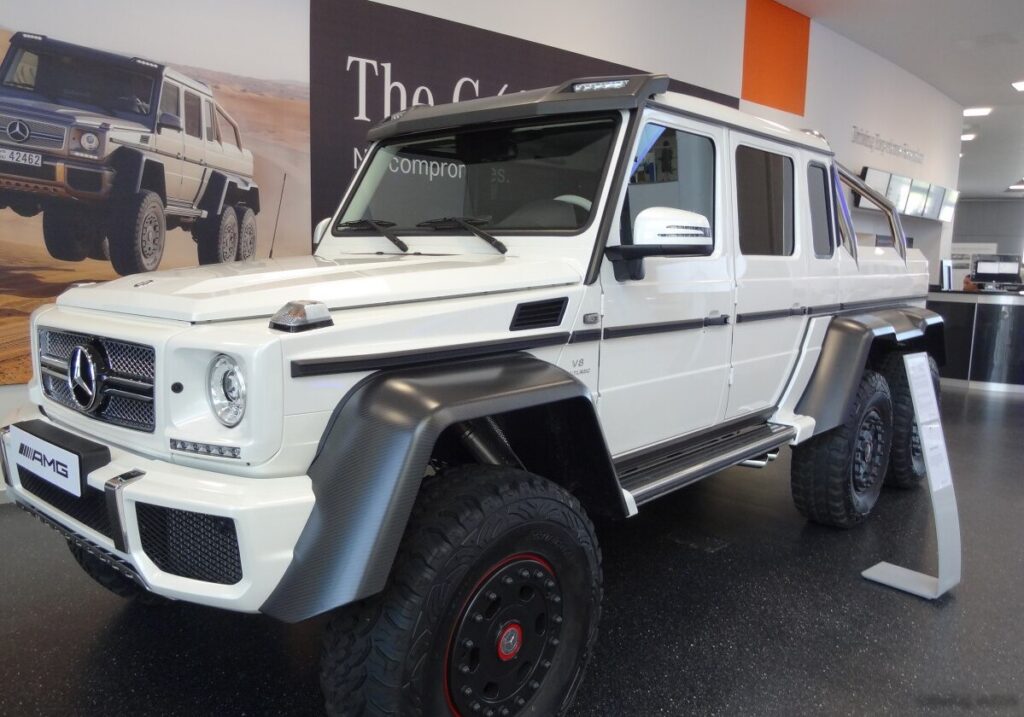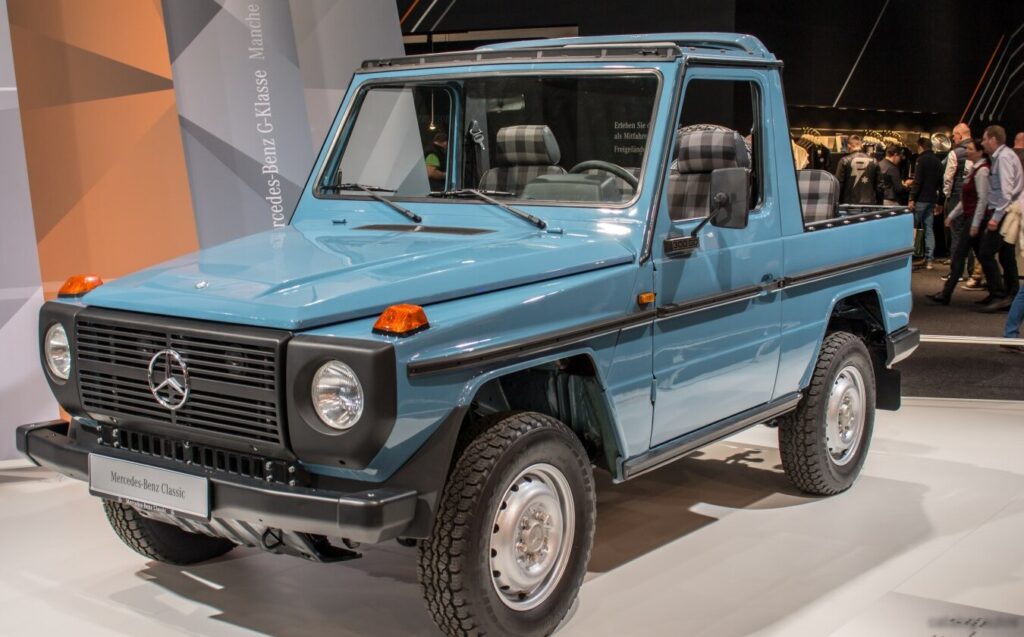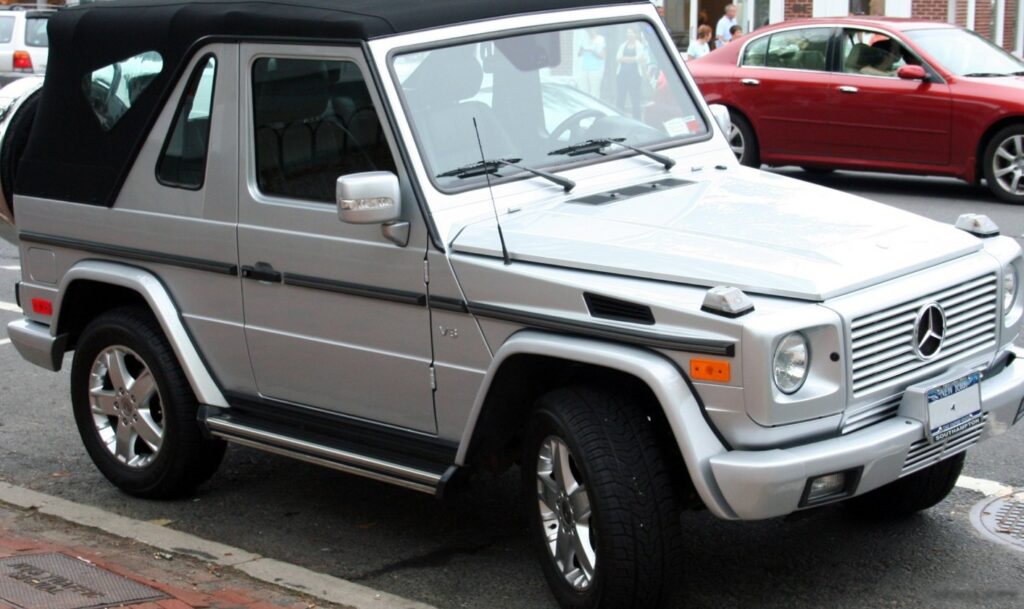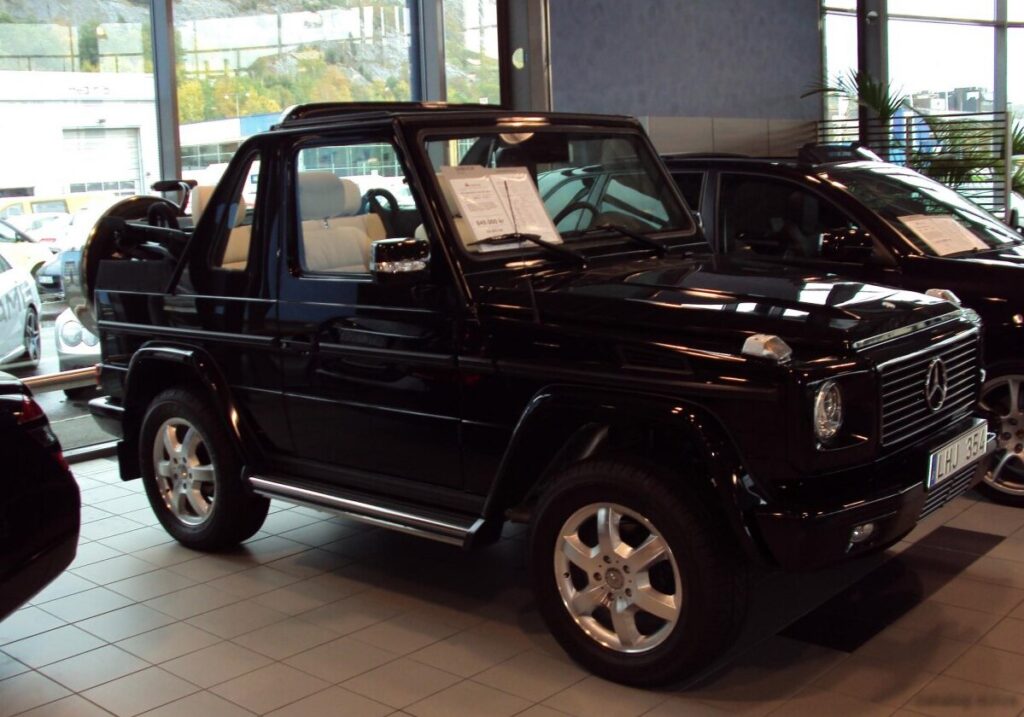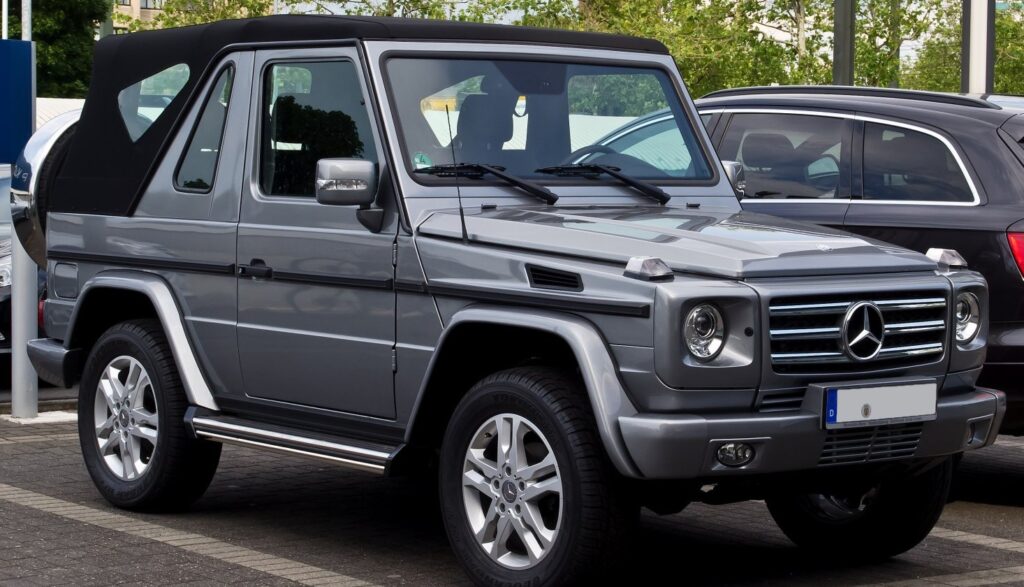
The Mercedes-Benz G 300 Long (W463), produced from September 1993 to March 1997, represents a significant iteration of the iconic G-Class, often referred to as the “G-Wagen.” This extended-wheelbase version of the W463 series was primarily aimed at markets desiring increased passenger space and comfort without sacrificing the G-Class’s legendary off-road capability. The G 300 Long occupied a middle ground in the G-Class lineup, offering a balance between the more basic, utilitarian models and the higher-performance, more luxurious variants. It was a popular choice for those seeking a robust, capable vehicle suitable for both everyday use and challenging terrain. This particular variant, equipped with the M103.987 3.0-liter inline-six engine producing 170 horsepower, and a 5-speed manual transmission, offered a unique driving experience within the G-Class family.
Technical Specifications
| Brand | Mercedes-Benz |
| Model | G-class |
| Generation | G-class Long (W463) |
| Type (Engine) | G 300 (170 Hp) 4MATIC |
| Start of production | September, 1993 |
| End of production | March, 1997 |
| Powertrain Architecture | Internal Combustion engine |
| Body type | Off-road vehicle |
| Seats | 5 |
| Doors | 5 |
| Fuel consumption (urban) | 19 l/100 km (12.4 US mpg) |
| Fuel consumption (extra urban) | 13.4 l/100 km (17.6 US mpg) |
| Fuel Type | Petrol (Gasoline) |
| Acceleration 0 – 100 km/h | 14.2 sec |
| Acceleration 0 – 62 mph | 14.2 sec |
| Acceleration 0 – 60 mph | 13.5 sec |
| Maximum speed | 165 km/h (102.53 mph) |
| Weight-to-power ratio | 13.1 kg/Hp |
| Weight-to-torque ratio | 9.4 kg/Nm |
| Power | 170 Hp @ 5500 rpm |
| Torque | 235 Nm @ 4500 rpm (173.33 lb.-ft. @ 4500 rpm) |
| Engine layout | Front, Longitudinal |
| Engine Model/Code | M 103.987 |
| Engine displacement | 2960 cm3 (180.63 cu. in.) |
| Number of cylinders | 6 |
| Engine configuration | Inline |
| Cylinder Bore | 88.5 mm (3.48 in.) |
| Piston Stroke | 80.2 mm (3.16 in.) |
| Compression ratio | 9.2:1 |
| Number of valves per cylinder | 2 |
| Fuel injection system | Multi-port manifold injection |
| Engine aspiration | Naturally aspirated engine |
| Valvetrain | SOHC |
| Engine oil capacity | 6.5 l (6.87 US qt | 5.72 UK qt) |
| Coolant | 7.8 l (8.24 US qt | 6.86 UK qt) |
| Kerb Weight | 2220 kg (4894.26 lbs.) |
| Max. weight | 2950 kg (6503.64 lbs.) |
| Max load | 730 kg (1609.37 lbs.) |
| Fuel tank capacity | 96 l (25.36 US gal | 21.12 UK gal) |
| Length | 4635 mm (182.48 in.) |
| Width | 1690 mm (66.54 in.) |
| Height | 1936 mm (76.22 in.) |
| Wheelbase | 2850 mm (112.2 in.) |
| Front track | 1425 mm (56.1 in.) |
| Rear track | 1425 mm (56.1 in.) |
| Drivetrain Architecture | All wheel drive (4×4) |
| Number of gears | 5 gears, manual transmission |
| Front suspension | Coil spring, Rigid axle suspension, Trailing arm |
| Rear suspension | Rigid axle suspension, Trailing arm, Coil spring |
| Front brakes | Disc |
| Rear brakes | Drum |
| Assisting systems | ABS (Anti-lock braking system) |
| Steering type | Cone worm with recirculation balls |
| Power steering | Hydraulic Steering |
| Tires size | 205/80 R 16 |
| Wheel rims size | 6 J x 16 |
Powertrain & Engine Architecture
The heart of the G 300 Long was the M103.987, a 3.0-liter inline-six cylinder gasoline engine. This engine, a descendant of the well-regarded M103 family, featured a single overhead camshaft (SOHC) valvetrain and Bosch multi-port fuel injection. The M103 was known for its durability and relatively smooth operation, though it wasn’t a particularly high-revving engine. Its 170 horsepower and 235 Nm (173 lb-ft) of torque were adequate for the G-Wagen’s substantial weight, but didn’t deliver blistering acceleration. The 5-speed manual transmission provided a more engaging driving experience than the optional 4-speed automatic, allowing the driver to better utilize the engine’s torque band. The engine’s longitudinal mounting and the permanent four-wheel-drive system contributed to the G-Wagen’s exceptional off-road prowess.
Driving Characteristics
The G 300 Long with the 170 hp engine and manual transmission offered a unique driving experience. Acceleration was modest, taking around 14.2 seconds to reach 60 mph. However, the engine’s torque delivery made it surprisingly capable in off-road situations. The manual gearbox allowed for precise control when navigating challenging terrain, and the 4MATIC system provided excellent traction. On paved roads, the G 300 Long felt somewhat agricultural compared to more modern SUVs. The long wheelbase contributed to a comfortable ride, but also made the vehicle feel large and cumbersome in tight spaces. Compared to the G 300 with the automatic transmission, the manual version felt more responsive and engaging, though it required more driver effort.
Equipment & Trim Levels
The G 300 Long typically came with a relatively basic level of equipment, reflecting its utilitarian origins. Standard features included power steering, ABS brakes, and a basic audio system. Interior upholstery was typically cloth, though leather was available as an option. The extended wheelbase provided significantly more rear passenger legroom compared to the standard G-Wagen. Optional extras included air conditioning, power windows, a sunroof, and upgraded audio systems. The G 300 Long wasn’t designed to compete with luxury SUVs in terms of features, but it offered a comfortable and functional interior for its intended purpose.
Chassis & Braking
The G 300 Long retained the traditional G-Wagen chassis design, featuring a ladder frame construction. This provided exceptional strength and durability, making it ideal for off-road use. The suspension consisted of coil springs and rigid axles with trailing arms, offering a good balance between ride comfort and off-road articulation. Brakes were discs at the front and drums at the rear. While adequate for the vehicle’s weight and performance, the braking system wasn’t particularly sophisticated by modern standards. The steering system utilized a cone worm and recirculation balls, providing a direct but somewhat heavy feel.
Market Reception & Comparison
The G 300 Long was generally well-received by those seeking a capable and durable off-road vehicle with increased passenger space. Critics praised its off-road performance and robust construction, but noted its relatively slow acceleration and agricultural driving characteristics. Compared to other G-Class variants, the G 300 Long offered a more affordable entry point into the G-Wagen family. It was a more practical choice than the higher-performance G 36 AMG or the more luxurious G 320, appealing to buyers who prioritized functionality and durability over outright performance or luxury. Fuel economy was predictably poor, reflecting the vehicle’s weight and engine size.
Legacy
The G 300 Long (W463) remains a sought-after vehicle among G-Wagen enthusiasts. The M103 engine, while not the most powerful, is known for its reliability and relative simplicity. Well-maintained examples are becoming increasingly rare and valuable. The G 300 Long represents a unique chapter in the G-Class’s history, bridging the gap between the original utilitarian models and the more modern, luxurious versions. Today, it’s appreciated for its classic design, robust construction, and legendary off-road capability. Finding parts can sometimes be a challenge, but a dedicated aftermarket and a strong community of G-Wagen owners help to keep these vehicles on the road.