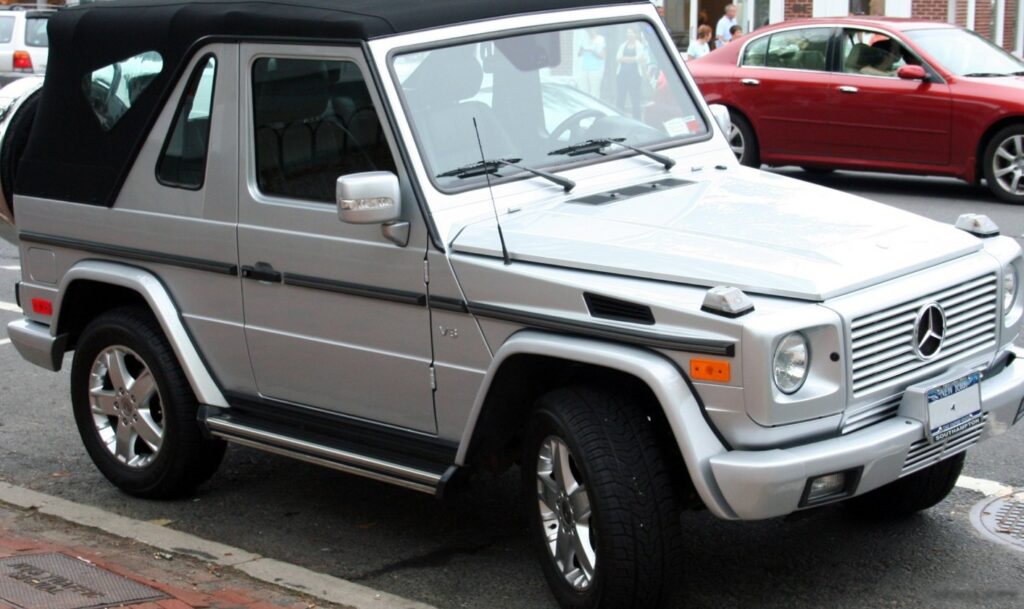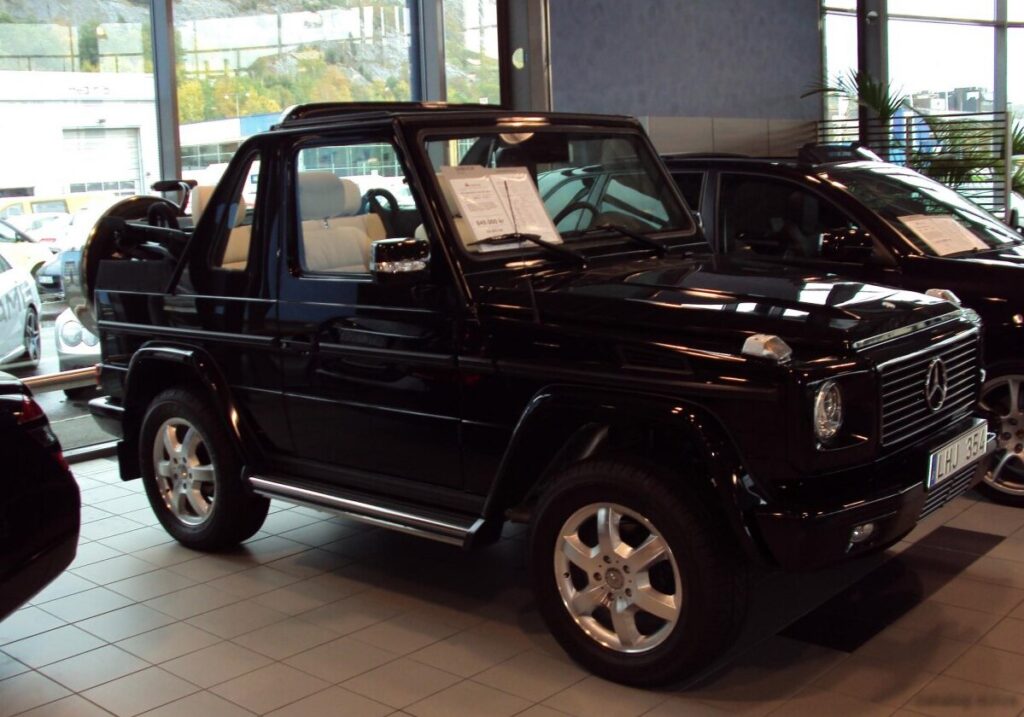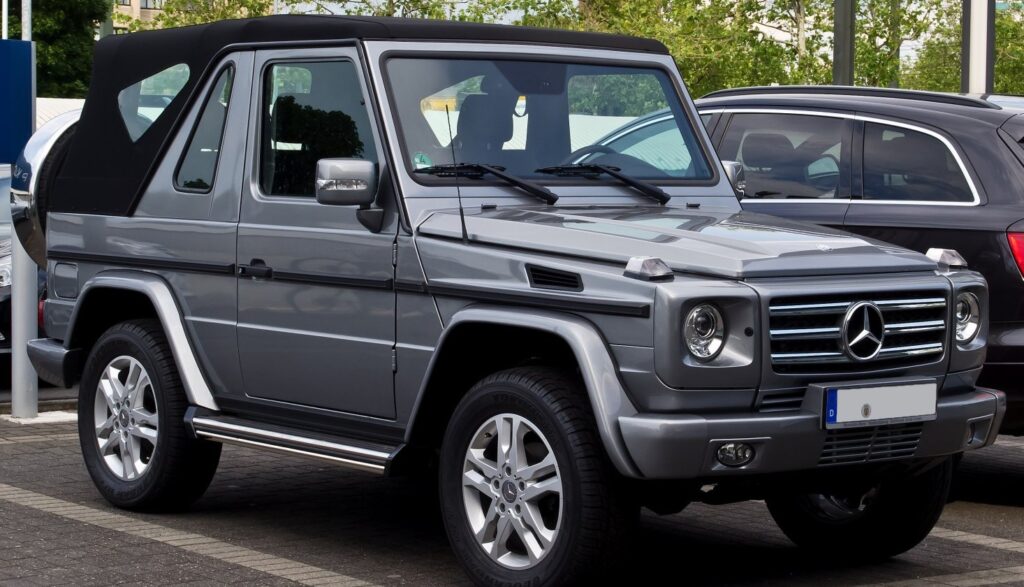
The Mercedes-Benz G-class Long (W463) G 300 TD 4MATIC Automatic, produced from July 1996 to November 2000, represents a unique iteration of the iconic G-Wagen. This long-wheelbase variant, distinguished by its increased interior space, was primarily aimed at markets desiring a more practical and luxurious off-road vehicle. Powered by a 3.0-liter turbocharged diesel engine producing 177 horsepower, it offered a blend of capability and refinement, though its performance characteristics differed significantly from the gasoline-powered G-Class models. The G 300 TD occupied a middle ground in the W463 lineup, offering a more affordable entry point than the G 320 or G 500 while still providing the G-Class’s legendary off-road prowess and robust construction.
Technical Specifications
| Brand | Mercedes-Benz |
| Model | G-class |
| Generation | G-class Long (W463) |
| Type (Engine) | G 300 TD (177 Hp) 4MATIC Automatic |
| Start of production | July, 1996 |
| End of production | November, 2000 |
| Powertrain Architecture | Internal Combustion engine |
| Body type | Off-road vehicle |
| Seats | 5 |
| Doors | 5 |
| Fuel consumption (economy) – urban (NEDC) | 14.6 l/100 km (16.1 US mpg, 19.3 UK mpg, 6.8 km/l) |
| Fuel consumption (economy) – extra urban (NEDC) | 10.6 l/100 km (22.2 US mpg, 26.6 UK mpg, 9.4 km/l) |
| Fuel consumption (economy) – combined (NEDC) | 12.1 l/100 km (19.4 US mpg, 23.3 UK mpg, 8.3 km/l) |
| CO2 emissions (NEDC) | 330 g/km |
| Fuel Type | Diesel |
| Acceleration 0 – 100 km/h | 15.7 sec |
| Acceleration 0 – 62 mph | 15.7 sec |
| Acceleration 0 – 60 mph | 14.9 sec |
| Maximum speed | 163 km/h (101.28 mph) |
| Emission standard | Euro 2 |
| Weight-to-power ratio | 13.3 kg/Hp, 75.3 Hp/tonne |
| Weight-to-torque ratio | 11.2 kg/Nm, 89.4 Nm/tonne |
| Power | 177 Hp @ 4600 rpm |
| Power per litre | 59.1 Hp/l |
| Torque | 210 Nm @ 1600-3600 rpm (154.89 lb.-ft. @ 1600-3600 rpm) |
| Engine layout | Front, Longitudinal |
| Engine Model/Code | OM 606.964 |
| Engine displacement | 2996 cm3 (182.83 cu. in.) |
| Number of cylinders | 6 |
| Engine configuration | Inline |
| Cylinder Bore | 87 mm (3.43 in.) |
| Piston Stroke | 84 mm (3.31 in.) |
| Compression ratio | 22:1 |
| Number of valves per cylinder | 4 |
| Fuel injection system | Precombustion chamber injection |
| Engine aspiration | Turbocharger |
| Valvetrain | DOHC |
| Engine oil capacity | 7.5 l (7.93 US qt | 6.6 UK qt) |
| Coolant | 7.5 l (7.93 US qt | 6.6 UK qt) |
| Kerb Weight | 2350 kg (5180.86 lbs.) |
| Max. weight | 3050-3100 kg (6724.1 – 6834.33 lbs.) |
| Max load | 700-750 kg (1543.24 – 1653.47 lbs.) |
| Trunk (boot) space – minimum | 480 l (16.95 cu. ft.) |
| Trunk (boot) space – maximum | 2250 l (79.46 cu. ft.) |
| Fuel tank capacity | 96 l (25.36 US gal | 21.12 UK gal) |
| Max. roof load | 200 kg (440.92 lbs.) |
| Permitted trailer load with brakes (12%) | 3500 kg (7716.18 lbs.) |
| Permitted trailer load without brakes | 750 kg (1653.47 lbs.) |
| Length | 4680 mm (184.25 in.) |
| Width | 1760 mm (69.29 in.) |
| Width including mirrors | 2007 mm (79.02 in.) |
| Height | 1936 mm (76.22 in.) |
| Wheelbase | 2850 mm (112.2 in.) |
| Front track | 1475 mm (58.07 in.) |
| Rear (Back) track | 1475 mm (58.07 in.) |
| Ride height (ground clearance) | 210 mm (8.27 in.) |
| Minimum turning circle (turning diameter) | 13.3 m (43.64 ft.) |
| Approach angle | 36° |
| Departure angle | 27° |
| Climb angle | 38.7° |
| Drivetrain Architecture | The Internal combustion engine (ICE) drives permanently the four wheels of the vehicle. |
| Drive wheel | All wheel drive (4×4) |
| Number of gears and type of gearbox | 5 gears, automatic transmission |
| Front suspension | Coil spring, Rigid axle suspension, Trailing arm |
| Rear suspension | Rigid axle suspension, Trailing arm, Coil spring |
| Front brakes | Ventilated discs |
| Rear brakes | Disc |
| Assisting systems | ABS (Anti-lock braking system) |
| Steering type | Cone worm with recirculation balls |
| Power steering | Hydraulic Steering |
| Tires size | 255/65 R 16 |
| Wheel rims size | 7.5 J x 16 |
Powertrain & Engine Architecture
The heart of the G 300 TD is the OM 606.964, a 3.0-liter inline-six cylinder diesel engine. This engine utilizes precombustion chamber injection, a system common in Mercedes-Benz diesels of the era, known for its relatively quiet operation and good combustion efficiency. A turbocharger was added to increase power output to 177 horsepower and 210 Nm (154.89 lb.-ft.) of torque. The engine’s longitudinal mounting and the 4MATIC all-wheel-drive system contribute to the G-Wagen’s inherent off-road capability. The automatic transmission employed was a robust 5-speed unit, designed to handle the engine’s torque and the vehicle’s substantial weight. While not known for blistering acceleration, the transmission provided smooth shifts and adequate performance for everyday driving and moderate off-road excursions.
Driving Characteristics
The G 300 TD Automatic offered a distinctly different driving experience compared to its gasoline-powered siblings. The turbo diesel engine delivered strong low-end torque, making it well-suited for tackling challenging terrain. However, its 15.7-second 0-60 mph acceleration time underscored its focus on usability rather than outright speed. The automatic transmission, while smooth, lacked the responsiveness of a manual gearbox, and the gear ratios were optimized for fuel efficiency and towing capacity rather than spirited driving. Compared to the G 320, the 300 TD felt noticeably slower, but it offered superior fuel economy and a more relaxed driving experience. The long wheelbase contributed to a more stable ride on paved roads, but it also slightly reduced maneuverability in tight spaces.
Equipment & Trim Levels
The G 300 TD Long typically came equipped with a respectable level of standard features, including power windows, central locking, and a basic audio system. Interior upholstery was generally cloth, though leather was available as an option. The dashboard layout was functional and utilitarian, reflecting the G-Wagen’s origins as a military vehicle. Optional extras included air conditioning, a sunroof, and upgraded audio systems. The long wheelbase provided ample space for passengers and cargo, making it a practical choice for families or those needing to transport equipment. The level of luxury was modest compared to contemporary luxury SUVs, but the G-Wagen’s inherent robustness and unique character appealed to a specific clientele.
Chassis & Braking
The G 300 TD Long retained the G-Wagen’s traditional body-on-frame construction, providing exceptional durability and off-road capability. The suspension consisted of coil springs and rigid axles with trailing arms, offering a comfortable ride and excellent articulation over uneven terrain. Braking duties were handled by ventilated discs at the front and discs at the rear, supplemented by an ABS (Anti-lock braking system) for enhanced safety. The steering system utilized a cone worm and recirculation balls mechanism, providing precise control but requiring a relatively large turning circle. The robust chassis and capable suspension allowed the G 300 TD to navigate challenging off-road conditions with confidence.
Market Reception & Comparison
The G 300 TD Long was generally well-received by critics who appreciated its blend of off-road capability, practicality, and relatively affordable price point. However, its slow acceleration and somewhat dated interior were points of criticism. Compared to other diesel-powered SUVs of the era, such as the Range Rover, the G 300 TD offered superior off-road performance but lacked the same level of luxury and refinement. Its fuel economy, while better than the gasoline-powered G-Wagens, was not class-leading. The G 300 TD appealed to buyers who prioritized durability, capability, and a unique vehicle aesthetic over outright performance or luxury.
Legacy
The Mercedes-Benz G 300 TD Long (W463) has developed a strong following among enthusiasts and collectors. The OM 606 engine is renowned for its durability and longevity, and well-maintained examples can still provide reliable service today. The G-Wagen’s iconic design and robust construction have ensured its continued desirability in the used car market. While parts availability can sometimes be a challenge, the G 300 TD remains a capable and distinctive vehicle, representing a unique chapter in the G-Wagen’s storied history. Its blend of practicality, off-road prowess, and timeless design continues to attract a dedicated following.