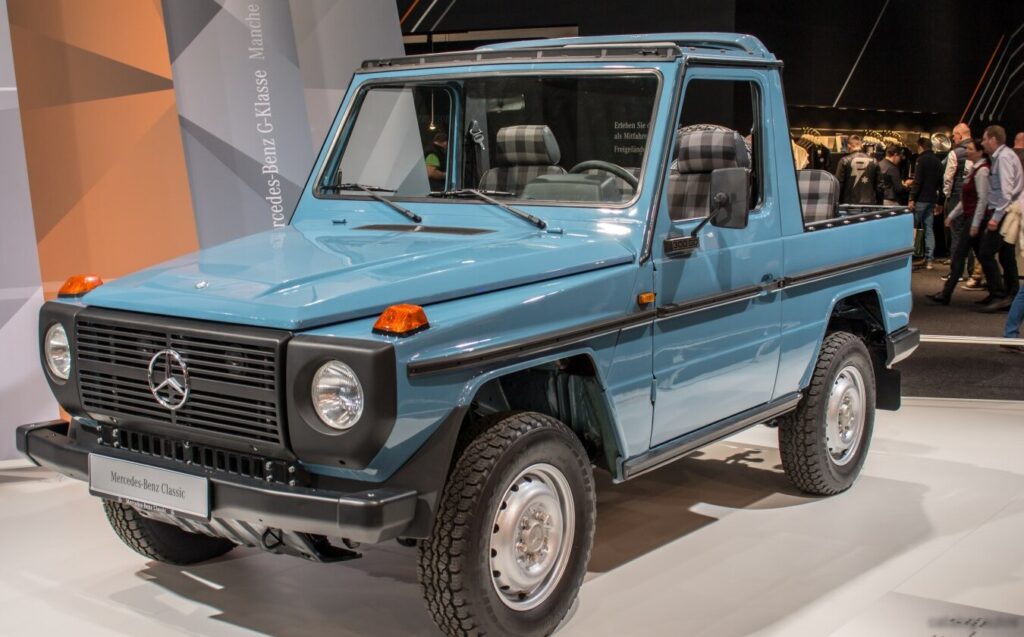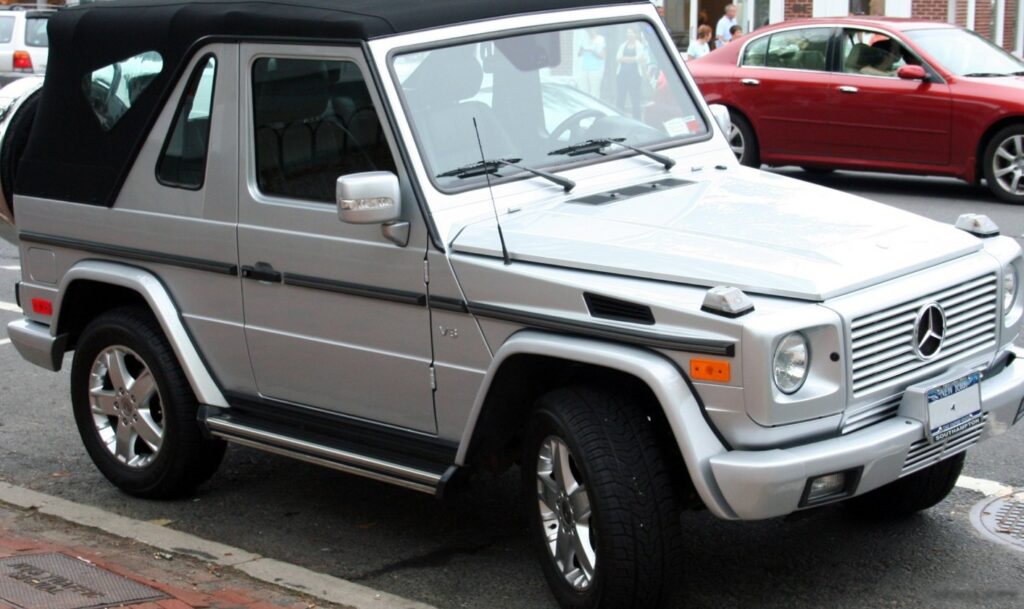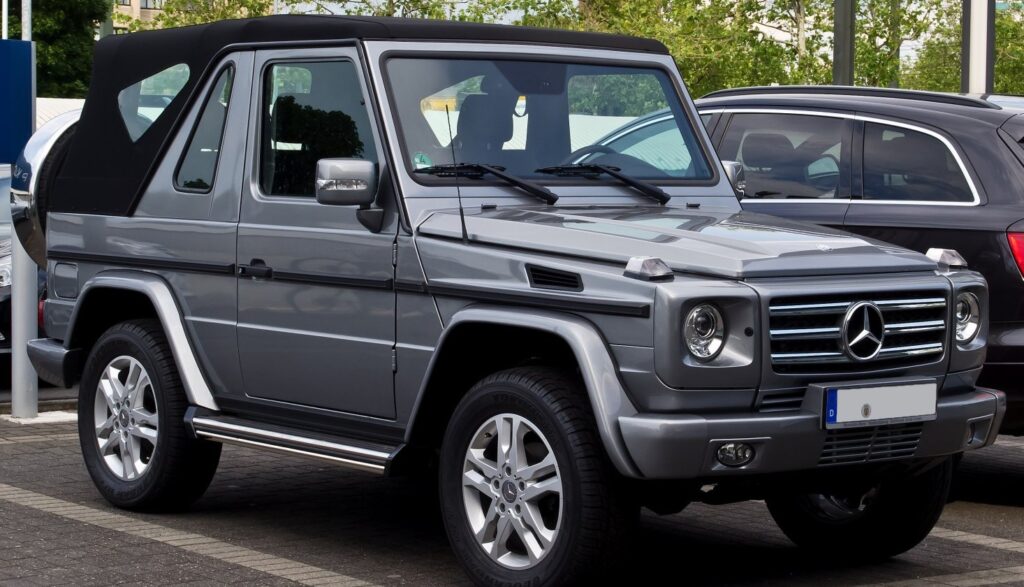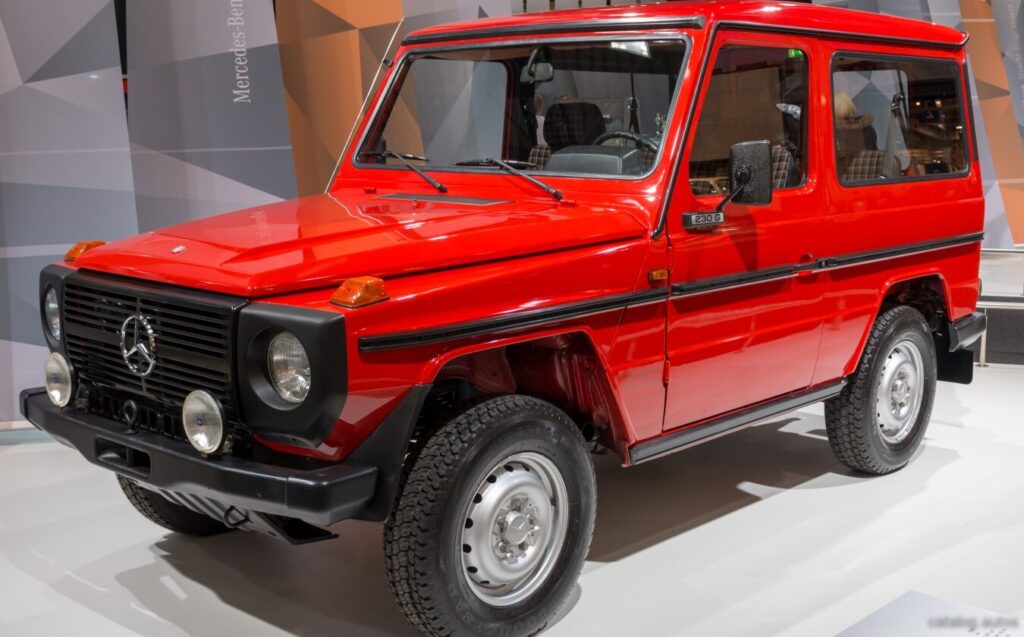
The Mercedes-Benz G-class (W460) 240 GD, produced from 1979 to 1987, represents a pivotal entry point into the iconic G-Wagen lineage. Initially conceived as a military vehicle for the German Bundeswehr, the W460 transitioned to civilian production, offering a robust and capable off-road vehicle to a broader market. The 240 GD, powered by a naturally aspirated 2.4-liter diesel engine producing 72 horsepower, was a key variant, particularly in Europe, where diesel engines were favored for their fuel efficiency and durability. It served as the base model, offering a no-frills, utilitarian approach to off-road capability. This model established the G-class’s reputation for toughness and cemented its place as a desirable, albeit expensive, vehicle.
Technical Specifications
| Brand | Mercedes-Benz |
| Model | G-class |
| Generation | G-class (W460) |
| Type (Engine) | 240 GD (72 Hp) 4WD |
| Start of production | 1979 |
| End of production | 1987 |
| Powertrain Architecture | Internal Combustion engine |
| Body type | Off-road vehicle |
| Seats | 5 |
| Doors | 3 |
| Fuel consumption (urban) | 14.1 l/100 km (16.7 US mpg, 20 UK mpg, 7.1 km/l) |
| Fuel consumption (extra urban) | 11.8 l/100 km (19.9 US mpg, 23.9 UK mpg, 8.5 km/l) |
| Fuel Type | Diesel |
| Maximum speed | 115 km/h (71.46 mph) |
| Weight-to-power ratio | 25.1 kg/Hp, 39.8 Hp/tonne |
| Weight-to-torque ratio | 13.2 kg/Nm, 75.7 Nm/tonne |
| Power | 72 Hp @ 4400 rpm |
| Power per litre | 30 Hp/l |
| Torque | 137 Nm @ 2400 rpm (101.05 lb.-ft. @ 2400 rpm) |
| Engine layout | Front, Longitudinal |
| Engine Model/Code | OM 616.936 |
| Engine displacement | 2399 cm3 (146.4 cu. in.) |
| Number of cylinders | 4 |
| Engine configuration | Inline |
| Cylinder Bore | 90.9 mm (3.58 in.) |
| Piston Stroke | 92.4 mm (3.64 in.) |
| Compression ratio | 21:1 |
| Number of valves per cylinder | 2 |
| Fuel injection system | Precombustion chamber injection |
| Engine aspiration | Naturally aspirated engine |
| Valvetrain | SOHC |
| Engine oil capacity | 6.5 l (6.87 US qt | 5.72 UK qt) |
| Coolant capacity | 10.7 l (11.31 US qt | 9.41 UK qt) |
| Kerb Weight | 1810 kg (3990.37 lbs.) |
| Max. weight | 2500 kg (5511.56 lbs.) |
| Max load | 690 kg (1521.19 lbs.) |
| Trunk (boot) space – minimum | 743 l (26.24 cu. ft.) |
| Trunk (boot) space – maximum | 1730 l (61.09 cu. ft.) |
| Fuel tank capacity | 75 l (19.81 US gal | 16.5 UK gal) |
| Permitted trailer load with brakes (12%) | 2500 kg (5511.56 lbs.) |
| Permitted trailer load without brakes | 750 kg (1653.47 lbs.) |
| Length | 4145 mm (163.19 in.) |
| Width | 1700 mm (66.93 in.) |
| Height | 1985 mm (78.15 in.) |
| Wheelbase | 2400 mm (94.49 in.) |
| Front track | 1425 mm (56.1 in.) |
| Rear (Back) track | 1425 mm (56.1 in.) |
| Front overhang | 745 mm (29.33 in.) |
| Rear overhang | 800 mm (31.5 in.) |
| Ride height (ground clearance) | 215 mm (8.46 in.) |
| Minimum turning circle (turning diameter) | 11.4 m (37.4 ft.) |
| Approach angle | 45° |
| Departure angle | 40° |
| Ramp-over (brakeover) angle | 31° |
| Climb angle | 38.7° |
| Wading depth | 600 mm (23.62 in.) |
| Drivetrain Architecture | The Internal combustion engine (ICE) drives the rear wheels permanently, and the front wheels are driven through an electrically or mechanically operated clutch if necessary. |
| Drive wheel | All wheel drive (4×4) |
| Number of gears and type of gearbox | 4 gears, manual transmission |
| Front suspension | Coil spring, Rigid axle suspension, Transverse stabilizer, Trailing arm |
| Rear suspension | Rigid axle suspension, Trailing arm, Coil spring |
| Front brakes | Disc, 303 mm |
| Rear brakes | Drum, 260 mm |
| Steering type | Cone worm with recirculation balls |
| Tires size | 205/80 R16 |
| Wheel rims size | 5.5J x 16 |
Powertrain & Engine Architecture
The heart of the 240 GD is the OM 616.936, a 2.4-liter inline-four diesel engine. This engine is renowned for its robustness and longevity, characteristics typical of Mercedes-Benz diesel engines of the era. It utilizes precombustion chamber injection, a system where fuel is injected into a small pre-chamber connected to the main combustion chamber, promoting more complete combustion and reducing engine noise. The engine features a single overhead camshaft (SOHC) valvetrain operating two valves per cylinder. The 72 horsepower and 137 Nm (101 lb-ft) of torque were delivered at 4400 and 2400 rpm respectively. The engine’s longitudinal front-engine layout contributed to the vehicle’s balanced weight distribution. The 240 GD was exclusively offered with a four-speed manual transmission, chosen for its simplicity and durability, perfectly complementing the engine’s characteristics.
Driving Characteristics
The 240 GD’s driving experience is defined by its utilitarian nature. With only 72 horsepower propelling a relatively heavy vehicle (1810 kg or 3990 lbs), acceleration is modest. However, the diesel engine’s torque characteristics provide adequate pulling power, especially at lower engine speeds. The four-speed manual transmission requires deliberate shifting, and the gear ratios are spaced to maximize fuel efficiency and off-road capability rather than outright speed. Compared to later G-class variants with more powerful engines (like the G 280 or G 320), the 240 GD feels significantly slower. However, its simplicity and robust drivetrain make it a highly capable off-road performer, excelling in challenging terrain where low-speed torque and a durable chassis are paramount.
Equipment & Trim Levels
The 240 GD was positioned as the entry-level G-class model, and its equipment reflected this. Standard features were minimal, focusing on functionality rather than luxury. Typically, it included basic steel wheels, vinyl upholstery, and a simple dashboard layout. Optional extras were available, such as upgraded upholstery, a sunroof, and auxiliary lighting, but these were rarely specified on the base model. The interior was spartan but durable, designed to withstand the rigors of off-road use. The emphasis was on providing a practical and reliable vehicle, rather than a luxurious one.
Chassis & Braking
The W460 chassis is a body-on-frame construction, providing exceptional strength and durability. The suspension utilizes coil springs and rigid axles front and rear, offering substantial wheel articulation for off-road capability. A transverse stabilizer bar was fitted to the front axle to reduce body roll. Braking duties were handled by disc brakes at the front and drum brakes at the rear. While adequate for the vehicle’s weight and performance, the braking system is not particularly powerful by modern standards. The robust chassis and suspension, combined with the all-wheel-drive system, made the 240 GD a formidable off-road vehicle.
Market Reception & Comparison
The 240 GD was well-received in Europe, particularly in regions where diesel engines were popular. Critics praised its off-road capability, durability, and fuel efficiency. However, its modest performance and spartan interior were also noted. Compared to the gasoline-powered G-class variants, the 240 GD offered significantly better fuel economy but lacked the same level of performance. Against competitors like the Land Rover Defender, the 240 GD offered a more refined driving experience and a reputation for superior build quality, though at a higher price point.
Legacy
The 240 GD, while not the most powerful or luxurious G-class variant, played a crucial role in establishing the model’s reputation for toughness and off-road capability. The OM 616 engine is known for its exceptional longevity, and well-maintained examples continue to operate reliably today. In the used car market, the 240 GD is sought after by enthusiasts who appreciate its simplicity, durability, and classic G-Wagen styling. Its relative affordability compared to later, more desirable G-class models makes it an accessible entry point into the world of these iconic off-road vehicles. The 240 GD remains a testament to Mercedes-Benz’s engineering prowess and a symbol of rugged, no-nonsense utility.