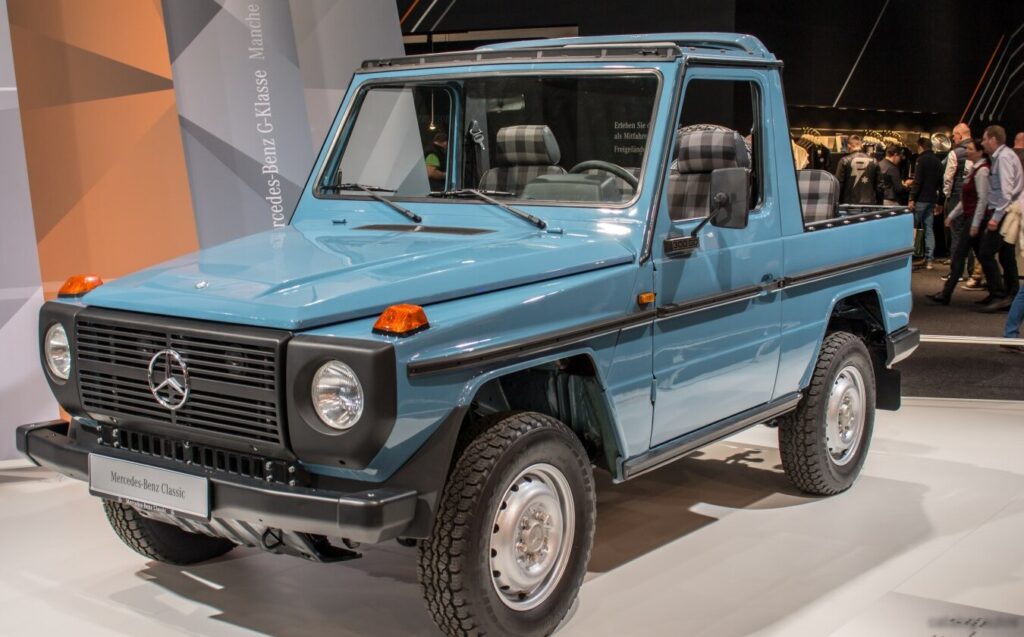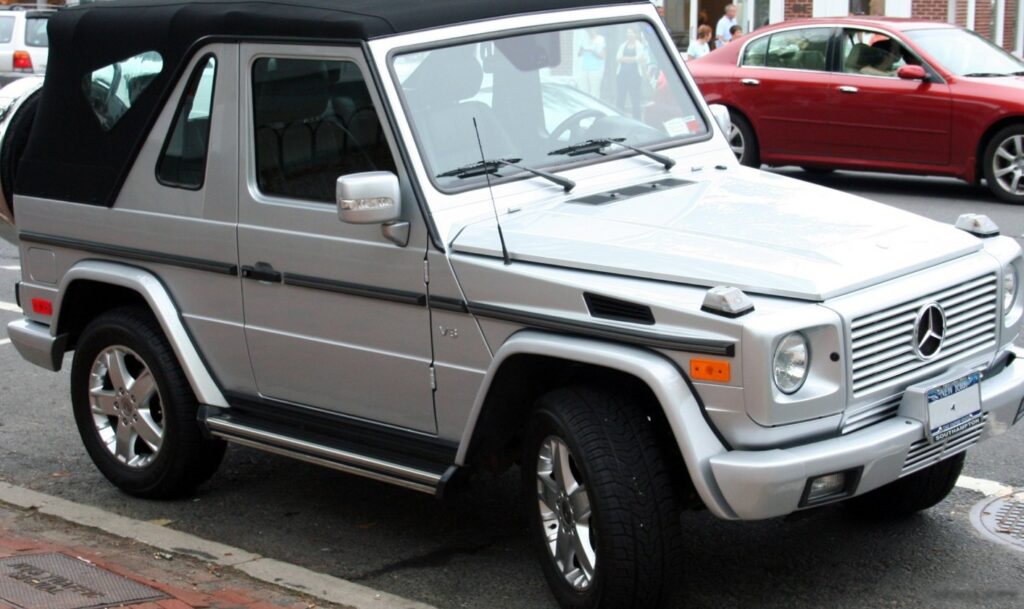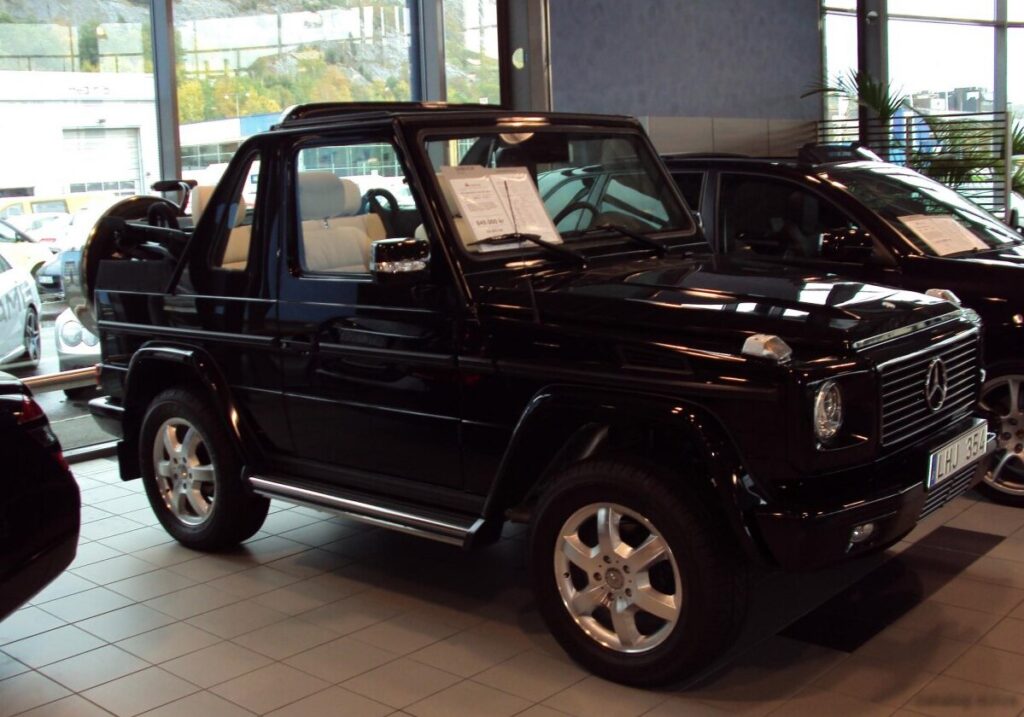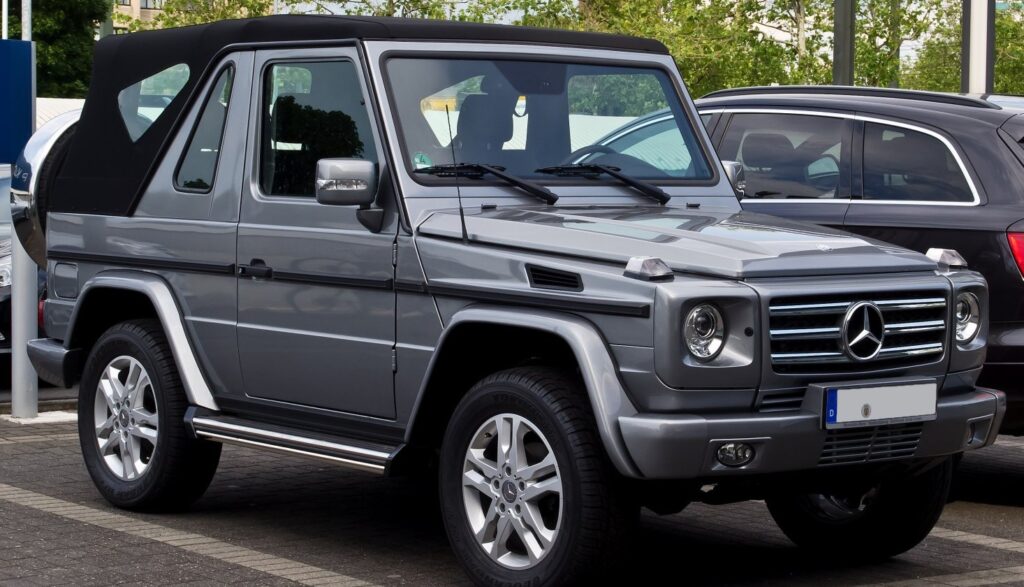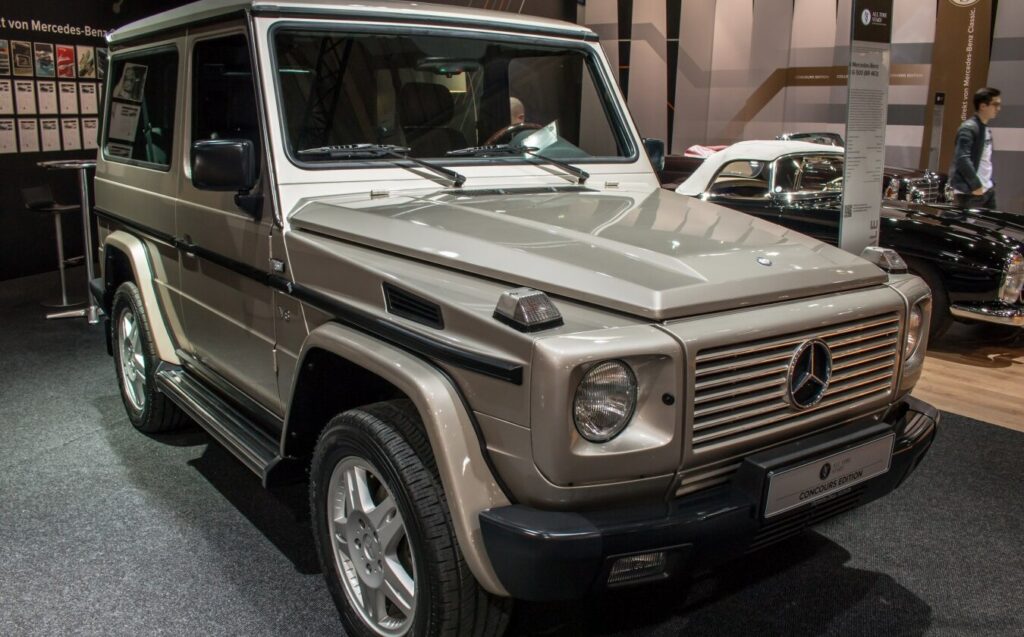
The Mercedes-Benz G-Class 230 GE 4MATIC Automatic, produced from April 1990 to September 1993, represents a pivotal point in the evolution of the iconic G-Wagen. Falling within the W463 generation, this variant offered a more accessible entry point into the G-Class range, balancing the vehicle’s legendary off-road capability with a more economical engine option. It served as a bridge between the more powerful 300 GE models and the later, more refined G-Class iterations. The 230 GE aimed to broaden the G-Class’s appeal beyond specialized military and professional applications, attracting a wider customer base seeking a robust and capable all-terrain vehicle.
Technical Specifications
| Brand | Mercedes-Benz |
| Model | G-class |
| Generation | G-class (W463) |
| Type | 230 GE (126 Hp) 4MATIC Automatic |
| Start of production | April, 1990 |
| End of production | September, 1993 |
| Powertrain Architecture | Internal Combustion engine |
| Body type | Off-road vehicle |
| Seats | 5 |
| Doors | 3 |
| Fuel consumption (urban) | 16.4 l/100 km (14.3 US mpg, 17.2 UK mpg, 6.1 km/l) |
| Fuel consumption (extra urban) | 12.7 l/100 km (18.5 US mpg, 22.2 UK mpg, 7.9 km/l) |
| Fuel Type | Petrol (Gasoline) |
| Acceleration 0 – 100 km/h | 18.4 sec |
| Acceleration 0 – 62 mph | 18.4 sec |
| Acceleration 0 – 60 mph | 17.5 sec |
| Maximum speed | 145 km/h (90.1 mph) |
| Weight-to-power ratio | 16.3 kg/Hp, 61.2 Hp/tonne |
| Weight-to-torque ratio | 10.8 kg/Nm, 92.2 Nm/tonne |
| Power | 126 Hp @ 5000 rpm |
| Power per litre | 54.8 Hp/l |
| Torque | 190 Nm @ 4000 rpm (140.14 lb.-ft. @ 4000 rpm) |
| Engine layout | Front, Longitudinal |
| Engine Model/Code | M 102.989 |
| Engine displacement | 2298 cm3 (140.23 cu. in.) |
| Number of cylinders | 4 |
| Engine configuration | Inline |
| Cylinder Bore | 95.5 mm (3.76 in.) |
| Piston Stroke | 80.2 mm (3.16 in.) |
| Compression ratio | 9:1 |
| Number of valves per cylinder | 2 |
| Fuel injection system | Multi-port manifold injection |
| Engine aspiration | Naturally aspirated engine |
| Valvetrain | SOHC |
| Engine oil capacity | 6 l (6.34 US qt | 5.28 UK qt) |
| Coolant | 5 l (5.28 US qt | 4.4 UK qt) |
| Kerb Weight | 2060 kg (4541.52 lbs.) |
| Max. weight | 2620 kg (5776.11 lbs.) |
| Max load | 560 kg (1234.59 lbs.) |
| Fuel tank capacity | 96 l (25.36 US gal | 21.12 UK gal) |
| Length | 4185 mm (164.76 in.) |
| Width | 1690 mm (66.54 in.) |
| Height | 1908 mm (75.12 in.) |
| Wheelbase | 2400 mm (94.49 in.) |
| Front track | 1425 mm (56.1 in.) |
| Rear track | 1425 mm (56.1 in.) |
| Drivetrain Architecture | The Internal combustion engine (ICE) drives permanently the four wheels of the vehicle. |
| Drive wheel | All wheel drive (4×4) |
| Number of gears | 4 |
| Gearbox type | automatic transmission |
| Front suspension | Coil spring, Rigid axle suspension, Trailing arm |
| Rear suspension | Rigid axle suspension, Trailing arm, Coil spring |
| Front brakes | Disc |
| Rear brakes | Drum |
| Steering type | Cone worm with recirculation balls |
| Power steering | Hydraulic Steering |
| Tires size | 205/80 R16 |
| Wheel rims size | 6J x 16 |
Powertrain & Engine Architecture
The 230 GE was powered by the Mercedes-Benz M102.989 engine, a 2.3-liter inline-four cylinder gasoline engine. This engine, a member of the well-regarded M102 family, featured a single overhead camshaft (SOHC) valvetrain and multi-port fuel injection. While not known for outright performance, the M102 was praised for its durability and relatively smooth operation. The 126 horsepower output at 5000 rpm and 190 Nm (140 lb-ft) of torque at 4000 rpm were adequate for the G-Class’s intended purpose, but significantly less than the six and eight-cylinder engines offered in other G-Wagen variants. The engine’s longitudinal front-engine layout contributed to the vehicle’s balanced weight distribution, crucial for off-road performance. The 4-speed automatic transmission, while providing ease of use, did impact acceleration and fuel economy compared to the available manual transmission.
Driving Characteristics
The 230 GE Automatic’s driving experience was defined by its robust build quality and off-road prowess, rather than sporty handling. Acceleration was leisurely, taking approximately 18.4 seconds to reach 100 km/h (62 mph). The automatic transmission, while convenient, resulted in noticeable power loss and less driver control compared to the manual gearbox. The gear ratios were optimized for low-speed torque and climbing ability, making it well-suited for challenging terrain. On paved roads, the 230 GE felt somewhat cumbersome, with noticeable body roll and a less refined ride than more modern SUVs. However, its solid construction and permanent four-wheel drive system provided a sense of security and stability in various conditions.
Equipment & Trim Levels
The 230 GE, being positioned as a more accessible G-Class model, typically featured a more basic level of equipment compared to the higher-end variants. Standard features generally included cloth upholstery, basic instrumentation, and manual windows and locks. Air conditioning was often an optional extra, as were features like a sunroof and upgraded audio systems. The interior design was functional and utilitarian, reflecting the G-Class’s origins as a military vehicle. Trim levels were relatively limited, with most customization options revolving around exterior color choices and the addition of optional equipment packages.
Chassis & Braking
The G-Class chassis remained largely consistent across the W463 generation, featuring a robust ladder frame construction. The 230 GE utilized a coil spring suspension with rigid axles front and rear, providing substantial wheel articulation for off-road capability. Front brakes were discs, while the rear brakes were drums – a cost-saving measure for this entry-level model. The steering system employed a cone worm and recirculation ball mechanism, offering precise control but requiring significant driver effort. The 205/80 R16 tires, mounted on 6J x 16 inch wheels, were chosen for their durability and off-road traction.
Market Reception & Comparison
The 230 GE Automatic received mixed reviews. Critics acknowledged its off-road capabilities and ruggedness but often criticized its lack of performance and relatively high price point, even for the base G-Class model. Compared to the 300 GE, the 230 GE offered significantly less power and refinement. However, it provided a more fuel-efficient option, with combined fuel consumption around 14.8 l/100km. The 230 GE appealed to buyers who prioritized off-road capability and durability over outright speed and luxury. It was seen as a practical and reliable vehicle for those living in rural areas or frequently venturing off the beaten path.
Legacy
The 230 GE 4MATIC Automatic, while not the most powerful or luxurious G-Class variant, holds a significant place in the model’s history. Its relatively simple engine and transmission combination contribute to its reputation for long-term reliability. Today, well-maintained examples are sought after by collectors and enthusiasts, particularly those who appreciate the G-Class’s original, utilitarian character. The M102 engine, while aging, is known for its robustness and relatively straightforward maintenance. The 230 GE represents a unique blend of iconic G-Class DNA and accessible pricing, making it a desirable and increasingly valuable classic vehicle in the used car market.