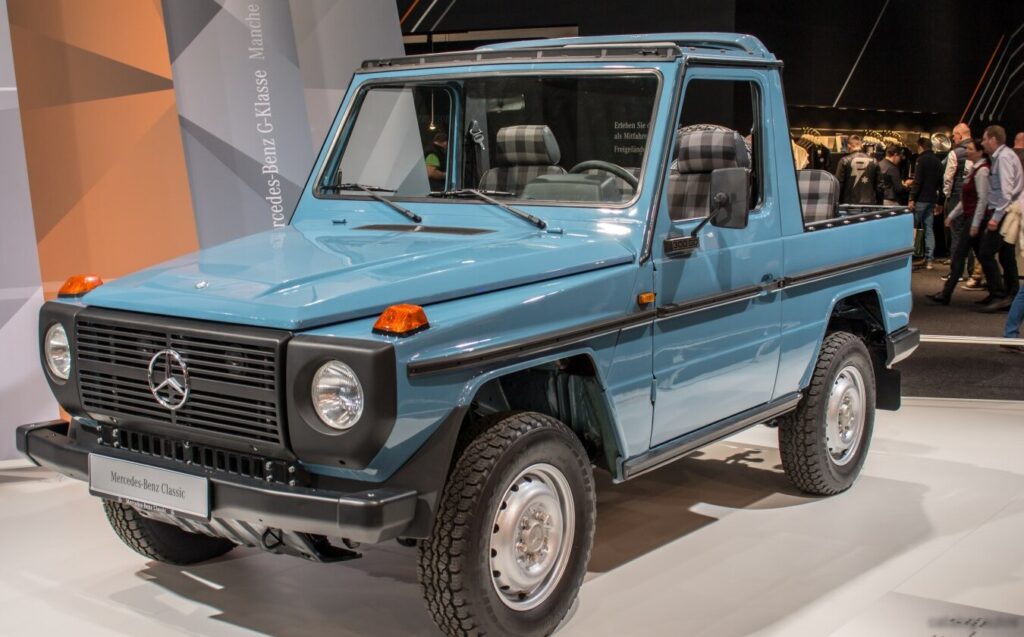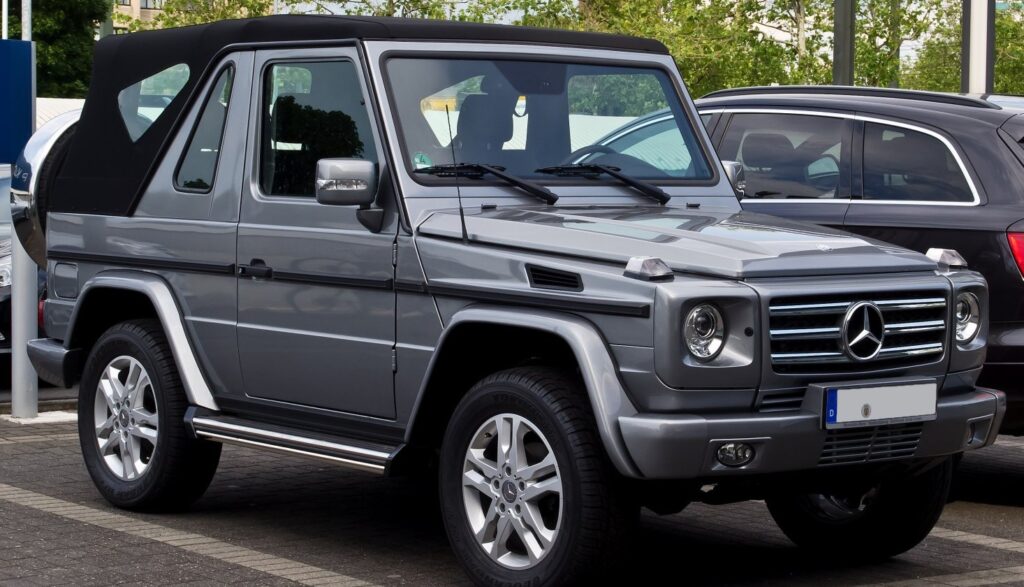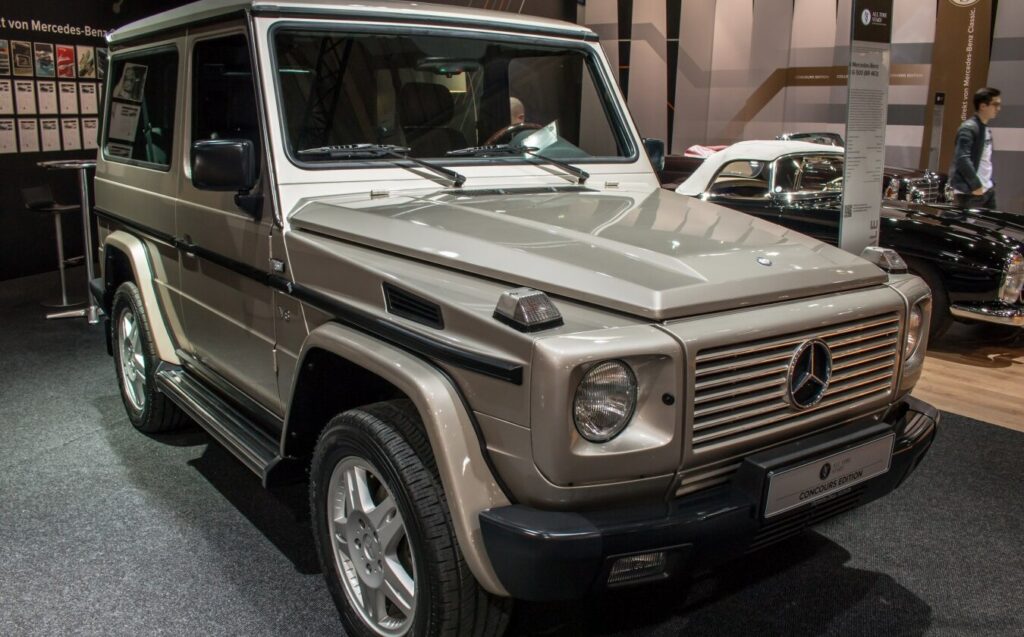
The Mercedes-Benz G-class (W463) 300 GD 4MATIC, produced from June 1990 to September 1993, represents a crucial iteration of the iconic off-road vehicle. Positioned as a diesel-powered variant within the W463 series – the first generation of G-Wagens to be widely available to the public – the 300 GD offered a blend of robust capability and relatively economical operation. It served as a workhorse option, appealing to those needing a durable and capable vehicle for both on and off-road duties, particularly in European markets where diesel engines were favored. This model bridged the gap between the earlier, more utilitarian G-Wagens and the increasingly refined versions that would follow.
| Brand | Mercedes-Benz |
| Model | G-class |
| Generation | G-class (W463) |
| Type | 300 GD (113 Hp) 4MATIC |
| Start of production | June, 1990 |
| End of production | September, 1993 |
| Powertrain Architecture | Internal Combustion engine |
| Body type | Off-road vehicle |
| Seats | 5 |
| Doors | 3 |
| Fuel consumption (urban) | 14.7 l/100 km (16 US mpg, 19.2 UK mpg) |
| Fuel consumption (extra urban) | 10.9 l/100 km (21.6 US mpg, 25.9 UK mpg) |
| Fuel Type | Diesel |
| Maximum speed | 141 km/h (87.61 mph) |
| Weight-to-power ratio | 18.5 kg/Hp |
| Weight-to-torque ratio | 10.9 kg/Nm |
| Power | 113 Hp @ 4600 rpm |
| Power per litre | 37.7 Hp/l |
| Torque | 191 Nm @ 2700-2900 rpm (140.87 lb.-ft.) |
| Engine layout | Front, Longitudinal |
| Engine Model/Code | OM 603.931 |
| Engine displacement | 2996 cm3 (182.83 cu. in.) |
| Number of cylinders | 6 |
| Engine configuration | Inline |
| Cylinder Bore | 87 mm (3.43 in.) |
| Piston Stroke | 84 mm (3.31 in.) |
| Compression ratio | 22:1 |
| Number of valves per cylinder | 2 |
| Fuel injection system | Precombustion chamber injection |
| Engine aspiration | Naturally aspirated |
| Valvetrain | SOHC |
| Engine oil capacity | 8 l (8.45 US qt, 7.04 UK qt) |
| Coolant capacity | 7.5 l (7.93 US qt, 6.6 UK qt) |
| Kerb Weight | 2090 kg (4607.66 lbs.) |
| Max. weight | 2620 kg (5776.11 lbs.) |
| Max load | 530 kg (1168.45 lbs.) |
| Fuel tank capacity | 96 l (25.36 US gal, 21.12 UK gal) |
| Length | 4185 mm (164.76 in.) |
| Width | 1690 mm (66.54 in.) |
| Height | 1908 mm (75.12 in.) |
| Wheelbase | 2400 mm (94.49 in.) |
| Front track | 1425 mm (56.1 in.) |
| Rear track | 1425 mm (56.1 in.) |
| Drivetrain Architecture | All wheel drive (4×4) |
| Number of gears | 5 |
| Gearbox type | Manual transmission |
| Front suspension | Coil spring, Rigid axle, Trailing arm |
| Rear suspension | Rigid axle, Trailing arm, Coil spring |
| Front brakes | Disc |
| Rear brakes | Drum |
| Steering type | Cone worm with recirculation balls |
| Power steering | Hydraulic |
| Tires size | 205/80 R 16 |
| Wheel rims size | 6 J x 16 |
Powertrain & Engine Architecture
The heart of the 300 GD is the OM 603.931, a 3.0-liter inline-six cylinder diesel engine. This engine is a naturally aspirated, precombustion chamber diesel, a design common in Mercedes-Benz diesels of the era. Precombustion chambers improve cold-starting and combustion efficiency, crucial for diesel engines of the time. The OM603 featured a single overhead camshaft (SOHC) valvetrain operating two valves per cylinder. The engine produced 113 horsepower at 4600 rpm and 191 Nm (140.87 lb-ft) of torque between 2700 and 2900 rpm. This torque output, while modest by modern standards, was well-suited to the G-Wagen’s intended purpose. The engine’s longitudinal front-engine layout and the permanent four-wheel drive system, known as 4MATIC, provided excellent traction in challenging conditions. The 300 GD was equipped with a 5-speed manual transmission, offering precise control and allowing the driver to effectively utilize the engine’s torque band.
Driving Characteristics
The 300 GD 4MATIC, with its 113 hp and manual transmission, offered a driving experience focused on capability rather than outright speed. Acceleration was deliberate, and the engine required careful gear selection to maintain momentum, especially when loaded or tackling steep inclines. The 5-speed manual transmission allowed for precise control, and the relatively low gearing provided ample torque for off-road situations. Compared to later, more powerful G-Wagens, the 300 GD felt less refined but more directly connected to the driving experience. The manual transmission also provided a more engaging experience than the automatic options available on other G-Wagen variants. The 4MATIC system ensured excellent traction on various surfaces, making it a capable performer both on and off the pavement.
Equipment & Trim Levels
The 300 GD 4MATIC was generally equipped with a functional, rather than luxurious, interior. Standard features included basic cloth upholstery, a simple dashboard layout, and manually adjustable seats. Air conditioning and power windows were often optional extras. The focus was on durability and practicality, with robust materials used throughout the cabin. Trim levels were relatively limited; the 300 GD represented a mid-range offering within the W463 lineup, positioned above the more basic 230 GE but below the more powerful and luxurious 300 GE and later models. Optional extras could include a sunroof, upgraded sound system, and various off-road accessories like a winch or auxiliary lighting.
Chassis & Braking
The W463 G-class chassis was built around a robust ladder frame construction, providing exceptional strength and durability. The 300 GD utilized a coil spring suspension with rigid axles front and rear, offering substantial wheel articulation for off-road travel. Front suspension featured trailing arms, while the rear also employed a trailing arm design. Braking was accomplished via disc brakes on the front wheels and drum brakes on the rear. The braking system, while adequate for the vehicle’s weight and performance, lacked the sophistication of more modern systems. Steering was handled by a cone worm and recirculation balls system with hydraulic power assistance, providing a firm but manageable steering feel.
Market Reception & Comparison
The 300 GD 4MATIC was well-received in Europe, particularly in markets where diesel engines were popular. Critics praised its robust construction, off-road capability, and relatively fuel-efficient diesel engine. Compared to the gasoline-powered 300 GE, the 300 GD offered better fuel economy and lower running costs, making it a more practical choice for many buyers. However, it lacked the 300 GE’s refinement and higher performance. The 300 GD also offered a more affordable entry point into G-Wagen ownership compared to the more luxurious models. Its simplicity and durability made it a favorite among those seeking a reliable and capable off-road vehicle.
Legacy
The 300 GD 4MATIC, while not the most powerful or luxurious G-Wagen, holds a significant place in the model’s history. Its robust powertrain and durable construction have contributed to its longevity, and well-maintained examples are still found in use today. The OM 603 engine is known for its reliability and longevity, and parts availability remains relatively good. In the used car market, the 300 GD 4MATIC is increasingly sought after by enthusiasts and collectors, particularly those who appreciate its classic design and off-road capability. It represents a pivotal moment in the G-Wagen’s evolution, bridging the gap between its military origins and its eventual status as a luxury icon.