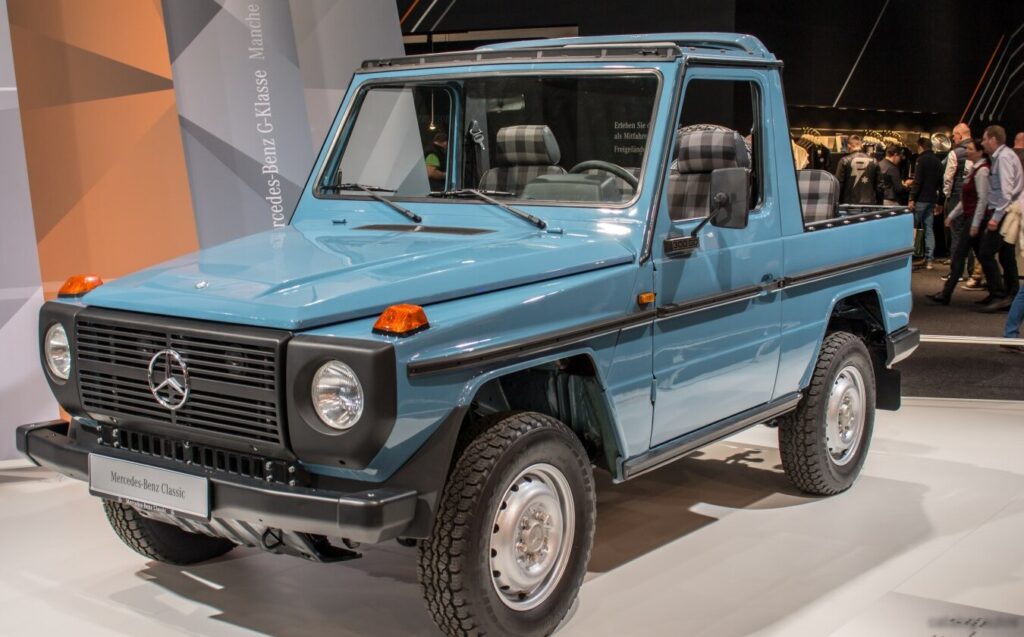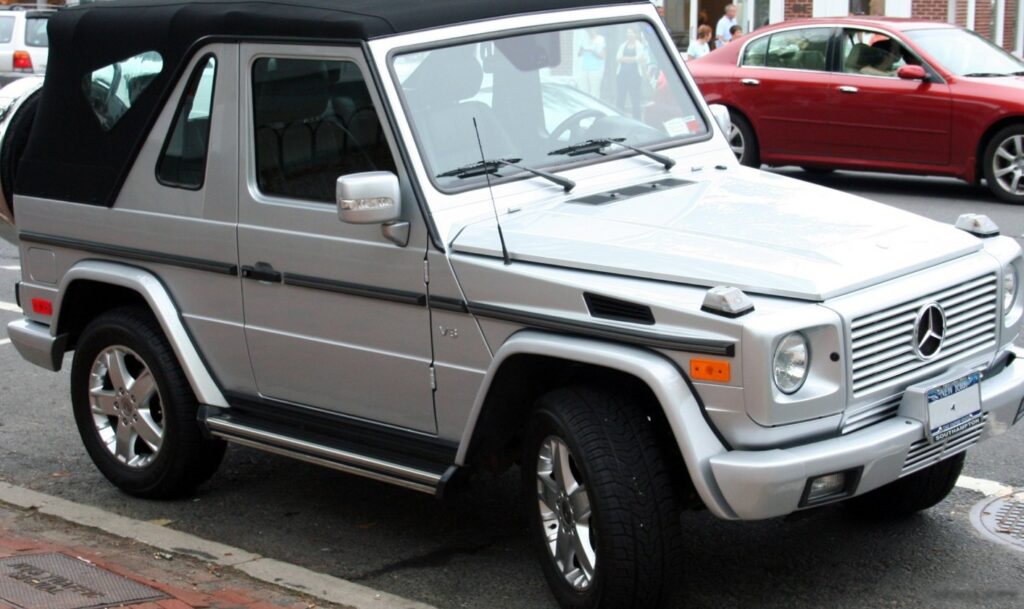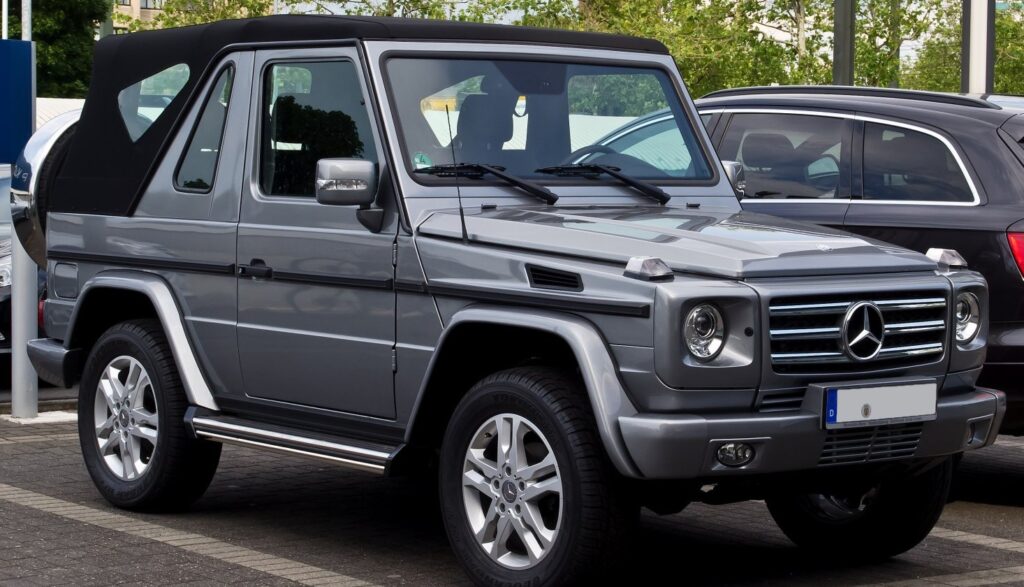
The Mercedes-Benz G-class (W463) 350 GD Turbo 4MATIC Automatic, produced from March 1992 to September 1993, represents a significant iteration of the iconic “Geländewagen.” Positioned as a mid-range offering within the W463 series, it bridged the gap between the less powerful 300 GD and the more expensive 500 GE models. This variant aimed to provide a balance of capability, comfort, and fuel efficiency for buyers seeking a robust and versatile off-road vehicle. It was primarily sold in European markets, where the G-class had already established a strong reputation for its go-anywhere ability and durable construction.
Technical Specifications
| Brand | Mercedes-Benz |
| Model | G-class |
| Generation | G-class (W463) |
| Type | 350 GD Turbo (136 Hp) 4MATIC Automatic |
| Start of production | March, 1992 |
| End of production | September, 1993 |
| Powertrain Architecture | Internal Combustion engine |
| Body type | Off-road vehicle |
| Seats | 5 |
| Doors | 3 |
| Fuel consumption (urban) | 13.5 l/100 km (17.4 US mpg) |
| Fuel consumption (extra urban) | 11.8 l/100 km (19.9 US mpg) |
| Fuel Type | Diesel |
| Acceleration 0 – 100 km/h | 16 sec |
| Acceleration 0 – 62 mph | 16 sec |
| Acceleration 0 – 60 mph | 15.2 sec |
| Maximum speed | 145 km/h (90.1 mph) |
| Weight-to-power ratio | 15.8 kg/Hp |
| Weight-to-torque ratio | 7 kg/Nm |
| Power | 136 Hp @ 4600 rpm |
| Torque | 305 Nm @ 1800 rpm (224.96 lb.-ft. @ 1800 rpm) |
| Engine layout | Front, Longitudinal |
| Engine Model/Code | OM 603.972 |
| Engine displacement | 3449 cm3 (210.47 cu. in.) |
| Number of cylinders | 6 |
| Engine configuration | Inline |
| Cylinder Bore | 89 mm (3.5 in.) |
| Piston Stroke | 92.4 mm (3.64 in.) |
| Compression ratio | 22:1 |
| Number of valves per cylinder | 2 |
| Fuel injection system | Precombustion chamber injection |
| Engine aspiration | Turbocharger |
| Valvetrain | SOHC |
| Engine oil capacity | 8.5 l (8.98 US qt | 7.48 UK qt) |
| Coolant capacity | 9.5 l (10.04 US qt | 8.36 UK qt) |
| Kerb Weight | 2145 kg (4728.92 lbs.) |
| Max. weight | 2710 kg (5974.53 lbs.) |
| Max load | 565 kg (1245.61 lbs.) |
| Fuel tank capacity | 96 l (25.36 US gal | 21.12 UK gal) |
| Length | 4185 mm (164.76 in.) |
| Width | 1690 mm (66.54 in.) |
| Height | 1908 mm (75.12 in.) |
| Wheelbase | 2400 mm (94.49 in.) |
| Front track | 1425 mm (56.1 in.) |
| Rear track | 1425 mm (56.1 in.) |
| Drivetrain Architecture | All wheel drive (4×4) |
| Number of gears | 4 |
| Gearbox type | Automatic transmission |
| Front suspension | Coil spring, Rigid axle suspension, Trailing arm |
| Rear suspension | Rigid axle suspension, Trailing arm, Coil spring |
| Front brakes | Disc |
| Rear brakes | Drum |
| Steering type | Cone worm with recirculation balls |
| Power steering | Hydraulic Steering |
| Tires size | 205/80 R 16 |
| Wheel rims size | 6 J x 16 |
Powertrain & Engine Architecture
The heart of the 350 GD Turbo is the OM 603.972, a 3.5-liter inline-six cylinder diesel engine. This engine utilizes precombustion chamber injection, a system common in Mercedes-Benz diesels of the era, known for its relatively quiet operation and good combustion efficiency. The addition of a turbocharger significantly boosted power output compared to naturally aspirated versions of the same engine. The turbocharger, coupled with intercooling, allowed Mercedes to extract 136 horsepower at 4600 rpm and 305 Nm (224.96 lb-ft) of torque at a low 1800 rpm. This torque curve was particularly well-suited for off-road driving, providing ample pulling power at low speeds. The engine features a single overhead camshaft (SOHC) valvetrain, operating two valves per cylinder. The automatic transmission used was a four-speed unit, designed to provide smooth shifts and ease of use, particularly appealing to drivers not accustomed to manual transmissions.
Driving Characteristics
The 350 GD Turbo Automatic offered a unique driving experience. While not a sports car by any means, the turbocharger provided a noticeable increase in responsiveness compared to the non-turbocharged 300 GD. Acceleration to 60 mph took around 15.2 seconds, and top speed was limited to 145 km/h (90.1 mph). The automatic transmission, while convenient, did result in some power loss compared to the available manual transmission. Gear ratios were optimized for torque delivery rather than outright speed. In off-road situations, the 4MATIC all-wheel-drive system, combined with the engine’s low-end torque, made the 350 GD Turbo exceptionally capable. The vehicle could navigate challenging terrain with relative ease, making it a favorite among those who needed a robust and reliable off-road performer.
Equipment & Trim Levels
The 350 GD Turbo Automatic typically came equipped with a relatively basic, yet functional, interior. Standard features included cloth upholstery, manually adjustable seats, and a simple dashboard layout. Air conditioning was often an optional extra, as were power windows and central locking. The focus was on durability and practicality rather than luxury. The exterior featured the classic G-class styling, with a boxy shape, exposed hinges, and robust body panels. Optional extras included a sunroof, upgraded sound system, and various off-road accessories such as a winch and auxiliary lighting.
Chassis & Braking
The W463 G-class chassis was built on a ladder frame, providing exceptional strength and rigidity. The suspension consisted of coil springs and rigid axles with trailing arms, offering a comfortable ride on and off-road. Front brakes were discs, providing adequate stopping power, while rear brakes were drums, a cost-saving measure common in vehicles of this era. The steering system was a cone worm with recirculation balls, offering precise control but requiring significant driver input. The 350 GD Turbo’s weight of approximately 2145 kg (4728.92 lbs) was substantial, contributing to its stability but also impacting its acceleration and fuel economy.
Market Reception & Comparison
The 350 GD Turbo Automatic was generally well-received by automotive critics as a capable and refined off-road vehicle. It offered a good balance between performance, comfort, and fuel efficiency. Compared to the 300 GD, the 350 GD Turbo provided a significant power boost, making it more suitable for towing and highway driving. However, it was more expensive than the 300 GD. Compared to the more powerful 500 GE, the 350 GD Turbo was more fuel-efficient and less expensive to maintain, but it lacked the 500 GE’s outright performance. Fuel economy was reasonable for a vehicle of its size and capability, averaging around 13.5 l/100 km (17.4 US mpg) in urban driving and 11.8 l/100 km (19.9 US mpg) on the highway.
Legacy
The OM 603 engine family, including the 603.972 found in the 350 GD Turbo, is renowned for its durability and longevity. These engines are known to reliably exceed 300,000 kilometers (186,000 miles) with proper maintenance. The W463 G-class, in general, has become a highly sought-after classic vehicle, and the 350 GD Turbo represents a sweet spot in the lineup, offering a good combination of capability, reliability, and affordability. Today, well-maintained examples command a premium in the used car market, appealing to collectors and enthusiasts who appreciate the G-class’s unique character and off-road prowess. The automatic transmission, while not as desirable to some purists as the manual, adds to the vehicle’s appeal for drivers seeking a more comfortable and convenient driving experience.