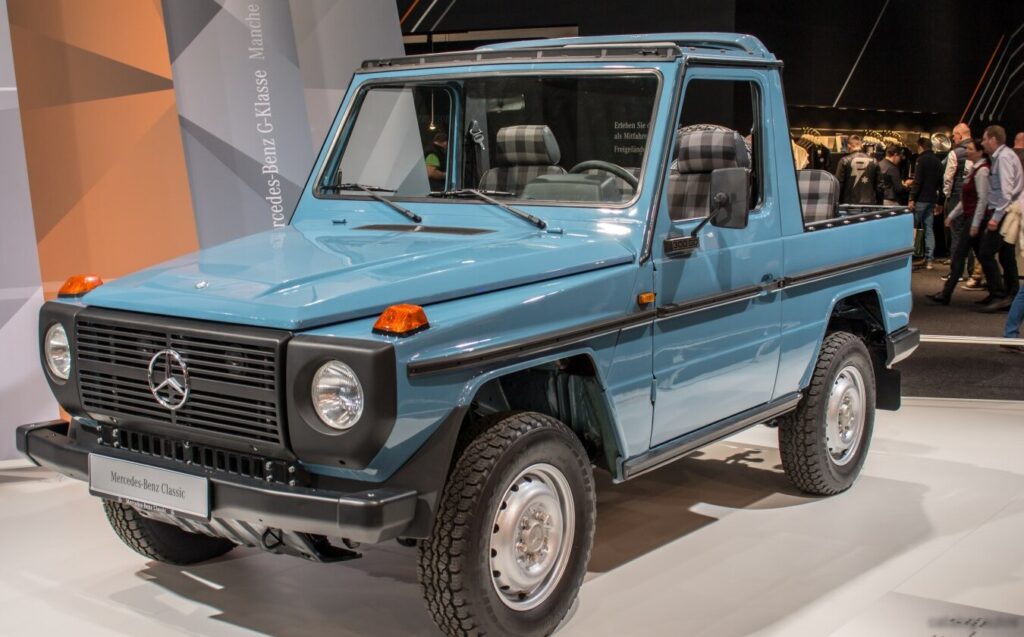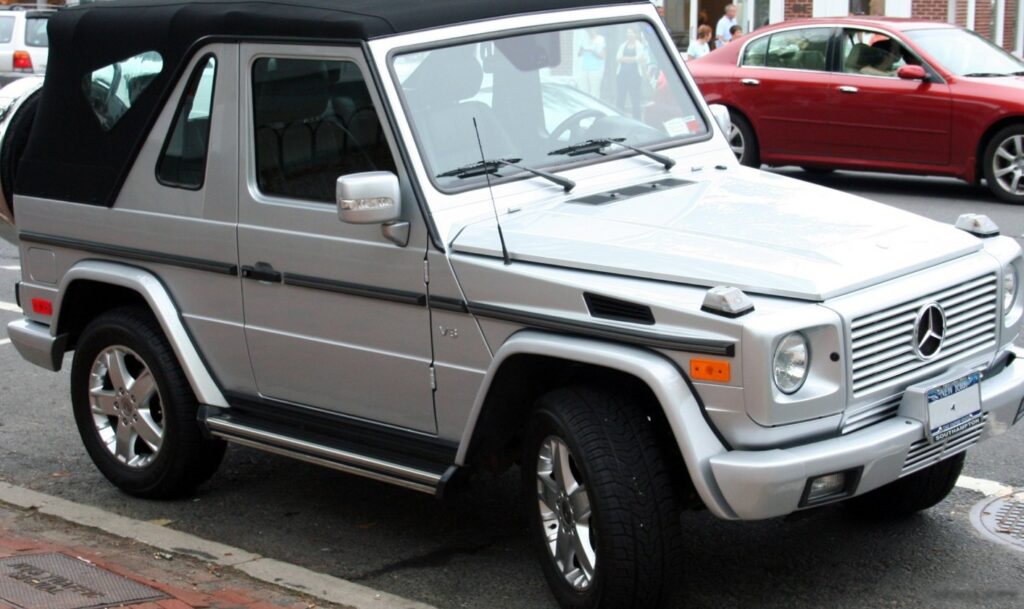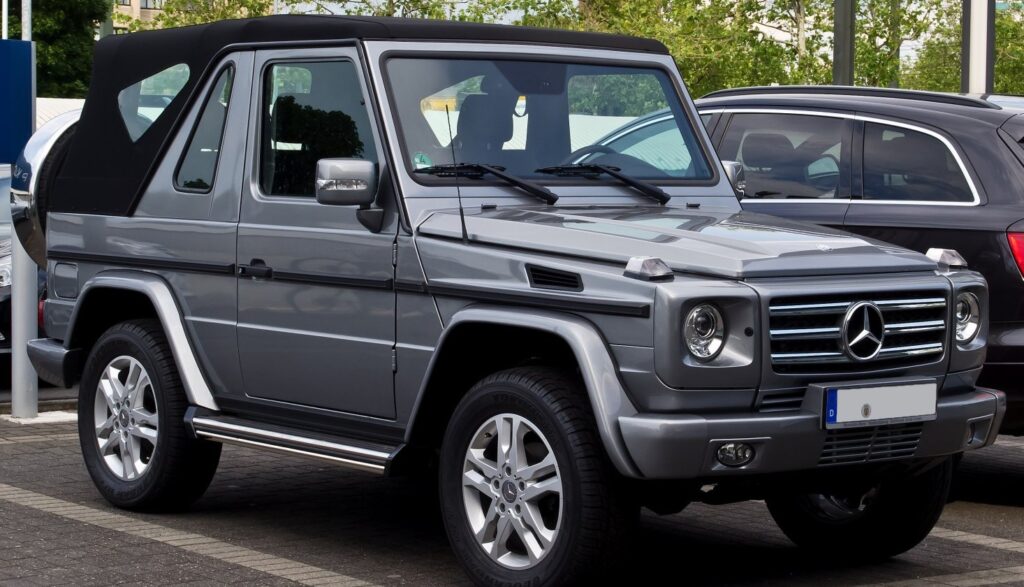
The Mercedes-Benz G 320 CDI, produced from April 2007 to June 2008, represents a significant iteration of the iconic G-Class (W463) following its 2006 facelift. This variant, equipped with a 3.0-liter V6 turbodiesel engine and a 7G-TRONIC automatic transmission, aimed to balance the G-Class’s legendary off-road capability with improved refinement and fuel efficiency compared to its gasoline counterparts. Positioned as a mid-range offering within the W463 lineup, the G 320 CDI appealed to buyers seeking a robust and capable vehicle for both on- and off-road use, without the higher price tag of the G 55 AMG or the specialized nature of other trims.
Technical Specifications
| Brand | Mercedes-Benz |
| Model | G-class |
| Generation | G-class (W463, facelift 2007) |
| Type (Engine) | G 320 CDI V6 (224 Hp) 4MATIC 7G-TRONIC |
| Start of production | April, 2007 |
| End of production | June, 2008 |
| Powertrain Architecture | Internal Combustion engine |
| Body type | Off-road vehicle |
| Seats | 5 |
| Doors | 3 |
| Fuel consumption (economy) – urban (NEDC) | 13.4 l/100 km (17.6 US mpg, 21.1 UK mpg, 7.5 km/l) |
| Fuel consumption (economy) – extra urban (NEDC) | 9.7 l/100 km (24.2 US mpg, 29.1 UK mpg, 10.3 km/l) |
| Fuel consumption (economy) – combined (NEDC) | 11 l/100 km (21.4 US mpg, 25.7 UK mpg, 9.1 km/l) |
| CO2 emissions (NEDC) | 302 g/km |
| Fuel Type | Diesel |
| Acceleration 0 – 100 km/h | 8.8 sec |
| Acceleration 0 – 62 mph | 8.8 sec |
| Acceleration 0 – 60 mph | 8.4 sec |
| Maximum speed | 177 km/h (109.98 mph) |
| Emission standard | Euro 4 |
| Weight-to-power ratio | 9.8 kg/Hp, 101.8 Hp/tonne |
| Weight-to-torque ratio | 4.1 kg/Nm, 245.5 Nm/tonne |
| Power | 224 Hp @ 3800 rpm |
| Power per litre | 75 Hp/l |
| Torque | 540 Nm @ 1600-2400 rpm (398.28 lb.-ft. @ 1600-2400 rpm) |
| Maximum engine speed | 4400 rpm |
| Engine layout | Front, Longitudinal |
| Engine Model/Code | OM 642.970 |
| Engine displacement | 2987 cm3 (182.28 cu. in.) |
| Number of cylinders | 6 |
| Engine configuration | V-engine |
| Cylinder Bore | 83 mm (3.27 in.) |
| Piston Stroke | 92 mm (3.62 in.) |
| Compression ratio | 17.7:1 |
| Number of valves per cylinder | 4 |
| Fuel injection system | Diesel Commonrail |
| Engine aspiration | Turbocharger, Intercooler |
| Valvetrain | DOHC |
| Engine oil capacity | 8.5 l (8.98 US qt | 7.48 UK qt) |
| Coolant | 11.6 l (12.26 US qt | 10.21 UK qt) |
| Kerb Weight | 2200 kg (4850.17 lbs.) |
| Max. weight | 2850 kg (6283.17 lbs.) |
| Max load | 650 kg (1433 lbs.) |
| Trunk (boot) space – minimum | 250 l (8.83 cu. ft.) |
| Trunk (boot) space – maximum | 1580 l (55.8 cu. ft.) |
| Fuel tank capacity | 96 l (25.36 US gal | 21.12 UK gal) |
| Max. roof load | 150 kg (330.69 lbs.) |
| Permitted trailer load with brakes (12%) | 2850 kg (6283.17 lbs.) |
| Permitted trailer load without brakes | 750 kg (1653.47 lbs.) |
| Permitted towbar download | 115 kg (253.53 lbs.) |
| Length | 4221 mm (166.18 in.) |
| Width | 1760 mm (69.29 in.) |
| Width including mirrors | 2007 mm (79.02 in.) |
| Height | 1931 mm (76.02 in.) |
| Wheelbase | 2400 mm (94.49 in.) |
| Front track | 1470 mm (57.87 in.) |
| Rear (Back) track | 1470 mm (57.87 in.) |
| Ride height (ground clearance) | 205 mm (8.07 in.) |
| Minimum turning circle (turning diameter) | 11.3 m (37.07 ft.) |
| Approach angle | 36° |
| Departure angle | 27° |
| Ramp-over (brakeover) angle | 23° |
| Climb angle | 38.7° |
| Wading depth | 500 mm (19.69 in.) |
| Drivetrain Architecture | The Internal combustion engine (ICE) drives permanently the four wheels of the vehicle. |
| Drive wheel | All wheel drive (4×4) |
| Number of gears and type of gearbox | 7 gears, automatic transmission G-TRONIC |
| Front suspension | Coil spring, Rigid axle suspension, Trailing arm |
| Rear suspension | Rigid axle suspension, Trailing arm, Coil spring |
| Front brakes | Ventilated discs |
| Rear brakes | Disc |
Powertrain & Engine Architecture
The heart of the G 320 CDI is the OM 642.970 3.0-liter V6 turbodiesel engine. This engine, a mainstay in many Mercedes-Benz vehicles of the era, features common-rail direct injection, a variable geometry turbocharger, and an intercooler. The common-rail system, operating at extremely high pressures, ensures precise fuel delivery and contributes to both power and efficiency. The engine utilizes a double overhead camshaft (DOHC) valvetrain with four valves per cylinder, optimizing gas flow for improved performance. The 7G-TRONIC automatic transmission, a seven-speed unit, was a significant upgrade over previous Mercedes-Benz automatics. It offered smoother shifts, a wider gear ratio spread, and the ability to manually select gears, enhancing both driving enjoyment and fuel economy. The transmission is designed to handle the substantial torque output of the diesel engine, providing confident acceleration and towing capability.
Driving Characteristics
The G 320 CDI offered a unique driving experience. While not as overtly powerful as the G 55 AMG, the 540 Nm (398 lb-ft) of torque available from 1600-2400 rpm provided ample pulling power for both on-road overtaking and challenging off-road situations. The 7G-TRONIC transmission, while smooth, could feel slightly hesitant at times, particularly during kickdown maneuvers. Compared to the manual transmission options available on other G-Class models, the automatic prioritized comfort and ease of use over outright performance. The G-Class’s legendary off-road prowess remained intact, with the permanent all-wheel-drive system, three locking differentials, and robust suspension allowing it to conquer extremely difficult terrain. However, the vehicle’s considerable weight and boxy shape meant that on-road handling was not as agile as more modern SUVs.
Equipment & Trim Levels
The G 320 CDI came reasonably well-equipped as standard. Features typically included automatic climate control, power windows and locks, heated front seats, and a basic audio system. Leather upholstery was a common option, as were features like a sunroof, navigation system, and upgraded audio. The interior, while functional and durable, reflected the G-Class’s utilitarian origins, lacking the luxurious appointments found in some other Mercedes-Benz models. The exterior styling remained largely unchanged from other W463 variants, with the iconic boxy shape and prominent headlights.
Chassis & Braking
The G 320 CDI utilized a robust ladder-frame chassis, a hallmark of the G-Class design. This construction provided exceptional strength and durability, essential for off-road use. The suspension consisted of coil springs and rigid axles front and rear, offering substantial wheel articulation. Braking duties were handled by ventilated discs at the front and solid discs at the rear, equipped with ABS (Anti-lock Braking System). While adequate for the vehicle’s weight and intended use, the braking system wasn’t particularly sporty or responsive.
Market Reception & Comparison
The G 320 CDI was generally well-received by critics and buyers alike. It offered a compelling combination of off-road capability, diesel fuel economy, and relative refinement. Compared to the G 55 AMG, the G 320 CDI was significantly more affordable and offered better fuel economy, making it a more practical choice for everyday use. However, it lacked the AMG’s exhilarating performance. Compared to other diesel-powered G-Class variants, such as the G 320, the CDI offered improved power and torque thanks to the common-rail injection system.
Legacy
The OM 642 engine, found in the G 320 CDI, is generally considered to be a reliable and durable powerplant, provided it receives regular maintenance. The 7G-TRONIC transmission has also proven to be relatively robust, although some units have experienced issues with valve body failures. Today, the G 320 CDI represents a relatively affordable entry point into G-Class ownership. Well-maintained examples are sought after by enthusiasts who appreciate the vehicle’s unique character and off-road capability. While not as collectible as the earlier G-Class models or the high-performance AMG variants, the G 320 CDI remains a desirable and capable vehicle with a loyal following.