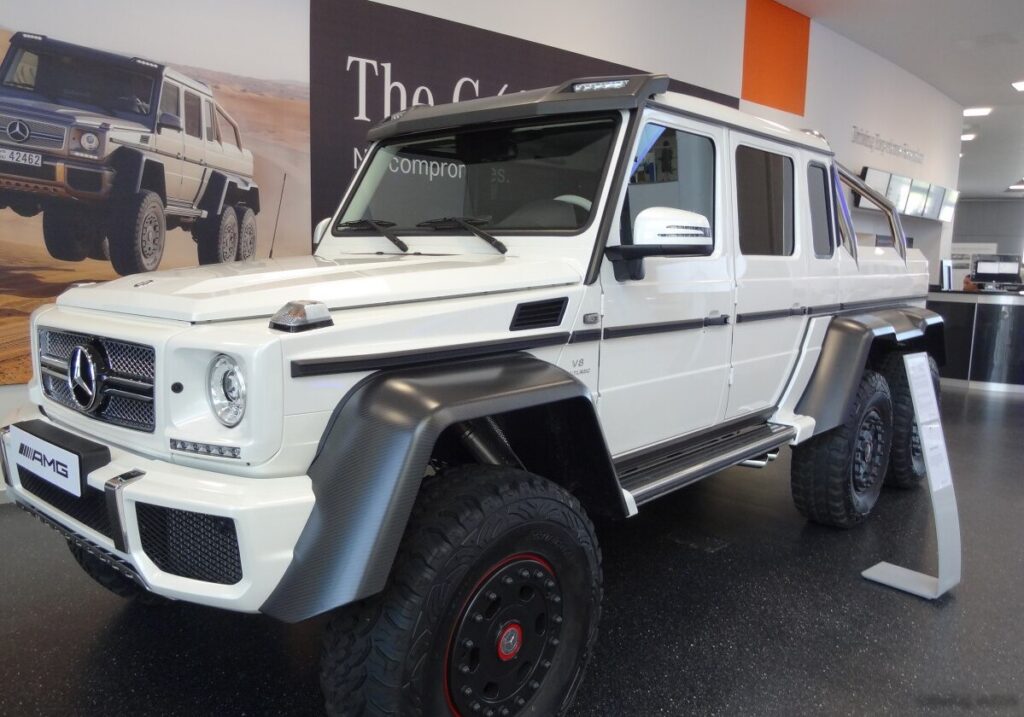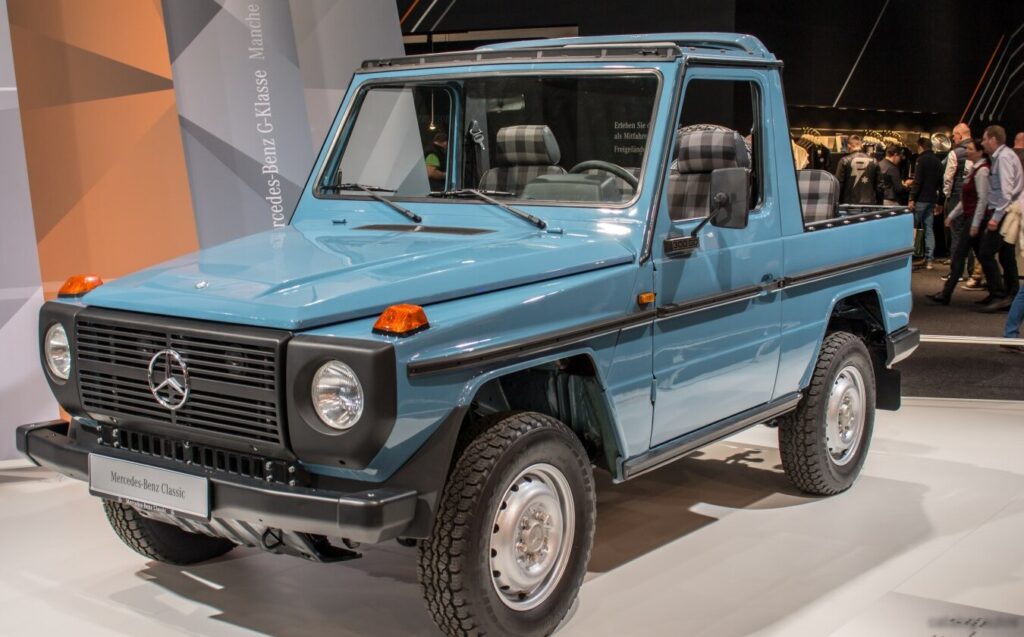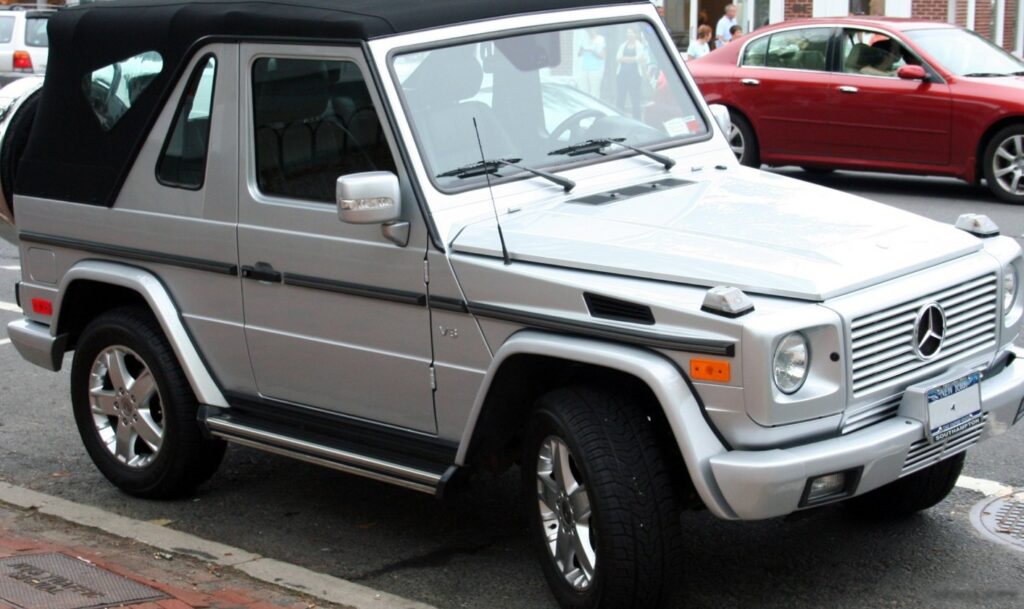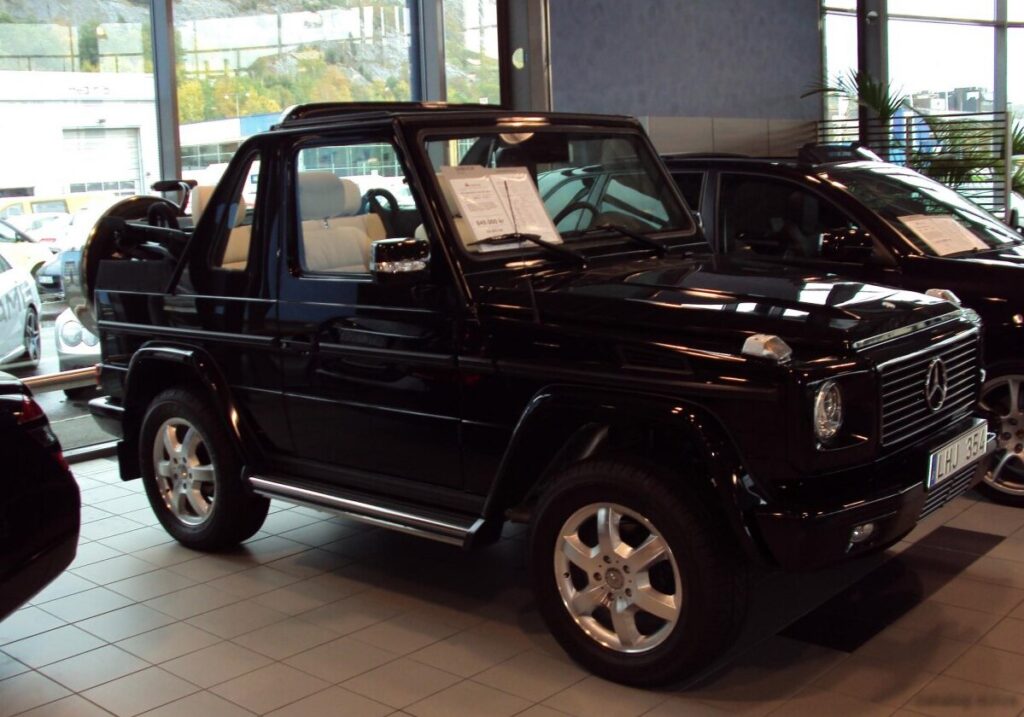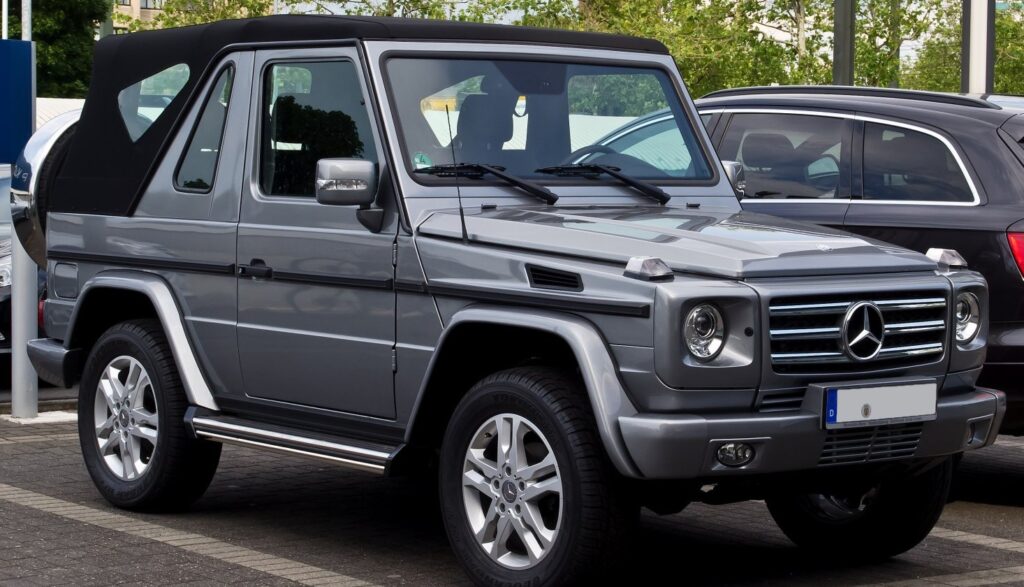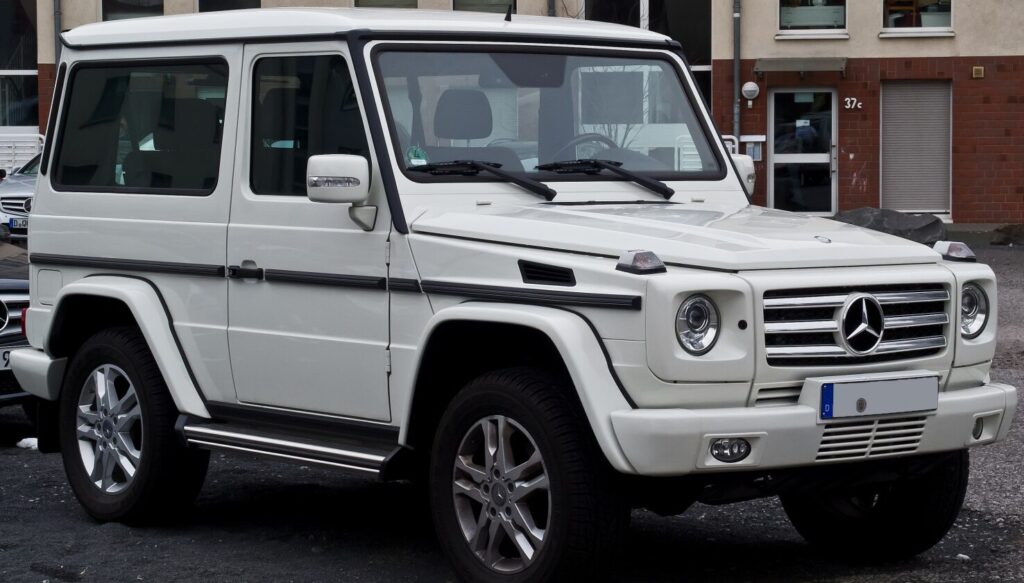
The Mercedes-Benz G 350 BlueTEC, produced from 2010 to 2011, represents a specific iteration of the iconic G-Class (W463) following the 2008 facelift. This variant was positioned as a more fuel-efficient diesel option within the G-Class range, offering a balance between the model’s legendary off-road capability and improved emissions compliance thanks to its BlueTEC diesel technology. It served as a bridge between the more powerful G 55 AMG and the base G-Class models available in certain markets. The G 350 BlueTEC was primarily aimed at European and international markets where diesel engines were favored, and it offered a unique combination of luxury, performance, and practicality for discerning buyers.
Technical Specifications
| Brand | Mercedes-Benz |
| Model | G-class |
| Generation | G-class (W463, facelift 2008) |
| Type (Engine) | G 350 BlueTEC V6 (211 Hp) 4MATIC 7G-TRONIC |
| Start of production | 2010 |
| End of production | 2011 |
| Powertrain Architecture | Internal Combustion engine |
| Body type | Off-road vehicle |
| Seats | 5 |
| Doors | 3 |
| Fuel consumption (economy) – urban (NEDC) | 13.6 l/100 km (17.3 US mpg, 20.8 UK mpg, 7.4 km/l) |
| Fuel consumption (economy) – extra urban (NEDC) | 9.8 l/100 km (24 US mpg, 28.8 UK mpg, 10.2 km/l) |
| Fuel consumption (economy) – combined (NEDC) | 11.2 l/100 km (21 US mpg, 25.2 UK mpg, 8.9 km/l) |
| CO2 emissions (NEDC) | 295 g/km |
| Fuel Type | Diesel |
| Acceleration 0 – 100 km/h | 9.1 sec |
| Acceleration 0 – 62 mph | 9.1 sec |
| Acceleration 0 – 60 mph | 8.6 sec |
| Maximum speed | 175 km/h (108.74 mph) |
| Emission standard | Euro 5 |
| Weight-to-power ratio | 10.5 kg/Hp, 94.8 Hp/tonne |
| Weight-to-torque ratio | 4.1 kg/Nm, 242.7 Nm/tonne |
| Power | 211 Hp @ 3800 rpm |
| Power per litre | 70.6 Hp/l |
| Torque | 540 Nm @ 1600-2400 rpm (398.28 lb.-ft. @ 1600-2400 rpm) |
| Engine layout | Front, Longitudinal |
| Engine Model/Code | OM 642.970 |
| Engine displacement | 2987 cm3 (182.28 cu. in.) |
| Number of cylinders | 6 |
| Engine configuration | V-engine |
| Cylinder Bore | 83 mm (3.27 in.) |
| Piston Stroke | 92 mm (3.62 in.) |
| Number of valves per cylinder | 4 |
| Fuel injection system | Diesel Commonrail |
| Engine aspiration | Turbocharger, Intercooler |
| Valvetrain | DOHC |
| Engine oil capacity | 8 l (8.45 US qt | 7.04 UK qt) |
| Kerb Weight | 2225 kg (4905.29 lbs.) |
| Max. weight | 2850 kg (6283.17 lbs.) |
| Max load | 625 kg (1377.89 lbs.) |
| Trunk (boot) space – minimum | 250 l (8.83 cu. ft.) |
| Trunk (boot) space – maximum | 1580 l (55.8 cu. ft.) |
| Fuel tank capacity | 96 l (25.36 US gal | 21.12 UK gal) |
| Max. roof load | 150 kg (330.69 lbs.) |
| Permitted trailer load with brakes (12%) | 2850 kg (6283.17 lbs.) |
| Permitted trailer load without brakes | 750 kg (1653.47 lbs.) |
| Permitted towbar download | 115 kg (253.53 lbs.) |
| Length | 4212 mm (165.83 in.) |
| Width | 1760 mm (69.29 in.) |
| Width including mirrors | 2007 mm (79.02 in.) |
| Height | 1931 mm (76.02 in.) |
| Wheelbase | 2400 mm (94.49 in.) |
| Front track | 1475 mm (58.07 in.) |
| Rear (Back) track | 1475 mm (58.07 in.) |
| Front overhang | 783 mm (30.83 in.) |
| Rear overhang | 820 mm (32.28 in.) |
| Ride height (ground clearance) | 205 mm (8.07 in.) |
| Minimum turning circle (turning diameter) | 11.3 m (37.07 ft.) |
| Approach angle | 36° |
| Departure angle | 27° |
| Ramp-over (brakeover) angle | 23° |
| Climb angle | 38.7° |
| Wading depth | 500 mm (19.69 in.) |
| Drivetrain Architecture | The Internal combustion engine (ICE) drives permanently the four wheels of the vehicle. |
| Drive wheel | All wheel drive (4×4) |
| Number of gears and type of gearbox | 7 gears, automatic transmission G-TRONIC |
| Front suspension | Coil spring, Rigid axle suspension |
| Rear suspension | Rigid axle suspension, Coil spring |
| Front brakes | Ventilated discs |
| Rear brakes | Ventilated discs |
| Assisting systems | ABS (Anti-lock braking system) |
| Steering type | Cone worm with recirculation balls |
| Power steering | Hydraulic Steering |
| Tires size | 265/70 R16 |
| Wheel rims size | 7.5J x 16 |
INTRODUCTION
The G 350 BlueTEC, part of the W463 series produced after the 2008 facelift, represented Mercedes-Benz’s commitment to offering a more environmentally conscious option within its iconic G-Class lineup. Production spanned a relatively short period, from 2010 to 2011, making it a somewhat rare variant. It was built upon the robust ladder-frame chassis that defined the G-Class, renowned for its exceptional off-road prowess. The “BlueTEC” designation signified the inclusion of advanced diesel technology designed to reduce harmful emissions, complying with increasingly stringent Euro 5 standards. This model aimed to appeal to buyers who desired the G-Class’s distinctive styling and capabilities but were seeking improved fuel economy and lower running costs compared to the larger, more powerful gasoline engines.
Powertrain & Engine Architecture
At the heart of the G 350 BlueTEC lies the OM 642.970 3.0-liter V6 diesel engine. This engine is a turbocharged common-rail direct injection diesel, producing 211 horsepower at 3800 rpm and a substantial 540 Nm (398 lb-ft) of torque between 1600 and 2400 rpm. The common-rail system, operating at very high pressures, ensures precise fuel delivery and efficient combustion. The turbocharger, coupled with an intercooler, enhances power output and responsiveness. The engine also incorporates a diesel particulate filter (DPF) to further reduce emissions. Paired with the engine is the 7G-TRONIC seven-speed automatic transmission, known for its smooth shifting and efficiency. This transmission was specifically calibrated to work with the diesel engine’s torque characteristics, providing ample power for both on-road cruising and challenging off-road conditions. The engine is longitudinally mounted in the front of the vehicle, driving all four wheels through Mercedes-Benz’s 4MATIC all-wheel-drive system.
Driving Characteristics
The G 350 BlueTEC offered a distinctly different driving experience compared to its more powerful G-Class siblings. While not as overtly quick as the G 55 AMG, the 3.0-liter V6 provided ample torque for confident acceleration and effortless cruising. The 7G-TRONIC transmission contributed to a relaxed driving experience, with smooth gear changes and a well-chosen selection of ratios. Acceleration from 0 to 100 km/h (0-62 mph) took approximately 9.1 seconds, and 0-60 mph was achieved in around 8.6 seconds. The 4MATIC system ensured excellent traction in a variety of conditions, making it a capable performer both on and off the road. The G-Class’s inherent characteristics – its boxy shape and high center of gravity – meant that it wasn’t a cornering machine, but the robust suspension and all-wheel-drive system provided a stable and predictable ride. Compared to manual transmission G-Class models, the automatic offered greater convenience, particularly in urban environments.
Equipment & Trim Levels
The G 350 BlueTEC typically came well-equipped, reflecting the G-Class’s luxury positioning. Standard features included leather upholstery, automatic climate control, power-adjustable front seats, and a premium audio system. The interior design was functional and durable, with a focus on practicality rather than outright extravagance. Optional extras included a sunroof, upgraded navigation system, parking sensors, and various customization options for the interior trim and exterior paint. The dashboard layout was relatively straightforward, with clearly labeled controls and a focus on providing the driver with essential information. While not as lavishly appointed as some of the higher-end G-Class models, the G 350 BlueTEC offered a comfortable and refined interior environment.
Chassis & Braking
The G 350 BlueTEC retained the traditional G-Class chassis – a robust ladder frame construction that provided exceptional strength and durability. The suspension consisted of coil springs and rigid axles front and rear, offering a comfortable ride and excellent off-road articulation. The braking system featured ventilated discs on all four wheels, providing ample stopping power. Anti-lock brakes (ABS) were standard, enhancing safety and control. The steering system was a recirculating ball type, providing a direct and responsive feel. The G 350 BlueTEC’s weight of approximately 2225 kg (4905 lbs) was managed effectively by the suspension and braking systems, ensuring a stable and controlled driving experience.
Market Reception & Comparison
The G 350 BlueTEC was generally well-received by critics, who praised its improved fuel economy and reduced emissions compared to the gasoline-powered G-Class models. It was seen as a more sensible option for buyers who prioritized practicality and efficiency without sacrificing the G-Class’s iconic styling and off-road capabilities. Compared to the G 55 AMG, the G 350 BlueTEC offered a more affordable entry point into the G-Class world, albeit with less outright performance. Fuel economy figures of around 11.2 l/100 km (21 US mpg) were a significant improvement over the G 55 AMG’s considerably higher consumption. Reliability was generally good, although the complexity of the BlueTEC emissions system could potentially lead to higher maintenance costs over the long term.
Legacy
The G 350 BlueTEC, despite its short production run, remains a desirable variant among G-Class enthusiasts. Its combination of diesel efficiency, robust construction, and iconic styling has ensured its continued appeal in the used car market. The OM 642 engine, when properly maintained, is known for its durability and longevity. However, potential buyers should be aware of the potential maintenance costs associated with the BlueTEC emissions system, including the DPF and associated sensors. Today, the G 350 BlueTEC represents a unique and relatively rare chapter in the G-Class’s storied history, offering a compelling blend of luxury, capability, and efficiency.