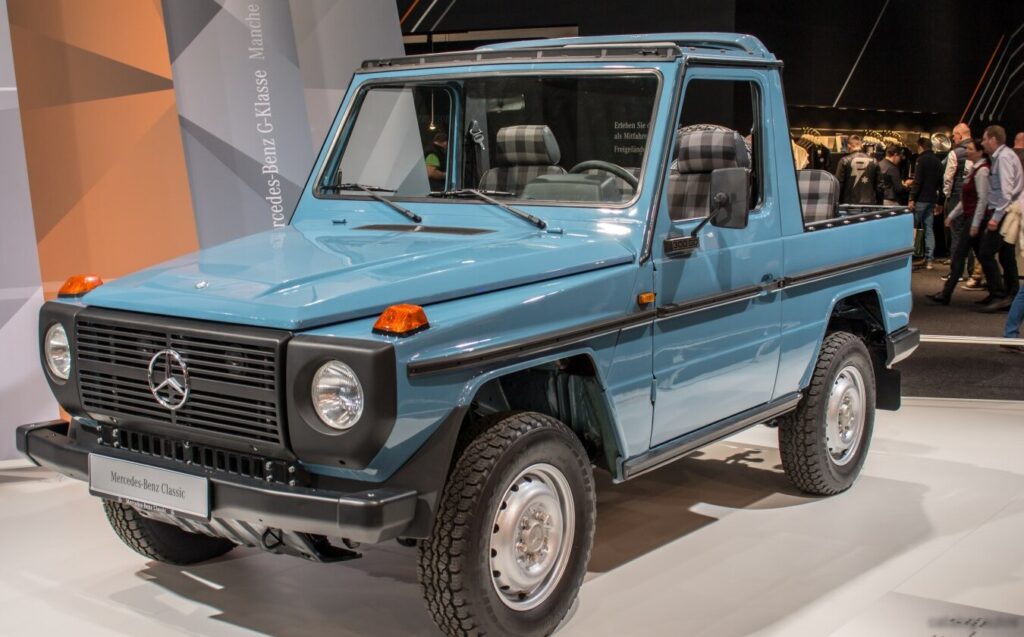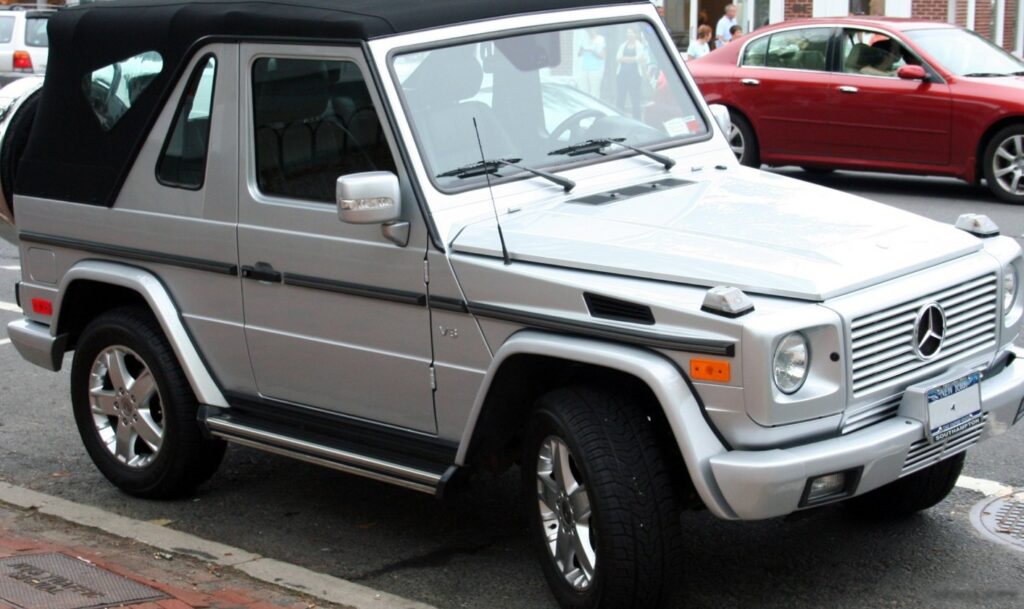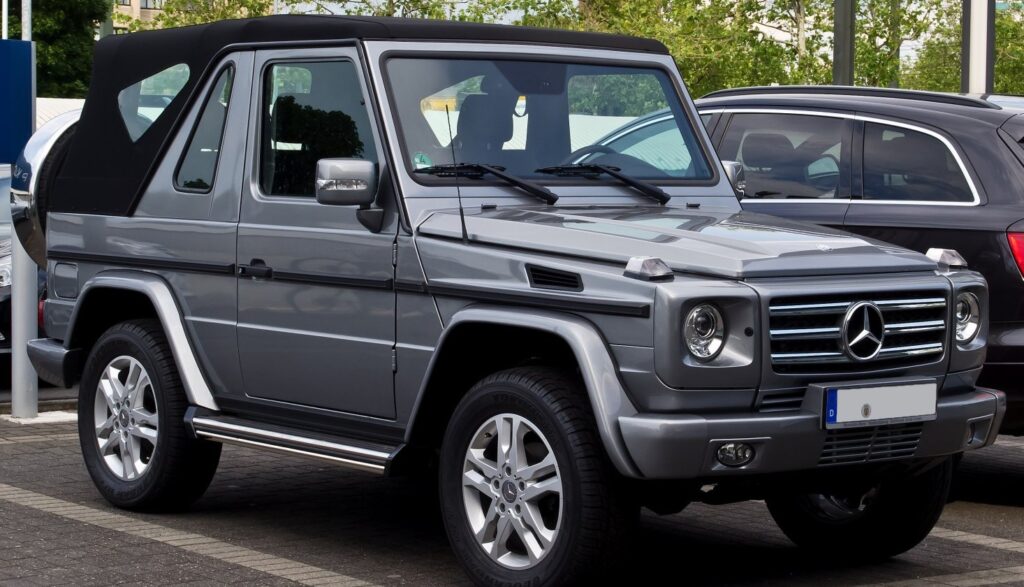
The Mercedes-Benz G 300 4MATIC, produced between September 1993 and August 1996, represents a significant iteration of the iconic G-Class (W463) series. Positioned as a mid-range offering within the G-Class lineup during its production run, the G 300 aimed to provide a balance between capability and relative affordability compared to the more powerful G 360 and G 500 models. This variant was primarily marketed in Europe and other international markets, leveraging the G-Class’s established reputation for off-road prowess and durability. The G 300 4MATIC offered a compelling package for those seeking a robust, all-terrain vehicle with a more accessible price point.
Technical Specifications
| Brand | Mercedes-Benz |
| Model | G-class |
| Generation | G-class (W463) |
| Type (Engine) | G 300 (170 Hp) 4MATIC |
| Start of production | September, 1993 |
| End of production | August, 1996 |
| Powertrain Architecture | Internal Combustion engine |
| Body type | Off-road vehicle |
| Seats | 5 |
| Doors | 3 |
| Fuel consumption (urban) | 18.7 l/100 km (12.6 US mpg) |
| Fuel consumption (extra urban) | 13.4 l/100 km (17.6 US mpg) |
| Fuel Type | Petrol (Gasoline) |
| Acceleration 0 – 100 km/h | 13.5 sec |
| Acceleration 0 – 62 mph | 13.5 sec |
| Acceleration 0 – 60 mph | 12.8 sec |
| Maximum speed | 165 km/h (102.53 mph) |
| Weight-to-power ratio | 12.3 kg/Hp |
| Weight-to-torque ratio | 8.9 kg/Nm |
| Power | 170 Hp @ 5500 rpm |
| Torque | 235 Nm @ 4500 rpm (173.33 lb.-ft. @ 4500 rpm) |
| Engine layout | Front, Longitudinal |
| Engine Model/Code | M 103.987 |
| Engine displacement | 2960 cm3 (180.63 cu. in.) |
| Number of cylinders | 6 |
| Engine configuration | Inline |
| Cylinder Bore | 88.5 mm (3.48 in.) |
| Piston Stroke | 80.2 mm (3.16 in.) |
| Compression ratio | 9.2:1 |
| Number of valves per cylinder | 2 |
| Fuel injection system | Multi-port manifold injection |
| Engine aspiration | Naturally aspirated engine |
| Valvetrain | SOHC |
| Engine oil capacity | 6.5 l (6.87 US qt | 5.72 UK qt) |
| Coolant | 7.8 l (8.24 US qt | 6.86 UK qt) |
| Kerb Weight | 2085 kg (4596.64 lbs.) |
| Max. weight | 2620 kg (5776.11 lbs.) |
| Max load | 535 kg (1179.47 lbs.) |
| Fuel tank capacity | 96 l (25.36 US gal | 21.12 UK gal) |
| Length | 4185 mm (164.76 in.) |
| Width | 1690 mm (66.54 in.) |
| Height | 1908 mm (75.12 in.) |
| Wheelbase | 2400 mm (94.49 in.) |
| Front track | 1425 mm (56.1 in.) |
| Rear track | 1425 mm (56.1 in.) |
| Drivetrain Architecture | All wheel drive (4×4) |
| Number of gears | 5 gears, manual transmission |
| Front suspension | Coil spring, Rigid axle suspension, Trailing arm |
| Rear suspension | Rigid axle suspension, Trailing arm, Coil spring |
| Front brakes | Disc |
| Rear brakes | Drum |
| Assisting systems | ABS (Anti-lock braking system) |
| Steering type | Cone worm with recirculation balls |
| Power steering | Hydraulic Steering |
| Tires size | 205/80 R 16 |
| Wheel rims size | 6 J x 16 |
Powertrain & Engine Architecture
The G 300 4MATIC was powered by the M 103.987, a 3.0-liter inline-six cylinder gasoline engine. This engine, a mainstay of Mercedes-Benz’s mid-range offerings for many years, was known for its robustness and relatively simple design. It featured a single overhead camshaft (SOHC) valvetrain operating two valves per cylinder. Fuel delivery was handled by a multi-port fuel injection system, contributing to improved efficiency and smoother operation compared to earlier carbureted designs. The engine produced 170 horsepower at 5500 rpm and 235 Nm (173 lb-ft) of torque at 4500 rpm. The engine’s longitudinal mounting and the 4MATIC all-wheel-drive system contributed to the G-Class’s inherent stability and off-road capability. The standard transmission was a 5-speed manual, although an optional 4-speed automatic transmission was available, impacting performance and fuel economy.
Driving Characteristics
The G 300 4MATIC with the manual transmission offered a reasonably engaging driving experience, though it wasn’t designed for outright speed. Acceleration from 0 to 60 mph took around 12.8 seconds, and the top speed was limited to 102.53 mph. The engine’s torque delivery was relatively linear, providing adequate power for both on-road cruising and off-road challenges. The automatic transmission, while offering convenience, noticeably dulled performance due to its less efficient gear ratios and torque converter losses. The G-Class’s high center of gravity and relatively soft suspension resulted in noticeable body roll during cornering, but the 4MATIC system provided excellent traction in various conditions. The steering, utilizing a cone worm and recirculation balls system, felt somewhat vague by modern standards but offered substantial feedback.
Equipment & Trim Levels
The G 300 4MATIC was typically equipped with a relatively basic level of standard features, reflecting its positioning as a workhorse vehicle. Standard equipment generally included power steering, ABS brakes, and a basic audio system. Interior upholstery was typically cloth, although leather was available as an option. Optional extras included air conditioning, power windows, central locking, and a sunroof. The dashboard layout was functional and utilitarian, prioritizing durability and ease of use over aesthetic appeal. Trim levels were relatively limited, with most variations stemming from the selection of optional equipment.
Chassis & Braking
The G 300 4MATIC utilized a robust ladder-frame chassis, a hallmark of the G-Class design. This construction provided exceptional strength and durability, essential for off-road use. The suspension consisted of coil springs and rigid axles with trailing arms, offering substantial wheel articulation and a comfortable ride over rough terrain. Front brakes were discs, while rear brakes were drums, a cost-saving measure common for the time. The 4MATIC all-wheel-drive system employed a permanent four-wheel drive configuration with a two-speed transfer case, providing both high and low range gearing for tackling challenging obstacles.
Market Reception & Comparison
The G 300 4MATIC was generally well-received by critics as a capable and reliable off-road vehicle. However, its on-road performance and refinement were often criticized compared to more modern SUVs. Compared to the higher-end G 360 and G 500 models, the G 300 offered a more affordable entry point into the G-Class lineup, but at the expense of outright performance. The G 300 also contrasted with diesel-powered G-Class variants, such as the G 300 TD, which prioritized fuel economy and low-end torque over horsepower. Fuel economy was relatively poor, averaging around 12.6 US mpg in urban driving and 17.6 US mpg on the highway.
Legacy
The G 300 4MATIC, while not as widely recognized as some other G-Class variants, has gained a following among enthusiasts for its simplicity, durability, and off-road capability. The M 103 engine is known for its longevity, and well-maintained examples can still provide reliable service today. In the used car market, the G 300 4MATIC represents a relatively affordable way to experience the iconic G-Class design and heritage. However, potential buyers should be aware of the vehicle’s age and the potential for corrosion, particularly in areas exposed to harsh weather conditions. The G 300 4MATIC remains a testament to Mercedes-Benz’s commitment to building robust and capable off-road vehicles.