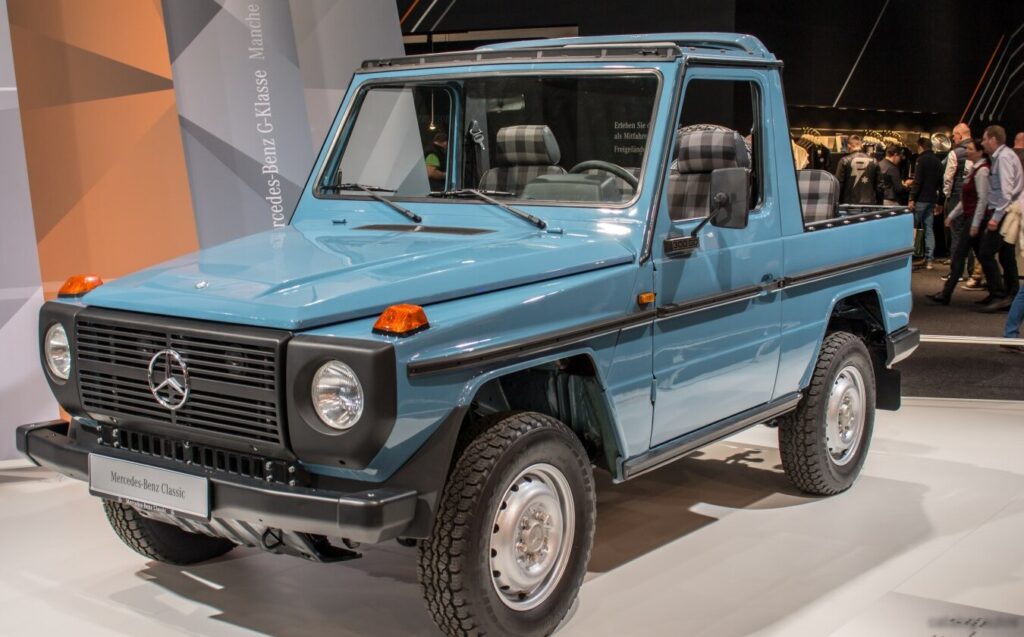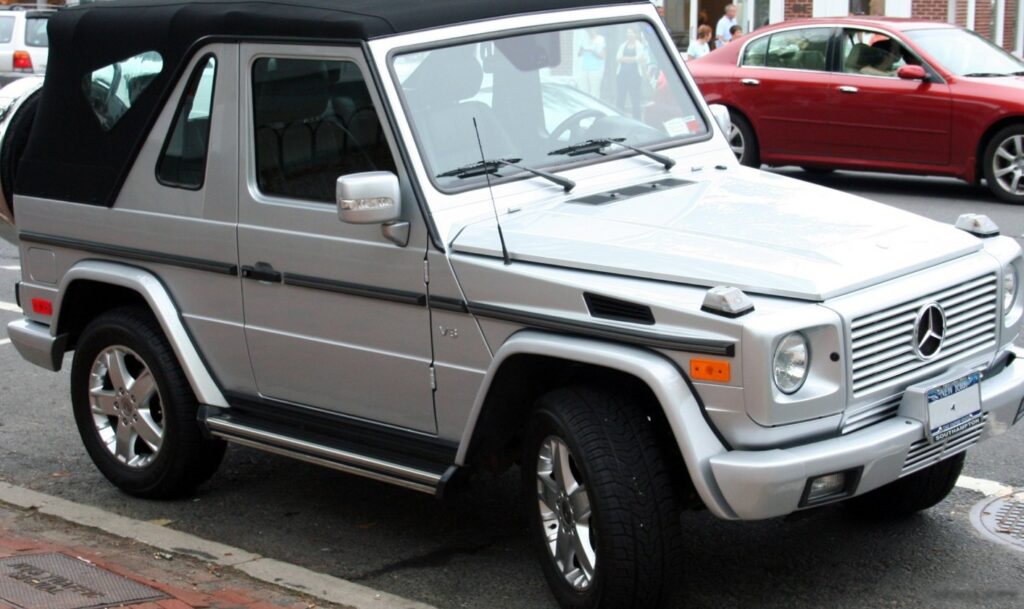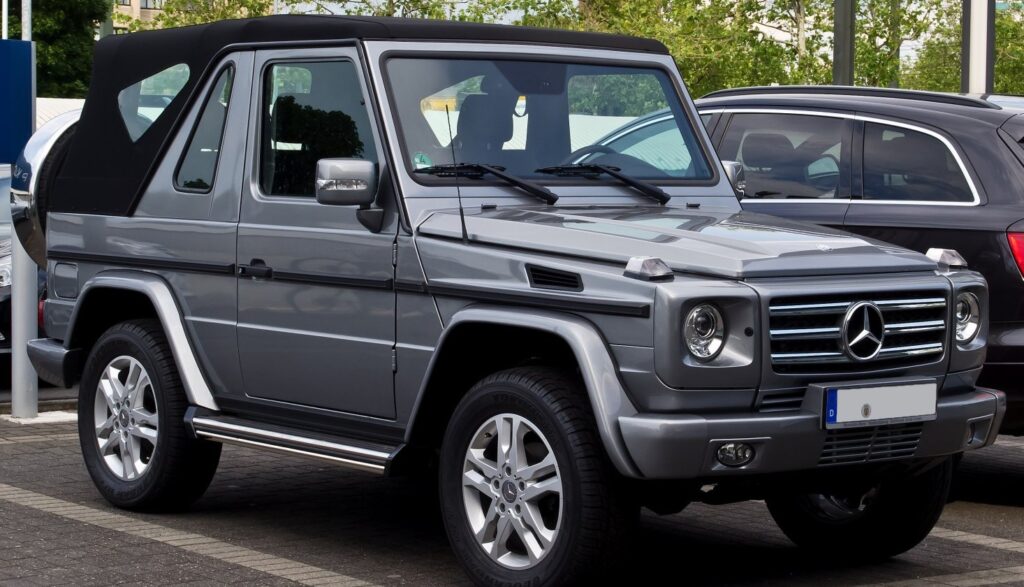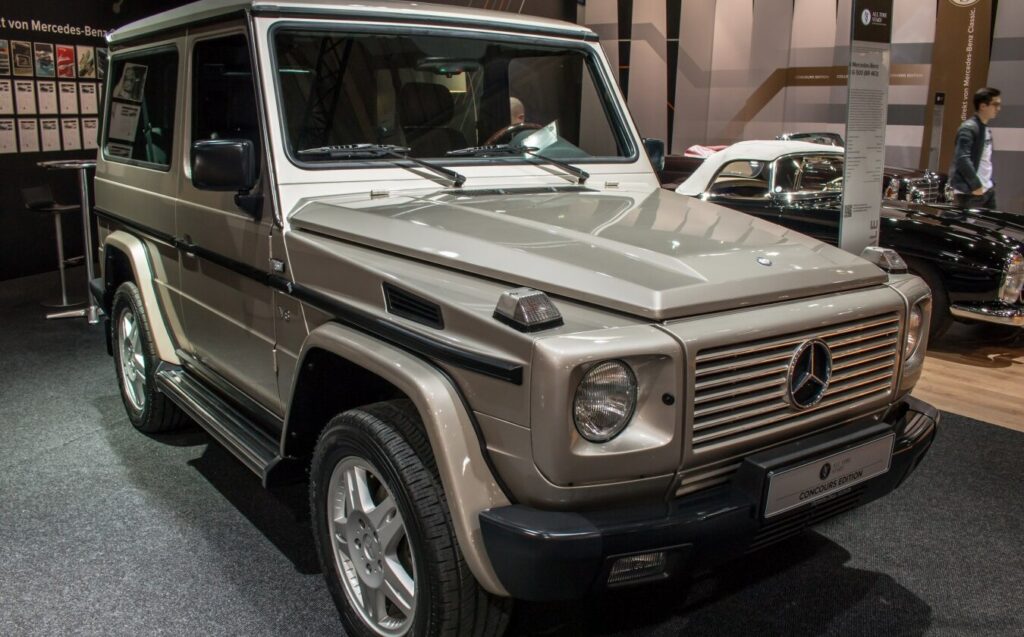
The Mercedes-Benz G 320, produced between May 1994 and September 1997, represents a significant iteration of the iconic G-Class (W463) series. Positioned as a mid-range offering within the G-Class lineup during its production run, the G 320 aimed to balance the rugged capability expected of the G-Wagen with a more accessible price point and improved on-road refinement compared to the higher-spec G 360 or the later AMG models. It served as a popular choice for those seeking a durable, capable, and prestigious off-road vehicle, particularly in European markets where the G-Class maintained a strong following among both civilian and military customers.
Technical Specifications
| Brand | Mercedes-Benz |
| Model | G-class |
| Generation | G-class (W463) |
| Type | G 320 (210 Hp) 4MATIC Automatic |
| Start of production | May, 1994 |
| End of production | September, 1997 |
| Powertrain Architecture | Internal Combustion engine |
| Body type | Off-road vehicle |
| Seats | 5 |
| Doors | 3 |
| Fuel consumption (urban) | 16.6 l/100 km (14.2 US mpg, 17 UK mpg, 6 km/l) |
| Fuel consumption (extra urban) | 14 l/100 km (16.8 US mpg, 20.2 UK mpg, 7.1 km/l) |
| Fuel Type | Petrol (Gasoline) |
| Acceleration 0 – 100 km/h | 12.5 sec |
| Acceleration 0 – 62 mph | 12.5 sec |
| Acceleration 0 – 60 mph | 11.9 sec |
| Maximum speed | 170 km/h (105.63 mph) |
| Emission standard | Euro 2 |
| Weight-to-power ratio | 10.5 kg/Hp, 94.8 Hp/tonne |
| Weight-to-torque ratio | 7.4 kg/Nm, 135.4 Nm/tonne |
| Power | 210 Hp @ 5500 rpm |
| Power per litre | 65.6 Hp/l |
| Torque | 300 Nm @ 3750 rpm (221.27 lb.-ft. @ 3750 rpm) |
| Engine layout | Front, Longitudinal |
| Engine Model/Code | M 104.996 |
| Engine displacement | 3199 cm3 (195.21 cu. in.) |
| Number of cylinders | 6 |
| Engine configuration | Inline |
| Cylinder Bore | 89.9 mm (3.54 in.) |
| Piston Stroke | 84 mm (3.31 in.) |
| Compression ratio | 9.2:1 |
| Number of valves per cylinder | 4 |
| Fuel injection system | Multi-port manifold injection |
| Engine aspiration | Naturally aspirated engine |
| Valvetrain | DOHC |
| Engine oil capacity | 6.5 l (6.87 US qt, 5.72 UK qt) |
| Coolant | 11.5 l (12.15 US qt, 10.12 UK qt) |
| Kerb Weight | 2215 kg (4883.24 lbs.) |
| Max. weight | 2750 kg (6062.71 lbs.) |
| Max load | 535 kg (1179.47 lbs.) |
| Trunk (boot) space – minimum | 250 l (8.83 cu. ft.) |
| Trunk (boot) space – maximum | 1580 l (55.8 cu. ft.) |
| Fuel tank capacity | 96 l (25.36 US gal, 21.12 UK gal) |
| Max. roof load | 150 kg (330.69 lbs.) |
| Permitted trailer load with brakes (12%) | 2860 kg (6305.22 lbs.) |
| Permitted trailer load without brakes | 750 kg (1653.47 lbs.) |
| Length | 4230 mm (166.54 in.) |
| Width | 1760 mm (69.29 in.) |
| Height | 1931 mm (76.02 in.) |
| Wheelbase | 2400 mm (94.49 in.) |
| Front track | 1475 mm (58.07 in.) |
| Rear (Back) track | 1475 mm (58.07 in.) |
| Ride height (ground clearance) | 210 mm (8.27 in.) |
| Minimum turning circle | 11.3 m (37.07 ft.) |
| Approach angle | 36° |
| Departure angle | 27° |
| Climb angle | 38.7° |
| Drivetrain Architecture | ICE drives four wheels permanently |
| Drive wheel | All wheel drive (4×4) |
| Number of gears | 4 |
| Gearbox type | automatic transmission |
| Front suspension | Coil spring, Rigid axle, Trailing arm |
| Rear suspension | Rigid axle, Trailing arm, Coil spring |
| Front brakes | Ventilated discs |
| Rear brakes | Drum |
| Assisting systems | ABS |
| Steering type | Cone worm with recirculation balls |
| Power steering | Hydraulic |
| Tires size | 255/65 R 16 |
| Wheel rims size | 7.5 J x 16 |
Powertrain & Engine Architecture
The G 320 was powered by the Mercedes-Benz M104.996 engine, a 3.2-liter inline-six cylinder gasoline engine. This engine was a mainstay of Mercedes-Benz’s mid-range offerings during the 1990s, known for its smoothness and relative reliability. The M104 featured a cast iron block with aluminum cylinder heads, dual overhead camshafts (DOHC), and four valves per cylinder. Fuel delivery was handled by a multi-port fuel injection system, contributing to improved efficiency and reduced emissions compared to earlier carbureted designs. The engine produced 210 horsepower at 5500 rpm and 300 Nm (221 lb-ft) of torque at 3750 rpm. The engine’s longitudinal mounting and the 4MATIC all-wheel-drive system contributed to the G-Wagen’s inherent stability and off-road prowess.
The G 320 utilized a four-speed automatic transmission, a common choice for those prioritizing ease of use over ultimate performance. While not offering the driver engagement of a manual gearbox, the automatic transmission provided smooth shifts and made the G 320 more accessible to a wider range of drivers. The transmission was designed to handle the engine’s torque output and the demands of off-road driving.
Driving Characteristics
The G 320’s driving experience was characterized by a blend of rugged capability and surprisingly comfortable on-road manners. The 210 hp engine, coupled with the automatic transmission, provided adequate, though not exhilarating, performance. Acceleration from 0 to 60 mph took around 11.9 seconds, and the top speed was limited to 170 km/h (105.6 mph). The automatic transmission’s gear ratios were tuned for both off-road crawling and highway cruising. Compared to the manual transmission versions, the automatic G 320 felt slightly less responsive, but it offered a more relaxed driving experience. Compared to the more powerful G 360, the G 320 offered a noticeable reduction in fuel consumption, albeit at the expense of outright performance.
Equipment & Trim Levels
The G 320 typically came equipped with a relatively basic, yet functional, interior. Standard features included cloth upholstery, power windows, central locking, and a basic audio system. Air conditioning was often included, but leather upholstery, sunroofs, and upgraded audio systems were available as optional extras. The dashboard layout was straightforward and utilitarian, reflecting the G-Wagen’s origins as a military vehicle. Trim levels were relatively limited, with most customization options being selected à la carte. The focus was on durability and functionality rather than luxury.
Chassis & Braking
The G 320’s chassis was based on a robust ladder frame construction, providing exceptional strength and torsional rigidity. The suspension consisted of coil springs and rigid axles with trailing arms, offering a good balance between off-road articulation and on-road comfort. Front brakes were ventilated discs, while rear brakes were drums. Anti-lock braking system (ABS) was standard, enhancing safety and control. The G 320’s high ground clearance (210 mm / 8.27 inches) and generous approach and departure angles (36° and 27° respectively) made it exceptionally capable in challenging off-road terrain.
Market Reception & Comparison
The G 320 was generally well-received by automotive critics, who praised its ruggedness, capability, and surprisingly refined driving experience. However, some criticized its relatively high price and somewhat dated interior. Compared to other luxury SUVs of the time, the G 320 offered a unique combination of off-road prowess and understated elegance. Fuel economy was a weak point, with combined fuel consumption averaging around 15.3 l/100 km (15.4 US mpg). Compared to the G 360, the G 320 offered a more affordable entry point into the G-Class world, but it lacked the extra power and performance of its larger-engined sibling.
Legacy
The G 320 has developed a strong following among enthusiasts and collectors. The M104 engine is known for its durability and relatively straightforward maintenance. While not immune to age-related issues, the G 320’s powertrain is generally considered reliable. Today, well-maintained examples command a premium in the used car market, reflecting the G-Class’s enduring appeal and iconic status. The G 320 represents a sweet spot in the W463 generation, offering a blend of classic G-Wagen character, reasonable running costs, and a growing collector value.