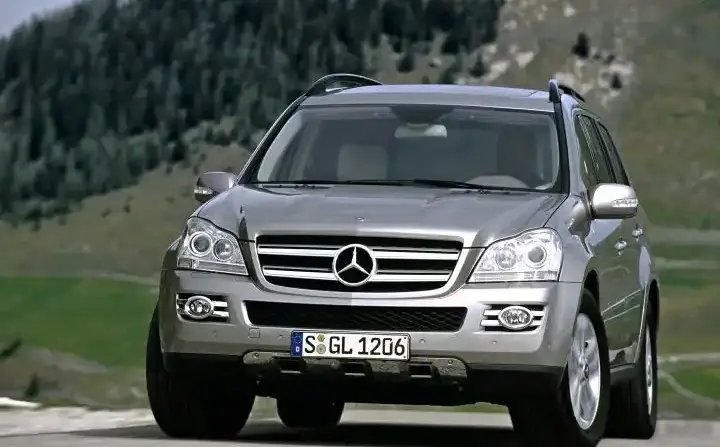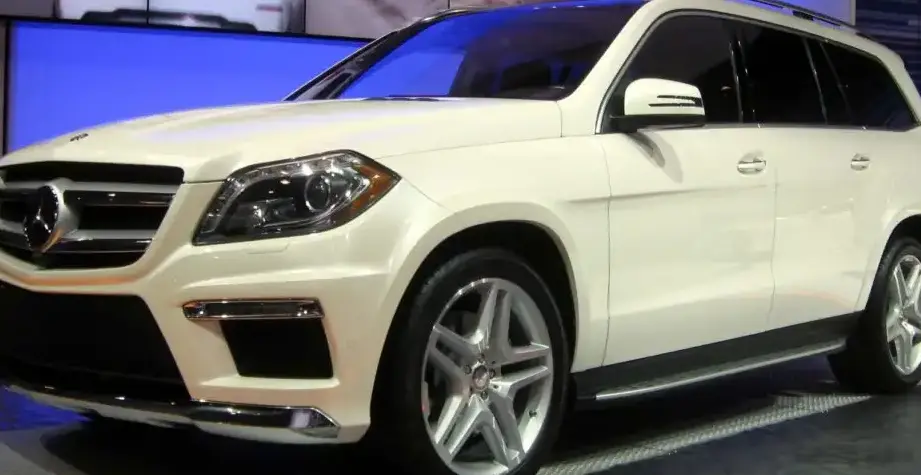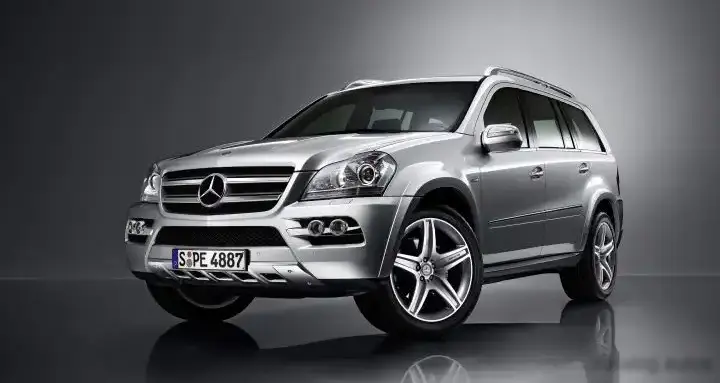
The Mercedes-Benz GL 500 (X164 facelift, produced from 2009 to 2012) represented the flagship powertrain option for the second generation GL-Class, a full-size luxury SUV. Positioned as the premium offering within the range, it catered to buyers seeking substantial power and capability combined with Mercedes-Benz refinement. The X164 facelift brought styling updates and technological enhancements to the original GL, solidifying its position in the competitive luxury SUV segment. This variant, with its naturally aspirated 5.5-liter V8 engine and 7-speed automatic transmission, was primarily sold in North America, Europe, and select global markets.
Technical Specifications
| Brand | Mercedes-Benz |
| Model | GL |
| Generation | GL (X164 facelift 2009) |
| Type (Engine) | GL 500 (388 Hp) 4MATIC G-TRONIC |
| Start of production | 2009 |
| End of production | 2012 |
| Powertrain Architecture | Internal Combustion engine |
| Body type | SUV |
| Seats | 7 |
| Doors | 5 |
| Fuel consumption (urban) | 18.8 l/100 km (12.5 US mpg, 15 UK mpg, 5.3 km/l) |
| Fuel consumption (extra urban) | 10.6 l/100 km (22.2 US mpg, 26.6 UK mpg, 9.4 km/l) |
| Fuel consumption (combined) | 13.6 l/100 km (17.3 US mpg, 20.8 UK mpg, 7.4 km/l) |
| CO2 emissions | 317 g/km |
| Fuel Type | Petrol (Gasoline) |
| Acceleration 0 – 100 km/h | 6.5 sec |
| Acceleration 0 – 62 mph | 6.5 sec |
| Acceleration 0 – 60 mph | 6.2 sec |
| Maximum speed | 240 km/h (149.13 mph) |
| Emission standard | Euro 5 |
| Weight-to-power ratio | 6.1 kg/Hp, 163.7 Hp/tonne |
| Weight-to-torque ratio | 4.5 kg/Nm, 223.6 Nm/tonne |
| Power | 388 Hp @ 6000 rpm |
| Power per litre | 71 Hp/l |
| Torque | 530 Nm @ 2800-4800 rpm (390.91 lb.-ft. @ 2800-4800 rpm) |
| Maximum engine speed | 6500 rpm |
| Engine layout | Front, Longitudinal |
| Engine Model/Code | M 273.963 |
| Engine displacement | 5461 cm3 (333.25 cu. in.) |
| Number of cylinders | 8 |
| Engine configuration | V-engine |
| Cylinder Bore | 98 mm (3.86 in.) |
| Piston Stroke | 90.5 mm (3.56 in.) |
| Compression ratio | 10.7:1 |
| Number of valves per cylinder | 4 |
| Fuel injection system | Multi-port manifold injection |
| Engine aspiration | Naturally aspirated engine |
| Valvetrain | DOHC |
| Engine oil capacity | 9 l (9.51 US qt | 7.92 UK qt) |
| Kerb Weight | 2370 kg (5224.96 lbs.) |
| Max. weight | 3150 kg (6944.56 lbs.) |
| Max load | 780 kg (1719.61 lbs.) |
| Trunk (boot) space – minimum | 620 l (21.9 cu. ft.) |
| Trunk (boot) space – maximum | 2300 l (81.22 cu. ft.) |
| Fuel tank capacity | 100 l (26.42 US gal | 22 UK gal) |
| Permitted trailer load with brakes (12%) | 3500 kg (7716.18 lbs.) |
| Permitted trailer load without brakes | 750 kg (1653.47 lbs.) |
| Length | 5099 mm (200.75 in.) |
| Width | 1920 mm (75.59 in.) |
| Height | 1840 mm (72.44 in.) |
| Wheelbase | 3075 mm (121.06 in.) |
| Front track | 1645 mm (64.76 in.) |
| Rear (Back) track | 1648 mm (64.88 in.) |
| Ride height (ground clearance) | 198 mm (7.8 in.) |
| Drag coefficient (Cd) | 0.37 |
| Minimum turning circle (turning diameter) | 12.1 m (39.7 ft.) |
| Drive wheel | All wheel drive (4×4) |
| Number of gears and type of gearbox | 7 gears, automatic transmission G-TRONIC |
| Front suspension | Double wishbone |
| Rear suspension | Independent multi-link suspension |
| Front brakes | Ventilated discs |
| Rear brakes | Ventilated discs |
| Assisting systems | ABS (Anti-lock braking system) |
| Steering type | Steering rack and pinion |
| Power steering | Hydraulic Steering |
| Tires size | 275/55 R19 |
| Wheel rims size | 19 |
Powertrain & Engine Architecture
The GL 500 was powered by the M273.963 5.5-liter naturally aspirated V8 engine. This engine, a cornerstone of Mercedes-Benz’s lineup during the period, featured a three-valve per cylinder design (two intake, one exhaust) and a relatively high 10.7:1 compression ratio. Fuel delivery was handled by a multi-port fuel injection system. The engine produced 388 horsepower at 6000 rpm and 530 Nm (390.91 lb-ft) of torque between 2800 and 4800 rpm. The engine’s architecture was a 90-degree V8, known for its smoothness and inherent balance. Paired with the engine was the 7G-TRONIC automatic transmission, a seven-speed unit that offered smooth and relatively quick shifts. This transmission was known for its adaptability and contributed to both performance and fuel efficiency, although the GL 500’s weight limited overall economy.
Driving Characteristics
The GL 500 offered a compelling blend of power and size. While not a sports car, the 388 hp engine provided ample acceleration, achieving 0-60 mph in approximately 6.2 seconds. The 7G-TRONIC transmission was well-matched to the engine, providing smooth gear changes and keeping the engine in its optimal power band. However, the vehicle’s substantial weight (over 5,200 lbs) was always noticeable, particularly during spirited driving or braking. Compared to the GL 320 CDI diesel variant, the GL 500 offered significantly more outright power but at the expense of fuel economy. The GL 500’s automatic transmission, while refined, didn’t offer the same level of driver engagement as the available manual transmissions in other GL models.
Equipment & Trim Levels
The GL 500 typically came standard with a high level of equipment, reflecting its position as the range-topping model. Standard features included leather upholstery, wood trim, a premium sound system, multi-zone climate control, and a power liftgate. Optional extras included a rear-seat entertainment system, adaptive suspension (AIRMATIC), and various driver-assistance features. The interior design was typical of Mercedes-Benz at the time, emphasizing luxury and comfort. Trim levels were relatively simple, with most customization occurring through the selection of optional packages and individual options.
Chassis & Braking
The GL-Class utilized a robust chassis designed to handle its size and weight. The suspension consisted of a double wishbone setup at the front and an independent multi-link suspension at the rear. The GL 500 typically featured larger brakes than lower-trim models, with ventilated discs at all four corners. Anti-lock brakes (ABS) and electronic stability control were standard safety features. The 4MATIC all-wheel-drive system provided excellent traction in various conditions, making the GL 500 a capable vehicle on and off-road.
Market Reception & Comparison
The GL 500 was generally well-received by automotive critics, who praised its powerful engine, luxurious interior, and spaciousness. However, its fuel economy was a common criticism, as was its high price tag. Compared to competitors like the BMW X5 and Audi Q7, the GL 500 offered a more luxurious and comfortable ride, but its handling was not as sharp. The GL 320 CDI, with its diesel engine, offered significantly better fuel economy and comparable performance, making it a popular choice for buyers prioritizing efficiency.
Legacy
The M273 engine, while robust, is known to require regular maintenance, particularly regarding valve cover gaskets and oil leaks as it ages. The 7G-TRONIC transmission is generally reliable but can be expensive to repair if issues arise. Today, the GL 500 represents a relatively affordable entry point into the world of full-size luxury SUVs. Well-maintained examples are still sought after by enthusiasts who appreciate their combination of power, comfort, and space. However, potential buyers should be prepared for higher running costs compared to more fuel-efficient alternatives.