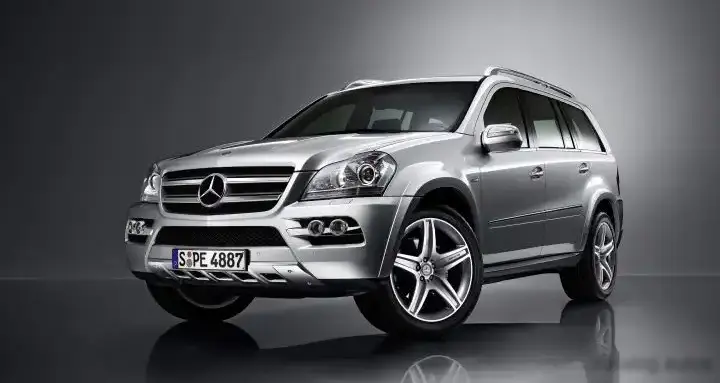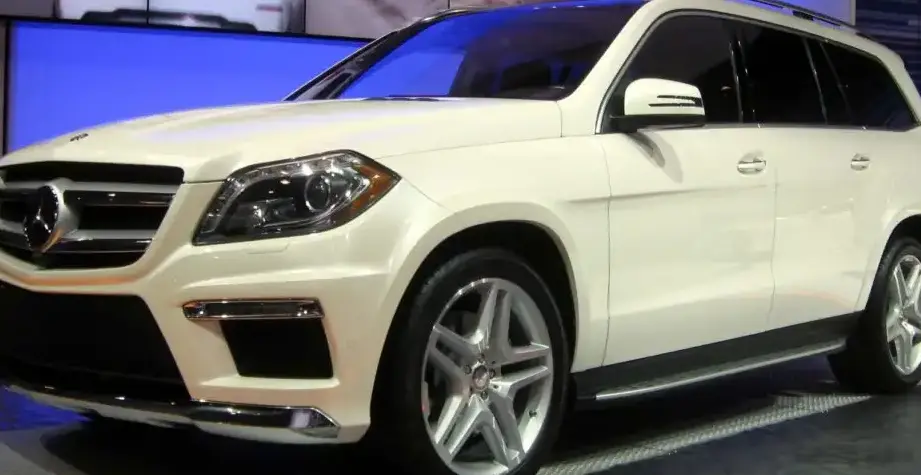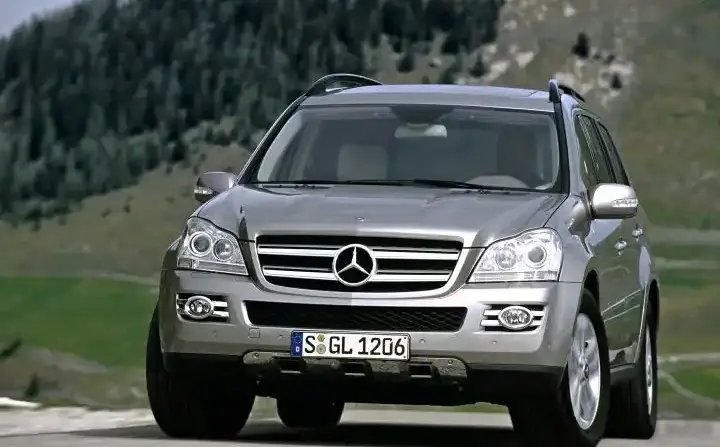
The Mercedes-Benz GL 320 CDI 4MATIC, produced from 2006 to 2008, was a key variant within the first generation (X164) of the GL-Class full-size luxury SUV. Positioned as a mid-range offering, it bridged the gap between the entry-level GL 350 and the high-performance GL 450 and GL 550 models. This diesel-powered variant aimed to provide a balance of capability, fuel efficiency, and refinement for buyers seeking a large SUV with genuine towing capacity and all-weather performance. The GL-Class itself was Mercedes-Benz’s first foray into the full-size SUV segment, designed to compete with established American and Japanese models like the Chevrolet Tahoe, Ford Expedition, and Toyota Land Cruiser.
Technical Specifications
| Brand | Mercedes-Benz |
| Model | GL |
| Generation | GL (X164) |
| Type (Engine) | GL 320 CDI (224 Hp) 4MATIC G-TRONIC |
| Start of production | 2006 |
| End of production | 2008 |
| Powertrain Architecture | Internal Combustion engine |
| Body type | SUV |
| Seats | 5 |
| Doors | 5 |
| Fuel consumption (urban) | 12.5 l/100 km (18.8 US mpg) |
| Fuel consumption (extra urban) | 8 l/100 km (29.4 US mpg) |
| Fuel consumption (combined) | 9.8 l/100 km (24 US mpg) |
| CO2 emissions | 261 g/km |
| Fuel Type | Diesel |
| Acceleration 0 – 100 km/h | 9.5 sec |
| Acceleration 0 – 62 mph | 9.5 sec |
| Acceleration 0 – 60 mph | 9 sec |
| Maximum speed | 210 km/h (130.49 mph) |
| Emission standard | Euro 4 |
| Weight-to-power ratio | 10.6 kg/Hp |
| Weight-to-torque ratio | 4.7 kg/Nm |
| Power | 224 Hp @ 3800 rpm |
| Torque | 510 Nm @ 1600-2800 rpm (376.16 lb.-ft.) |
| Engine layout | Front, Longitudinal |
| Engine Model/Code | OM 642.820 |
| Engine displacement | 2987 cm3 (182.28 cu. in.) |
| Number of cylinders | 6 |
| Engine configuration | V-engine |
| Cylinder Bore | 83 mm (3.27 in.) |
| Piston Stroke | 92 mm (3.62 in.) |
| Compression ratio | 18:1 |
| Number of valves per cylinder | 4 |
| Fuel injection system | Diesel Commonrail |
| Engine aspiration | Turbocharger, Intercooler |
| Valvetrain | DOHC |
| Engine oil capacity | 8.5 l (8.98 US qt | 7.48 UK qt) |
| Kerb Weight | 2375 kg (5235.98 lbs.) |
| Max. weight | 3150 kg (6944.56 lbs.) |
| Max load | 775 kg (1708.58 lbs.) |
| Trunk (boot) space – minimum | 620 l (21.9 cu. ft.) |
| Trunk (boot) space – maximum | 2300 l (81.22 cu. ft.) |
| Fuel tank capacity | 96 l (25.36 US gal | 21.12 UK gal) |
| Permitted trailer load with brakes (12%) | 3500 kg (7716.18 lbs.) |
| Permitted trailer load without brakes | 750 kg (1653.47 lbs.) |
| Length | 5088 mm (200.31 in.) |
| Width | 1920 mm (75.59 in.) |
| Height | 1840 mm (72.44 in.) |
| Wheelbase | 3075 mm (121.06 in.) |
| Front track | 1651 mm (65 in.) |
| Rear (Back) track | 1654 mm (65.12 in.) |
| Drag coefficient (Cd) | 0.37 |
| Minimum turning circle | 12.1 m (39.7 ft.) |
| Drive wheel | All wheel drive (4×4) |
| Number of gears | 7 |
| Gearbox type | Automatic transmission G-TRONIC |
| Front suspension | Double wishbone |
| Rear suspension | Independent multi-link suspension |
| Front brakes | Ventilated discs |
| Rear brakes | Ventilated discs |
| Assisting systems | ABS (Anti-lock braking system) |
| Steering type | Cone worm with recirculation balls |
| Power steering | Hydraulic Steering |
| Tires size | 265/60 R18 |
| Wheel rims size | 18 |
Powertrain & Engine Architecture
The GL 320 CDI was powered by the OM 642.820, a 3.0-liter V6 diesel engine. This engine was a cornerstone of Mercedes-Benz’s diesel offerings during the mid-2000s, known for its robust construction and relatively smooth operation. It featured a common rail direct injection system, delivering fuel at extremely high pressures for optimized combustion. The engine also incorporated a variable geometry turbocharger (VGT) and an intercooler to enhance power and efficiency. The V6 configuration provided inherent balance, minimizing vibrations. The engine produced 224 horsepower at 3800 rpm and a substantial 510 Nm (376 lb-ft) of torque between 1600 and 2800 rpm. This torque output was particularly beneficial for towing and off-road driving. The engine was paired with Mercedes-Benz’s 7G-TRONIC seven-speed automatic transmission, which offered smooth and responsive shifts. This transmission was designed to optimize fuel economy and provide a comfortable driving experience.
Driving Characteristics
The GL 320 CDI offered a distinctly different driving experience compared to its gasoline-powered siblings. While not as overtly powerful as the GL 450 or GL 550, the diesel engine’s abundant torque provided strong acceleration, especially in the low and mid-range. The 7G-TRONIC transmission was well-matched to the engine, providing seamless gear changes and contributing to a relaxed cruising experience. The 0-60 mph time of around 9 seconds was respectable for a vehicle of this size and weight. However, the GL 320 CDI truly excelled in situations requiring pulling power, such as towing a trailer or navigating steep inclines. The automatic transmission’s gear ratios were optimized for both fuel efficiency and towing capability. Compared to the manual transmissions available in some European markets, the 7G-TRONIC offered greater convenience and ease of use, particularly in urban driving conditions.
Equipment & Trim Levels
The GL 320 CDI 4MATIC typically came well-equipped with standard features including leather upholstery, dual-zone automatic climate control, power-adjustable front seats with memory function, a premium audio system, and a sunroof. Safety features were also comprehensive, including ABS, traction control, stability control, and multiple airbags. Optional extras included a navigation system, rear-seat entertainment system, heated and ventilated front seats, and a parking assistance package. The interior design was typical of Mercedes-Benz, emphasizing luxury and refinement. The dashboard layout was straightforward and intuitive, with high-quality materials used throughout the cabin.
Chassis & Braking
The GL-Class featured a robust chassis designed to handle the vehicle’s weight and provide a comfortable ride. The front suspension utilized a double wishbone design, while the rear suspension employed an independent multi-link setup. This configuration provided a good balance of ride comfort and handling precision. The GL 320 CDI was equipped with ventilated disc brakes on all four wheels, providing ample stopping power. The 4MATIC all-wheel-drive system distributed power between the front and rear axles as needed, enhancing traction in slippery conditions. The system was primarily rear-wheel drive biased, contributing to a more engaging driving experience.
Market Reception & Comparison
The GL 320 CDI was generally well-received by automotive critics, who praised its fuel efficiency, strong torque output, and comfortable ride. However, some reviewers noted that the diesel engine was somewhat noisy compared to the gasoline engines. In terms of fuel economy, the GL 320 CDI offered a significant advantage over its gasoline-powered counterparts, achieving around 24 mpg in combined driving. Reliability was generally good, although diesel engines can be more susceptible to issues with the fuel injection system and turbocharger. Compared to the GL 350, the 320 CDI offered better fuel economy and more torque, but slightly less overall power. The GL 450 and GL 550 provided more exhilarating performance but at the expense of fuel efficiency.
Legacy
The Mercedes-Benz GL 320 CDI 4MATIC remains a popular choice in the used car market, particularly for buyers seeking a large, capable SUV with good fuel economy. The OM 642 engine is known for its durability, but regular maintenance is essential to ensure long-term reliability. Common issues include fuel injector failure and turbocharger wear. Despite its age, the GL 320 CDI continues to offer a compelling combination of luxury, capability, and value, making it a desirable option for those who prioritize practicality and efficiency in a full-size SUV.