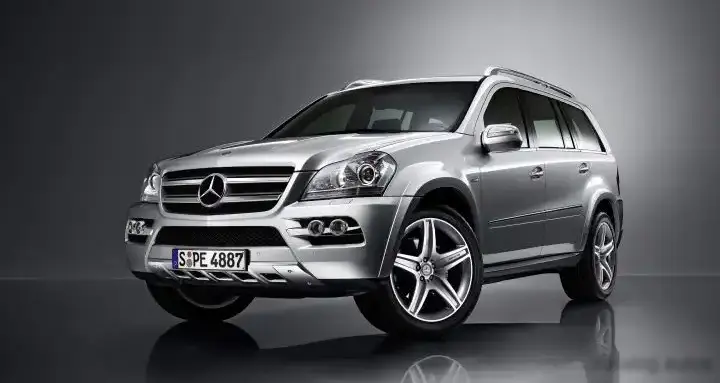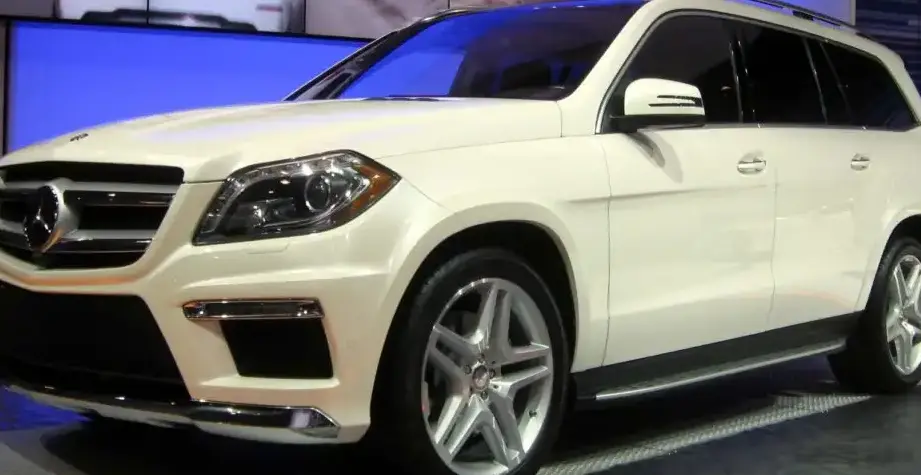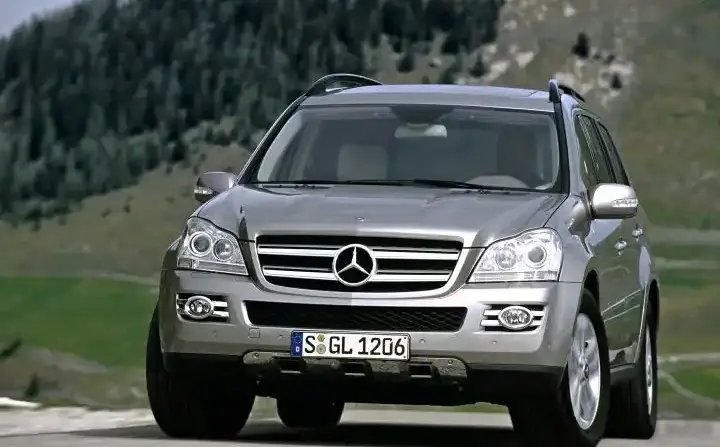
The Mercedes-Benz GL 450 4MATIC, produced between 2006 and 2008 as part of the X164 GL-Class generation, represented a significant entry into the full-size luxury SUV segment for the German automaker. Positioned as a mid-range offering within the GL lineup – which also included the GL 320 CDI diesel and the high-performance GL 550 – the GL 450 aimed to balance capability, comfort, and a respectable level of performance. It was designed to compete with vehicles like the Cadillac Escalade, Lincoln Navigator, and BMW X5, offering a blend of on-road refinement and off-road prowess, underpinned by Mercedes-Benz’s reputation for engineering and build quality.
Technical Specifications
| Brand | Mercedes-Benz |
| Model | GL |
| Generation | GL (X164) |
| Type (Engine) | GL 450 (340 Hp) 4MATIC G-TRONIC |
| Start of production | 2006 |
| End of production | 2008 |
| Powertrain Architecture | Internal Combustion engine |
| Body type | SUV |
| Seats | 5 |
| Doors | 5 |
| Fuel consumption (economy) – urban | 18.2 l/100 km (12.9 US mpg, 15.5 UK mpg, 5.5 km/l) |
| Fuel consumption (economy) – extra urban | 10.4 l/100 km (22.6 US mpg, 27.2 UK mpg, 9.6 km/l) |
| Fuel consumption (economy) – combined | 13.3 l/100 km (17.7 US mpg, 21.2 UK mpg, 7.5 km/l) |
| CO2 emissions | 317 g/km |
| Fuel Type | Petrol (Gasoline) |
| Acceleration 0 – 100 km/h | 7.2 sec |
| Acceleration 0 – 62 mph | 7.2 sec |
| Acceleration 0 – 60 mph | 6.8 sec |
| Maximum speed | 235 km/h (146.02 mph) |
| Emission standard | Euro 4 |
| Weight-to-power ratio | 6.9 kg/Hp, 144.4 Hp/tonne |
| Weight-to-torque ratio | 5.1 kg/Nm, 195.3 Nm/tonne |
| Power | 340 Hp @ 6000 rpm |
| Power per litre | 72.9 Hp/l |
| Torque | 460 Nm @ 2700 rpm (339.28 lb.-ft. @ 2700 rpm) |
| Maximum engine speed | 6500 rpm |
| Engine layout | Front, Longitudinal |
| Engine Model/Code | M 273.923 |
| Engine displacement | 4663 cm3 (284.55 cu. in.) |
| Number of cylinders | 8 |
| Engine configuration | V-engine |
| Cylinder Bore | 92.9 mm (3.66 in.) |
| Piston Stroke | 86 mm (3.39 in.) |
| Compression ratio | 10.5:1 |
| Number of valves per cylinder | 4 |
| Fuel injection system | Multi-port manifold injection |
| Engine aspiration | Naturally aspirated engine |
| Valvetrain | DOHC |
| Engine oil capacity | 9 l (9.51 US qt | 7.92 UK qt) |
| Kerb Weight | 2355 kg (5191.89 lbs.) |
| Max. weight | 3150 kg (6944.56 lbs.) |
| Max load | 795 kg (1752.67 lbs.) |
| Trunk (boot) space – minimum | 620 l (21.9 cu. ft.) |
| Trunk (boot) space – maximum | 2300 l (81.22 cu. ft.) |
| Fuel tank capacity | 100 l (26.42 US gal | 22 UK gal) |
| Permitted trailer load with brakes (12%) | 3500 kg (7716.18 lbs.) |
| Permitted trailer load without brakes | 750 kg (1653.47 lbs.) |
| Length | 5088 mm (200.31 in.) |
| Width | 1920 mm (75.59 in.) |
| Height | 1840 mm (72.44 in.) |
| Wheelbase | 3075 mm (121.06 in.) |
| Front track | 1645 mm (64.76 in.) |
| Rear (Back) track | 1648 mm (64.88 in.) |
| Drag coefficient (Cd) | 0.37 |
| Minimum turning circle (turning diameter) | 12.1 m (39.7 ft.) |
| Drive wheel | All wheel drive (4×4) |
| Number of gears and type of gearbox | 7 gears, automatic transmission G-TRONIC |
| Front suspension | Double wishbone |
| Rear suspension | Independent multi-link suspension |
| Front brakes | Ventilated discs |
| Rear brakes | Ventilated discs |
| Assisting systems | ABS (Anti-lock braking system) |
| Steering type | Cone worm with recirculation balls |
| Power steering | Hydraulic Steering |
| Tires size | 275/55 R19 |
| Wheel rims size | 19 |
Powertrain & Engine Architecture
The GL 450 was powered by the M273.923 engine, a 4.7-liter naturally aspirated V8. This engine was a cornerstone of Mercedes-Benz’s engine lineup during the mid-2000s, known for its smooth operation and relatively high output. It featured a three-valve-per-cylinder design (two intake, one exhaust) and a double overhead camshaft (DOHC) valvetrain. Fuel delivery was handled by a multi-port fuel injection system. The engine produced 340 horsepower at 6000 rpm and 460 Nm (339 lb-ft) of torque at 2700 rpm. The engine’s longitudinal mounting and all-wheel-drive configuration were standard. Paired with the engine was the 7G-TRONIC automatic transmission, a seven-speed unit that offered smooth shifts and helped optimize fuel efficiency. This transmission was a significant advancement over older automatic designs, providing a wider range of gear ratios for improved performance and economy.
Driving Characteristics
The GL 450, with its 340 hp and seven-speed automatic, offered a comfortable and capable driving experience. Acceleration from 0 to 60 mph took approximately 6.8 seconds, which was respectable for a full-size SUV of its era. The 7G-TRONIC transmission contributed to smooth gear changes, although it wasn’t particularly sporty in its shift programming. Compared to the GL 320 CDI, the GL 450 offered quicker acceleration and a more responsive feel, but at the cost of significantly lower fuel economy. The GL 550, with its larger V8, provided even more power but came with a substantial price premium. The GL 450’s automatic transmission, while refined, didn’t offer the same level of driver engagement as the manual transmissions available in some European markets.
Equipment & Trim Levels
The GL 450 came standard with a generous array of features, including leather upholstery, power-adjustable front seats with memory function, dual-zone automatic climate control, a premium audio system, and a sunroof. Optional extras included a rear-seat entertainment system, navigation, parking assist, and upgraded leather packages. The interior design was typical of Mercedes-Benz at the time, emphasizing luxury and comfort. Dashboard materials were generally high quality, and the overall layout was functional and well-organized. Trim levels were relatively simple, with most options being added individually rather than bundled into distinct packages.
Chassis & Braking
The GL-Class utilized a robust chassis designed to handle both on-road and off-road conditions. The front suspension featured a double wishbone design, while the rear employed an independent multi-link setup. This configuration provided a comfortable ride and good handling characteristics. The GL 450 came equipped with ventilated disc brakes on all four wheels, along with ABS (Anti-lock Braking System) and electronic stability control. The braking system was generally effective, providing ample stopping power for a vehicle of its size and weight. The 4MATIC all-wheel-drive system provided excellent traction in various conditions.
Market Reception & Comparison
The GL 450 was generally well-received by automotive critics, who praised its comfortable ride, spacious interior, and refined powertrain. However, its fuel economy was a common criticism, as the 4.7-liter V8 was not particularly efficient. Compared to the GL 320 CDI, the GL 450 offered less fuel economy but more readily available power. The GL 550, while offering superior performance, was significantly more expensive. The GL 450 struck a balance between these two extremes, appealing to buyers who wanted a luxurious and capable SUV without the high cost of the GL 550 or the diesel engine’s potential maintenance concerns.
Legacy
The Mercedes-Benz GL 450 (X164) has proven to be a relatively reliable vehicle, although maintenance costs can be high due to its complex engineering and luxury status. The M273 engine, while generally robust, is known to be susceptible to certain issues, such as oil leaks and timing chain wear, particularly as mileage increases. The 7G-TRONIC transmission is also known to require occasional servicing. In the used car market, the GL 450 remains a popular choice for buyers seeking a spacious and luxurious SUV with all-wheel drive. However, prospective buyers should be aware of the potential maintenance costs and carefully inspect the vehicle before purchase.