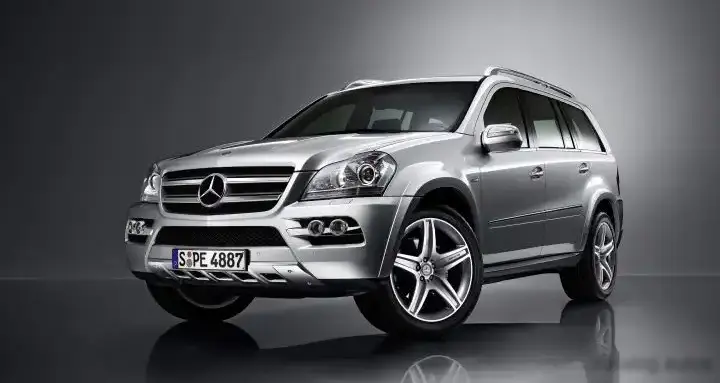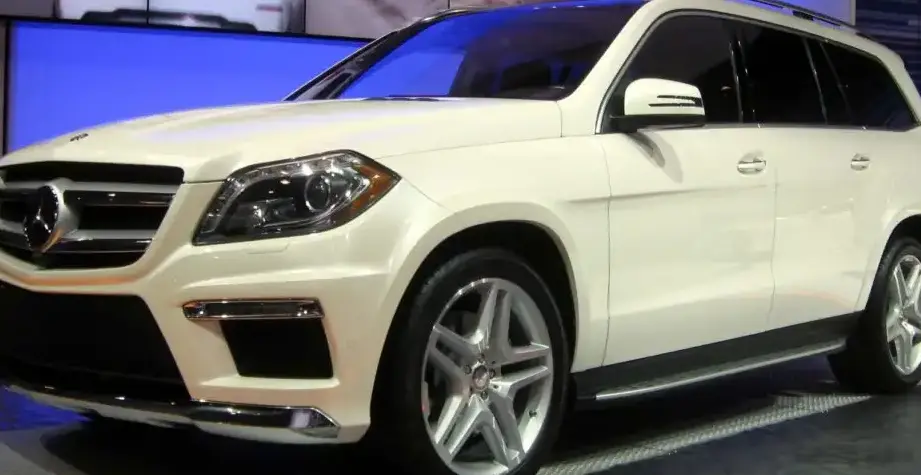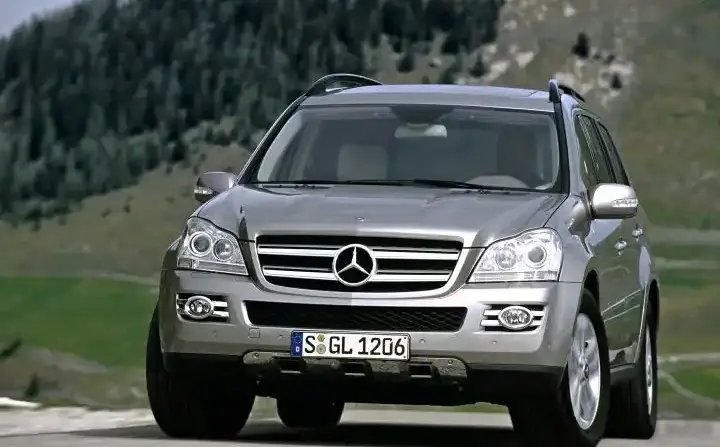
The Mercedes-Benz GL 500 (X164) was a luxury, full-size SUV produced from 2006 to 2008. Representing the top-of-the-line engine option for the first generation GL (X164) series, the GL 500 aimed to deliver a blend of performance, luxury, and all-weather capability within the burgeoning full-size SUV segment. It was positioned as the flagship model, offering a more powerful alternative to the GL 320 and later GL 450 variants. The X164 GL was Mercedes-Benz’s first foray into a true seven-passenger SUV, competing with vehicles like the Cadillac Escalade, Lincoln Navigator, and BMW X5.
| Brand | Mercedes-Benz |
| Model | GL |
| Generation | GL (X164) |
| Type | GL 500 (388 Hp) 4MATIC G-TRONIC |
| Start of production | 2006 |
| End of production | 2008 |
| Powertrain Architecture | Internal Combustion engine |
| Body type | SUV |
| Seats | 5 |
| Doors | 5 |
| Fuel consumption (urban) | 19.3 l/100 km (12.2 US mpg) |
| Fuel consumption (extra urban) | 12 l/100 km (19.6 US mpg) |
| Fuel consumption (combined) | 14.7 l/100 km (16 US mpg) |
| CO2 emissions | 351 g/km |
| Fuel Type | Petrol (Gasoline) |
| Acceleration 0 – 100 km/h | 5.9 sec |
| Acceleration 0 – 62 mph | 5.9 sec |
| Acceleration 0 – 60 mph | 5.6 sec |
| Maximum speed | 210 km/h (130.49 mph) |
| Emission standard | Euro 4 |
| Weight-to-power ratio | 5.6 kg/Hp |
| Weight-to-torque ratio | 4.1 kg/Nm |
| Power | 388 Hp @ 6000 rpm |
| Torque | 530 Nm @ 2800-4800 rpm (390.91 lb.-ft.) |
| Engine layout | Front, Longitudinal |
| Engine Model/Code | M 273.963 |
| Engine displacement | 5461 cm3 (333.25 cu. in.) |
| Number of cylinders | 8 |
| Engine configuration | V-engine |
| Cylinder Bore | 98 mm (3.86 in.) |
| Piston Stroke | 90.5 mm (3.56 in.) |
| Compression ratio | 10:1 |
| Fuel injection system | Multi-port manifold injection |
| Engine aspiration | Naturally aspirated engine |
| Engine oil capacity | 9 l (9.51 US qt | 7.92 UK qt) |
| Kerb Weight | 2170 kg (4784.03 lbs.) |
| Max. weight | 2850 kg (6283.17 lbs.) |
| Max load | 680 kg (1499.14 lbs.) |
| Trunk (boot) space – minimum | 620 l (21.9 cu. ft.) |
| Trunk (boot) space – maximum | 2300 l (81.22 cu. ft.) |
| Fuel tank capacity | 96 l (25.36 US gal | 21.12 UK gal) |
| Permitted trailer load with brakes (12%) | 2850 kg (6283.17 lbs.) |
| Permitted trailer load without brakes | 750 kg (1653.47 lbs.) |
| Length | 5088 mm (200.31 in.) |
| Width | 1920 mm (75.59 in.) |
| Height | 1840 mm (72.44 in.) |
| Wheelbase | 3075 mm (121.06 in.) |
| Front track | 1645 mm (64.76 in.) |
| Rear (Back) track | 1648 mm (64.88 in.) |
| Drag coefficient (Cd) | 0.54 |
| Minimum turning circle | 11.31 m (37.11 ft.) |
| Drive wheel | All wheel drive (4×4) |
| Number of gears | 7 |
| Gearbox type | Automatic transmission G-TRONIC |
| Front suspension | Double wishbone |
| Rear suspension | Independent multi-link suspension |
| Front brakes | Ventilated discs |
| Rear brakes | Ventilated discs |
| Assisting systems | ABS (Anti-lock braking system) |
| Steering type | Cone worm with recirculation balls |
| Power steering | Hydraulic Steering |
| Tires size | 265/60 R18 |
| Wheel rims size | 18 |
Powertrain & Engine Architecture
The GL 500 was powered by the M273.963 5.4-liter naturally aspirated V8 engine. This engine was a cornerstone of Mercedes-Benz’s engine lineup during the mid-2000s, known for its smooth operation and substantial power output. The M273 featured a three-valve per cylinder design (two intake, one exhaust), a relatively high 10:1 compression ratio, and a multi-port fuel injection system. The engine produced 388 horsepower at 6000 rpm and 391 lb-ft of torque between 2800 and 4800 rpm. The engine’s longitudinal mounting and all-wheel-drive configuration were standard. Paired with the engine was the 7G-TRONIC seven-speed automatic transmission, a sophisticated unit that offered smooth shifts and a wide range of gear ratios to optimize both performance and fuel economy. The 7G-TRONIC allowed for manual gear selection via steering wheel-mounted paddles in some configurations.
Driving Characteristics
The GL 500 offered a noticeably different driving experience compared to the lower-trim GL models. The V8 engine provided strong acceleration, capable of propelling the large SUV from 0 to 60 mph in around 5.6 seconds. While not a sports car, the GL 500 felt surprisingly agile for its size, thanks in part to the responsive 7G-TRONIC transmission. The automatic transmission was tuned for comfort and refinement, with smooth gear changes and a relatively relaxed shift pattern. Compared to a hypothetical manual transmission version (which was not offered), the automatic prioritized ease of use and a more luxurious driving experience. The 7G-TRONIC’s gear ratios were optimized for both highway cruising and towing, making the GL 500 a capable all-rounder. However, the substantial weight of the vehicle did impact handling, with some body roll noticeable in corners.
Equipment & Trim Levels
The GL 500 came standard with a comprehensive list of features befitting its flagship status. Standard equipment typically included leather upholstery, wood trim, dual-zone automatic climate control, a premium sound system, and power-adjustable front seats with memory function. Optional extras included a rear-seat entertainment system, a panoramic sunroof, adaptive cruise control, and parking assist. The GL 500 also benefited from Mercedes-Benz’s COMAND infotainment system, which controlled navigation, audio, and vehicle settings. Exterior features included 18-inch alloy wheels, chrome accents, and roof rails. The interior color schemes were generally conservative, with options for black, beige, and gray leather.
Chassis & Braking
The GL 500 featured a robust chassis designed to handle the vehicle’s weight and provide a comfortable ride. The suspension consisted of a double wishbone setup at the front and an independent multi-link suspension at the rear. This configuration aimed to balance ride comfort with handling stability. The GL 500 was equipped with ventilated disc brakes on all four wheels, providing ample stopping power. Anti-lock braking system (ABS) was standard, along with electronic stability control (ESP) to help maintain control in challenging driving conditions. The steering system was a cone worm with recirculation balls, providing a relatively direct and precise feel. The GL 500’s tires were typically 265/60 R18, offering a good balance of grip and ride comfort.
Market Reception & Comparison
The GL 500 was generally well-received by automotive critics, who praised its powerful engine, luxurious interior, and spacious cabin. However, its fuel economy was a common criticism, as the V8 engine consumed a significant amount of gasoline. Compared to the GL 320 (diesel) and GL 450 (V6), the GL 500 offered significantly more performance but at the cost of increased fuel consumption and a higher price tag. The GL 500 appealed to buyers who prioritized power and luxury over fuel efficiency. Its towing capacity was also a strong selling point for those who needed to haul boats, trailers, or other large loads.
Legacy
The M273 engine, while generally reliable, is known to be susceptible to certain issues as it ages, including oil leaks and potential problems with the balance shaft. The 7G-TRONIC transmission is also known for requiring regular maintenance, including fluid changes, to ensure smooth operation. Today, the GL 500 can be found on the used car market at relatively affordable prices. However, potential buyers should be aware of the potential maintenance costs associated with a vehicle of this age and complexity. Despite these potential issues, the GL 500 remains a desirable SUV for those seeking a blend of luxury, performance, and all-weather capability. Its robust construction and spacious interior continue to appeal to buyers looking for a capable and comfortable family vehicle.