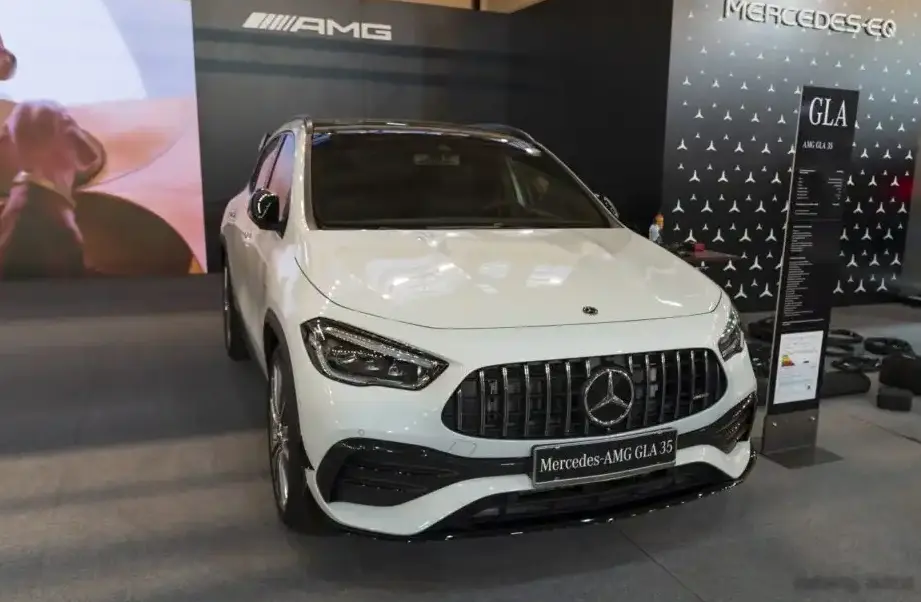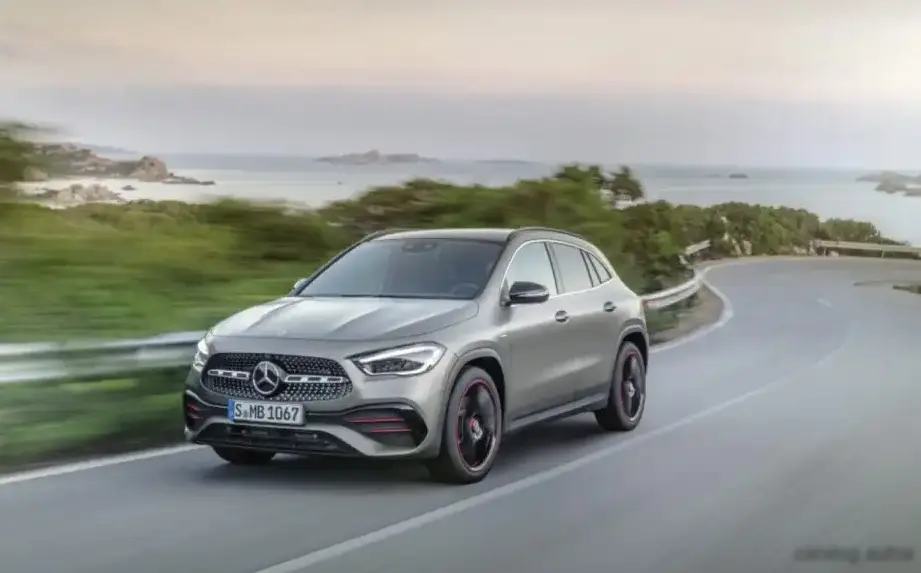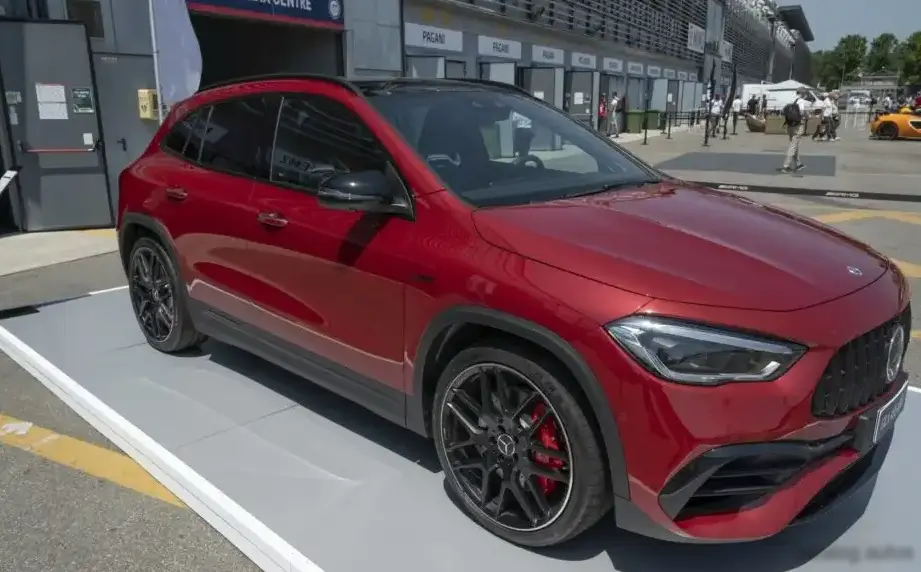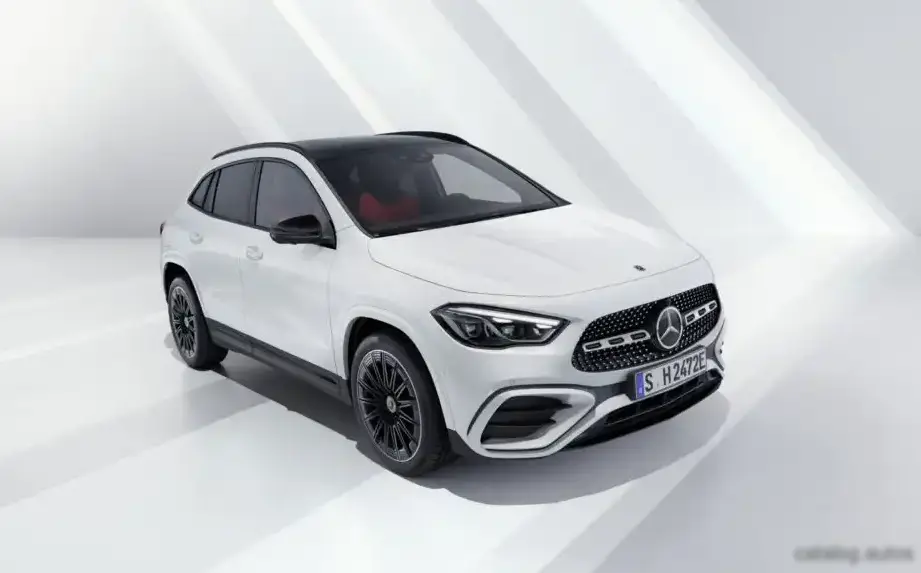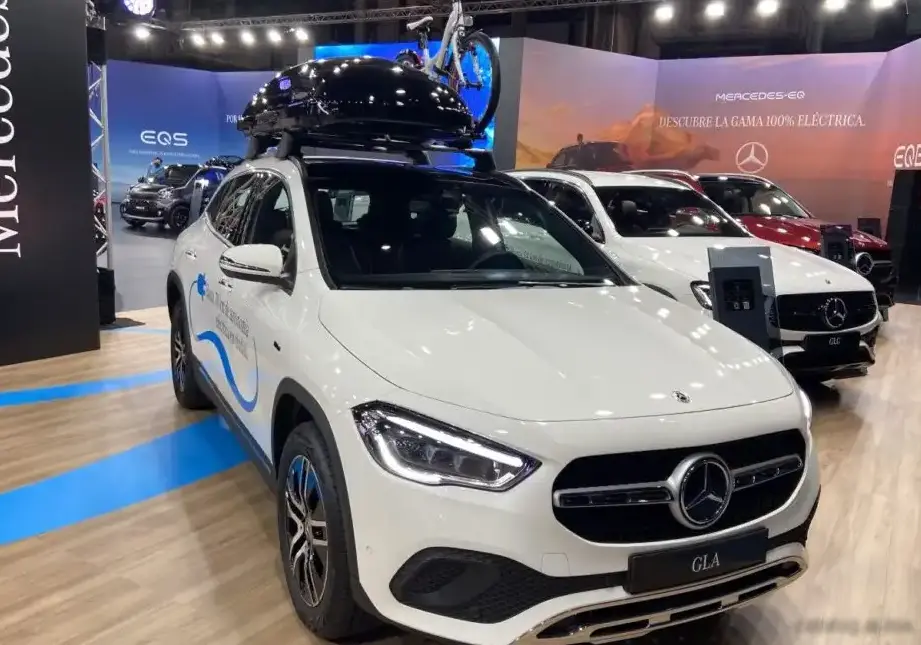
The Mercedes-Benz GLA 250e EQ Power, produced from July 2020 to 2023, represents a significant step in the compact luxury SUV segment with its plug-in hybrid powertrain. Falling within the H247 GLA generation, this variant aimed to offer a balance between performance, efficiency, and environmental responsibility. Positioned as a mid-range offering within the GLA lineup, the 250e provided a more economical and eco-conscious alternative to the petrol-only GLA 250, while offering a more accessible entry point than the higher-performance AMG variants. It was primarily marketed in Europe and other regions actively promoting electrified vehicles, offering a compelling option for buyers seeking a premium compact SUV with reduced emissions and the flexibility of electric driving.
Technical Specifications
| Brand | Mercedes-Benz |
| Model | GLA |
| Generation | GLA (H247) |
| Type | GLA 250e (218 Hp) EQ Power 8G-DCT |
| Start of production | July, 2020 |
| End of production | 2023 |
| Powertrain Architecture | PHEV (Plug-in Hybrid Electric Vehicle) |
| Body type | SUV |
| Seats | 5 |
| Doors | 5 |
| Combined fuel consumption (WLTP) | 1.3-1.6 l/100 km (180.9 – 147 US mpg, 217.3 – 176.6 UK mpg, 76.9 – 62.5 km/l) |
| CO2 emissions (WLTP) | 29-37 g/km |
| Fuel consumption (NEDC) – combined | 1.7-1.8 l/100 km (138.4 – 130.7 US mpg, 166.2 – 156.9 UK mpg, 58.8 – 55.6 km/l) |
| CO2 emissions (NEDC) | 38-41 g/km |
| Fuel Type | Petrol / electricity |
| Acceleration 0 – 100 km/h | 7.1 sec |
| Acceleration 0 – 62 mph | 7.1 sec |
| Acceleration 0 – 60 mph | 6.7 sec |
| Maximum speed | 220 km/h (136.7 mph) |
| Emission standard | Euro 6d-ISC-FCM |
| Weight-to-power ratio | 7.8 kg/Hp, 128.2 Hp/tonne |
| Weight-to-torque ratio | 3.8 kg/Nm, 264.7 Nm/tonne |
| Gross battery capacity | 15.6 kWh |
| Net (usable) battery capacity | 10.6 kWh |
| Battery technology | Lithium-ion (Li-Ion) |
| Battery weight | 150 kg (330.69 lbs.) |
| Battery location | Under the rear seats |
| All-electric range (WLTP) | 57-63 km (35.42 – 39.15 mi) |
| All-electric range (NEDC) | 63-69 km (39.15 – 42.87 mi) |
| Average Energy consumption (WLTP) | 16-17.9 kWh/100 km (25.75 – 28.81 kWh/100 mi, 131 – 117 MPGe, 6.3 – 5.6 km/kWh, 3.9 – 3.5 mi/kWh) |
| Average Energy consumption (NEDC) | 14-14.3 kWh/100 km (22.53 – 23.01 kWh/100 mi, 150 – 146 MPGe, 7.1 – 7 km/kWh, 4.4 – 4.3 mi/kWh) |
| Electric motor power | 102 Hp |
| Electric motor Torque | 300 Nm (221.27 lb.-ft.) |
| Electric motor location | Between the combustion engine and the transmission |
| System power | 218 Hp |
| System torque | 450 Nm (331.9 lb.-ft.) |
| Power | 160 Hp @ 5500 rpm |
| Torque | 250 Nm @ 1620 rpm (184.39 lb.-ft. @ 1620 rpm) |
| Engine layout | Front, Transverse |
| Engine Model/Code | M 282 DE 14 AL |
| Engine displacement | 1332 cm3 (81.28 cu. in.) |
| Number of cylinders | 4 |
| Engine configuration | Inline |
| Cylinder Bore | 72.2 mm (2.84 in.) |
| Piston Stroke | 81.4 mm (3.2 in.) |
| Compression ratio | 10.6:1 |
| Number of valves per cylinder | 4 |
| Fuel injection system | Direct injection |
| Engine aspiration | Turbocharger, Intercooler |
| Valvetrain | DOHC |
| Engine oil capacity | 4.5 l (4.76 US qt | 3.96 UK qt) |
| Coolant | 6.8 l (7.19 US qt | 5.98 UK qt) |
| Kerb Weight | 1700 kg (3747.86 lbs.) |
| Max. weight | 2295 kg (5059.61 lbs.) |
| Max load | 595 kg (1311.75 lbs.) |
| Trunk (boot) space – minimum | 385 l (13.6 cu. ft.) |
| Trunk (boot) space – maximum | 1385 l (48.91 cu. ft.) |
| Fuel tank capacity | 35 l (9.25 US gal | 7.7 UK gal) |
| Max. roof load | 75 kg (165.35 lbs.) |
| Permitted trailer load with brakes (12%) | 1800 kg (3968.32 lbs.) |
| Permitted trailer load without brakes | 750 kg (1653.47 lbs.) |
| Permitted towbar download | 80 kg (176.37 lbs.) |
| Length | 4410 mm (173.62 in.) |
| Width | 1834 mm (72.2 in.) |
| Width including mirrors | 2020 mm (79.53 in.) |
| Height | 1611 mm (63.43 in.) |
| Wheelbase | 2729 mm (107.44 in.) |
| Front track | 1605 mm (63.19 in.) |
| Rear (Back) track | 1583 mm (62.32 in.) |
| Front overhang | 905 mm (35.63 in.) |
| Rear overhang | 776 mm (30.55 in.) |
| Ride height (ground clearance) | 143 mm (5.63 in.) |
| Drag coefficient (Cd) | 0.30 |
| Minimum turning circle (turning diameter) | 11.4 m (37.4 ft.) |
| Approach angle | 18.3° |
| Departure angle | 22.1° |
| Ramp-over (brakeover) angle | 14.4° |
| Drivetrain Architecture | The Internal combustion engine (ICE) and electric motor drive the front wheels of the car with the ability to work in full electric or mixed mode. |
| Drive wheel | Front wheel drive |
| Number of gears and type of gearbox | 8 gears, automatic transmission G-DCT |
| Front suspension | Independent type McPherson |
| Rear suspension | Coil spring, Torsion |
| Front brakes | Ventilated discs |
| Rear brakes | Disc |
| Assisting systems | ABS (Anti-lock braking system) |
| Steering type | Steering rack and pinion |
| Power steering | Electric Steering |
| Tires size | 215/65 R17; 235/55 R18; 235/50 R19; 235/45 R20 |
| Wheel rims size | 6.5J x 17; 7.5J x 18; 7.5J x 19; 8J x 20 |
Powertrain & Engine Architecture
The GLA 250e utilizes a plug-in hybrid powertrain centered around a 1.3-liter turbocharged four-cylinder petrol engine (M 282 DE 14 AL). This engine, producing 160 hp at 5500 rpm and 250 Nm of torque at 1620 rpm, is paired with a 102 hp electric motor. The electric motor is integrated between the engine and the 8-speed dual-clutch transmission (8G-DCT), allowing for both electric-only driving and combined operation. The system’s total output is 218 hp and 450 Nm of torque. The engine features direct fuel injection and an intercooler to enhance performance and efficiency. The 15.6 kWh lithium-ion battery, located under the rear seats, provides a usable capacity of 10.6 kWh, enabling an all-electric range of 57-63 km (WLTP) or 63-69 km (NEDC). The battery can be charged via a standard household outlet or a dedicated charging station.
Driving Characteristics
The GLA 250e offers a distinct driving experience compared to its petrol-only counterparts. In electric mode, the vehicle provides near-silent acceleration and responsive torque, ideal for urban driving. When the battery is depleted or requires assistance, the petrol engine seamlessly engages, providing a combined power output that delivers brisk acceleration – 0-100 km/h in 7.1 seconds. The 8G-DCT transmission offers smooth and quick gear changes, contributing to a refined driving experience. While not as sporty as the GLA 35 or AMG variants, the 250e provides ample power for everyday driving and highway cruising. The weight of the battery pack does slightly impact handling, making it feel a bit less agile than lighter GLA models.
Equipment & Trim Levels
The GLA 250e typically came well-equipped, reflecting its position as a mid-range offering. Standard features often included Mercedes-Benz’s MBUX infotainment system with a touchscreen display, smartphone integration (Apple CarPlay and Android Auto), automatic climate control, and a suite of safety features such as automatic emergency braking, lane keeping assist, and adaptive cruise control. Interior upholstery was typically Artico leather (synthetic leather), with options for genuine leather upgrades. Optional extras included a panoramic sunroof, premium sound system, and various driver assistance packages. Trim levels varied slightly by market, but generally offered packages that added cosmetic enhancements and additional convenience features.
Chassis & Braking
The GLA 250e utilizes a McPherson strut front suspension and a torsion beam rear suspension. This setup provides a good balance between ride comfort and handling. The added weight of the battery pack necessitated slightly stiffer spring rates compared to the standard GLA models. Braking duties are handled by ventilated discs at the front and solid discs at the rear, equipped with ABS and electronic brakeforce distribution. The steering is electrically assisted, providing a light and precise feel.
Market Reception & Comparison
The GLA 250e was generally well-received by automotive critics, who praised its fuel efficiency, comfortable ride, and refined driving experience. Compared to the petrol-only GLA 250, the 250e offered significantly lower running costs, particularly for drivers who frequently commute in urban areas and can take advantage of electric-only driving. However, the higher purchase price and slightly reduced cargo space (due to the battery pack) were noted as potential drawbacks. Compared to diesel-powered GLA variants, the 250e offered a cleaner alternative, aligning with growing environmental concerns.
Legacy
The Mercedes-Benz GLA 250e represents an important step in the brand’s electrification strategy. While production ended in 2023, the model has established a reputation for reliability, particularly regarding the powertrain. The 8G-DCT transmission has proven to be durable, and the hybrid system has demonstrated long-term dependability. On the used car market, the GLA 250e remains a popular choice for buyers seeking a premium compact SUV with low running costs and a reduced environmental impact. Its continued demand reflects the growing acceptance of plug-in hybrid technology and the desire for sustainable mobility.