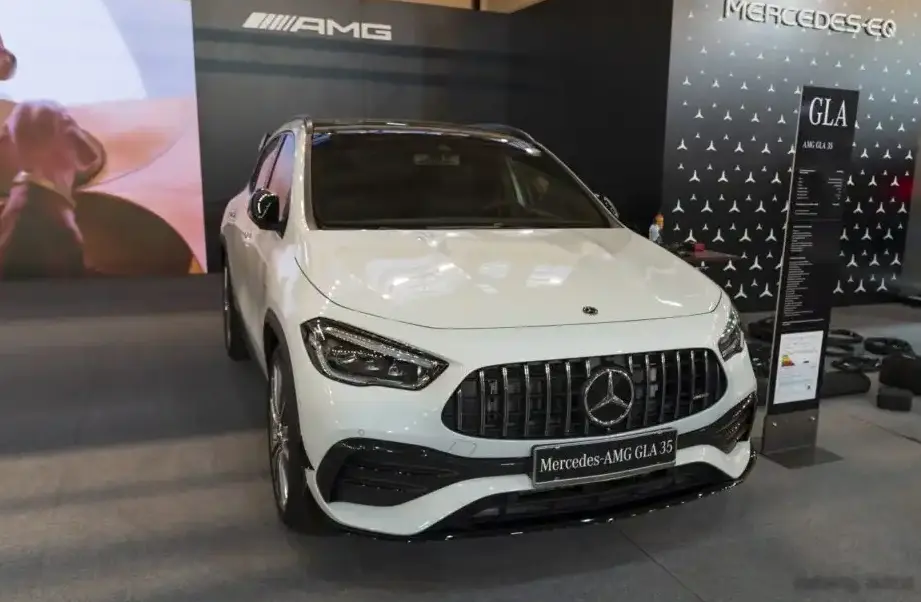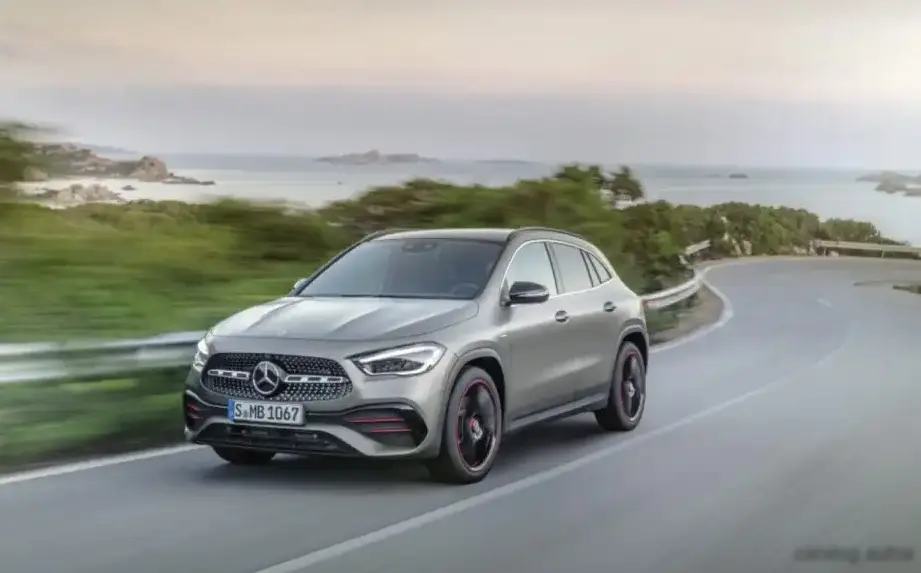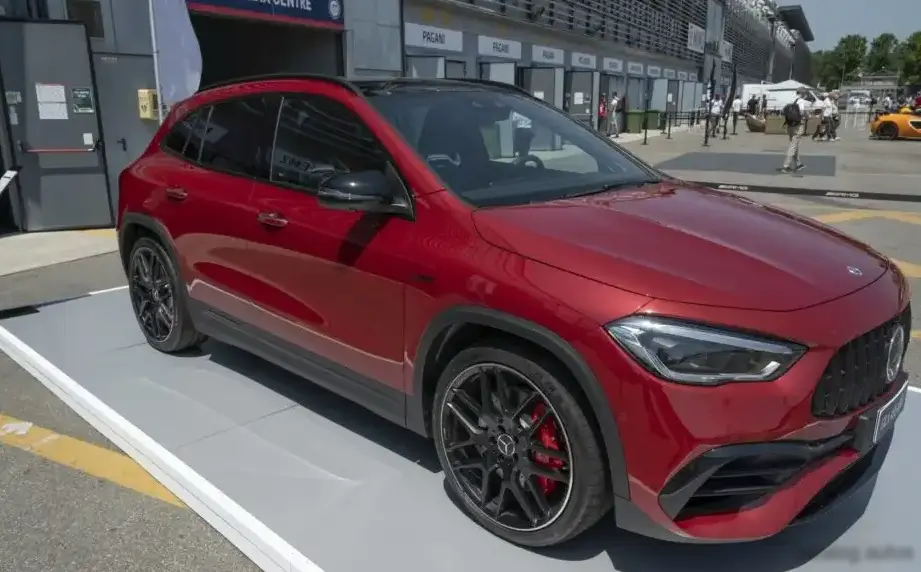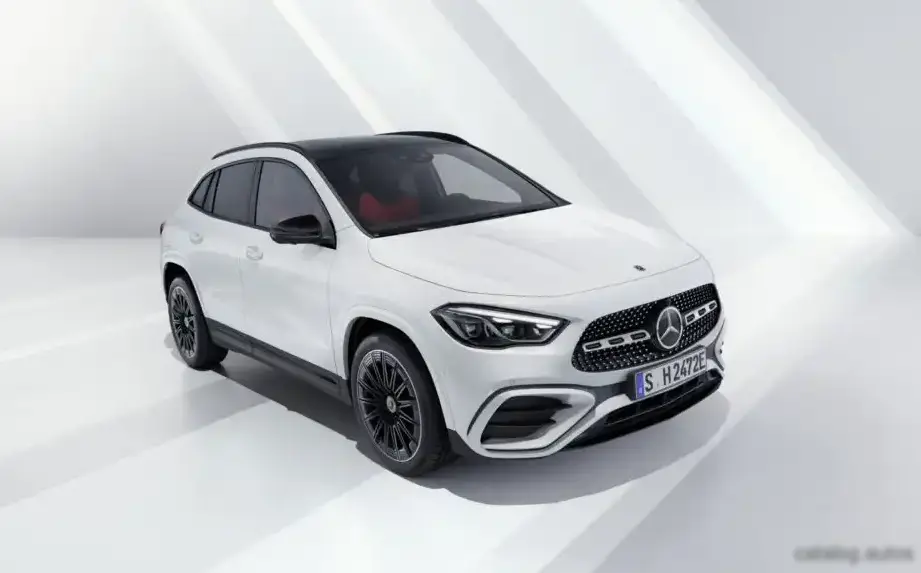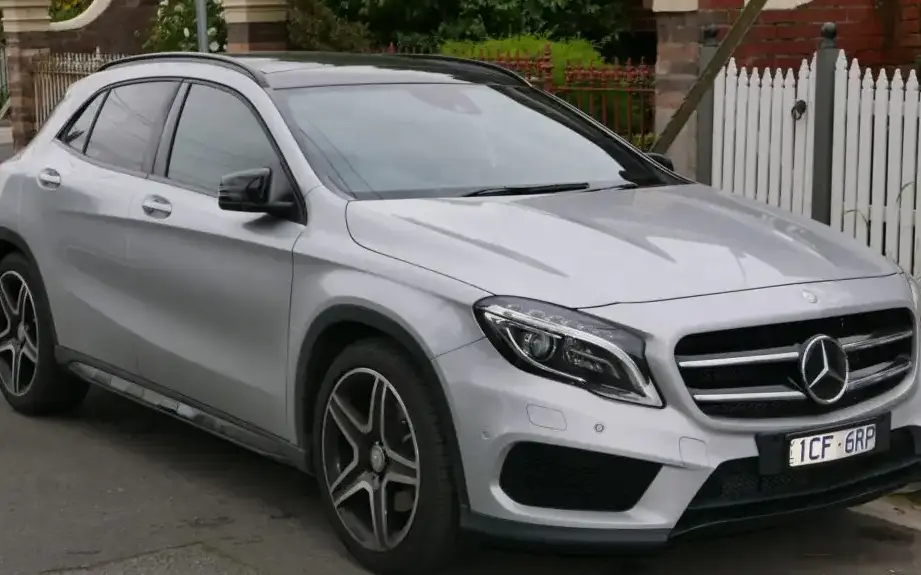
The Mercedes-Benz GLA 45 AMG, produced from July 2014 to August 2015, represents the high-performance variant of the first-generation GLA (X156) compact SUV. Positioned as the flagship model within the X156 lineup, the GLA 45 AMG aimed to deliver exhilarating performance in a practical, albeit small, package. It distinguished itself from other GLA models – such as the GLA 250 – through its significantly more powerful engine, upgraded braking and suspension systems, and aggressive styling cues. This model was a key part of Mercedes-AMG’s strategy to expand its portfolio into the burgeoning compact luxury crossover segment, offering a compelling alternative to rivals like the Audi RS Q3 and BMW X2 M35i (later models).
Technical Specifications
| Brand | Mercedes-Benz |
| Model | GLA |
| Generation | GLA (X156) |
| Type | AMG GLA 45 (360 Hp) 4MATIC AMG SPEEDSHIFT DCT |
| Start of production | July, 2014 |
| End of production | August, 2015 |
| Powertrain Architecture | Internal Combustion engine |
| Body type | SUV |
| Seats | 5 |
| Doors | 5 |
| Fuel consumption (economy) – urban (NEDC) | 9.9 l/100 km (23.8 US mpg, 28.5 UK mpg, 10.1 km/l) |
| Fuel consumption (economy) – extra urban (NEDC) | 6.1 l/100 km (38.6 US mpg, 46.3 UK mpg, 16.4 km/l) |
| Fuel consumption (economy) – combined (NEDC) | 7.5 l/100 km (31.4 US mpg, 37.7 UK mpg, 13.3 km/l) |
| CO2 emissions (NEDC) | 175 g/km |
| Fuel Type | Petrol (Gasoline) |
| Acceleration 0 – 100 km/h | 4.8 sec |
| Acceleration 0 – 62 mph | 4.8 sec |
| Acceleration 0 – 60 mph | 4.6 sec |
| Maximum speed | 250 km/h (155.34 mph), Electronically limited |
| Emission standard | Euro 6 |
| Weight-to-power ratio | 4.2 kg/Hp, 238.4 Hp/tonne |
| Weight-to-torque ratio | 3.4 kg/Nm, 298 Nm/tonne |
| Power | 360 Hp @ 6000 rpm |
| Power per litre | 180.8 Hp/l |
| Torque | 450 Nm @ 2250-5000 rpm (331.9 lb.-ft. @ 2250-5000 rpm) |
| Engine layout | Front, Transverse |
| Engine Model/Code | M 133.980 |
| Engine displacement | 1991 cm3 (121.5 cu. in.) |
| Number of cylinders | 4 |
| Engine configuration | Inline |
| Cylinder Bore | 83 mm (3.27 in.) |
| Piston Stroke | 92 mm (3.62 in.) |
| Compression ratio | 8.6:1 |
| Number of valves per cylinder | 4 |
| Fuel injection system | Direct injection |
| Engine aspiration | Twin-scroll turbo, Intercooler |
| Valvetrain | DOHC |
| Engine oil capacity | 5.5 l (5.81 US qt | 4.84 UK qt) |
| Kerb Weight | 1510 kg (3328.98 lbs.) |
| Max. weight | 2105 kg (4640.73 lbs.) |
| Max load | 595 kg (1311.75 lbs.) |
| Trunk (boot) space – minimum | 421 l (14.87 cu. ft.) |
| Trunk (boot) space – maximum | 1235 l (43.61 cu. ft.) |
| Fuel tank capacity | 56 l (14.79 US gal | 12.32 UK gal) |
| Max. roof load | 100 kg (220.46 lbs.) |
| Length | 4445 mm (175 in.) |
| Width | 1805 mm (71.06 in.) |
| Width including mirrors | 2022 mm (79.61 in.) |
| Height | 1479 mm (58.23 in.) |
| Wheelbase | 2699 mm (106.26 in.) |
| Drag coefficient (Cd) | 0.34 |
| Minimum turning circle | 11.84 m (38.85 ft.) |
| Drivetrain Architecture | All wheel drive (4×4). Internal Combustion engine. The ICE drives the front wheels permanently, and the rear wheels are driven through an electrically or mechanically operated clutch if necessary. |
| Number of gears and type of gearbox | 7 gears, automatic transmission AMG SPEEDSHIFT DCT |
| Front suspension | Independent, type McPherson with coil spring and anti-roll bar |
| Rear suspension | Wishbone, Transverse stabilizer, Trailing arm |
| Front brakes | Ventilated discs |
| Rear brakes | Ventilated discs |
| Assisting systems | ABS (Anti-lock braking system) |
| Steering type | Steering rack and pinion |
| Power steering | Electric Steering |
| Tires size | 215/55 R18; 235/45 R19; 235/40 R20 |
| Wheel rims size | 7.5J x 18; 8J x 19; 8J x 20 |
Powertrain & Engine Architecture
The heart of the GLA 45 AMG is the M133 2.0-liter turbocharged inline-four engine. This engine, hand-assembled in Affalterbach, Germany, was a significant achievement in engineering, producing an astonishing 360 horsepower and 331 lb-ft of torque from such a small displacement. The M133 featured direct fuel injection, a twin-scroll turbocharger, and a reinforced crankshaft to handle the increased power output. The engine code, M133.980, specifically denotes the higher-output version used in the GLA 45 AMG. The engine’s high specific output (180.8 hp per liter) was comparable to many naturally aspirated V8 engines of the time. Power is delivered to all four wheels via Mercedes-Benz’s 4MATIC all-wheel-drive system and a seven-speed AMG SPEEDSHIFT DCT dual-clutch transmission. This transmission offered incredibly fast and precise gear changes, contributing to the car’s impressive acceleration.
Driving Characteristics
The GLA 45 AMG delivered a surprisingly engaging driving experience. While the 2.0-liter engine didn’t offer the low-end grunt of larger displacement engines, it compensated with a remarkably responsive top end. The turbocharger spooled up quickly, providing a surge of power from around 2250 rpm. The AMG SPEEDSHIFT DCT transmission played a crucial role, offering both automatic and manual shifting modes. In manual mode, gear changes were lightning-fast, allowing drivers to maintain optimal engine speed. Compared to the standard GLA 250, the GLA 45 AMG felt significantly more agile and planted, thanks to its stiffer suspension and more responsive steering. However, the ride quality was firmer, making it less comfortable for everyday commuting. The 4MATIC all-wheel-drive system provided excellent traction in all weather conditions, enhancing stability and confidence.
Equipment & Trim Levels
The GLA 45 AMG came standard with a comprehensive list of features, including sport seats upholstered in Artico leather and Dinamica microfiber, a flat-bottom steering wheel, aluminum pedal pads, and red contrast stitching throughout the interior. Standard exterior features included AMG body styling, a rear spoiler, and 19-inch alloy wheels. Optional extras included a panoramic sunroof, a premium sound system, and various driver-assistance features such as blind-spot monitoring and lane-keeping assist. The interior dashboard configuration was largely similar to other GLA models, but with AMG-specific gauges and trim elements.
Chassis & Braking
The GLA 45 AMG featured a sport-tuned suspension with stiffer springs and dampers compared to other GLA models. The front suspension utilized McPherson struts, while the rear suspension employed a multi-link design. Larger brake rotors and calipers were also standard, providing enhanced stopping power. The front brakes featured ventilated discs, as did the rear brakes. ABS (Anti-lock Braking System) was standard, along with electronic stability control. The GLA 45 AMG’s chassis was designed to handle the increased power and torque, providing a stable and predictable driving experience.
Market Reception & Comparison
The GLA 45 AMG was generally well-received by automotive critics. It was praised for its impressive performance, engaging handling, and relatively practical size. However, some critics noted the firm ride quality and the engine’s lack of low-end torque. Compared to the GLA 250, the GLA 45 AMG offered a significantly more thrilling driving experience, but at the expense of fuel economy and comfort. The GLA 45 AMG’s fuel economy, rated at 31.4 US mpg combined, was lower than the GLA 250’s 36.3 US mpg. Reliability reports suggested that the M133 engine was generally robust, but preventative maintenance, particularly oil changes, was crucial.
Legacy
The GLA 45 AMG represented a pivotal moment for Mercedes-AMG, demonstrating the brand’s ability to deliver high performance in a compact package. The M133 engine became a benchmark for turbocharged four-cylinder engines, and its technology was later incorporated into other AMG models. On the used car market, the GLA 45 AMG remains a desirable option for enthusiasts seeking a sporty and practical crossover. Well-maintained examples command a premium price, and the powertrain is generally considered reliable with proper servicing. The GLA 45 AMG paved the way for future generations of high-performance compact SUVs from Mercedes-Benz and other manufacturers.