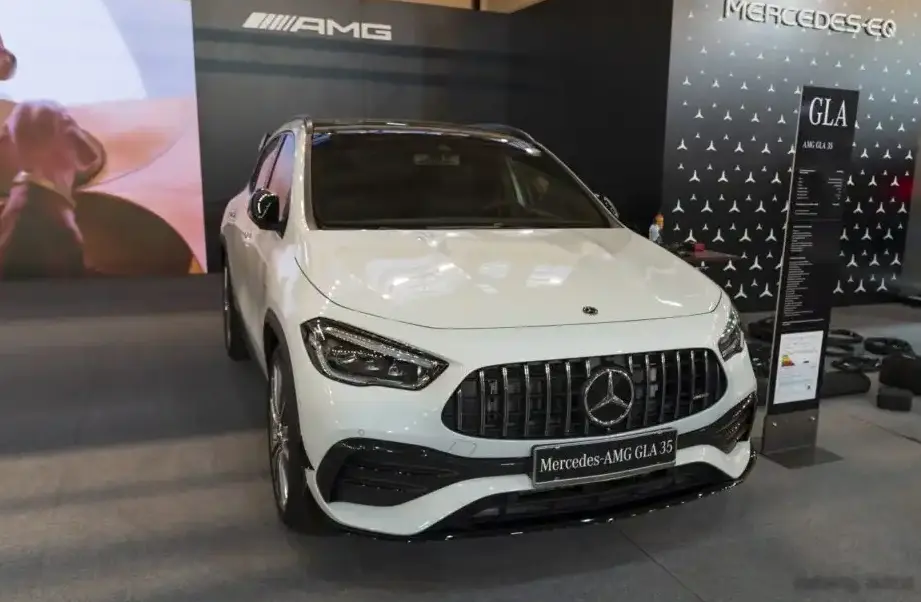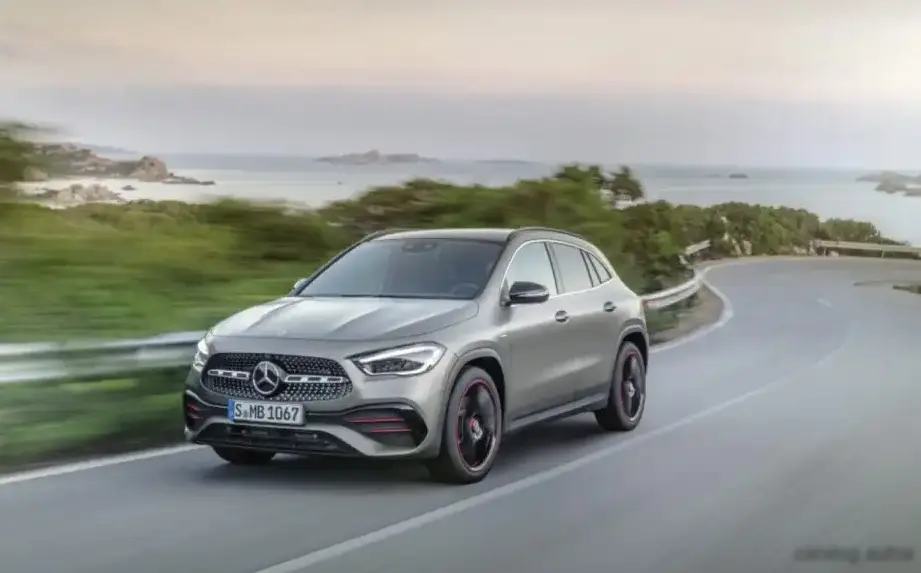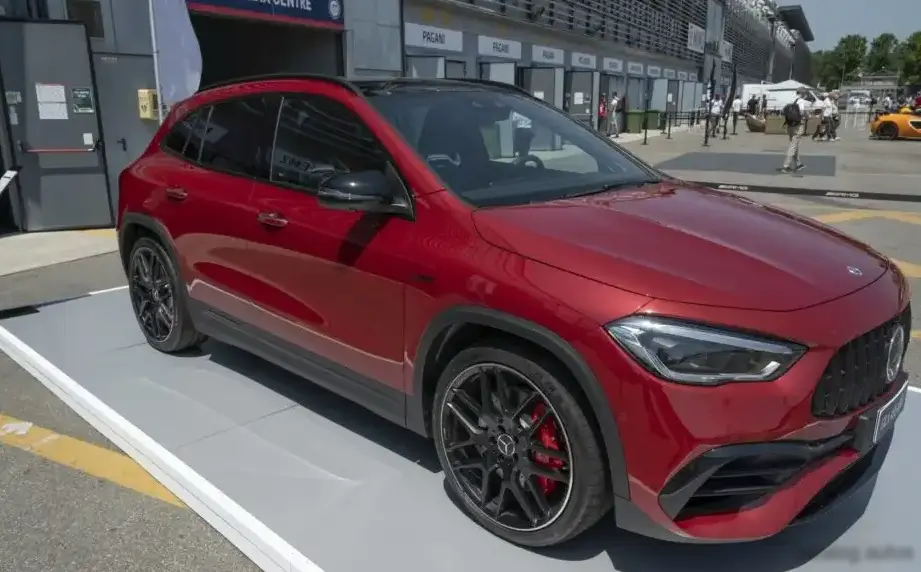
The Mercedes-Benz GLA 180d (X156, facelift 2017) represents an entry-level variant within the second generation of the GLA compact SUV, produced from January 2017 to May 2018. Positioned as a fuel-efficient option, it catered to buyers prioritizing economy and practicality within the premium compact segment. This model featured a 1.5-liter turbocharged diesel engine producing 109 horsepower, paired with a 7-speed dual-clutch automatic transmission. It occupied the lower end of the GLA lineup, serving as a more accessible alternative to the higher-performance GLA 200, GLA 250, and AMG variants.
Technical Specifications
| Brand | Mercedes-Benz |
| Model | GLA |
| Generation | GLA (X156, facelift 2017) |
| Type (Engine) | GLA 180d (109 Hp) |
| Start of production | January, 2017 |
| End of production | May, 2018 |
| Powertrain Architecture | Internal Combustion engine |
| Body type | SUV |
| Seats | 5 |
| Doors | 5 |
| Fuel consumption (economy) – urban (NEDC) | 4.7-4.8 l/100 km (50 – 49 US mpg, 60.1 – 58.9 UK mpg, 21.3 – 20.8 km/l) |
| Fuel consumption (economy) – extra urban (NEDC) | 3.6-4 l/100 km (65.3 – 58.8 US mpg, 78.5 – 70.6 UK mpg, 27.8 – 25 km/l) |
| Fuel consumption (economy) – combined (NEDC) | 4-4.3 l/100 km (58.8 – 54.7 US mpg, 70.6 – 65.7 UK mpg, 25 – 23.3 km/l) |
| CO2 emissions (NEDC) | 105-113 g/km |
| Fuel Type | Diesel |
| Acceleration 0 – 100 km/h | 11.9 sec |
| Acceleration 0 – 62 mph | 11.9 sec |
| Acceleration 0 – 60 mph | 11.3 sec |
| Maximum speed | 190 km/h (118.06 mph) |
| Emission standard | Euro 6 |
| Weight-to-power ratio | 12.5 kg/Hp, 79.9 Hp/tonne |
| Weight-to-torque ratio | 5.3 kg/Nm, 190.5 Nm/tonne |
| Power | 109 Hp @ 4000 rpm |
| Power per litre | 74.6 Hp/l |
| Torque | 260 Nm @ 1750-2500 rpm (191.77 lb.-ft. @ 1750-2500 rpm) |
| Engine layout | Front, Transverse |
| Engine Model/Code | OM 607.951 |
| Engine displacement | 1461 cm3 (89.16 cu. in.) |
| Number of cylinders | 4 |
| Engine configuration | Inline |
| Cylinder Bore | 76 mm (2.99 in.) |
| Piston Stroke | 80.5 mm (3.17 in.) |
| Compression ratio | 15.4:1 |
| Number of valves per cylinder | 2 |
| Fuel injection system | Diesel Commonrail |
| Engine aspiration | Turbocharger, Intercooler |
| Valvetrain | SOHC |
| Engine oil capacity | 4.5 l (4.76 US qt | 3.96 UK qt) |
| Kerb Weight | 1365 kg (3009.31 lbs.) |
| Max. weight | 1970 kg (4343.11 lbs.) |
| Max load | 605 kg (1333.8 lbs.) |
| Trunk (boot) space – minimum | 421 l (14.87 cu. ft.) |
| Trunk (boot) space – maximum | 1235 l (43.61 cu. ft.) |
| Fuel tank capacity | 50 l (13.21 US gal | 11 UK gal) |
| Max. roof load | 75 kg (165.35 lbs.) |
| Permitted trailer load with brakes (12%) | 1200 kg (2645.55 lbs.) |
| Permitted trailer load without brakes | 720 kg (1587.33 lbs.) |
| Permitted towbar download | 75 kg (165.35 lbs.) |
| Length | 4424 mm (174.17 in.) |
| Width | 1804 mm (71.02 in.) |
| Width including mirrors | 2022 mm (79.61 in.) |
| Height | 1494 mm (58.82 in.) |
| Wheelbase | 2699 mm (106.26 in.) |
| Front track | 1569 mm (61.77 in.) |
| Rear (Back) track | 1560 mm (61.42 in.) |
| Front overhang | 913 mm (35.94 in.) |
| Rear overhang | 812 mm (31.97 in.) |
| Drag coefficient (Cd) | 0.30 |
| Minimum turning circle (turning diameter) | 11.84 m (38.85 ft.) |
| Approach angle | 15.8° |
| Departure angle | 21.5° |
| Ramp-over (brakeover) angle | 13.3° |
| Drivetrain Architecture | The Internal combustion engine (ICE) drives the front wheels of the vehicle. |
| Drive wheel | Front wheel drive |
| Number of gears and type of gearbox | 7 gears, automatic transmission |
| Front suspension | Independent, type McPherson with coil spring and anti-roll bar |
| Rear suspension | Wishbone, Transverse stabilizer, Trailing arm |
| Front brakes | Ventilated discs |
| Rear brakes | Disc |
| Assisting systems | ABS (Anti-lock braking system) |
| Steering type | Steering rack and pinion |
| Power steering | Electric Steering |
| Tires size | 215/60 R17; 215/55 R18; 235/50 R18; 235/45 R19 |
| Wheel rims size | 6.5J x 17; 6.5J x 18; 7J x 18; 8J x 19 |
INTRODUCTION
The GLA 180d, introduced with the 2017 facelift of the X156 generation, was designed to broaden the GLA’s appeal by offering a more economical and accessible entry point into the Mercedes-Benz compact SUV range. Built on the MFA (Modular Front-wheel drive Architecture) platform – also known as the 1HX0/A3 platform – shared with other compact Mercedes-Benz models and the A-Class, B-Class, and CLA, the 180d focused on maximizing fuel efficiency without entirely sacrificing the premium feel expected of the brand. It was primarily marketed in Europe and other regions where diesel engines remained popular due to favorable tax incentives and fuel costs.
Powertrain & Engine Architecture
The heart of the GLA 180d is the OM 607.951 1.5-liter inline-four cylinder diesel engine. This engine is part of Mercedes-Benz’s modular engine family and features a turbocharger with an intercooler to boost power and efficiency. The engine utilizes a common-rail direct fuel injection system, delivering fuel directly into the combustion chamber at extremely high pressure for optimized combustion. The valvetrain employs a single overhead camshaft (SOHC) configuration. The engine produces 109 horsepower at 4000 rpm and 260 Nm (191.77 lb.-ft.) of torque between 1750 and 2500 rpm. Paired with this engine is a 7G-DCT (7-speed dual-clutch transmission) which provides quick and smooth gear changes. This transmission was chosen for its efficiency and responsiveness, contributing to the vehicle’s overall fuel economy.
Driving Characteristics
The GLA 180d, with its 109 horsepower and front-wheel drive configuration, delivers adequate but not exhilarating performance. Acceleration from 0 to 100 km/h (0-62 mph) takes approximately 11.9 seconds. The 7G-DCT transmission helps to mitigate the engine’s modest power output, providing relatively quick shifts and keeping the engine within its optimal torque band. Compared to the more powerful GLA 200 or GLA 250 variants, the 180d feels noticeably slower, particularly during overtaking maneuvers. However, its strength lies in its fuel efficiency and comfortable ride. The gear ratios are tuned for economy, prioritizing lower engine speeds during cruising. The front-wheel drive setup provides predictable handling, but lacks the all-wheel drive stability of higher-spec models.
Equipment & Trim Levels
The GLA 180d typically came equipped with a respectable level of standard features, including automatic climate control, a multimedia system with a 7-inch display screen, Bluetooth connectivity, and a suite of safety features like ABS, ESP, and multiple airbags. Interior upholstery was generally cloth, with options for leather upgrades. Common optional extras included a larger multimedia screen, navigation system, parking assist, panoramic sunroof, and various driver assistance packages. Trim levels varied slightly depending on the market, but generally offered packages that added features like upgraded interior trim, alloy wheels, and enhanced safety systems.
Chassis & Braking
The GLA 180d utilizes a McPherson strut front suspension with coil springs and an anti-roll bar, providing a comfortable and controlled ride. The rear suspension employs a multi-link setup with a transverse stabilizer and trailing arms. The braking system consists of ventilated discs at the front and solid discs at the rear. ABS (Anti-lock Braking System) is standard, enhancing braking performance and stability. The suspension tuning is geared towards comfort, prioritizing ride quality over sporty handling. Stabilizer bar thickness is moderate, providing a balance between body roll control and ride comfort.
Market Reception & Comparison
The GLA 180d was generally well-received by critics as a practical and economical option within the premium compact SUV segment. Its fuel efficiency was a major selling point, particularly in Europe. However, some reviewers noted that the engine’s performance felt somewhat underpowered, especially when fully loaded or tackling steep inclines. Compared to the GLA 200, the 180d offered significantly better fuel economy but at the cost of performance. The GLA 200, with its more powerful engine, provided a more engaging driving experience. In terms of reliability, the OM 607 engine family has proven to be generally robust, although regular maintenance is crucial for long-term durability.
Legacy
The GLA 180d (X156) remains a relatively common sight on the used car market. Its fuel efficiency and relatively low running costs make it an attractive option for budget-conscious buyers seeking a premium compact SUV. The 7G-DCT transmission, while generally reliable, can require occasional servicing. The OM 607 engine is known for its durability when properly maintained, but potential buyers should be aware of the importance of regular oil changes and adherence to the manufacturer’s service schedule. Overall, the GLA 180d represents a sensible and practical choice for those prioritizing economy and reliability over outright performance.