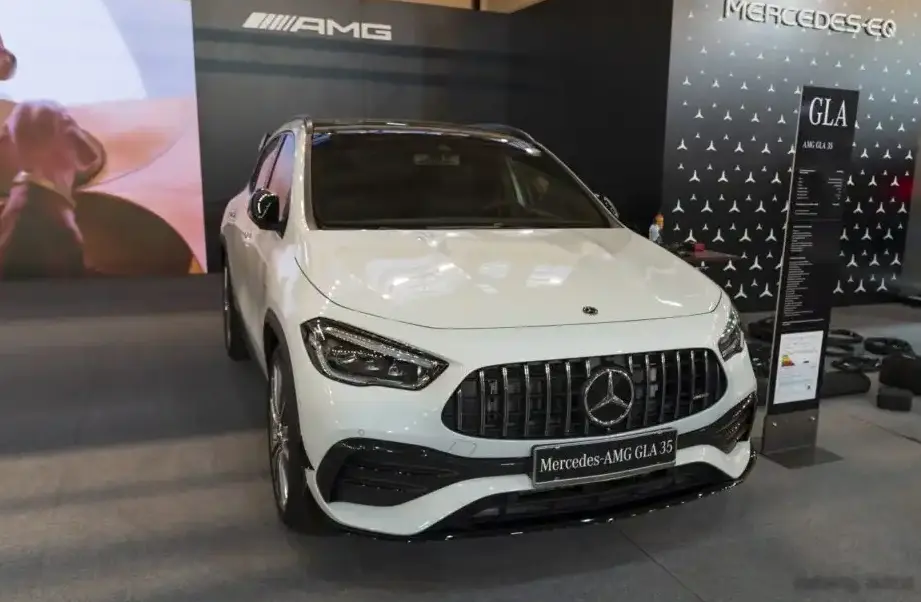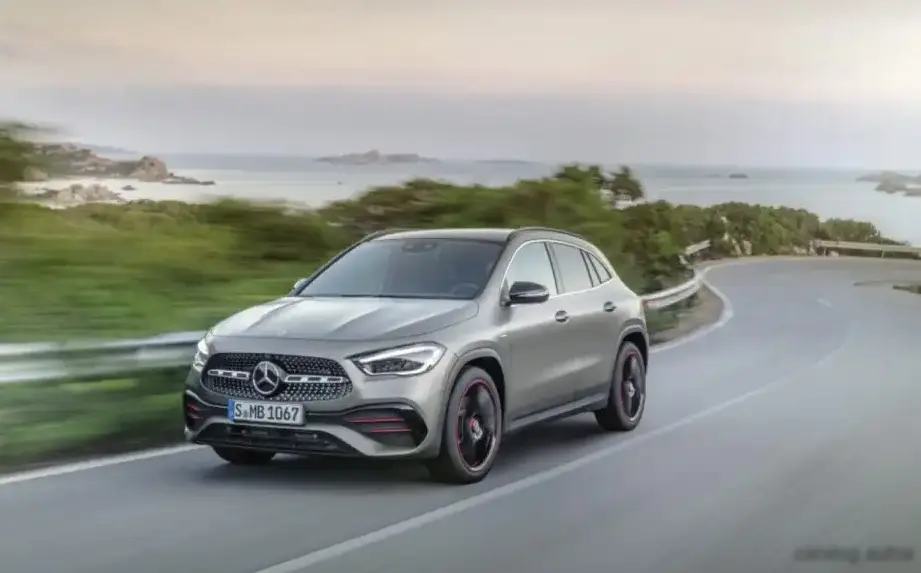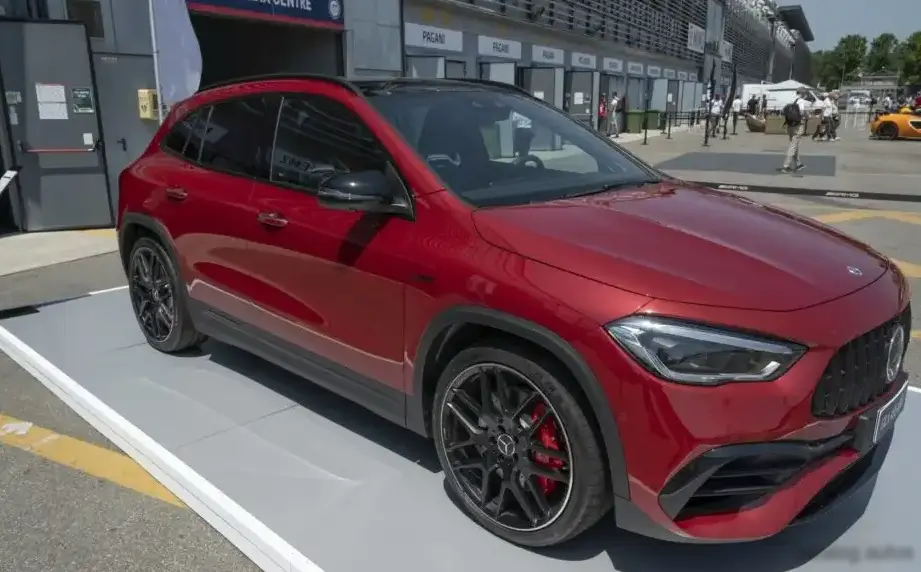
The Mercedes-Benz GLA 180 (X156), produced from 2015 to 2017, represents the entry point into the first-generation GLA compact SUV range. Positioned as a more accessible option within the broader GLA lineup, it aimed to attract buyers seeking the prestige of the Mercedes-Benz brand in a smaller, more fuel-efficient package. Built on the MFA (Modular Front-wheel drive Architecture) platform – shared with other compact Mercedes-Benz models like the A-Class and CLA – the GLA 180 offered a blend of practicality, comfort, and relatively economical performance. This variant primarily targeted urban drivers and those prioritizing fuel efficiency over outright performance, making it a popular choice in European markets and increasingly so in North America as the GLA gained traction.
Technical Specifications
| Brand | Mercedes-Benz |
| Model | GLA |
| Generation | GLA (X156) |
| Type (Engine) | GLA 180 (122 Hp) |
| Start of production | 2015 |
| End of production | 2017 |
| Powertrain Architecture | Internal Combustion engine |
| Body type | SUV |
| Seats | 5 |
| Doors | 5 |
| Fuel consumption (economy) – urban (NEDC) | 7.6-7.8 l/100 km (30.9 – 30.2 US mpg, 37.2 – 36.2 UK mpg, 13.2 – 12.8 km/l) |
| Fuel consumption (economy) – extra urban (NEDC) | 4.6-4.9 l/100 km (51.1 – 48 US mpg, 61.4 – 57.6 UK mpg, 21.7 – 20.4 km/l) |
| Fuel consumption (economy) – combined (NEDC) | 5.7-6 l/100 km (41.3 – 39.2 US mpg, 49.6 – 47.1 UK mpg, 17.5 – 16.7 km/l) |
| CO2 emissions (NEDC) | 133-138 g/km |
| Fuel Type | Petrol (Gasoline) |
| Acceleration 0 – 100 km/h | 9 sec |
| Acceleration 0 – 62 mph | 9 sec |
| Acceleration 0 – 60 mph | 8.6 sec |
| Maximum speed | 200 km/h (124.27 mph) |
| Emission standard | Euro 6 |
| Weight-to-power ratio | 10.8 kg/Hp, 92.4 Hp/tonne |
| Weight-to-torque ratio | 6.6 kg/Nm, 151.5 Nm/tonne |
| Power | 122 Hp @ 5000 rpm |
| Power per litre | 76.5 Hp/l |
| Torque | 200 Nm @ 1200-4000 rpm (147.51 lb.-ft. @ 1200-4000 rpm) |
| Engine layout | Front, Transverse |
| Engine Model/Code | M 270.910 |
| Engine displacement | 1595 cm3 (97.33 cu. in.) |
| Number of cylinders | 4 |
| Engine configuration | Inline |
| Cylinder Bore | 83 mm (3.27 in.) |
| Piston Stroke | 73.7 mm (2.9 in.) |
| Compression ratio | 10.3:1 |
| Number of valves per cylinder | 4 |
| Fuel injection system | Direct injection |
| Engine aspiration | Turbocharger, Intercooler |
| Valvetrain | DOHC |
| Engine oil capacity | 5.8 l (6.13 US qt | 5.1 UK qt) |
| Coolant | 7 l (7.4 US qt | 6.16 UK qt) |
| Kerb Weight | 1320 kg (2910.1 lbs.) |
| Max. weight | 1920 kg (4232.88 lbs.) |
| Max load | 600 kg (1322.77 lbs.) |
| Trunk (boot) space – minimum | 421 l (14.87 cu. ft.) |
| Trunk (boot) space – maximum | 1235 l (43.61 cu. ft.) |
| Fuel tank capacity | 50 l (13.21 US gal | 11 UK gal) |
| Max. roof load | 75 kg (165.35 lbs.) |
| Permitted trailer load with brakes (8%) | 1500 kg (3306.93 lbs.) |
| Permitted trailer load with brakes (12%) | 1200 kg (2645.55 lbs.) |
| Permitted trailer load without brakes | 695 kg (1532.21 lbs.) |
| Permitted towbar download | 75 kg (165.35 lbs.) |
| Length | 4417 mm (173.9 in.) |
| Width | 1804 mm (71.02 in.) |
| Width including mirrors | 2022 mm (79.61 in.) |
| Height | 1494 mm (58.82 in.) |
| Wheelbase | 2699 mm (106.26 in.) |
| Front track | 1569 mm (61.77 in.) |
| Rear (Back) track | 1560 mm (61.42 in.) |
| Front overhang | 906 mm (35.67 in.) |
| Rear overhang | 812 mm (31.97 in.) |
| Drag coefficient (Cd) | 0.29 |
| Minimum turning circle (turning diameter) | 11.84 m (38.85 ft.) |
| Approach angle | 15.8° |
| Departure angle | 21.5° |
| Drivetrain Architecture | The Internal combustion engine (ICE) drives the front wheels of the vehicle. |
| Drive wheel | Front wheel drive |
| Number of gears and type of gearbox | 6 gears, manual transmission |
| Front suspension | Independent, type McPherson with coil spring and anti-roll bar |
| Rear suspension | Wishbone, Transverse stabilizer, Trailing arm |
| Front brakes | Ventilated discs |
| Rear brakes | Disc |
| Assisting systems | ABS (Anti-lock braking system) |
| Steering type | Steering rack and pinion |
| Power steering | Electric Steering |
| Tires size | 215/60 R17; 215/55 R18; 235/50 R18; 235/45 R19 |
| Wheel rims size | 6.5J x 17; 6.5J x 18; 7J x 18; 8J x 19 |
INTRODUCTION
The Mercedes-Benz GLA 180, launched in 2015 as part of the X156 series, was designed to broaden the appeal of the GLA range. It occupied the entry-level position, offering a more affordable route into Mercedes-Benz ownership. The X156 generation marked Mercedes-Benz’s foray into the burgeoning compact SUV segment, aiming to capture a younger demographic and those seeking a versatile, premium vehicle. The GLA 180 specifically targeted buyers who prioritized fuel economy and ease of driving over outright performance, making it a popular choice in densely populated urban environments.
Powertrain & Engine Architecture
At the heart of the GLA 180 lies the M 270.910 1.6-liter inline-four cylinder gasoline engine. This engine is a key member of Mercedes-Benz’s modular engine family, known for its compact dimensions and efficiency. It features direct fuel injection, a single turbocharger with an intercooler, and a double overhead camshaft (DOHC) valvetrain with four valves per cylinder. The engine produces 122 horsepower at 5000 rpm and 200 Nm (147.51 lb-ft) of torque between 1200 and 4000 rpm. The engine’s turbocharging system provides a boost in power and torque, improving responsiveness and drivability. The GLA 180 was typically paired with a 7-speed dual-clutch automatic transmission (7G-DCT), although a 6-speed manual transmission was also available in some markets. The 7G-DCT transmission offers smooth and quick gear changes, contributing to both fuel efficiency and a more engaging driving experience.
Driving Characteristics
The GLA 180, with its 122 hp and automatic transmission, delivers a comfortable and refined driving experience, but isn’t particularly sporty. Acceleration from 0 to 100 km/h (0-62 mph) takes around 9 seconds, which is adequate for everyday driving but lags behind higher-powered GLA variants like the GLA 250. The engine’s torque is readily available from low revs, making it easy to navigate city traffic. The automatic transmission is well-programmed, providing smooth shifts and contributing to a relaxed driving experience. Compared to the manual transmission version, the automatic offers greater convenience, especially in stop-and-go traffic. However, the manual version provides a more direct connection to the engine and a slightly more engaging driving feel. The GLA 180’s front-wheel-drive configuration contributes to good fuel economy, but it can exhibit some torque steer under hard acceleration.
Equipment & Trim Levels
The GLA 180 typically came equipped with a respectable level of standard features, including air conditioning, a multi-function steering wheel, a color infotainment display, and basic safety systems like ABS and ESP. Interior upholstery was generally cloth, although leather options were available as upgrades. Optional extras included features like a panoramic sunroof, navigation system, upgraded audio system, and various driver assistance technologies such as lane keeping assist and blind spot monitoring. Trim levels varied depending on the market, but generally offered packages that bundled together popular options. The Style package, for example, often included exterior styling enhancements and upgraded interior trim.
Chassis & Braking
The GLA 180 utilizes a McPherson strut front suspension and a multi-link rear suspension, providing a good balance between ride comfort and handling. The suspension is tuned for comfort, absorbing bumps and imperfections in the road effectively. The front brakes are ventilated discs, while the rear brakes are solid discs. ABS (Anti-lock Braking System) and ESP (Electronic Stability Program) are standard safety features, providing enhanced braking control and stability. The GLA 180’s relatively lightweight construction contributes to its agility and fuel efficiency. Stabilizer bars are fitted to both the front and rear axles to reduce body roll during cornering.
Market Reception & Comparison
The GLA 180 was generally well-received by critics as a practical and affordable entry point into the Mercedes-Benz SUV range. Its fuel economy was a major selling point, particularly in Europe where fuel prices are high. However, some reviewers noted that its performance was somewhat underwhelming compared to more powerful GLA variants. Compared to the GLA 250, the 180 offered significantly less power and acceleration, but at a lower price point. The GLA 200 CDI (diesel) provided a good alternative for those prioritizing fuel economy and torque, but the 180 offered a smoother and quieter driving experience. Reliability reports suggest that the M 270 engine is generally reliable, but regular maintenance is essential to prevent issues.
Legacy
The GLA 180 (X156) remains a relatively common sight on the used car market. Its combination of Mercedes-Benz prestige, fuel efficiency, and practicality continues to appeal to buyers seeking a compact SUV. The M 270 engine has proven to be reasonably durable, but potential buyers should be aware of potential issues such as carbon buildup on the intake valves, which can affect performance. Overall, the GLA 180 represents a solid choice for those seeking an affordable and reliable compact SUV with the backing of the Mercedes-Benz brand.