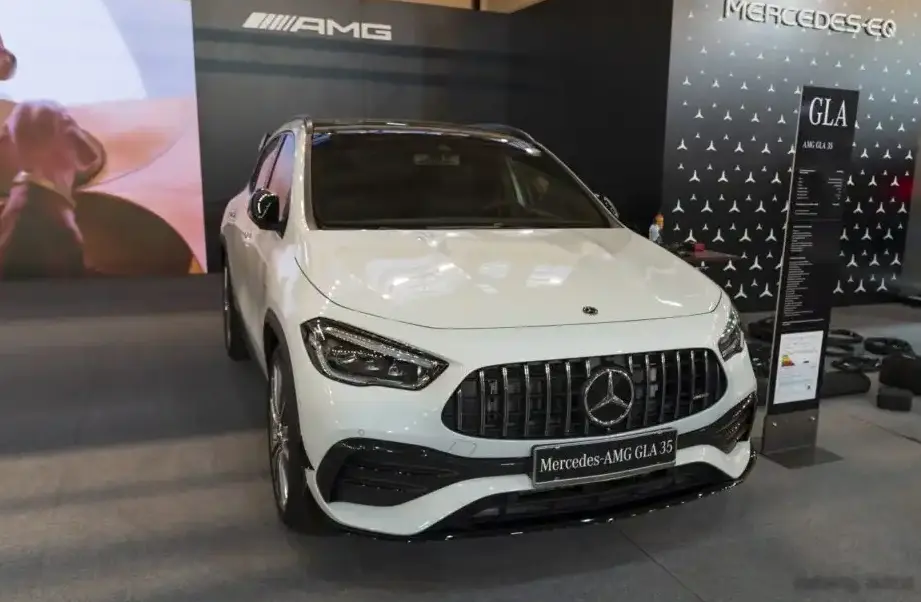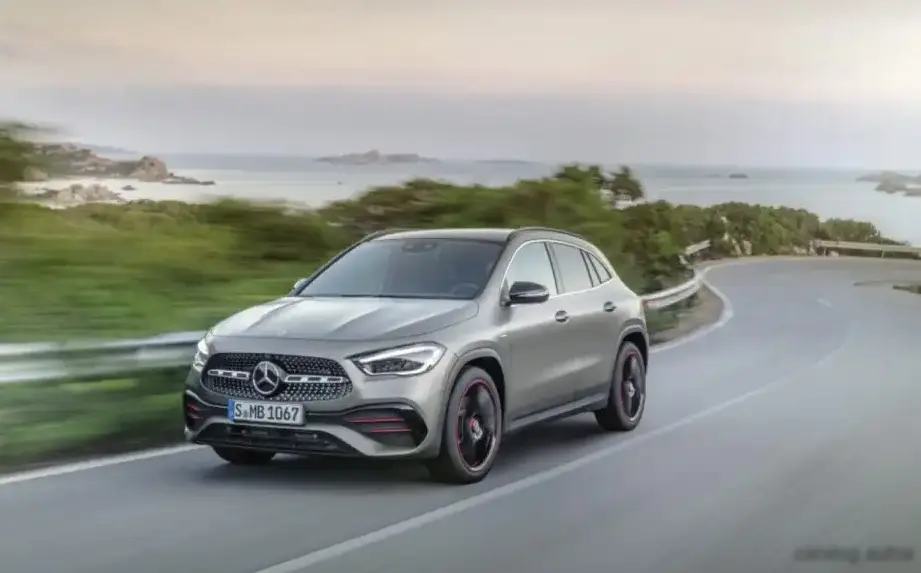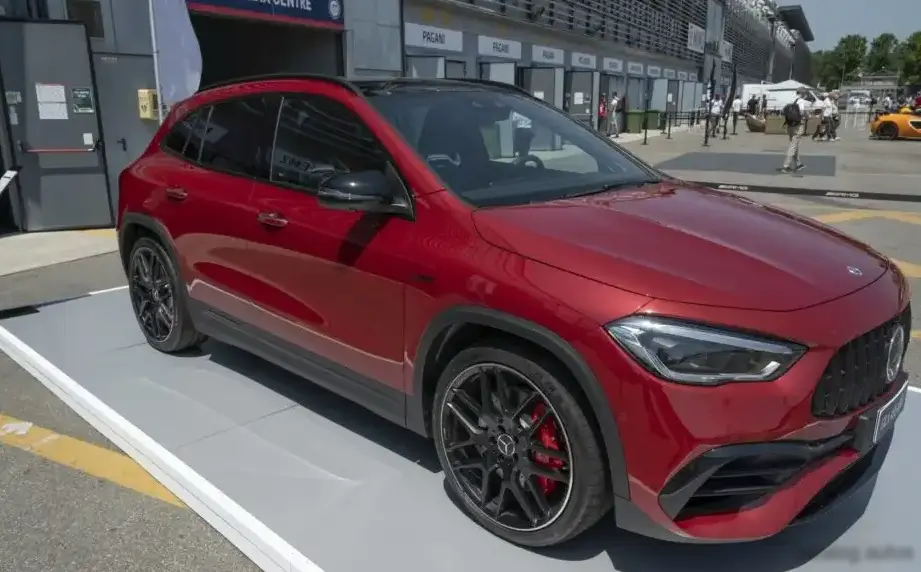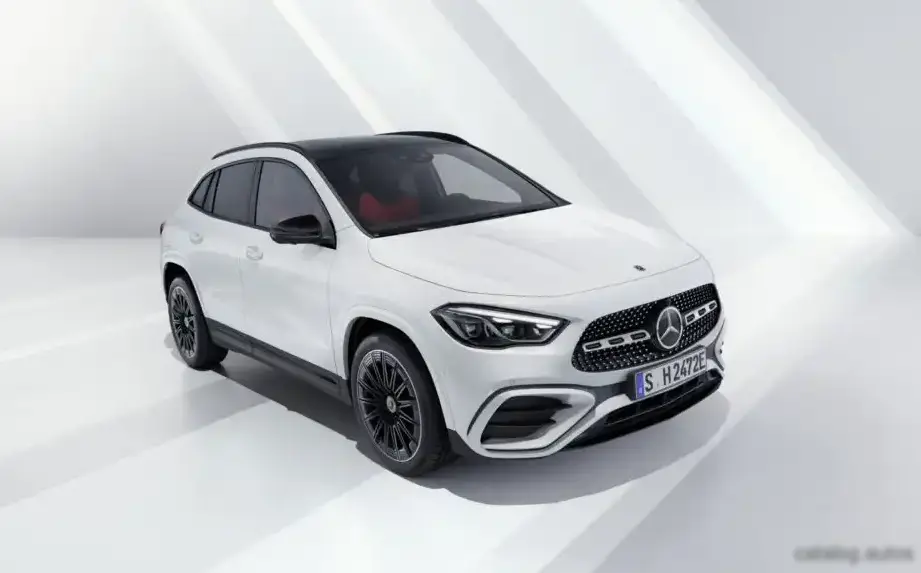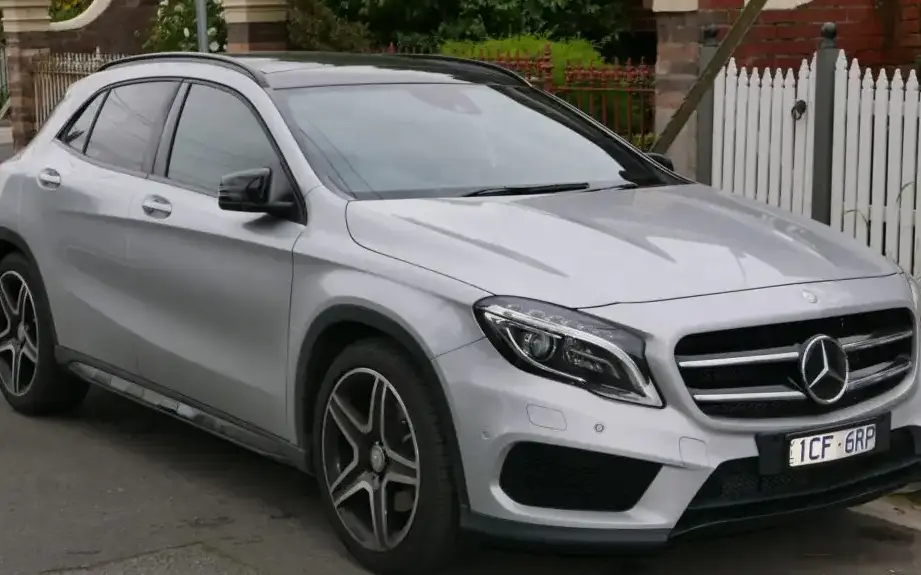
The Mercedes-Benz GLA 200 (X156), produced from December 2013 to 2017, represents the entry point into the first-generation GLA compact SUV range. Positioned as a more accessible option within the GLA lineup, it aimed to attract buyers seeking the prestige of the Mercedes-Benz brand in a smaller, more affordable package. The GLA 200 utilized the Mercedes-Benz 270 engine family and was a key model in expanding the brand’s presence in the burgeoning compact luxury crossover segment, particularly in European and Asian markets. It was built on the MFA (Modular Front-wheel drive Architecture) platform, shared with other compact Mercedes-Benz models like the A-Class and B-Class.
Technical Specifications
| Brand | Mercedes-Benz |
| Model | GLA |
| Generation | GLA (X156) |
| Type (Engine) | GLA 200 (156 Hp) |
| Start of production | December, 2013 |
| End of production | 2017 |
| Powertrain Architecture | Internal Combustion engine |
| Body type | SUV |
| Seats | 5 |
| Doors | 5 |
| Fuel consumption (economy) – urban (NEDC) | 7.9 l/100 km (29.8 US mpg, 35.8 UK mpg, 12.7 km/l) |
| Fuel consumption (economy) – extra urban (NEDC) | 4.7-4.8 l/100 km (50 – 49 US mpg, 60.1 – 58.9 UK mpg, 21.3 – 20.8 km/l) |
| Fuel consumption (economy) – combined (NEDC) | 5.9 l/100 km (39.9 US mpg, 47.9 UK mpg, 16.9 km/l) |
| CO2 emissions (NEDC) | 137-139 g/km |
| Fuel Type | Petrol (Gasoline) |
| Acceleration 0 – 100 km/h | 8.9 sec |
| Acceleration 0 – 62 mph | 8.9 sec |
| Acceleration 0 – 60 mph | 8.5 sec |
| Maximum speed | 215 km/h (133.59 mph) |
| Emission standard | Euro 6 |
| Weight-to-power ratio | 8.5 kg/Hp, 118.2 Hp/tonne |
| Weight-to-torque ratio | 5.3 kg/Nm, 189.4 Nm/tonne |
| Power | 156 Hp @ 5300 rpm |
| Power per litre | 97.8 Hp/l |
| Torque | 250 Nm @ 1250-4000 rpm (184.39 lb.-ft. @ 1250-4000 rpm) |
| Engine layout | Front, Transverse |
| Engine Model/Code | M 270.910 |
| Engine displacement | 1595 cm3 (97.33 cu. in.) |
| Number of cylinders | 4 |
| Engine configuration | Inline |
| Cylinder Bore | 83 mm (3.27 in.) |
| Piston Stroke | 73.7 mm (2.9 in.) |
| Compression ratio | 10.3:1 |
| Number of valves per cylinder | 4 |
| Fuel injection system | Direct injection |
| Engine aspiration | Turbocharger, Intercooler |
| Valvetrain | DOHC |
| Engine oil capacity | 5.8 l (6.13 US qt | 5.1 UK qt) |
| Kerb Weight | 1320 kg (2910.1 lbs.) |
| Max. weight | 1920 kg (4232.88 lbs.) |
| Max load | 600 kg (1322.77 lbs.) |
| Trunk (boot) space – minimum | 421 l (14.87 cu. ft.) |
| Trunk (boot) space – maximum | 1235 l (43.61 cu. ft.) |
| Fuel tank capacity | 50 l (13.21 US gal | 11 UK gal) |
| Max. roof load | 75 kg (165.35 lbs.) |
| Permitted trailer load with brakes (12%) | 1400 kg (3086.47 lbs.) |
| Permitted trailer load without brakes | 695 kg (1532.21 lbs.) |
| Permitted towbar download | 75 kg (165.35 lbs.) |
| Length | 4417 mm (173.9 in.) |
| Width | 1804 mm (71.02 in.) |
| Width including mirrors | 2022 mm (79.61 in.) |
| Height | 1494 mm (58.82 in.) |
| Wheelbase | 2699 mm (106.26 in.) |
| Front track | 1569 mm (61.77 in.) |
| Rear (Back) track | 1560 mm (61.42 in.) |
| Front overhang | 906 mm (35.67 in.) |
| Rear overhang | 812 mm (31.97 in.) |
| Drag coefficient (Cd) | 0.31 |
| Minimum turning circle (turning diameter) | 11.84 m (38.85 ft.) |
| Approach angle | 15.8° |
| Departure angle | 21.5° |
| Drivetrain Architecture | The Internal combustion engine (ICE) drives the front wheels of the vehicle. |
| Drive wheel | Front wheel drive |
| Number of gears and type of gearbox | 6 gears, manual transmission |
| Front suspension | Independent, type McPherson with coil spring and anti-roll bar |
| Rear suspension | Wishbone, Transverse stabilizer, Trailing arm |
| Front brakes | Ventilated discs |
| Rear brakes | Disc |
| Assisting systems | ABS (Anti-lock braking system) |
| Steering type | Steering rack and pinion |
| Power steering | Electric Steering |
| Tires size | 215/60 R17; 215/55 R18; 235/50 R18; 235/45 R19 |
| Wheel rims size | 6.5J x 17; 6.5J x 18; 7J x 18; 8J x 19 |
INTRODUCTION
The Mercedes-Benz GLA 200, launched in late 2013, was a crucial addition to the X156 GLA series. It served as the entry-level model, offering a relatively affordable way to experience the Mercedes-Benz SUV lineup. The GLA, in general, was Mercedes-Benz’s attempt to capture a younger demographic and compete in the rapidly growing compact luxury crossover market. The GLA 200 specifically targeted buyers prioritizing fuel efficiency and a comfortable ride over outright performance. It was available with either a six-speed manual or a seven-speed dual-clutch automatic transmission, though the automatic was far more common.
Powertrain & Engine Architecture
The GLA 200 is powered by the M 270.910 1.6-liter turbocharged inline-four cylinder engine. This engine is part of Mercedes-Benz’s modular engine family, known for its compact size and efficiency. The M 270 features direct fuel injection, a single turbocharger with an intercooler, and a double overhead camshaft (DOHC) valvetrain. The engine code signifies a displacement of approximately 1.6 liters. The turbocharger provides a boost in power and torque, compensating for the relatively small displacement. The engine utilizes a timing chain for durability. The seven-speed 7G-DCT dual-clutch transmission, standard on most GLA 200 models, offers quick and smooth gear changes, contributing to both performance and fuel economy. The 7G-DCT is known for its efficiency and responsiveness, though some early units experienced software glitches.
Driving Characteristics
The GLA 200, with its 156 horsepower and 250 Nm (184 lb-ft) of torque, delivers adequate performance for everyday driving. Acceleration from 0-60 mph takes around 8.5 seconds, which is competitive within its class but noticeably slower than higher-powered GLA variants like the GLA 250 or GLA 45 AMG. The 7G-DCT transmission helps to maximize the available power, providing quick shifts and a relatively seamless driving experience. The gear ratios are tuned for fuel efficiency, meaning the engine can feel slightly strained during aggressive acceleration. Compared to the manual transmission version, the automatic offers greater convenience and smoother operation, though some driving enthusiasts may prefer the engagement of a manual gearbox. The front-wheel-drive configuration contributes to good fuel economy but limits traction in adverse weather conditions.
Equipment & Trim Levels
The GLA 200 typically came standard with features such as automatic climate control, a multi-function steering wheel, and a basic infotainment system with a central display screen. Interior upholstery was generally cloth, though leatherette or genuine leather were available as optional upgrades. Common optional extras included a panoramic sunroof, navigation system, parking sensors, and upgraded audio systems. Trim levels varied slightly depending on the market, but generally, the GLA 200 offered a relatively basic level of equipment compared to the higher-spec GLA 250 models. The interior design was modern and functional, reflecting the overall aesthetic of the Mercedes-Benz A-Class, with which it shared many components.
Chassis & Braking
The GLA 200 utilizes a McPherson strut front suspension and a multi-link rear suspension. This setup provides a comfortable ride quality and decent handling characteristics. The suspension is tuned for comfort rather than outright sportiness. Front brakes are ventilated discs, while rear brakes are solid discs. Anti-lock braking system (ABS) and electronic stability control (ESC) are standard safety features. The GLA 200’s relatively low weight, compared to other GLA models, contributes to its nimble handling. The standard tire size is typically 215/60 R17 or 215/55 R18, depending on the trim level.
Market Reception & Comparison
The GLA 200 was generally well-received by critics as an affordable and practical entry point into the Mercedes-Benz SUV range. However, some reviewers noted that the 1.6-liter engine felt underpowered, particularly when fully loaded or driving uphill. Fuel economy was praised, with combined figures averaging around 39.9 US mpg. Compared to the GLA 250, which featured a more powerful 2.0-liter engine, the GLA 200 offered significantly lower performance but also a lower price tag. The GLA 200 also competed with other compact luxury crossovers such as the Audi Q3 and BMW X1, offering a similar blend of practicality, comfort, and prestige.
Legacy
The GLA 200’s M 270 engine has proven to be generally reliable, though some owners have reported issues with the turbocharger and fuel injectors. The 7G-DCT transmission, while efficient, has also been known to experience occasional software glitches. On the used car market, the GLA 200 represents a relatively affordable way to own a Mercedes-Benz SUV. Its fuel efficiency and comfortable ride make it a popular choice for daily commuting. However, potential buyers should be aware of the potential for turbocharger and transmission issues and ensure that the vehicle has been properly maintained.