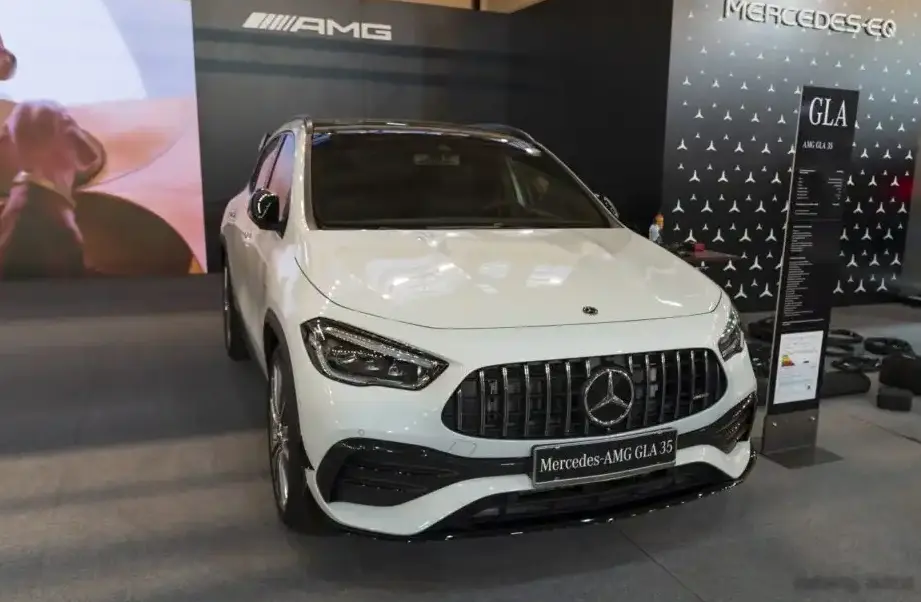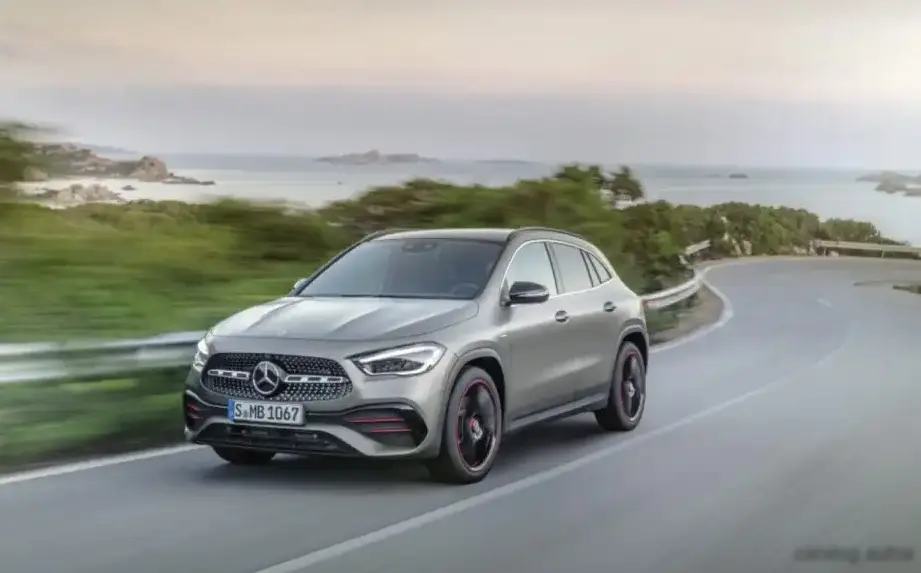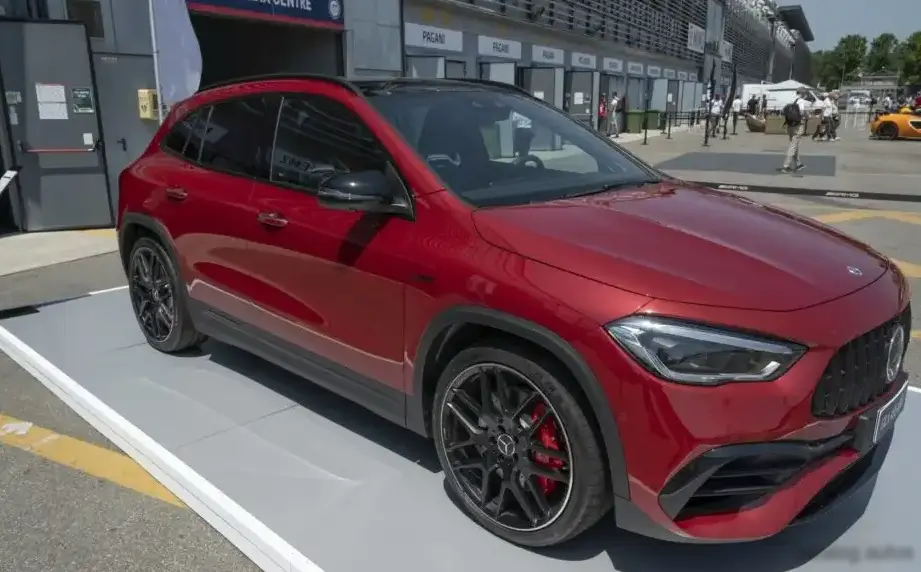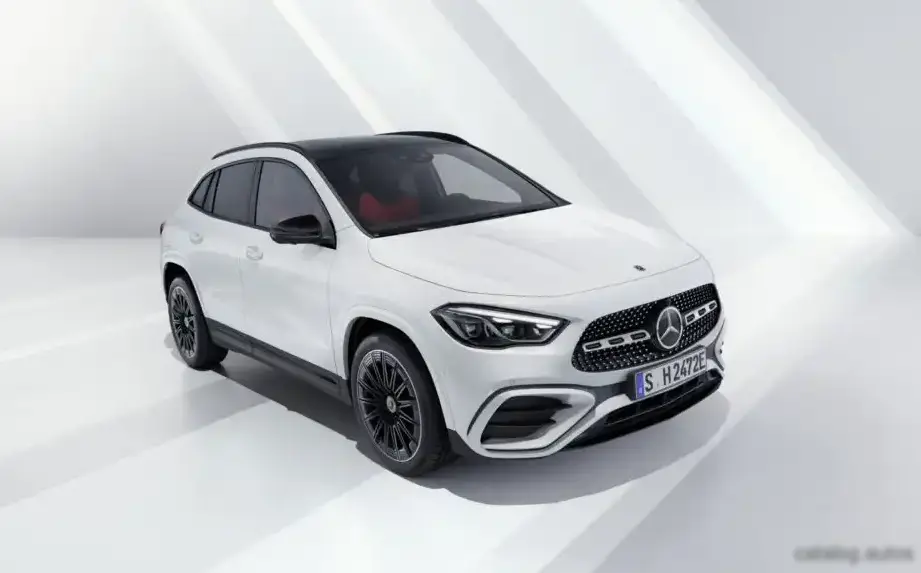
The Mercedes-Benz GLA 200 CDI, produced from December 2013 to 2017, was a key variant within the first generation (X156) GLA compact SUV lineup. Positioned as an entry-level diesel option, it aimed to provide a balance of fuel efficiency, practicality, and the prestige associated with the Mercedes-Benz brand. This model was primarily marketed in Europe and other regions where diesel engines held significant market share, offering a more economical alternative to the gasoline-powered GLA variants. The GLA 200 CDI represented Mercedes-Benz’s attempt to capture a younger, more urban demographic seeking a premium crossover with lower running costs.
Technical Specifications
| Brand | Mercedes-Benz |
| Model | GLA |
| Generation | GLA (X156) |
| Type (Engine) | GLA 200 CDI (136 Hp) |
| Start of production | December, 2013 |
| End of production | 2017 |
| Powertrain Architecture | Internal Combustion engine |
| Body type | SUV |
| Seats | 5 |
| Doors | 5 |
| Fuel consumption (economy) – urban (NEDC) | 5.4-5.5 l/100 km (43.6 – 42.8 US mpg, 52.3 – 51.4 UK mpg, 18.5 – 18.2 km/l) |
| Fuel consumption (economy) – extra urban (NEDC) | 3.7-3.9 l/100 km (63.6 – 60.3 US mpg, 76.3 – 72.4 UK mpg, 27 – 25.6 km/l) |
| Fuel consumption (economy) – combined (NEDC) | 4.3-4.5 l/100 km (54.7 – 52.3 US mpg, 65.7 – 62.8 UK mpg, 23.3 – 22.2 km/l) |
| CO2 emissions (NEDC) | 114-119 g/km |
| Fuel Type | Diesel |
| Acceleration 0 – 100 km/h | 10 sec |
| Acceleration 0 – 62 mph | 10 sec |
| Acceleration 0 – 60 mph | 9.5 sec |
| Maximum speed | 205 km/h (127.38 mph) |
| Emission standard | Euro 6 |
| Weight-to-power ratio | 10.5 kg/Hp, 95.1 Hp/tonne |
| Weight-to-torque ratio | 4.8 kg/Nm, 209.8 Nm/tonne |
| Power | 136 Hp @ 3400-4000 rpm |
| Power per litre | 63.5 Hp/l |
| Torque | 300 Nm @ 1400-3000 rpm (221.27 lb.-ft. @ 1400-3000 rpm) |
| Engine layout | Front, Transverse |
| Engine Model/Code | OM 651.930 |
| Engine displacement | 2143 cm3 (130.77 cu. in.) |
| Number of cylinders | 4 |
| Engine configuration | Inline |
| Cylinder Bore | 83 mm (3.27 in.) |
| Piston Stroke | 99 mm (3.9 in.) |
| Compression ratio | 16.2:1 |
| Number of valves per cylinder | 4 |
| Fuel injection system | Diesel Commonrail |
| Engine aspiration | Turbocharger, Intercooler |
| Valvetrain | DOHC |
| Engine oil capacity | 6.5 l (6.87 US qt | 5.72 UK qt) |
| Kerb Weight | 1430 kg (3152.61 lbs.) |
| Max. weight | 2020 kg (4453.34 lbs.) |
| Max load | 590 kg (1300.73 lbs.) |
| Trunk (boot) space – minimum | 421 l (14.87 cu. ft.) |
| Trunk (boot) space – maximum | 1235 l (43.61 cu. ft.) |
| Fuel tank capacity | 50 l (13.21 US gal | 11 UK gal) |
| Max. roof load | 75 kg (165.35 lbs.) |
| Permitted trailer load with brakes (12%) | 1500 kg (3306.93 lbs.) |
| Permitted trailer load without brakes | 750 kg (1653.47 lbs.) |
| Permitted towbar download | 75 kg (165.35 lbs.) |
| Length | 4417 mm (173.9 in.) |
| Width | 1804 mm (71.02 in.) |
| Width including mirrors | 2022 mm (79.61 in.) |
| Height | 1494 mm (58.82 in.) |
| Wheelbase | 2699 mm (106.26 in.) |
| Front track | 1569 mm (61.77 in.) |
| Rear (Back) track | 1560 mm (61.42 in.) |
| Front overhang | 906 mm (35.67 in.) |
| Rear overhang | 812 mm (31.97 in.) |
| Drag coefficient (Cd) | 0.30 |
| Minimum turning circle (turning diameter) | 11.84 m (38.85 ft.) |
| Approach angle | 15.8° |
| Departure angle | 21.5° |
| Drivetrain Architecture | The Internal combustion engine (ICE) drives the front wheels of the vehicle. |
| Drive wheel | Front wheel drive |
| Number of gears and type of gearbox | 6 gears, manual transmission |
| Front suspension | Independent, type McPherson with coil spring and anti-roll bar |
| Rear suspension | Wishbone, Transverse stabilizer, Trailing arm |
| Front brakes | Ventilated discs |
| Rear brakes | Disc |
| Assisting systems | ABS (Anti-lock braking system) |
| Steering type | Steering rack and pinion |
| Power steering | Electric Steering |
| Tires size | 215/60 R17; 215/55 R18; 235/50 R18; 235/45 R19 |
| Wheel rims size | 6.5J x 17; 6.5J x 18; 7J x 18; 8J x 19 |
Powertrain & Engine Architecture
The GLA 200 CDI was powered by the OM651.930 2.1-liter inline-four cylinder diesel engine. This engine was a mainstay in the Mercedes-Benz lineup, known for its durability and relatively good fuel economy. It featured a turbocharger with an intercooler to boost power output and improve efficiency. The engine utilized a common rail direct fuel injection system, delivering fuel directly into the combustion chamber at extremely high pressure for optimized combustion. The valvetrain employed a double overhead camshaft (DOHC) design with four valves per cylinder, enhancing breathing and contributing to the engine’s power delivery. The engine produced 136 horsepower at 3400-4000 rpm and 300 Nm (221 lb-ft) of torque between 1400-3000 rpm. The engine also incorporated a particulate filter to reduce emissions, meeting Euro 6 standards. The standard transmission was a 6-speed manual gearbox, although a 7G-DCT dual-clutch automatic transmission was available as an option.
Driving Characteristics
The GLA 200 CDI with the manual transmission offered adequate, though not exhilarating, performance. Acceleration from 0-60 mph took around 9.5 seconds, and top speed was limited to 127.38 mph. The engine’s torque was readily available from low RPMs, making it suitable for everyday driving and urban commutes. However, the 136 hp output meant that overtaking maneuvers required careful planning, especially when the vehicle was fully loaded. Compared to the more powerful GLA 250 or AMG variants, the 200 CDI felt noticeably slower. The manual gearbox was generally smooth, but the gear ratios were tuned for fuel efficiency rather than outright performance. The automatic transmission, when equipped, provided smoother shifts but could sometimes feel hesitant during quick acceleration.
Equipment & Trim Levels
The GLA 200 CDI typically came standard with features such as air conditioning, a multi-function steering wheel, power windows, and an audio system with Bluetooth connectivity. Safety features included ABS, ESP (Electronic Stability Program), and multiple airbags. Higher trim levels, such as the AMG Line, added features like sport seats, alloy wheels, and exterior styling enhancements. Optional extras included navigation system, panoramic sunroof, leather upholstery, and advanced driver-assistance systems like lane keeping assist and blind spot monitoring. Interior upholstery was typically cloth in the base models, with leather options available at an extra cost. The dashboard layout was modern and functional, with a central infotainment screen controlling various vehicle functions.
Chassis & Braking
The GLA 200 CDI featured a McPherson strut front suspension and a multi-link rear suspension, providing a comfortable ride quality. The suspension was tuned to prioritize comfort over sporty handling. Front brakes were ventilated discs, while rear brakes were solid discs. ABS (Anti-lock Braking System) was standard, ensuring safe and controlled braking in various conditions. The steering was electrically assisted, providing light and precise steering feel. The GLA 200 CDI’s weight of around 1430 kg (3153 lbs) influenced its handling characteristics, making it feel slightly less agile than lighter competitors.
Market Reception & Comparison
The GLA 200 CDI was generally well-received by automotive critics for its fuel efficiency and practicality. However, some reviewers noted that the engine lacked the punch of its gasoline counterparts. Compared to other diesel-powered compact SUVs in Europe, such as the Audi Q3 TDI and BMW X1 diesel, the GLA 200 CDI offered a competitive combination of performance, fuel economy, and price. Its fuel economy figures of 4.3-4.5 l/100 km (54.7-52.3 mpg) were particularly appealing to buyers seeking low running costs. Reliability reports suggested that the OM651 engine was generally robust, but regular maintenance was crucial to prevent issues with the diesel particulate filter and fuel injection system.
Legacy
The GLA 200 CDI remains a popular choice in the used car market, particularly for buyers seeking a fuel-efficient and relatively affordable compact SUV. The OM651 engine has proven to be durable when properly maintained, and parts availability is generally good. However, potential buyers should be aware of the potential for issues with the diesel particulate filter, especially if the vehicle has primarily been used for short trips. The GLA 200 CDI represents a significant step for Mercedes-Benz into the compact SUV segment, offering a blend of luxury, practicality, and efficiency that appealed to a wide range of buyers.