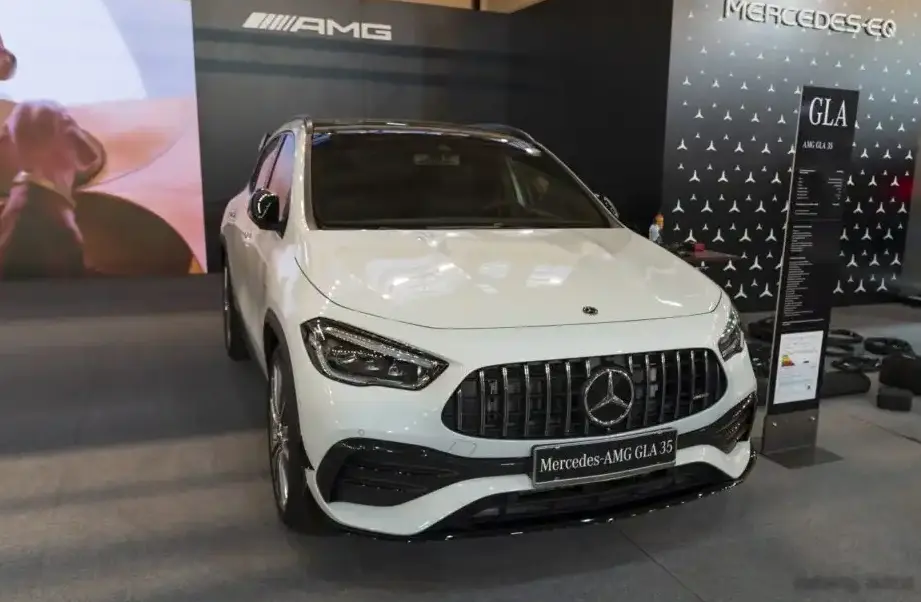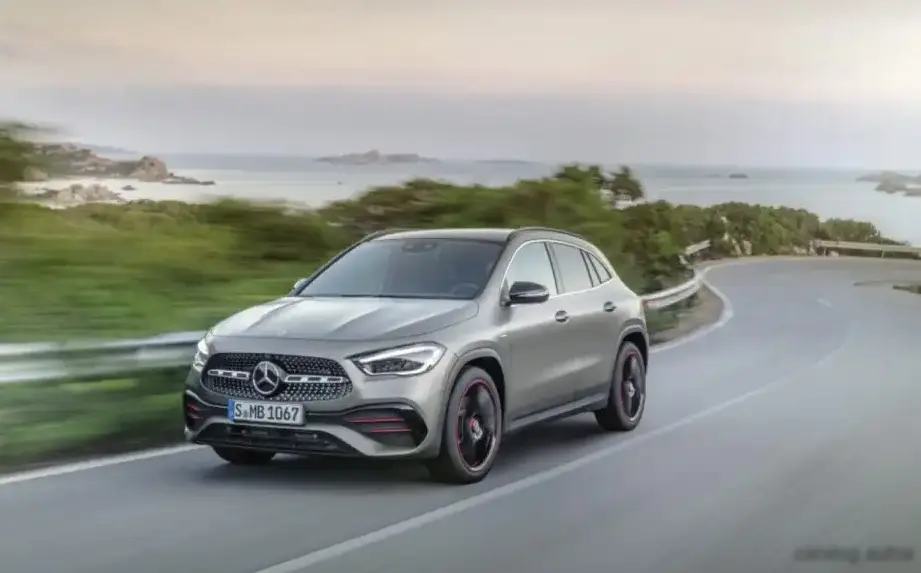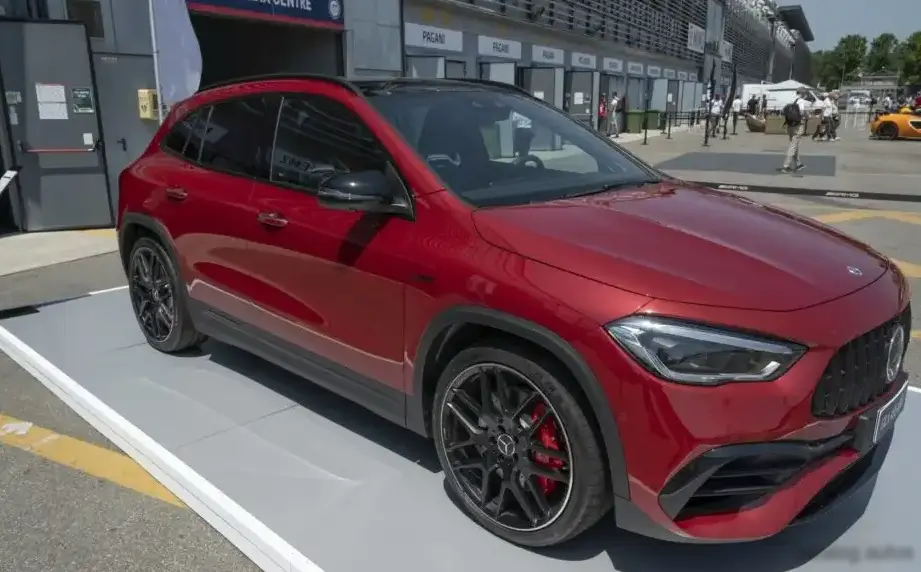
The Mercedes-Benz GLA 250, produced from 2015 to 2017 as part of the X156 generation, represents Mercedes-Benz’s entry into the burgeoning subcompact luxury crossover segment. Positioned as a mid-range offering within the GLA lineup, it bridged the gap between the base GLA 200 models and the performance-oriented AMG variants. The GLA 250 aimed to deliver a blend of practicality, style, and a more engaging driving experience than its competitors, appealing to a younger demographic and those seeking a versatile, premium vehicle. It was primarily marketed in North America, Europe, and Asia, offering a more accessible price point within the Mercedes-Benz family.
Technical Specifications
| Brand | Mercedes-Benz |
| Model | GLA |
| Generation | GLA (X156) |
| Type (Engine) | GLA 250 (211 Hp) |
| Start of production | July, 2015 |
| End of production | 2017 |
| Powertrain Architecture | Internal Combustion engine |
| Body type | SUV |
| Seats | 5 |
| Doors | 5 |
| Fuel consumption (economy) – urban (NEDC) | 8.2 l/100 km (28.7 US mpg, 34.4 UK mpg, 12.2 km/l) |
| Fuel consumption (economy) – extra urban (NEDC) | 4.9-5.1 l/100 km (48 – 46.1 US mpg, 57.6 – 55.4 UK mpg, 20.4 – 19.6 km/l) |
| Fuel consumption (economy) – combined (NEDC) | 6.1-6.2 l/100 km (38.6 – 37.9 US mpg, 46.3 – 45.6 UK mpg, 16.4 – 16.1 km/l) |
| CO2 emissions (NEDC) | 142-145 g/km |
| Fuel Type | Petrol (Gasoline) |
| Acceleration 0 – 100 km/h | 6.7 sec |
| Acceleration 0 – 62 mph | 6.7 sec |
| Acceleration 0 – 60 mph | 6.4 sec |
| Maximum speed | 235 km/h (146.02 mph) |
| Emission standard | Euro 6 |
| Weight-to-power ratio | 6.4 kg/Hp, 155.1 Hp/tonne |
| Weight-to-torque ratio | 3.9 kg/Nm, 257.4 Nm/tonne |
| Power | 211 Hp @ 5500 rpm |
| Torque | 350 Nm @ 1200-4000 rpm (258.15 lb.-ft. @ 1200-4000 rpm) |
| Engine layout | Front, Transverse |
| Engine Model/Code | M 270.920 |
| Engine displacement | 1991 cm3 (121.5 cu. in.) |
| Number of cylinders | 4 |
| Engine configuration | Inline |
| Cylinder Bore | 83 mm (3.27 in.) |
| Piston Stroke | 92 mm (3.62 in.) |
| Compression ratio | 9.8:1 |
| Number of valves per cylinder | 4 |
| Fuel injection system | Direct injection |
| Engine aspiration | Turbocharger, Intercooler |
| Valvetrain | DOHC |
| Engine oil capacity | 5.6 l (5.92 US qt | 4.93 UK qt) |
| Kerb Weight | 1360 kg (2998.29 lbs.) |
| Max. weight | 1945 kg (4287.99 lbs.) |
| Max load | 585 kg (1289.7 lbs.) |
| Trunk (boot) space – minimum | 421 l (14.87 cu. ft.) |
| Trunk (boot) space – maximum | 1235 l (43.61 cu. ft.) |
| Fuel tank capacity | 50 l (13.21 US gal | 11 UK gal) |
| Max. roof load | 75 kg (165.35 lbs.) |
| Permitted trailer load with brakes (12%) | 1500 kg (3306.93 lbs.) |
| Permitted trailer load without brakes | 715 kg (1576.31 lbs.) |
| Permitted towbar download | 75 kg (165.35 lbs.) |
| Length | 4417 mm (173.9 in.) |
| Width | 1804 mm (71.02 in.) |
| Width including mirrors | 2022 mm (79.61 in.) |
| Height | 1494 mm (58.82 in.) |
| Wheelbase | 2699 mm (106.26 in.) |
| Front track | 1569 mm (61.77 in.) |
| Rear (Back) track | 1560 mm (61.42 in.) |
| Front overhang | 906 mm (35.67 in.) |
| Rear overhang | 812 mm (31.97 in.) |
| Drag coefficient (Cd) | 0.31 |
| Minimum turning circle (turning diameter) | 11.84 m (38.85 ft.) |
| Approach angle | 15.8° |
| Departure angle | 21.5° |
| Drivetrain Architecture | The Internal combustion engine (ICE) drives the front wheels of the vehicle. |
| Drive wheel | Front wheel drive |
| Number of gears and type of gearbox | 7 gears, automatic transmission |
| Front suspension | Independent, type McPherson with coil spring and anti-roll bar |
| Rear suspension | Wishbone, Transverse stabilizer, Trailing arm |
| Front brakes | Ventilated discs |
| Rear brakes | Disc |
| Assisting systems | ABS (Anti-lock braking system) |
| Steering type | Steering rack and pinion |
| Power steering | Electric Steering |
| Tires size | 215/60 R17; 215/55 R18; 235/50 R18; 235/45 R19 |
| Wheel rims size | 6.5J x 17; 6.5J x 18; 7J x 18; 8J x 19 |
Powertrain & Engine Architecture
The GLA 250 is powered by the M270.920 2.0-liter inline-four cylinder gasoline engine. This engine is a member of Mercedes-Benz’s modular engine family, known for its compact design and efficiency. It utilizes direct fuel injection and a single turbocharger with an intercooler to produce 211 horsepower at 5500 rpm and 350 Nm (258 lb-ft) of torque between 1200 and 4000 rpm. The engine features a double overhead camshaft (DOHC) valvetrain with four valves per cylinder. The GLA 250 predominantly came equipped with a 7G-TRONIC PLUS seven-speed automatic transmission, offering smooth shifts and contributing to the vehicle’s fuel efficiency. While a six-speed manual was available in some markets, the automatic was far more common, particularly in North America.
Driving Characteristics
The GLA 250 with the automatic transmission delivers a comfortable and refined driving experience. Acceleration from 0 to 60 mph takes approximately 6.4 seconds. The 7G-TRONIC transmission is well-tuned, providing quick and seamless gear changes. Compared to the base GLA 200 models, the 250 offers noticeably more power and responsiveness, making it more capable for highway merging and overtaking. However, it doesn’t possess the sporty urgency of the AMG GLA 45. The automatic transmission’s gear ratios are optimized for both fuel economy and everyday drivability, with a focus on providing adequate torque in lower gears for city driving. The front-wheel-drive configuration contributes to a slight understeer during aggressive cornering, but the vehicle remains stable and predictable.
Equipment & Trim Levels
The GLA 250 typically came standard with features such as automatic climate control, a 5.8-inch infotainment display, Bluetooth connectivity, and a rearview camera. Upholstery was generally MB-Tex artificial leather, with genuine leather available as an option. Common optional extras included a larger infotainment screen, navigation system, panoramic sunroof, heated seats, and a premium sound system. Trim levels varied slightly by market, but generally offered packages that bundled popular options together. The interior design was modern and functional, reflecting Mercedes-Benz’s design language at the time.
Chassis & Braking
The GLA 250 utilizes a McPherson strut front suspension and a multi-link rear suspension, providing a good balance between ride comfort and handling. The suspension is tuned to prioritize comfort, but still offers reasonable control in corners. Brakes are ventilated discs at the front and solid discs at the rear. Anti-lock braking system (ABS) is standard, along with electronic stability control. The GLA 250’s chassis is relatively lightweight, contributing to its agility and fuel efficiency. The standard tire size is typically 215/60 R17 or 215/55 R18, depending on the trim level.
Market Reception & Comparison
The GLA 250 was generally well-received by automotive critics, who praised its stylish design, comfortable interior, and engaging driving experience. It was often compared to rivals such as the Audi Q3, BMW X1, and Acura GLX. The GLA 250 offered a competitive level of performance and features for its price point. Fuel economy was considered good for its class, with combined figures ranging from 37.9 to 38.6 US mpg. Reliability reports have been mixed, with some owners reporting issues with the infotainment system and occasional oil consumption. Compared to the GLA 200, the 250 offered a significant performance upgrade, justifying the higher price. The AMG GLA 45, however, provided a much more potent driving experience, but at a considerably higher cost.
Legacy
The GLA 250 (X156) remains a relatively affordable entry point into the Mercedes-Benz brand on the used car market. The M270 engine, while generally reliable, requires regular maintenance, including oil changes and inspection of the timing chain. The 7G-TRONIC transmission is known for its durability, but may require servicing at higher mileages. Overall, the GLA 250 offers a good balance of luxury, practicality, and performance, making it a popular choice for buyers seeking a compact luxury crossover. Its impact lies in establishing Mercedes-Benz as a key player in the growing subcompact luxury SUV segment, paving the way for the second-generation GLA.