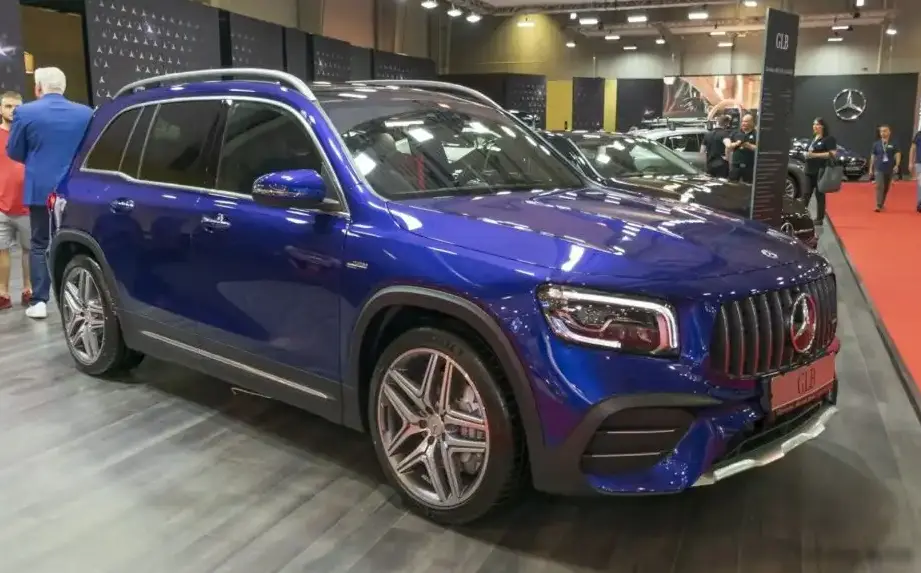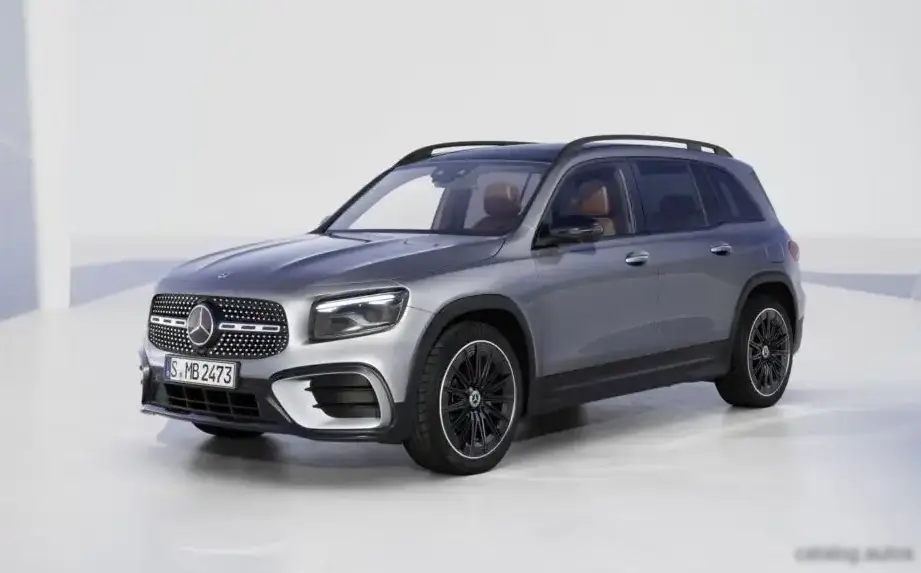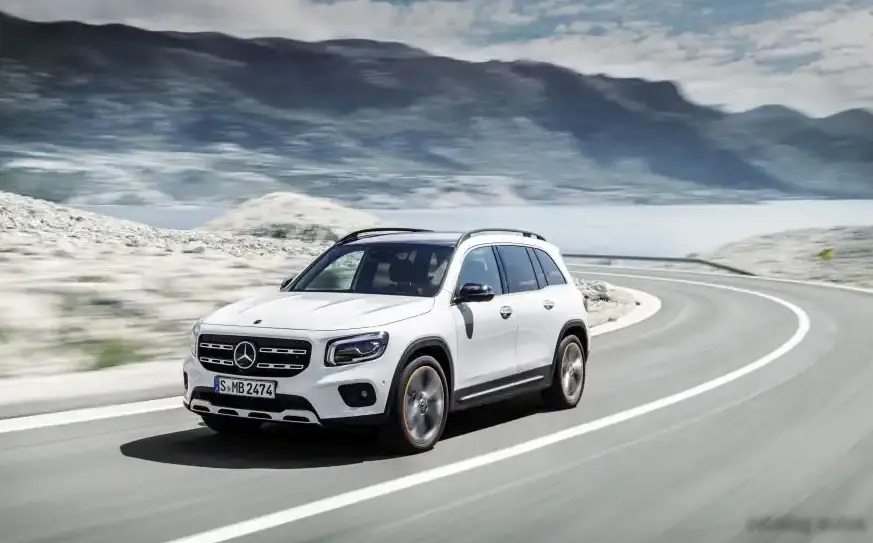
The Mercedes-Benz GLB 200d, produced from 2019 to 2023 as part of the X247 GLB generation, represents an entry point into the compact luxury SUV segment for the Mercedes-Benz brand. Positioned as a diesel-powered variant, it offered a balance of fuel efficiency and practicality, appealing to buyers seeking a versatile vehicle for both daily commuting and family transport. The GLB, overall, was designed to bridge the gap between the more affordable A-Class and the larger GLC, offering optional seven-seat configuration – a rarity in its class. The 200d trim, equipped with a dual-clutch transmission (DCT), was a popular choice in European markets where diesel engines remained prevalent.
Technical Specifications
| Brand | Mercedes-Benz |
| Model | GLB |
| Generation | GLB (X247) |
| Type (Engine) | GLB 200d (150 Hp) DCT |
| Start of production | 2019 |
| End of production | 2023 |
| Powertrain Architecture | Internal Combustion engine |
| Body type | SUV |
| Seats | 5-7 |
| Doors | 5 |
| Fuel consumption at Low speed (WLTP) | 5.4 l/100 km (43.6 US mpg, 52.3 UK mpg, 18.5 km/l) |
| Fuel consumption at very high speed (WLTP) | 6.1 l/100 km (38.6 US mpg, 46.3 UK mpg, 16.4 km/l) |
| CO2 emissions (WLTP) | 143-160 g/km |
| Fuel consumption (economy) – urban | 5.8-6.0 l/100 km (40.6 – 39.2 US mpg, 48.7 – 47.1 UK mpg, 17.2 – 16.7 km/l) |
| Fuel consumption (economy) – extra urban | 4.4-4.5 l/100 km (53.5 – 52.3 US mpg, 64.2 – 62.8 UK mpg, 22.7 – 22.2 km/l) |
| Fuel consumption (economy) – combined | 4.9-5.0 l/100 km (48 – 47 US mpg, 57.6 – 56.5 UK mpg, 20.4 – 20 km/l) |
| CO2 emissions | 129-133 g/km |
| Fuel Type | Diesel |
| Acceleration 0 – 100 km/h | 9 sec |
| Acceleration 0 – 62 mph | 9 sec |
| Acceleration 0 – 60 mph | 8.6 sec |
| Maximum speed | 204 km/h (126.76 mph) |
| Emission standard | Euro 6d ISC |
| Weight-to-power ratio | 10.7 kg/Hp, 93.5 Hp/tonne |
| Weight-to-torque ratio | 5 kg/Nm, 199.4 Nm/tonne |
| Power | 150 Hp @ 3400-4440 rpm |
| Power per litre | 76.9 Hp/l |
| Torque | 320 Nm @ 1400-2600 rpm (236.02 lb.-ft. @ 1400-2600 rpm) |
| Engine layout | Front, Transverse |
| Engine Model/Code | OM 654q |
| Engine displacement | 1951 cm3 (119.06 cu. in.) |
| Number of cylinders | 4 |
| Engine configuration | Inline |
| Number of valves per cylinder | 4 |
| Fuel injection system | Direct injection |
| Engine aspiration | Turbocharger, Intercooler |
| Engine oil capacity | 6.8 l (7.19 US qt | 5.98 UK qt) |
| Kerb Weight | 1605 kg (3538.42 lbs.) |
| Max. weight | 2195 kg (4839.15 lbs.) |
| Max load | 590 kg (1300.73 lbs.) |
| Trunk (boot) space – minimum | 570 l (20.13 cu. ft.) |
| Trunk (boot) space – maximum | 1805 l (63.74 cu. ft.) |
| Fuel tank capacity | 52 l (13.74 US gal | 11.44 UK gal) |
| Permitted trailer load with brakes (12%) | 1800 kg (3968.32 lbs.) |
| Permitted trailer load without brakes | 750 kg (1653.47 lbs.) |
| Length | 4634 mm (182.44 in.) |
| Width | 1834 mm (72.2 in.) |
| Width including mirrors | 2020 mm (79.53 in.) |
| Height | 1658-1662 mm (65.28 – 65.43 in.) |
| Wheelbase | 2829 mm (111.38 in.) |
| Front track | 1605 mm (63.19 in.) |
| Rear (Back) track | 1606 mm (63.23 in.) |
| Front overhang | 905 mm (35.63 in.) |
| Rear overhang | 900 mm (35.43 in.) |
| Ride height (ground clearance) | 135 mm (5.31 in.) |
| Approach angle | 18° |
| Departure angle | 18.3° |
| Ramp-over (brakeover) angle | 13.9° |
| Drivetrain Architecture | The Internal combustion engine (ICE) drives the front wheels of the vehicle. |
| Drive wheel | Front wheel drive |
| Number of gears and type of gearbox | 8 gears, automatic transmission G-DCT |
| Front suspension | Independent type McPherson |
| Rear suspension | Independent multi-link suspension |
| Front brakes | Ventilated discs |
| Rear brakes | Ventilated discs |
| Assisting systems | ABS (Anti-lock braking system) |
| Steering type | Steering rack and pinion |
| Power steering | Electric Steering |
| Tires size | 215/65 R17 |
| Wheel rims size | 6.5J x 17 |
Powertrain & Engine Architecture
The GLB 200d is powered by the OM 654q, a 1.95-liter inline-four cylinder diesel engine. This engine is a member of Mercedes-Benz’s modular engine family, known for its lightweight construction and advanced technology. It features a cast iron block and aluminum cylinder head, contributing to both durability and reduced weight. The engine utilizes a second-generation common-rail direct injection system, operating at pressures up to 2,700 bar, for precise fuel delivery and optimized combustion. A single turbocharger with variable geometry turbine (VGT) provides boosted intake air, enhancing both power and torque across a broad RPM range. The engine also incorporates an intercooler to further cool the intake charge. The 8-speed dual-clutch transmission (G-DCT) is a key component, offering quick and smooth gear changes. This transmission is known for its efficiency and responsiveness, contributing to the GLB 200d’s overall fuel economy.
Driving Characteristics
The GLB 200d with the DCT transmission delivers a comfortable and refined driving experience. While not overtly sporty, the 150 horsepower and 320 Nm (236 lb-ft) of torque provide adequate performance for everyday driving situations. Acceleration from 0 to 100 km/h (0-62 mph) takes approximately 9 seconds. The DCT transmission contributes to seamless gear changes, minimizing interruptions in power delivery. Compared to the more powerful GLB 250 variants, the 200d prioritizes fuel efficiency over outright speed. The gear ratios are tuned for optimal fuel economy and relaxed cruising, rather than aggressive acceleration. The front-wheel-drive configuration provides good traction in most conditions, although it may exhibit some torque steer under hard acceleration.
Equipment & Trim Levels
The GLB 200d typically came standard with features such as automatic climate control, a touchscreen infotainment system with Apple CarPlay and Android Auto compatibility, and a suite of safety features including automatic emergency braking and lane keeping assist. Interior upholstery was generally Artico leatherette (synthetic leather), with options for genuine leather upgrades. Standard dashboard configuration included a digital instrument cluster and a multi-function steering wheel. Optional extras included a panoramic sunroof, premium sound system, and advanced driver-assistance systems like adaptive cruise control and blind-spot monitoring. The GLB 200d often served as a base model, with higher trims offering more luxurious appointments and additional features.
Chassis & Braking
The GLB 200d utilizes an independent McPherson strut suspension at the front and a multi-link suspension at the rear, providing a comfortable ride and good handling characteristics. Stabilizer bars are fitted to both axles to reduce body roll during cornering. The braking system consists of ventilated discs on all four wheels, providing ample stopping power. Anti-lock braking system (ABS) and electronic stability control (ESC) are standard safety features. The suspension tuning is geared towards comfort, prioritizing a smooth ride over sporty handling. The GLB’s relatively compact size and manageable weight contribute to its agility in urban environments.
Market Reception & Comparison
The GLB 200d was generally well-received by automotive critics, particularly for its fuel efficiency and practicality. Reviewers praised its spacious interior, comfortable ride, and user-friendly technology. However, some noted that the engine could feel underpowered when fully loaded or during overtaking maneuvers. Compared to the GLB 250, the 200d offered significantly better fuel economy but lacked the same level of performance. Against competitors like the BMW X1 and Audi Q3, the GLB 200d offered a compelling combination of value, space, and efficiency. Its diesel engine was a key selling point in European markets, where diesel fuel was more readily available and often cheaper than gasoline.
Legacy
The OM 654 engine family, used in the GLB 200d, has proven to be a reliable and durable powertrain. While long-term reliability data is still accumulating, early indications suggest that the engine is relatively trouble-free. The GLB 200d has become a popular choice in the used car market, particularly among buyers seeking a fuel-efficient and practical compact SUV. Its combination of comfort, space, and technology continues to make it an attractive option for families and commuters alike. The DCT transmission, while generally reliable, may require more frequent servicing than traditional automatic transmissions.