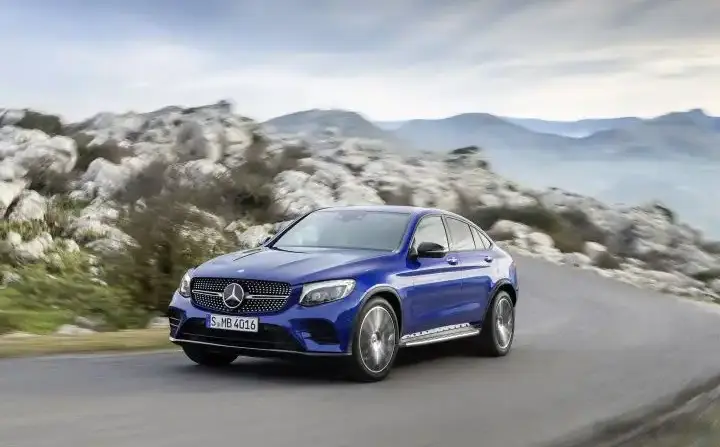
The Mercedes-Benz GLC 350d 4MATIC Coupe (C253) represents a compelling blend of luxury, performance, and practicality within the mid-size SUV segment. Produced between December 2016 and May 2018, this variant occupied a significant position in the GLC Coupe lineup, offering a diesel-powered option for buyers prioritizing fuel efficiency and strong torque delivery. It was part of the broader C253 generation, which introduced a coupe-styled body to the popular GLC platform (based on the W205 C-Class). The 350d trim aimed to bridge the gap between the entry-level models and the higher-performance AMG variants.
Technical Specifications
| Brand | Mercedes-Benz |
| Model | GLC |
| Generation | GLC Coupe (C253) |
| Type | GLC 350d (258 Hp) 4MATIC G-TRONIC |
| Start of production | December, 2016 |
| End of production | May, 2018 |
| Powertrain Architecture | Internal Combustion engine |
| Body type | Coupe, SUV |
| Seats | 4 |
| Doors | 4 |
| Fuel consumption (urban) | 6.9-7.2 l/100 km (34.1 – 32.7 US mpg, 40.9 – 39.2 UK mpg, 14.5 – 13.9 km/l) |
| Fuel consumption (extra urban) | 5.4-5.7 l/100 km (43.6 – 41.3 US mpg, 52.3 – 49.6 UK mpg, 18.5 – 17.5 km/l) |
| Fuel consumption (combined) | 6.0-6.2 l/100 km (39.2 – 37.9 US mpg, 47.1 – 45.6 UK mpg, 16.7 – 16.1 km/l) |
| CO2 emissions | 161-169 g/km |
| Fuel Type | Diesel |
| Acceleration 0 – 100 km/h | 6.2 sec |
| Acceleration 0 – 62 mph | 6.2 sec |
| Acceleration 0 – 60 mph | 5.9 sec |
| Maximum speed | 238 km/h (147.89 mph) |
| Emission standard | Euro 6 |
| Weight-to-power ratio | 7.1 kg/Hp, 140.2 Hp/tonne |
| Weight-to-torque ratio | 3 kg/Nm, 337 Nm/tonne |
| Power | 258 Hp @ 3400 rpm |
| Torque | 620 Nm @ 1600-2400 rpm (457.29 lb.-ft. @ 1600-2400 rpm) |
| Engine layout | Front, Longitudinal |
| Engine Model/Code | OM 642.873 |
| Engine displacement | 2987 cm3 (182.28 cu. in.) |
| Number of cylinders | 6 |
| Engine configuration | V-engine |
| Compression ratio | 15.5:1 |
| Fuel injection system | Diesel Commonrail |
| Engine aspiration | Turbocharger, Intercooler |
| Engine oil capacity | 8 l (8.45 US qt | 7.04 UK qt) |
| Coolant | 13 l (13.74 US qt | 11.44 UK qt) |
| Kerb Weight | 1840 kg (4056.51 lbs.) |
| Max. weight | 2530 kg (5577.7 lbs.) |
| Max load | 690 kg (1521.19 lbs.) |
| Trunk (boot) space – minimum | 500 l (17.66 cu. ft.) |
| Trunk (boot) space – maximum | 1400 l (49.44 cu. ft.) |
| Fuel tank capacity | 66 l (17.44 US gal | 14.52 UK gal) |
| Max. roof load | 75 kg (165.35 lbs.) |
| Permitted trailer load with brakes (12%) | 2500 kg (5511.56 lbs.) |
| Permitted trailer load without brakes | 750 kg (1653.47 lbs.) |
| Length | 4732 mm (186.3 in.) |
| Width | 1890 mm (74.41 in.) |
| Width including mirrors | 2096 mm (82.52 in.) |
| Height | 1602 mm (63.07 in.) |
| Wheelbase | 2873 mm (113.11 in.) |
| Front track | 1620 mm (63.78 in.) |
| Rear track | 1619 mm (63.74 in.) |
| Front overhang | 831 mm (32.72 in.) |
| Rear overhang | 1028 mm (40.47 in.) |
| Drag coefficient (Cd) | 0.31 |
| Minimum turning circle | 11.80 m (38.71 ft.) |
| Drive wheel | All wheel drive (4×4) |
| Number of gears | 9 |
| Gearbox type | automatic transmission G-TRONIC |
| Front suspension | Independent multi-link suspension |
| Rear suspension | Independent multi-link suspension |
| Front brakes | Ventilated discs |
| Rear brakes | Ventilated discs |
Powertrain & Engine Architecture
The GLC 350d Coupe was powered by the OM 642.873, a 3.0-liter turbocharged diesel V6 engine. This engine was a mainstay in Mercedes-Benz’s lineup, known for its robust construction and refined power delivery. The OM 642 featured a common rail direct injection system, delivering fuel at extremely high pressures for optimized combustion. The engine utilized a variable geometry turbocharger (VGT) and an intercooler to maximize power and efficiency. The V6 configuration provided inherent smoothness, while the turbocharging system boosted torque significantly, especially at lower engine speeds. The engine produced 258 horsepower at 3400 rpm and a substantial 620 Nm (457 lb-ft) of torque between 1600 and 2400 rpm. This torque output was a key characteristic, providing strong acceleration and effortless cruising. The engine was paired with Mercedes-Benz’s 9G-TRONIC nine-speed automatic transmission. This transmission was designed for smooth shifts and optimized fuel economy, with closely spaced gear ratios to keep the engine in its peak power band.
Driving Characteristics
The 9G-TRONIC transmission, combined with the high torque output of the 3.0L diesel, resulted in a driving experience focused on relaxed performance. Acceleration from 0 to 60 mph took approximately 5.9 seconds, making it a relatively quick SUV for its class. The transmission’s numerous gears allowed for efficient highway cruising, keeping engine speeds low and contributing to good fuel economy. Compared to the gasoline-powered GLC variants, the 350d offered superior low-end torque, making it more effortless in everyday driving situations and more capable of towing. While not as sporty as the AMG models, the 350d provided ample power for overtaking and merging onto highways. The 4MATIC all-wheel-drive system ensured confident handling in various weather conditions.
Equipment & Trim Levels
The GLC 350d 4MATIC Coupe typically came well-equipped as standard. Features included automatic climate control, a high-resolution infotainment system with a central display screen, leather upholstery, power-adjustable front seats, and a suite of safety features like automatic emergency braking and lane-keeping assist. Optional extras included a panoramic sunroof, premium sound system, advanced driver-assistance systems (such as adaptive cruise control and blind-spot monitoring), and various interior trim options. The Coupe body style itself added a degree of visual flair compared to the standard GLC SUV, with a sloping roofline and a more aggressive stance.
Chassis & Braking
The GLC 350d Coupe utilized an independent multi-link suspension system at both the front and rear axles. This setup provided a comfortable ride quality while maintaining good handling characteristics. The suspension was tuned to balance comfort and control, offering a stable and predictable driving experience. Braking duties were handled by ventilated disc brakes on all four wheels, providing ample stopping power. The 4MATIC all-wheel-drive system distributed power between the front and rear axles as needed, enhancing traction and stability. The system was typically rear-biased under normal driving conditions, contributing to a more engaging driving feel.
Market Reception & Comparison
The GLC 350d Coupe was generally well-received by automotive critics. It was praised for its refined engine, comfortable ride, and spacious interior. The diesel engine’s fuel efficiency was a significant selling point, particularly in European markets where diesel fuel was more prevalent and often less expensive than gasoline. Compared to the GLC 300 (gasoline-powered four-cylinder), the 350d offered more power and torque, but at a higher price point. Compared to the AMG GLC 43 and 63 models, the 350d provided a more balanced blend of performance and efficiency, appealing to buyers who didn’t necessarily need the ultimate in performance.
Legacy
The OM 642 engine family, including the 3.0-liter variant used in the GLC 350d, has a reputation for durability and reliability. With proper maintenance, these engines can accumulate high mileage without major issues. On the used car market, the GLC 350d Coupe remains a desirable option for buyers seeking a luxurious and fuel-efficient SUV. However, potential buyers should be aware of the potential maintenance costs associated with diesel engines, such as diesel particulate filter (DPF) maintenance and potential issues with the fuel injection system. The GLC Coupe, in general, helped establish Mercedes-Benz as a leader in the mid-size luxury SUV segment, and the 350d variant offered a compelling alternative to gasoline-powered rivals.