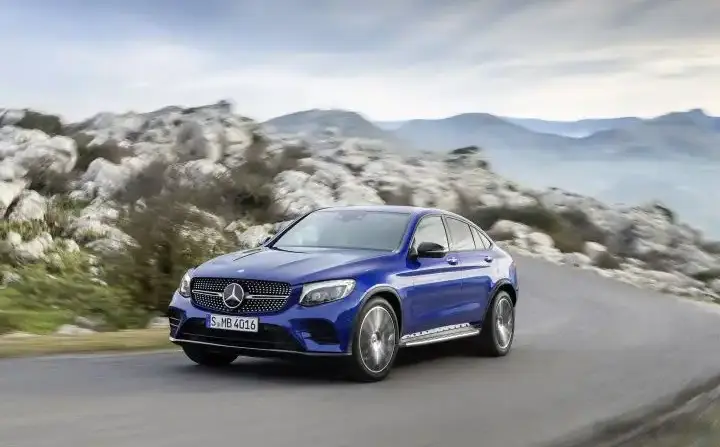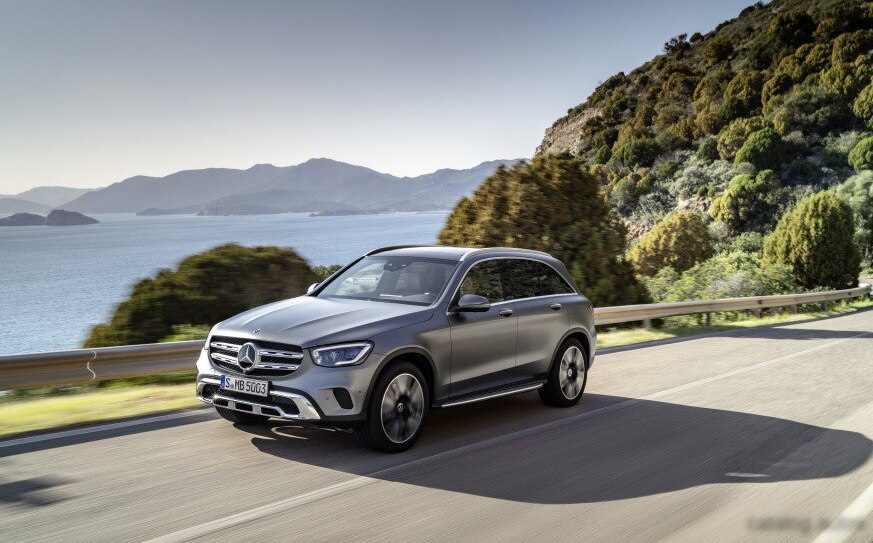
The Mercedes-Benz GLC 300e 4MATIC, a plug-in hybrid variant of the X253 GLC SUV, was produced from 2019 until July 2022. Introduced as part of the facelifted X253 generation, the 300e aimed to combine the practicality of a compact luxury SUV with the benefits of electric driving, appealing to environmentally conscious buyers in European and select global markets. Positioned as a mid-range offering within the GLC lineup, it bridged the gap between the base gasoline models and the higher-performance AMG variants. This model represented Mercedes-Benz’s increasing commitment to electrification and offered a compelling alternative to traditional internal combustion engine vehicles.
Technical Specifications
| Brand | Mercedes-Benz |
| Model | GLC |
| Generation | GLC SUV (X253, facelift 2019) |
| Type | GLC 300e (320 Hp) Plug-in Hybrid 4MATIC 9G-TRONIC |
| Start of production | 2019 |
| End of production | July, 2022 |
| Powertrain Architecture | PHEV (Plug-in Hybrid Electric Vehicle) |
| Body type | SUV |
| Seats | 5 |
| Doors | 5 |
| Combined fuel consumption (WLTP) | 2.2-2.7 l/100 km (106.9 – 87.1 US mpg, 128.4 – 104.6 UK mpg, 45.5 – 37 km/l) |
| CO2 emissions (WLTP) | 49-62 g/km |
| Fuel consumption (NEDC) – combined | 2.2-2.5 l/100 km (106.9 – 94.1 US mpg, 128.4 – 113 UK mpg, 45.5 – 40 km/l) |
| CO2 emissions (NEDC) | 51-57 g/km |
| Fuel Type | Petrol / electricity |
| Acceleration 0 – 100 km/h | 5.7 sec |
| Acceleration 0 – 62 mph | 5.7 sec |
| Acceleration 0 – 60 mph | 5.4 sec |
| Maximum speed | 230 km/h (142.92 mph) |
| Emission standard | Euro 6d-TEMP-EVAP-ISC |
| Weight-to-power ratio | 6.1 kg/Hp, 163.7 Hp/tonne |
| Weight-to-torque ratio | 2.8 kg/Nm, 358.1 Nm/tonne |
| Gross battery capacity | 13.5 kWh |
| Net (usable) battery capacity | 9.3 kWh |
| Battery technology | Lithium-ion (Li-Ion) |
| Battery location | Under the trunk |
| All-electric range (WLTP) | 39-43 km (24.23 – 26.72 mi) |
| All-electric range (NEDC) | 46-49 km (28.58 – 30.45 mi) |
| Average Energy consumption (NEDC) | 16.5-17.8 kWh/100 km (26.55 – 28.65 kWh/100 mi, 127 – 118 MPGe, 6.1 – 5.6 km/kWh, 3.8 – 3.5 mi/kWh) |
| Max speed (electric) | 130 km/h (80.78 mph) |
| Electric motor power | 122 Hp |
| Electric motor Torque | 440 Nm (324.53 lb.-ft.) |
| Electric motor location | Between the combustion engine and the transmission |
| Electric motor type | Synchronous |
| System power | 320 Hp |
| System torque | 700 Nm (516.29 lb.-ft.) |
| Power | 211 Hp @ 5500 rpm |
| Torque | 350 Nm @ 1200-4000 rpm (258.15 lb.-ft. @ 1200-4000 rpm) |
| Engine layout | Front, Longitudinal |
| Engine Model/Code | M 274 DE 20 AL |
| Engine displacement | 1991 cm3 (121.5 cu. in.) |
| Number of cylinders | 4 |
| Engine configuration | Inline |
| Cylinder Bore | 83 mm (3.27 in.) |
| Piston Stroke | 92 mm (3.62 in.) |
| Compression ratio | 9.8:1 |
| Number of valves per cylinder | 4 |
| Fuel injection system | Direct injection |
| Engine aspiration | Turbocharger, Intercooler |
| Valvetrain | DOHC |
| Engine oil capacity | 6.5 l (6.87 US qt | 5.72 UK qt) |
| Kerb Weight | 1955 kg (4310.04 lbs.) |
| Max. weight | 2615 kg (5765.09 lbs.) |
| Max load | 660 kg (1455.05 lbs.) |
| Trunk (boot) space – minimum | 395 l (13.95 cu. ft.) |
| Trunk (boot) space – maximum | 1445 l (51.03 cu. ft.) |
| Fuel tank capacity | 66 l (17.44 US gal | 14.52 UK gal) |
| Max. roof load | 75 kg (165.35 lbs.) |
| Permitted trailer load with brakes (12%) | 2000 kg (4409.25 lbs.) |
| Permitted trailer load without brakes | 750 kg (1653.47 lbs.) |
| Permitted towbar download | 80 kg (176.37 lbs.) |
| Length | 4658 mm (183.39 in.) |
| Width | 1890 mm (74.41 in.) |
| Width including mirrors | 2096 mm (82.52 in.) |
| Height | 1644 mm (64.72 in.) |
| Wheelbase | 2873 mm (113.11 in.) |
| Front track | 1621 mm (63.82 in.) |
| Rear (Back) track | 1617 mm (63.66 in.) |
| Front overhang | 830 mm (32.68 in.) |
| Rear overhang | 955 mm (37.6 in.) |
| Ride height (ground clearance) | 123 mm (4.84 in.) |
| Minimum turning circle (turning diameter) | 11.8 m (38.71 ft.) |
| Front suspension | Independent multi-link suspension, Transverse stabilizer |
| Rear suspension | Independent multi-link suspension, Transverse stabilizer |
| Front brakes | Ventilated discs |
| Rear brakes | Ventilated discs |
| Number of gears and type of gearbox | 9 gears, automatic transmission G-TRONIC |
INTRODUCTION
The Mercedes-Benz GLC 300e 4MATIC, launched in 2019 as part of the X253 facelift, represents a significant step in the brand’s push towards electrified vehicles. Built on the versatile MRA (Modular Rear-wheel Architecture) platform, shared with other Mercedes-Benz models like the C-Class and E-Class, the GLC 300e combines a 2.0-liter turbocharged four-cylinder gasoline engine with an electric motor and a 13.5 kWh battery pack. This plug-in hybrid configuration allows for a limited all-electric range and significantly improved fuel economy compared to conventional gasoline-powered GLC models. The 300e was primarily marketed in Europe and other regions with strong incentives for hybrid and electric vehicles, offering a balance of luxury, performance, and environmental responsibility.
Powertrain & Engine Architecture
At the heart of the GLC 300e lies the M 274 DE 20 AL 2.0-liter inline-four cylinder engine. This engine, equipped with direct fuel injection and a single turbocharger, produces 211 horsepower at 5500 rpm and 350 Nm (258.15 lb-ft) of torque between 1200 and 4000 rpm. The engine utilizes a sophisticated combustion process designed for efficiency and reduced emissions. Coupled with this is a 122 hp electric motor integrated between the engine and the 9G-TRONIC nine-speed automatic transmission. The electric motor contributes an additional 440 Nm (324.53 lb-ft) of torque. The 9G-TRONIC transmission is specifically calibrated for hybrid operation, providing smooth and efficient gear changes. The lithium-ion battery pack, with a gross capacity of 13.5 kWh and a usable capacity of 9.3 kWh, is located under the trunk floor, slightly reducing cargo space. The charging system supports AC charging, allowing for a full charge in approximately 5-6 hours from a standard household outlet or significantly faster with a dedicated wallbox.
Driving Characteristics
The GLC 300e delivers a refined and comfortable driving experience. In electric mode, the vehicle offers near-silent operation and brisk acceleration for city driving. The combined system output of 320 hp and 700 Nm (516.29 lb-ft) of torque provides strong performance, with a 0-60 mph time of around 5.4 seconds. The 9G-TRONIC transmission contributes to smooth power delivery, and the hybrid system intelligently manages the transition between electric and gasoline power. Compared to the GLC 300 with a conventional gasoline engine, the 300e offers improved low-end torque thanks to the electric motor. While not as sporty as the AMG-tuned GLC models, the 300e provides ample power for everyday driving and highway cruising. The added weight of the battery pack is noticeable, but the well-tuned suspension minimizes body roll and maintains a composed ride.
Equipment & Trim Levels
The GLC 300e typically came well-equipped, reflecting its position as a premium SUV. Standard features included Mercedes-Benz’s MBUX infotainment system with a touchscreen display, navigation, Apple CarPlay and Android Auto compatibility, and a suite of driver-assistance systems such as automatic emergency braking, lane-keeping assist, and adaptive cruise control. Interior upholstery was typically MB-Tex artificial leather or genuine leather, with a choice of color schemes. Optional extras included a panoramic sunroof, premium sound system, heated and ventilated seats, and advanced driver-assistance packages. The trim level often included unique badging and exterior styling elements to distinguish it from other GLC models.
Chassis & Braking
The GLC 300e utilizes a sophisticated suspension system designed for comfort and handling. It features independent multi-link suspension at both the front and rear, with transverse stabilizers to reduce body roll. The suspension is tuned to accommodate the added weight of the battery pack without compromising ride quality. Braking duties are handled by ventilated discs on all four wheels, providing ample stopping power. The regenerative braking system captures energy during deceleration, helping to recharge the battery and improve efficiency. The standard steering system is a power-assisted rack-and-pinion setup, offering precise and responsive steering feel.
Market Reception & Comparison
The GLC 300e was generally well-received by automotive critics, who praised its fuel efficiency, smooth ride, and refined interior. However, some reviewers noted the reduced cargo space due to the battery pack and the relatively high price compared to conventional gasoline-powered GLC models. Compared to the GLC 300, the 300e offered significantly better fuel economy and the ability to drive in all-electric mode, making it an attractive option for environmentally conscious buyers. Compared to the higher-performance GLC 43 AMG, the 300e prioritized efficiency and comfort over outright speed and handling. The 300e also competed with other plug-in hybrid SUVs from brands like BMW and Volvo.
Legacy
The Mercedes-Benz GLC 300e 4MATIC represents an important step in Mercedes-Benz’s transition to an electrified future. While production ended in July 2022, the model remains a popular choice in the used car market, particularly among buyers seeking a luxury SUV with low running costs and reduced emissions. The powertrain has proven to be relatively reliable, with few widespread issues reported. The GLC 300e’s success paved the way for further development of plug-in hybrid technology within the Mercedes-Benz lineup, and its legacy continues in the current generation of GLC models.