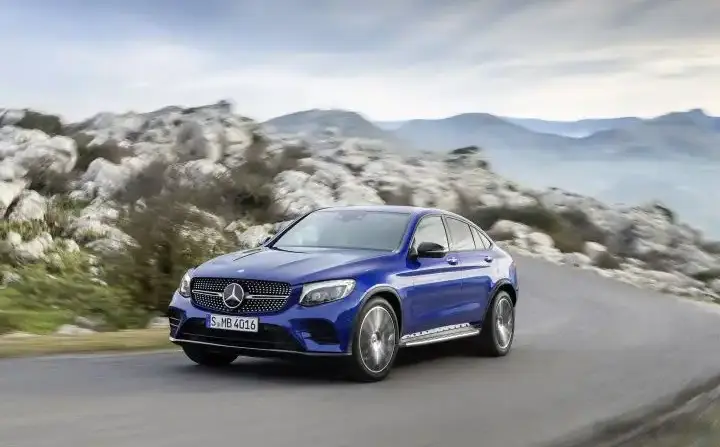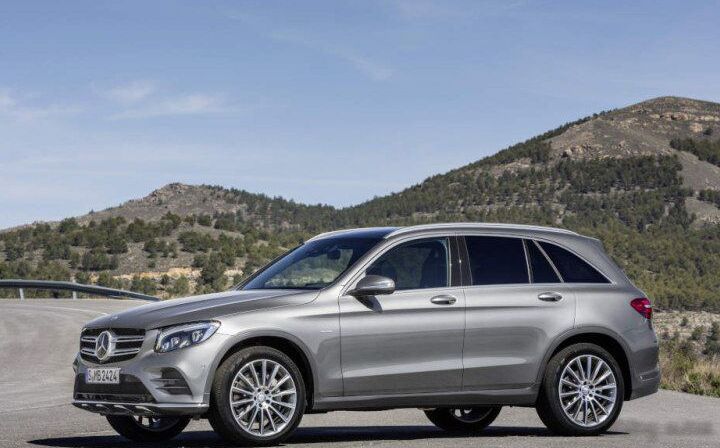
The Mercedes-Benz GLC 350e 4MATIC G-TRONIC PLUS, produced from June 2016 to August 2018, represents Mercedes-Benz’s initial foray into a plug-in hybrid (PHEV) variant within the popular GLC SUV (X253) range. Positioned as a premium offering, it aimed to combine the practicality of a compact luxury SUV with improved fuel efficiency and reduced emissions. This model was primarily targeted at the European market, where demand for PHEVs was growing, but was also available in limited quantities in North America. The 350e utilized a combination of a turbocharged four-cylinder gasoline engine and an electric motor, delivering a combined system output of 320 horsepower. It served as a bridge between the conventionally powered GLC 300 and the performance-oriented AMG GLC 43.
Technical Specifications
| Brand | Mercedes-Benz |
| Model | GLC |
| Generation | GLC SUV (X253) |
| Type | GLC 350e (320 Hp) 4MATIC G-TRONIC PLUS |
| Start of production | June, 2016 |
| End of production | August, 2018 |
| Powertrain Architecture | PHEV (Plug-in Hybrid Electric Vehicle) |
| Body type | SUV |
| Seats | 5 |
| Doors | 5 |
| Fuel consumption (combined) | 2.5-2.7 l/100 km (94.1 – 87.1 US mpg, 113 – 104.6 UK mpg, 40 – 37 km/l) |
| CO2 emissions | 59-64 g/km |
| Fuel Type | Petrol / electricity |
| Acceleration 0 – 100 km/h | 5.9 sec |
| Acceleration 0 – 62 mph | 5.9 sec |
| Acceleration 0 – 60 mph | 5.6 sec |
| Maximum speed | 235 km/h (146.02 mph) |
| Emission standard | Euro 6 |
| Weight-to-power ratio | 6.3 kg/Hp, 158 Hp/tonne |
| Weight-to-torque ratio | 3.6 kg/Nm, 276.5 Nm/tonne |
| Electric motor power | 116 Hp |
| Electric motor Torque | 340 Nm @ 0-2000 rpm (250.77 lb.-ft. @ 0-2000 rpm) |
| Electric motor location | Between the combustion engine and the transmission |
| System power | 320 Hp |
| System torque | 560 Nm (413.03 lb.-ft.) |
| Engine Power | 211 Hp |
| Power per litre | 106 Hp/l |
| Engine Torque | 350 Nm @ 1200-4000 rpm (258.15 lb.-ft. @ 1200-4000 rpm) |
| Engine layout | Front, Longitudinal |
| Engine Model/Code | M 274 DE 20 AL/274.920 |
| Engine displacement | 1991 cm3 (121.5 cu. in.) |
| Number of cylinders | 4 |
| Engine configuration | Inline |
| Engine oil capacity | 6.5 l (6.87 US qt | 5.72 UK qt) |
| Coolant capacity | 16 l (16.91 US qt | 14.08 UK qt) |
| Kerb Weight | 2025 kg (4464.36 lbs.) |
| Max. weight | 2605 kg (5743.04 lbs.) |
| Max load | 580 kg (1278.68 lbs.) |
| Fuel tank capacity | 50 l (13.21 US gal | 11 UK gal) |
| Permitted trailer load with brakes (12%) | 2000 kg (4409.25 lbs.) |
| Length | 4656 mm (183.31 in.) |
| Width | 1890 mm (74.41 in.) |
| Height | 1639 mm (64.53 in.) |
| Wheelbase | 2873 mm (113.11 in.) |
| Front track | 1621 mm (63.82 in.) |
| Front overhang | 831 mm (32.72 in.) |
| Rear overhang | 952 mm (37.48 in.) |
| Ride height (ground clearance) | 123 mm (4.84 in.) |
| Approach angle | 19.9° |
| Departure angle | 16.5° |
| Drive wheel | All wheel drive (4×4) |
| Number of gears and type of gearbox | 7 gears, automatic transmission G-TRONIC PLUS |
| Front brakes | Ventilated discs |
| Rear brakes | Ventilated discs |
Powertrain & Engine Architecture
The GLC 350e’s powertrain centers around the M 274 DE 20 AL engine, a 2.0-liter turbocharged inline-four cylinder gasoline engine. This engine, producing 211 hp and 350 Nm (258 lb-ft) of torque, is paired with a 116 hp electric motor integrated between the engine and the 7G-TRONIC PLUS seven-speed automatic transmission. The electric motor contributes an additional 340 Nm (251 lb-ft) of torque. The combined system output is 320 hp and 560 Nm (413 lb-ft). The engine utilizes direct fuel injection and a single turbocharger. The 7G-TRONIC PLUS transmission is a conventional torque-converter automatic, optimized for smooth shifts and efficiency. The hybrid system features a 8.4 kWh lithium-ion battery pack, providing an all-electric range of approximately 33 kilometers (21 miles) under optimal conditions. The battery can be charged via a standard household outlet or a dedicated wallbox.
Driving Characteristics
The GLC 350e offers a unique driving experience compared to its gasoline-only counterparts. In electric mode, the vehicle operates silently and provides brisk acceleration for city driving. When the gasoline engine engages, the transition is generally seamless. The combined power output delivers strong acceleration, with a 0-60 mph time of around 5.6 seconds. The 7G-TRONIC PLUS transmission provides smooth and responsive gear changes. However, the added weight of the battery pack (approximately 130 kg / 287 lbs) does slightly impact handling agility compared to lighter GLC models. The suspension is tuned for comfort, prioritizing ride quality over sporty handling. The hybrid system’s regenerative braking feature helps to recapture energy and extend the electric range.
Equipment & Trim Levels
The GLC 350e typically came well-equipped, reflecting its premium positioning. Standard features included leather upholstery, automatic climate control, a large infotainment screen with navigation, and a suite of safety features such as automatic emergency braking and lane-keeping assist. Optional extras included a panoramic sunroof, upgraded audio system, and various driver assistance packages. Trim levels were generally aligned with the standard GLC range, with the 350e offering similar levels of luxury and refinement as the higher-end gasoline models. Interior color options were varied, allowing for personalization.
Chassis & Braking
The GLC 350e utilizes a similar chassis and suspension setup as other GLC variants. It features a four-wheel independent suspension with steel springs and adaptive dampers. The braking system consists of ventilated discs on all four wheels, providing ample stopping power. The 4MATIC all-wheel-drive system ensures optimal traction in various weather conditions. Due to the increased weight, the suspension may be slightly firmer to maintain stability and control. Stabilizer bars are fitted front and rear to reduce body roll during cornering.
Market Reception & Comparison
The GLC 350e was generally well-received by automotive critics. It was praised for its fuel efficiency, smooth ride, and quiet operation in electric mode. However, some reviewers noted that the added weight of the battery pack slightly diminished the vehicle’s handling agility. Compared to the GLC 300, the 350e offered improved fuel economy and lower emissions, but at a higher price point. Compared to the AMG GLC 43, it provided less outright performance but a more environmentally friendly driving experience. The 350e competed with other plug-in hybrid SUVs, such as the BMW X5 xDrive40e and the Volvo XC60 T8.
Legacy
The GLC 350e represented an important step for Mercedes-Benz in its electrification strategy. While production was relatively short-lived, it paved the way for subsequent plug-in hybrid models within the GLC range. On the used car market, the GLC 350e remains a desirable option for buyers seeking a luxurious and fuel-efficient SUV. The powertrain has proven to be generally reliable, with few widespread issues reported. However, potential buyers should be aware of the battery’s lifespan and the cost of potential battery replacement. The GLC 350e’s combination of luxury, performance, and efficiency continues to appeal to a wide range of buyers.