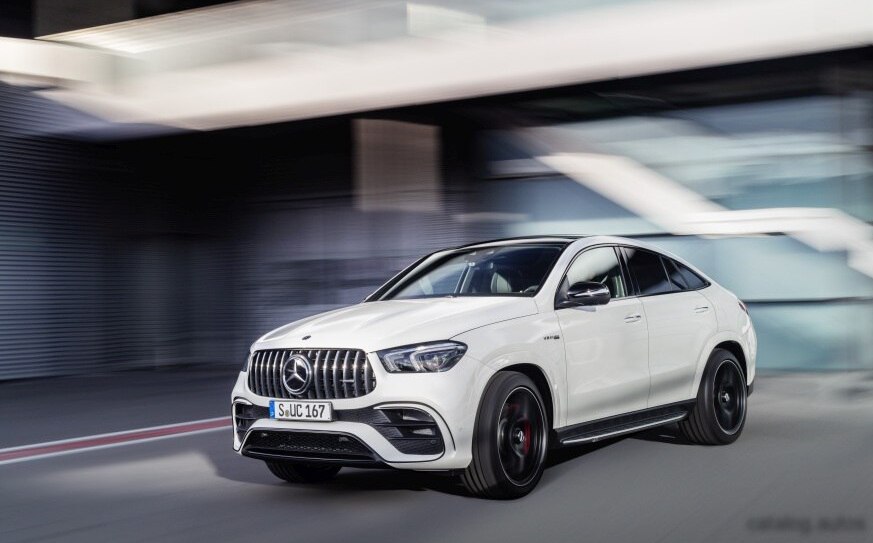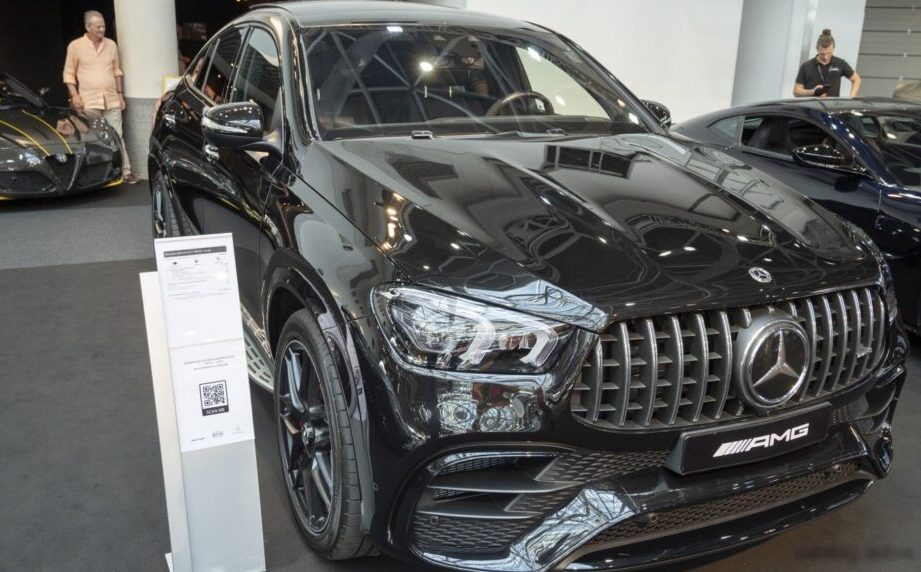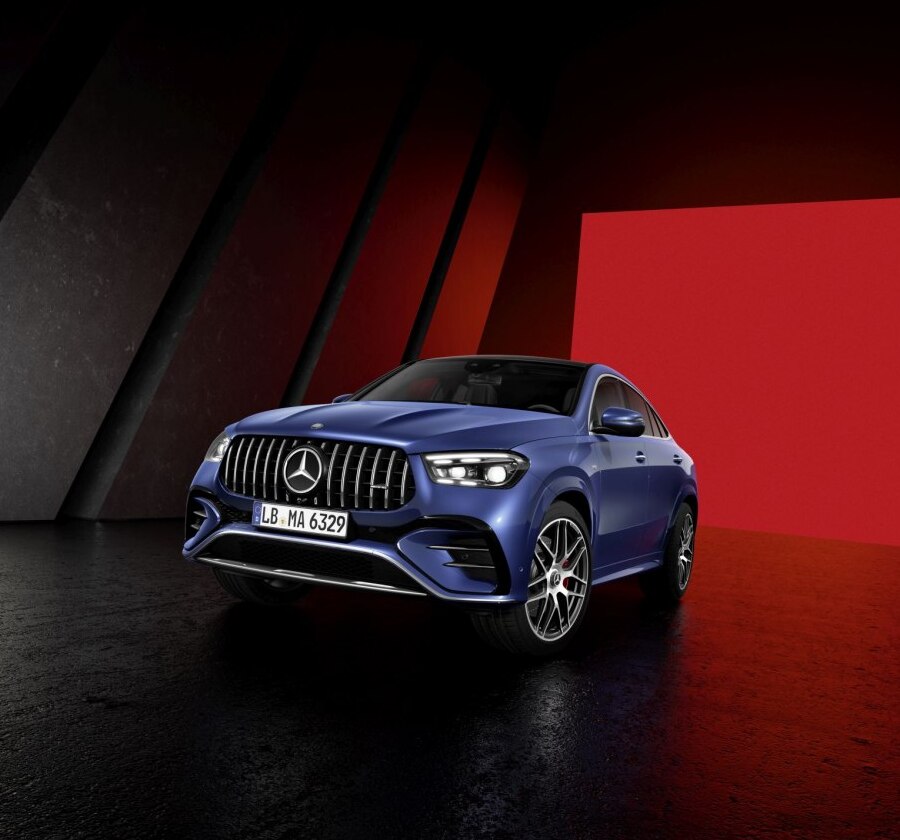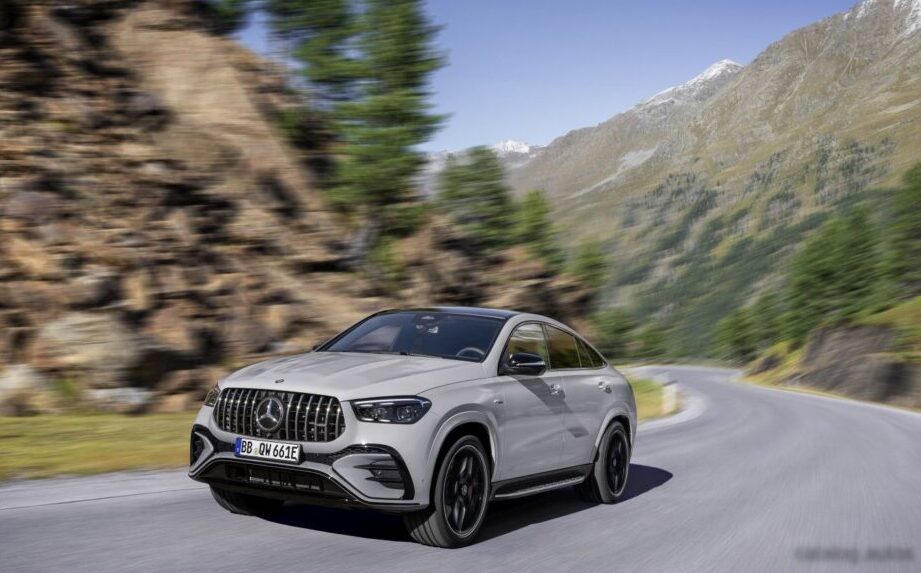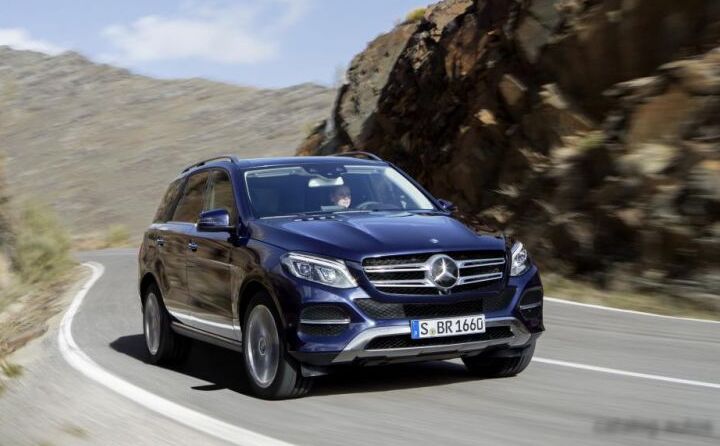
The Mercedes-Benz GLE 250d (W166), produced from March 2015 to 2018, represented a key entry point into the second generation GLE SUV range. Positioned as a diesel-powered option, it aimed to balance fuel efficiency with the luxury and practicality expected of the Mercedes-Benz brand. This variant utilized a 2.1-liter four-cylinder diesel engine paired with the sophisticated 9G-TRONIC nine-speed automatic transmission, offering a compelling alternative to the more powerful six and eight-cylinder models available in the lineup. The W166 GLE, a successor to the ML-Class, was designed to appeal to a broad audience seeking a premium mid-size SUV with a focus on comfort and technology.
Technical Specifications
| Brand | Mercedes-Benz |
| Model | GLE |
| Generation | GLE SUV (W166) |
| Type (Engine) | GLE 250d (204 Hp) 9G-TRONIC |
| Start of production | March, 2015 |
| End of production | 2018 |
| Powertrain Architecture | Internal Combustion engine |
| Body type | SUV |
| Seats | 5 |
| Doors | 5 |
| Fuel consumption (economy) – urban (NEDC) | 5.9-6.1 l/100 km (39.9 – 38.6 US mpg, 47.9 – 46.3 UK mpg, 16.9 – 16.4 km/l) |
| Fuel consumption (economy) – extra urban (NEDC) | 5-5.3 l/100 km (47 – 44.4 US mpg, 56.5 – 53.3 UK mpg, 20 – 18.9 km/l) |
| Fuel consumption (economy) – combined (NEDC) | 5.4-5.6 l/100 km (43.6 – 42 US mpg, 52.3 – 50.4 UK mpg, 18.5 – 17.9 km/l) |
| CO2 emissions (NEDC) | 140-146 g/km |
| Fuel Type | Diesel |
| Acceleration 0 – 100 km/h | 8.6 sec |
| Acceleration 0 – 62 mph | 8.6 sec |
| Acceleration 0 – 60 mph | 8.2 sec |
| Maximum speed | 210 km/h (130.49 mph) |
| Emission standard | Euro 6 |
| Weight-to-power ratio | 9.8 kg/Hp, 102 Hp/tonne |
| Weight-to-torque ratio | 4 kg/Nm, 250 Nm/tonne |
| Power | 204 Hp @ 3800 rpm |
| Power per litre | 95.2 Hp/l |
| Torque | 500 Nm @ 1600-1800 rpm (368.78 lb.-ft. @ 1600-1800 rpm) |
| Engine layout | Front, Longitudinal |
| Engine Model/Code | OM 651.960 |
| Engine displacement | 2143 cm3 (130.77 cu. in.) |
| Number of cylinders | 4 |
| Engine configuration | Inline |
| Cylinder Bore | 83 mm (3.27 in.) |
| Piston Stroke | 99 mm (3.9 in.) |
| Compression ratio | 16.2:1 |
| Number of valves per cylinder | 4 |
| Fuel injection system | Diesel Commonrail |
| Engine aspiration | BiTurbo, Intercooler |
| Valvetrain | DOHC |
| Engine oil capacity | 6.5 l (6.87 US qt | 5.72 UK qt) |
| Coolant | 10 l (10.57 US qt | 8.8 UK qt) |
| Kerb Weight | 2000 kg (4409.25 lbs.) |
| Max. weight | 2850 kg (6283.17 lbs.) |
| Max load | 850 kg (1873.93 lbs.) |
| Trunk (boot) space – minimum | 690 l (24.37 cu. ft.) |
| Trunk (boot) space – maximum | 2010 l (70.98 cu. ft.) |
| Fuel tank capacity | 93 l (24.57 US gal | 20.46 UK gal) |
| AdBlue tank | 32 l (8.45 US gal | 7.04 UK gal) |
| Max. roof load | 100 kg (220.46 lbs.) |
| Permitted trailer load with brakes (12%) | 2500 kg (5511.56 lbs.) |
| Permitted trailer load without brakes | 750 kg (1653.47 lbs.) |
| Permitted towbar download | 100 kg (220.46 lbs.) |
| Length | 4819 mm (189.72 in.) |
| Width | 1935 mm (76.18 in.) |
| Width including mirrors | 2141 mm (84.29 in.) |
| Height | 1788 mm (70.39 in.) |
| Wheelbase | 2915 mm (114.76 in.) |
| Front track | 1648 mm (64.88 in.) |
| Rear (Back) track | 1663 mm (65.47 in.) |
| Front overhang | 890 mm (35.04 in.) |
| Rear overhang | 1014 mm (39.92 in.) |
| Ride height (ground clearance) | 191 mm (7.52 in.) |
| Drag coefficient (Cd) | 0.34 |
| Minimum turning circle (turning diameter) | 11.8 m (38.71 ft.) |
| Approach angle | 26° |
| Departure angle | 26° |
| Wading depth | 500 mm (19.69 in.) |
| Drivetrain Architecture | The Internal combustion engine (ICE) drives the rear wheels of the vehicle. |
| Drive wheel | Rear wheel drive |
| Number of gears and type of gearbox | 9 gears, automatic transmission G-TRONIC |
| Front suspension | Coil spring, Double wishbone, Transverse stabilizer, Air Suspension – Optional |
| Rear suspension | Independent multi-link spring suspension with stabilizer, Air Suspension – Optional |
| Front brakes | Ventilated discs |
| Rear brakes | Disc |
| Assisting systems | ABS (Anti-lock braking system) |
| Steering type | Steering rack and pinion |
| Power steering | Electric Steering |
| Tires size | 235/65 R17; 255/55 R18; 255/50 R19; 265/45 R20; 265/40 R21 |
| Wheel rims size | 7.5J x 17; 8J x 18; 8J x 19; 8.5J x 19; 9J x 20; 9J x 21 |
Powertrain & Engine Architecture
The heart of the GLE 250d is the OM 651.960 2.1-liter inline four-cylinder diesel engine. This engine, a mainstay of the Mercedes-Benz diesel lineup, features common-rail direct injection and a bi-turbocharger setup. The twin turbos, one larger and one smaller, work in sequence to provide both strong low-end torque and sustained power throughout the rev range. The engine produces 204 horsepower at 3800 rpm and a substantial 500 Nm (368 lb-ft) of torque between 1600 and 1800 rpm. This torque output is a key characteristic of the engine, providing effortless acceleration and strong pulling power. The 9G-TRONIC nine-speed automatic transmission is crucial to maximizing the engine’s efficiency and delivering smooth shifts. This transmission offers a wide range of gear ratios, allowing the engine to operate in its optimal efficiency zone more frequently.
Driving Characteristics
The GLE 250d, with its 204 hp and 9G-TRONIC transmission, delivers a comfortable and refined driving experience. While not as overtly sporty as the higher-powered GLE variants, it offers ample performance for everyday driving and highway cruising. Acceleration from 0 to 60 mph takes approximately 8.2 seconds. The 9G-TRONIC transmission is programmed for smooth, almost imperceptible gear changes, contributing to a relaxed driving experience. The wide gear spread allows for efficient cruising at highway speeds, while the lower gears provide sufficient power for overtaking maneuvers. Compared to the manual transmission options available on other GLE models, the 9G-TRONIC prioritizes comfort and ease of use over outright driver engagement.
Equipment & Trim Levels
The GLE 250d typically came well-equipped as standard, reflecting Mercedes-Benz’s commitment to luxury. Standard features included automatic climate control, a high-resolution infotainment system with a central display screen, power-adjustable front seats, and a leather-wrapped steering wheel. Optional extras included features such as a panoramic sunroof, premium leather upholstery, a Burmester surround sound system, and advanced driver-assistance systems like adaptive cruise control and lane-keeping assist. Trim levels varied by market, but generally offered packages that bundled popular options together.
Chassis & Braking
The W166 GLE 250d utilizes a robust chassis designed to provide a comfortable ride and stable handling. The front suspension features coil springs and a double wishbone setup, while the rear suspension employs an independent multi-link design. Air suspension was available as an option, further enhancing ride comfort and allowing for adjustable ride height. Braking duties are handled by ventilated discs at the front and solid discs at the rear, with ABS (Anti-lock Braking System) standard. The GLE 250d’s weight of around 2000 kg (4409 lbs) necessitates a capable braking system to ensure safe and controlled stopping power.
Market Reception & Comparison
The GLE 250d was generally well-received by automotive critics as a practical and efficient option within the GLE range. Its fuel economy, averaging between 42 and 52 mpg (US), was a significant selling point, particularly in Europe where diesel engines were more prevalent. Compared to the more powerful GLE 350d and GLE 450 AMG models, the 250d offered a more affordable entry point into the GLE lineup, albeit with a noticeable reduction in performance. Reliability reports suggest that the OM 651 engine is generally robust, but like all modern diesel engines, it can be susceptible to issues with the diesel particulate filter (DPF) if not properly maintained.
Legacy
The GLE 250d (W166) represents a significant step in Mercedes-Benz’s SUV development, blending luxury, practicality, and fuel efficiency. On the used car market, these models offer a compelling value proposition, providing a comfortable and well-equipped SUV at a relatively affordable price point. The OM 651 engine, while requiring diligent maintenance, has proven to be a durable and reliable powerplant. As with any used vehicle, prospective buyers should carefully inspect the maintenance history and ensure that the DPF has been properly serviced to avoid potential issues.