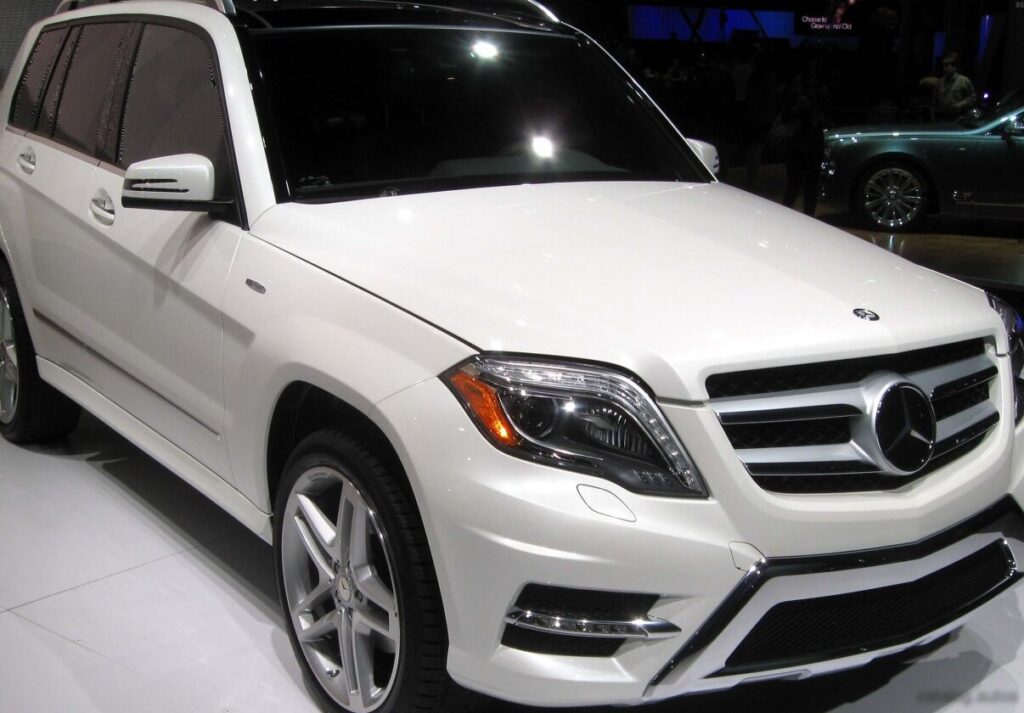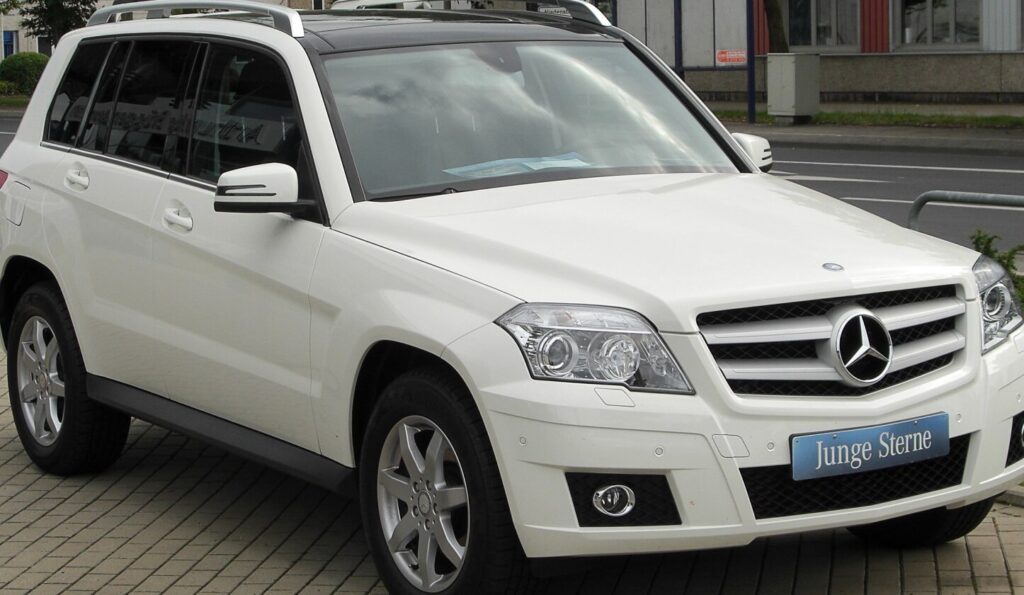
The Mercedes-Benz GLK 220 CDI BlueEFFICIENCY, produced between 2009 and 2011, was a diesel-powered variant of the first-generation GLK (X204) compact luxury SUV. Positioned as a fuel-efficient option within the GLK lineup, it aimed to provide a balance between practicality, comfort, and reasonable running costs. This model played a significant role in Mercedes-Benz’s strategy to offer more economical vehicles, particularly in European markets where diesel engines were highly favored. The GLK itself was Mercedes-Benz’s entry into the burgeoning compact SUV segment, designed to appeal to buyers seeking a more manageable and efficient alternative to larger, more expensive SUVs.
Technical Specifications
| Brand | Mercedes-Benz |
| Model | GLK |
| Generation | GLK (X204) |
| Type (Engine) | GLK 220 CDI BlueEFFICIENCY (170 Hp) |
| Start of production | 2009 |
| End of production | 2011 |
| Powertrain Architecture | Internal Combustion engine |
| Body type | SUV |
| Seats | 5 |
| Doors | 5 |
| Fuel consumption (economy) – urban (NEDC) | 7.2-7.5 l/100 km (32.7 – 31.4 US mpg, 39.2 – 37.7 UK mpg, 13.9 – 13.3 km/l) |
| Fuel consumption (economy) – extra urban (NEDC) | 5.1-5.3 l/100 km (46.1 – 44.4 US mpg, 55.4 – 53.3 UK mpg, 19.6 – 18.9 km/l) |
| Fuel consumption (economy) – combined (NEDC) | 5.8-6.1 l/100 km (40.6 – 38.6 US mpg, 48.7 – 46.3 UK mpg, 17.2 – 16.4 km/l) |
| CO2 emissions (NEDC) | 153-160 g/km |
| Fuel Type | Diesel |
| Acceleration 0 – 100 km/h | 8.5 sec |
| Acceleration 0 – 62 mph | 8.5 sec |
| Acceleration 0 – 60 mph | 8.1 sec |
| Maximum speed | 205 km/h (127.38 mph) |
| Emission standard | Euro 5 |
| Weight-to-power ratio | 10.1 kg/Hp, 99.1 Hp/tonne |
| Weight-to-torque ratio | 4.3 kg/Nm, 233.2 Nm/tonne |
| Power | 170 Hp @ 3200-4800 rpm |
| Power per litre | 79.3 Hp/l |
| Torque | 400 Nm @ 1400-2800 rpm (295.02 lb.-ft. @ 1400-2800 rpm) |
| Engine layout | Front, Longitudinal |
| Engine Model/Code | OM 651.916 |
| Engine displacement | 2143 cm3 (130.77 cu. in.) |
| Number of cylinders | 4 |
| Engine configuration | Inline |
| Cylinder Bore | 83 mm (3.27 in.) |
| Piston Stroke | 99 mm (3.9 in.) |
| Compression ratio | 16.2:1 |
| Number of valves per cylinder | 4 |
| Fuel injection system | Diesel Commonrail |
| Engine aspiration | BiTurbo, Intercooler |
| Valvetrain | DOHC |
| Engine oil capacity | 6.5 l (6.87 US qt | 5.72 UK qt) |
| Kerb Weight | 1715 kg (3780.93 lbs.) |
| Max. weight | 2385 kg (5258.02 lbs.) |
| Max load | 670 kg (1477.1 lbs.) |
| Trunk (boot) space – minimum | 450 l (15.89 cu. ft.) |
| Trunk (boot) space – maximum | 1550 l (54.74 cu. ft.) |
| Fuel tank capacity | 59 l (15.59 US gal | 12.98 UK gal) |
| Max. roof load | 75 kg (165.35 lbs.) |
| Permitted trailer load with brakes (12%) | 2000 kg (4409.25 lbs.) |
| Permitted trailer load without brakes | 750 kg (1653.47 lbs.) |
| Length | 4528 mm (178.27 in.) |
| Width | 1840 mm (72.44 in.) |
| Width including mirrors | 2016 mm (79.37 in.) |
| Height | 1689 mm (66.5 in.) |
| Wheelbase | 2755 mm (108.46 in.) |
| Front track | 1567 mm (61.69 in.) |
| Rear (Back) track | 1569 mm (61.77 in.) |
| Front overhang | 816 mm (32.13 in.) |
| Rear overhang | 957 mm (37.68 in.) |
| Ride height (ground clearance) | 201 mm (7.91 in.) |
| Drag coefficient (Cd) | 0.34 |
| Minimum turning circle (turning diameter) | 11.5 m (37.73 ft.) |
| Approach angle | 23° |
| Departure angle | 25° |
| Ramp-over (brakeover) angle | 19° |
| Climb angle | 35° |
| Wading depth | 300 mm (11.81 in.) |
| Drivetrain Architecture | The Internal combustion engine (ICE) drives the rear wheels of the vehicle. |
| Drive wheel | Rear wheel drive |
| Number of gears and type of gearbox | 6 gears, manual transmission |
| Front suspension | Independent, type McPherson with coil spring and anti-roll bar |
| Rear suspension | Independent multi-link spring suspension with stabilizer |
| Front brakes | Ventilated discs, 330×32 mm |
| Rear brakes | Ventilated discs, 300×22 mm |
| Assisting systems | ABS (Anti-lock braking system) |
| Steering type | Steering rack and pinion |
| Power steering | Hydraulic Steering |
| Tires size | Front wheel tires: 235/60 R17; 235/50 R19; 235/45 R20Rear wheel tires: 235/60 R17; 255/55 R17; 235/50 R19; 255/45 R19; 255/40 R20 |
| Wheel rims size | Front wheel rims: 7.5J x 17; 7.5J x 19; 8.5J x 20Rear wheel rims: 7.5J x 17; 8J x 17; 7.5J x 19; 8.5J x 19; 9.5J x 20 |
INTRODUCTION
The Mercedes-Benz GLK 220 CDI BlueEFFICIENCY, produced from 2009 to 2011, was a key variant within the X204 GLK series. It represented Mercedes-Benz’s attempt to capture a broader market segment by offering a more economical and accessible entry point into their compact SUV range. The GLK, as a whole, was designed to compete with vehicles like the BMW X3 and Audi Q5, offering a blend of luxury, practicality, and a more manageable size compared to the larger ML-Class. The 220 CDI BlueEFFICIENCY trim specifically targeted buyers prioritizing fuel efficiency and lower running costs without sacrificing the Mercedes-Benz brand experience.
Powertrain & Engine Architecture
At the heart of the GLK 220 CDI BlueEFFICIENCY lies the OM651.916 2.1-liter inline-four cylinder diesel engine. This engine is a highly advanced design for its time, featuring common-rail direct injection and a variable geometry turbocharger. The ‘BlueEFFICIENCY’ designation indicates the inclusion of various fuel-saving technologies, including optimized engine management and reduced internal friction. The engine produces 170 horsepower at 3200-4800 rpm and a substantial 400 Nm (295 lb-ft) of torque between 1400-2800 rpm. This torque output, available from relatively low engine speeds, provides good responsiveness for everyday driving. The engine utilizes a double overhead camshaft (DOHC) valvetrain with four valves per cylinder, contributing to its efficiency and power delivery. The GLK 220 CDI was typically paired with a six-speed manual transmission, although a seven-speed automatic transmission (7G-TRONIC) was also available as an option. The automatic transmission offered smoother gear changes and enhanced convenience, but at a slight cost to fuel economy.
Driving Characteristics
The GLK 220 CDI BlueEFFICIENCY, with its 170 hp and 400 Nm of torque, offered a comfortable and capable driving experience. While not particularly sporty, the engine provided sufficient power for everyday driving situations, including highway cruising and overtaking. The readily available torque meant that the car felt responsive even at lower speeds. Compared to the more powerful GLK 320 CDI or the petrol-powered GLK 350, the 220 CDI prioritized fuel economy over outright performance. The six-speed manual transmission allowed for greater driver control, while the optional automatic provided a more relaxed driving experience. The gear ratios were tuned to maximize fuel efficiency, resulting in a slightly less engaging driving experience compared to sportier variants. The rear-wheel drive configuration contributed to a balanced feel, although all-wheel drive (4MATIC) was available as an option for improved traction in adverse weather conditions.
Equipment & Trim Levels
The GLK 220 CDI BlueEFFICIENCY typically came equipped with a respectable level of standard features. These included automatic climate control, a multi-function steering wheel, power windows and mirrors, and a basic audio system. Interior upholstery was generally cloth, although leather options were available. Optional extras included a sunroof, navigation system, upgraded audio system, parking sensors, and heated seats. The dashboard layout was typical of Mercedes-Benz at the time, with a focus on functionality and a premium feel. The ‘BlueEFFICIENCY’ trim also included specific aerodynamic enhancements designed to reduce drag and improve fuel economy.
Chassis & Braking
The GLK 220 CDI BlueEFFICIENCY featured a McPherson strut front suspension and a multi-link rear suspension, providing a comfortable and controlled ride. Stabilizer bars were fitted to both axles to reduce body roll during cornering. The braking system consisted of ventilated disc brakes on all four wheels, providing ample stopping power. Anti-lock braking system (ABS) was standard, enhancing safety and stability. The suspension was tuned to prioritize comfort over outright sportiness, resulting in a smooth ride quality. The GLK’s chassis was designed to provide a stable and predictable handling experience, making it easy to drive in a variety of conditions.
Market Reception & Comparison
The GLK 220 CDI BlueEFFICIENCY was generally well-received by critics, who praised its fuel efficiency and comfortable ride. However, some reviewers noted that its performance was not as exhilarating as some of its competitors. Compared to the GLK 320 CDI, the 220 CDI offered significantly better fuel economy but lacked the extra power and refinement of the larger engine. Against the petrol-powered GLK 350, the 220 CDI provided a more economical option, but with a noticeable difference in acceleration. The GLK 220 CDI BlueEFFICIENCY was particularly popular in European markets, where diesel engines were favored for their fuel efficiency and lower running costs.
Legacy
The OM651 engine family, used in the GLK 220 CDI BlueEFFICIENCY, has proven to be a reliable and durable powertrain. With proper maintenance, these engines can accumulate high mileage without major issues. The GLK 220 CDI BlueEFFICIENCY remains a relatively popular choice in the used car market, particularly for buyers seeking a fuel-efficient and comfortable compact SUV. While newer SUVs offer more advanced technology and features, the GLK 220 CDI BlueEFFICIENCY continues to provide a solid and dependable driving experience. Its blend of practicality, comfort, and fuel efficiency has ensured its enduring appeal.