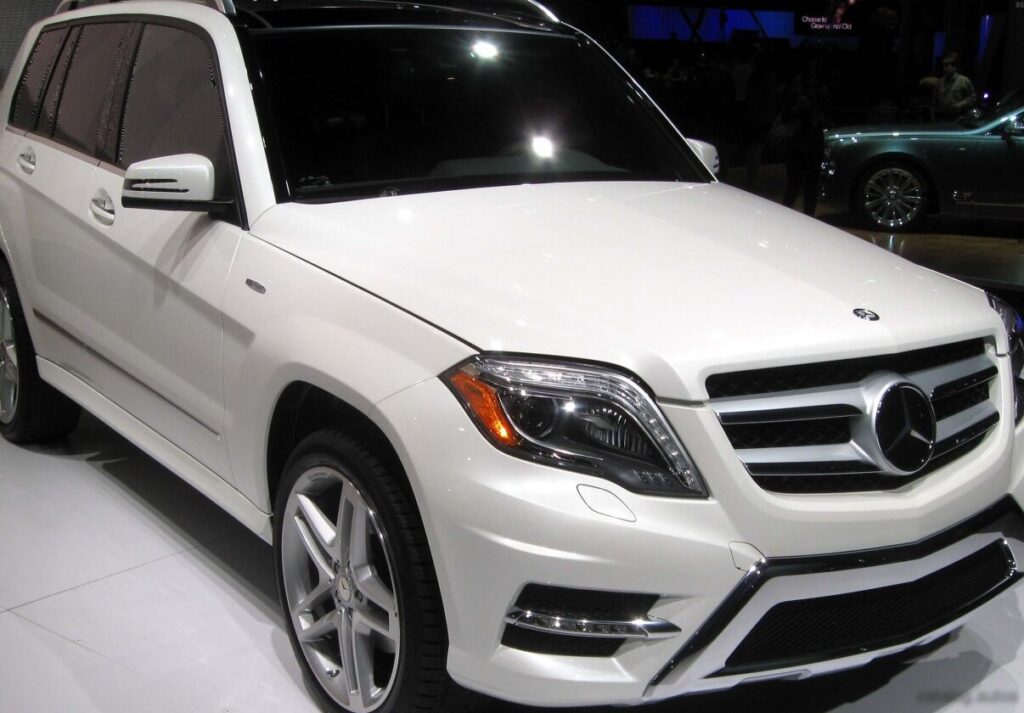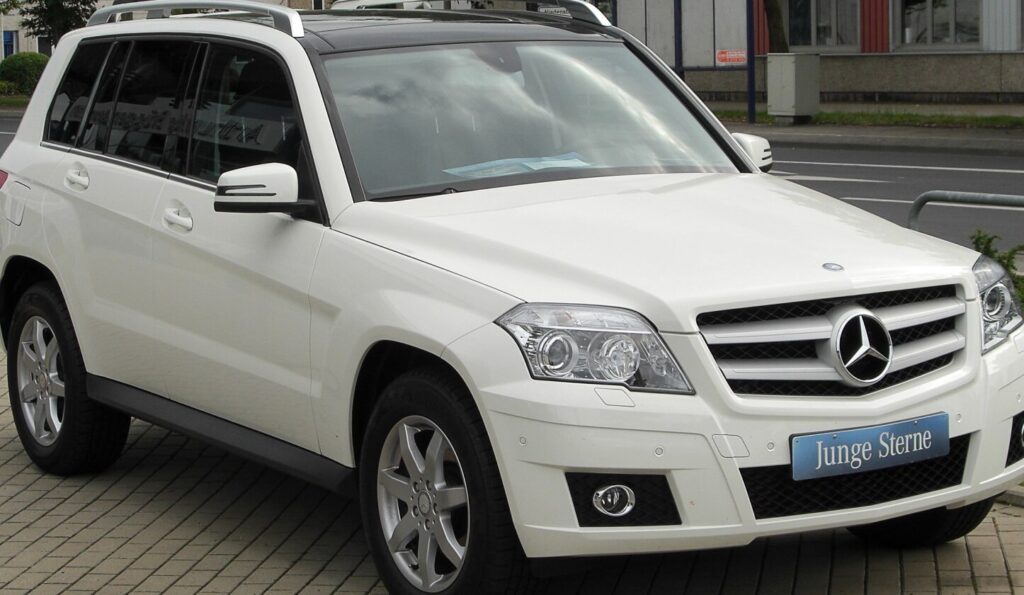
The Mercedes-Benz GLK 220 CDI BlueEFFICIENCY 4MATIC, produced between 2008 and 2011, was a key variant within the first generation (X204) of the GLK-Class compact luxury SUV. Positioned as a fuel-efficient and practical option within the GLK range, it offered a blend of comfort, capability, and relatively economical diesel power. This model aimed to appeal to buyers seeking a premium SUV experience without the higher running costs associated with larger engines. It served as a crucial entry point into the GLK lineup in many European markets, where diesel engines were – and continue to be – highly favored.
Technical Specifications
| Brand | Mercedes-Benz |
| Model | GLK |
| Generation | GLK (X204) |
| Type | GLK 220 CDI BlueEFFICIENCY (170 Hp) 4MATIC 7G-TRONIC |
| Start of production | 2008 |
| End of production | 2011 |
| Powertrain Architecture | Internal Combustion engine |
| Body type | SUV |
| Seats | 5 |
| Doors | 5 |
| Fuel consumption (urban) | 8.4-8.6 l/100 km (28 – 27.4 US mpg) |
| Fuel consumption (extra urban) | 5.8-5.9 l/100 km (40.6 – 39.9 US mpg) |
| Fuel consumption (combined) | 6.7-6.9 l/100 km (35.1 – 34.1 US mpg) |
| CO2 emissions | 176-182 g/km |
| Fuel Type | Diesel |
| Acceleration 0 – 100 km/h | 8.8 sec |
| Acceleration 0 – 62 mph | 8.8 sec |
| Acceleration 0 – 60 mph | 8.4 sec |
| Maximum speed | 205 km/h (127.38 mph) |
| Emission standard | Euro 5 |
| Weight-to-power ratio | 10.4 kg/Hp |
| Weight-to-torque ratio | 4.4 kg/Nm |
| Power | 170 Hp @ 3200-4800 rpm |
| Torque | 400 Nm @ 1400-2800 rpm (295.02 lb.-ft. @ 1400-2800 rpm) |
| Engine layout | Front, Longitudinal |
| Engine Model/Code | OM 651.912 |
| Engine displacement | 2143 cm3 (130.77 cu. in.) |
| Number of cylinders | 4 |
| Engine configuration | Inline |
| Cylinder Bore | 83 mm (3.27 in.) |
| Piston Stroke | 99 mm (3.9 in.) |
| Compression ratio | 16.2:1 |
| Number of valves per cylinder | 4 |
| Fuel injection system | Diesel Commonrail |
| Engine aspiration | BiTurbo, Intercooler |
| Valvetrain | DOHC |
| Engine oil capacity | 6.5 l (6.87 US qt | 5.72 UK qt) |
| Kerb Weight | 1770 kg (3902.18 lbs.) |
| Max. weight | 2440 kg (5379.28 lbs.) |
| Max load | 670 kg (1477.1 lbs.) |
| Trunk (boot) space (minimum) | 450 l (15.89 cu. ft.) |
| Trunk (boot) space (maximum) | 1550 l (54.74 cu. ft.) |
| Fuel tank capacity | 59 l (15.59 US gal | 12.98 UK gal) |
| Max. roof load | 75 kg (165.35 lbs.) |
| Permitted trailer load (braked) | 2000 kg (4409.25 lbs.) |
| Permitted trailer load (unbraked) | 750 kg (1653.47 lbs.) |
| Length | 4525 mm (178.15 in.) |
| Width | 1840 mm (72.44 in.) |
| Width including mirrors | 2016 mm (79.37 in.) |
| Height | 1689 mm (66.5 in.) |
| Wheelbase | 2755 mm (108.46 in.) |
| Front track | 1567 mm (61.69 in.) |
| Rear track | 1588 mm (62.52 in.) |
| Ride height (ground clearance) | 201 mm (7.91 in.) |
| Drag coefficient (Cd) | 0.34 |
| Minimum turning circle | 11.5 m (37.73 ft.) |
| Front suspension | Independent, McPherson with coil spring and anti-roll bar |
| Rear suspension | Independent multi-link spring suspension with stabilizer |
| Front brakes | Ventilated discs |
| Rear brakes | Disc |
| Gearbox | 7 gears, automatic transmission G-TRONIC |
INTRODUCTION
The Mercedes-Benz GLK 220 CDI BlueEFFICIENCY 4MATIC, launched in 2008, represented Mercedes-Benz’s entry into the burgeoning compact luxury SUV segment. Built on the X204 platform – shared with the second-generation W204 C-Class – the GLK aimed to offer a more accessible and practical alternative to the larger ML-Class. The “BlueEFFICIENCY” designation signified Mercedes-Benz’s efforts to improve fuel economy and reduce emissions through a combination of engine enhancements and aerodynamic improvements. The 220 CDI variant, powered by a 2.1-liter turbocharged diesel engine, was a particularly popular choice in Europe, where diesel fuel was more readily available and often subject to lower taxation.
Powertrain & Engine Architecture
At the heart of the GLK 220 CDI BlueEFFICIENCY lies the OM651.912, a 2.1-liter inline-four cylinder diesel engine. This engine is a highly advanced design for its time, featuring common-rail direct injection and a variable geometry turbocharger. The second-generation common-rail system, operating at extremely high pressures, allowed for precise fuel metering and optimized combustion. The turbocharger, with its variable vanes, provided a broad torque curve and minimized turbo lag. The engine also incorporated an intercooler to further enhance performance. The 7G-TRONIC automatic transmission, a seven-speed unit, was standard. This transmission was known for its smooth shifting and efficiency, contributing to the GLK 220 CDI’s relatively low fuel consumption. The transmission featured a torque converter lock-up clutch to minimize slippage and improve fuel economy at cruising speeds.
Driving Characteristics
The GLK 220 CDI 4MATIC offered a comfortable and composed driving experience. While not overtly sporty, the 170 horsepower and 400 Nm (295 lb-ft) of torque provided adequate performance for everyday driving and highway cruising. Acceleration from 0 to 60 mph took around 8.4 seconds, which was competitive for its class. The 7G-TRONIC transmission contributed to smooth gear changes, and the 4MATIC all-wheel-drive system provided enhanced traction in inclement weather. Compared to the more powerful GLK 320 CDI or the petrol-powered GLK 350, the 220 CDI prioritized fuel efficiency over outright performance. The gear ratios were tuned for economy, meaning the engine sometimes felt strained when pushed hard, particularly when overtaking. However, for most drivers, the balance between performance and economy was well-suited to its intended purpose.
Equipment & Trim Levels
The GLK 220 CDI BlueEFFICIENCY 4MATIC typically came well-equipped, reflecting its premium positioning. Standard features included automatic climate control, power windows and mirrors, a multi-function steering wheel, and an audio system with CD player. Upholstery was typically a combination of fabric and leatherette, with full leather options available as an upgrade. Optional extras included a sunroof, navigation system, heated seats, and a premium sound system. The interior design was generally conservative and functional, emphasizing quality materials and build quality. Trim levels varied slightly depending on the market, but generally offered a range of cosmetic and convenience upgrades.
Chassis & Braking
The GLK 220 CDI 4MATIC featured a fully independent suspension system, with McPherson struts at the front and a multi-link setup at the rear. This provided a comfortable ride and good handling characteristics. Stabilizer bars were fitted front and rear to reduce body roll. The braking system consisted of ventilated discs at the front and solid discs at the rear. Anti-lock brakes (ABS) and electronic stability control (ESP) were standard safety features. The 4MATIC all-wheel-drive system utilized a multi-plate clutch to distribute torque between the front and rear axles, providing optimal traction in various conditions.
Market Reception & Comparison
The GLK 220 CDI BlueEFFICIENCY 4MATIC was generally well-received by automotive critics. It was praised for its comfortable ride, fuel efficiency, and practical interior. However, some reviewers noted that the engine could feel underpowered at times, particularly when fully loaded. Compared to the GLK 320 CDI, the 220 CDI offered significantly better fuel economy but lacked the same level of performance. Against competitors like the BMW X3 and Audi Q5, the GLK 220 CDI offered a compelling combination of luxury, practicality, and efficiency, particularly for buyers prioritizing fuel economy.
Legacy
The OM651 engine family, including the version used in the GLK 220 CDI, has proven to be remarkably durable and reliable. With proper maintenance, these engines can easily exceed 200,000 miles. The 7G-TRONIC transmission is also generally reliable, although some units have experienced issues with valve body failures. On the used car market, the GLK 220 CDI 4MATIC remains a popular choice for buyers seeking a well-built and fuel-efficient luxury SUV. Its relatively low running costs and proven reliability make it an attractive option, although potential buyers should be aware of the potential for diesel particulate filter (DPF) issues, particularly on vehicles that have primarily been used for short trips.