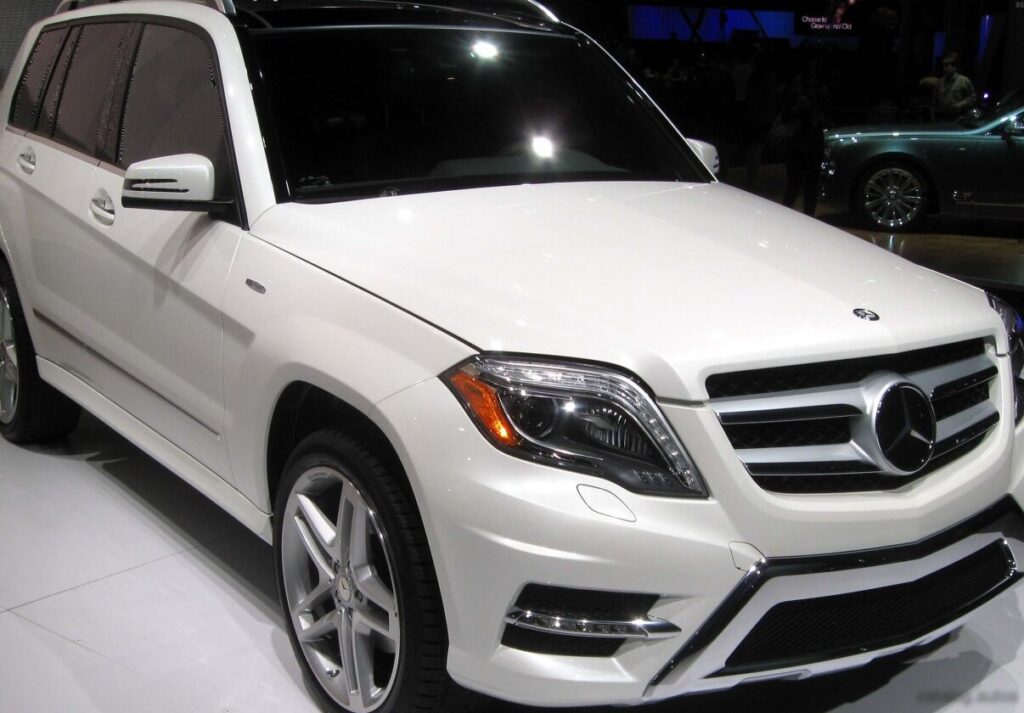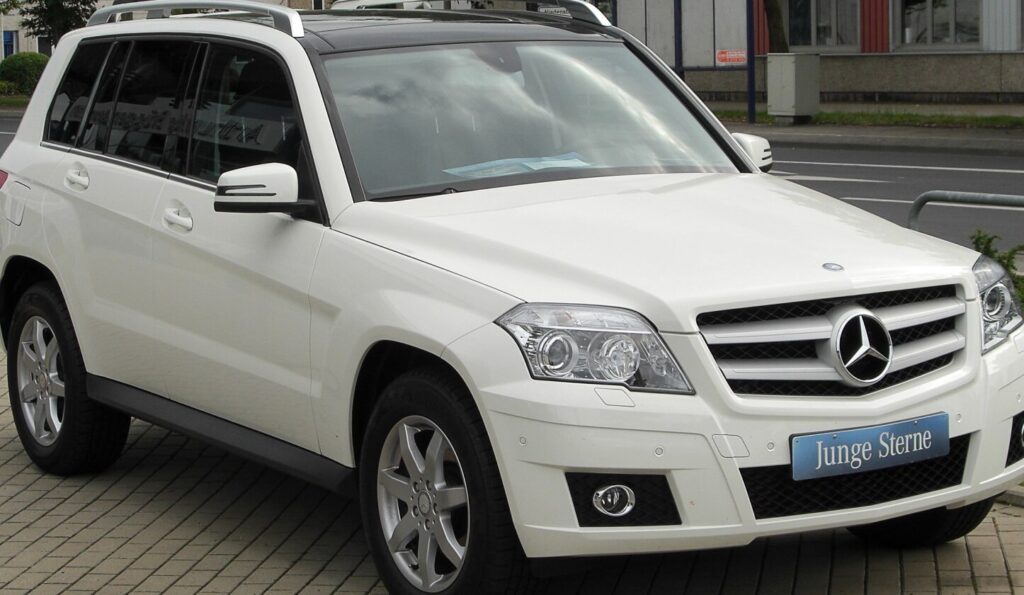
The Mercedes-Benz GLK 300 4MATIC, produced between 2009 and 2011, represented a key entry in Mercedes-Benz’s compact luxury SUV segment. Part of the X204 series, the GLK 300 aimed to blend the practicality of a small SUV with the prestige and refinement expected of the three-pointed star. This particular variant, equipped with the M272.948 3.0-liter V6 engine producing 231 horsepower and paired with the 7G-TRONIC seven-speed automatic transmission, occupied a mid-range position within the GLK lineup, offering a balance between performance and fuel efficiency. It served as a step up from the base GLK 280, while remaining more accessible than the later, more powerful GLK 350 models.
Technical Specifications
| Brand | Mercedes-Benz |
| Model | GLK |
| Generation | GLK (X204) |
| Type (Engine) | GLK 300 V6 (231 Hp) 4MATIC 7G-TRONIC |
| Start of production | 2009 |
| End of production | 2011 |
| Powertrain Architecture | Internal Combustion engine |
| Body type | SUV |
| Seats | 5 |
| Doors | 5 |
| Fuel consumption (urban) | 13.6-14.1 l/100 km (17.3 – 16.7 US mpg) |
| Fuel consumption (extra urban) | 8.3-8.4 l/100 km (28.3 – 28 US mpg) |
| Fuel consumption (combined) | 10.2-10.5 l/100 km (23.1 – 22.4 US mpg) |
| CO2 emissions | 239-246 g/km |
| Fuel Type | Petrol (Gasoline) |
| Acceleration 0 – 100 km/h | 7.6 sec |
| Acceleration 0 – 60 mph | 7.2 sec |
| Maximum speed | 210 km/h (130.49 mph) |
| Emission standard | Euro 5 |
| Weight-to-power ratio | 7.6 kg/Hp |
| Weight-to-torque ratio | 5.9 kg/Nm |
| Power | 231 Hp @ 6000 rpm |
| Torque | 300 Nm @ 2500-5000 rpm (221.27 lb.-ft. @ 2500-5000 rpm) |
| Engine layout | Front, Longitudinal |
| Engine Model/Code | M 272.948 |
| Engine displacement | 2996 cm3 (182.83 cu. in.) |
| Number of cylinders | 6 |
| Engine configuration | V-engine |
| Cylinder Bore | 88 mm (3.46 in.) |
| Piston Stroke | 82.1 mm (3.23 in.) |
| Compression ratio | 11.3:1 |
| Number of valves per cylinder | 4 |
| Fuel injection system | Multi-port manifold injection |
| Engine aspiration | Naturally aspirated engine |
| Valvetrain | DOHC |
| Engine oil capacity | 7 l (7.4 US qt | 6.16 UK qt) |
| Kerb Weight | 1755 kg (3869.11 lbs.) |
| Max. weight | 2480 kg (5467.46 lbs.) |
| Max load | 725 kg (1598.35 lbs.) |
| Trunk (boot) space – minimum | 450 l (15.89 cu. ft.) |
| Trunk (boot) space – maximum | 1550 l (54.74 cu. ft.) |
| Fuel tank capacity | 66 l (17.44 US gal | 14.52 UK gal) |
| Max. roof load | 75 kg (165.35 lbs.) |
| Permitted trailer load with brakes (12%) | 2000 kg (4409.25 lbs.) |
| Permitted trailer load without brakes | 750 kg (1653.47 lbs.) |
| Length | 4528 mm (178.27 in.) |
| Width | 1840 mm (72.44 in.) |
| Width including mirrors | 2016 mm (79.37 in.) |
| Height | 1689 mm (66.5 in.) |
| Wheelbase | 2755 mm (108.46 in.) |
| Front track | 1567 mm (61.69 in.) |
| Rear track | 1569 mm (61.77 in.) |
| Front overhang | 816 mm (32.13 in.) |
| Rear overhang | 957 mm (37.68 in.) |
| Ride height (ground clearance) | 201 mm (7.91 in.) |
| Drag coefficient (Cd) | 0.36 |
| Minimum turning circle | 11.5 m (37.73 ft.) |
| Front brakes | Ventilated discs, 330×32 mm |
| Rear brakes | Ventilated discs, 300×22 mm |
| Gearbox | 7 gears, automatic transmission G-TRONIC |
Powertrain & Engine Architecture
The GLK 300’s heart was the M272.948 3.0-liter naturally aspirated V6 engine. This engine, a staple in many Mercedes-Benz models of the era, featured a 60-degree V-angle and utilized a multi-port fuel injection system. The engine’s valvetrain employed double overhead camshafts (DOHC) with four valves per cylinder, contributing to its relatively high specific output. The 7G-TRONIC seven-speed automatic transmission, a hallmark of Mercedes-Benz engineering, provided smooth and efficient gear changes. This transmission was known for its adaptability, offering both fully automatic operation and the ability for the driver to manually select gears. The 4MATIC all-wheel-drive system distributed power between the front and rear axles, enhancing traction and stability in various driving conditions.
Driving Characteristics
The GLK 300 4MATIC offered a comfortable and refined driving experience. While not overtly sporty, the 231-horsepower V6 provided adequate power for everyday driving and highway cruising. Acceleration from 0 to 60 mph took approximately 7.2 seconds. The 7G-TRONIC transmission contributed to a smooth power delivery, although some drivers noted a slight delay in response during quick acceleration. Compared to the base GLK 280, the GLK 300 offered a noticeable improvement in performance. However, it lacked the more aggressive acceleration of the GLK 350. The all-wheel-drive system provided confident handling in inclement weather, making it a practical choice for drivers in regions with harsh winters.
Equipment & Trim Levels
The GLK 300 4MATIC came standard with a respectable array of features, including automatic climate control, power-adjustable front seats, a multi-function steering wheel, and an audio system with a CD player. Leatherette upholstery was standard, with genuine leather available as an option. Popular optional extras included a sunroof, navigation system, premium sound system, and parking assist. The interior design was typical of Mercedes-Benz, emphasizing quality materials and a sophisticated aesthetic. The dashboard layout was straightforward and user-friendly, with logically placed controls.
Chassis & Braking
The GLK 300 featured an independent suspension system at all four wheels. The front suspension utilized McPherson struts with coil springs and an anti-roll bar, while the rear suspension employed a multi-link setup, also with a stabilizer bar. This suspension configuration provided a comfortable ride while maintaining reasonable handling characteristics. The braking system consisted of ventilated disc brakes on all four wheels, providing ample stopping power. Anti-lock brakes (ABS) were standard, enhancing safety and control during emergency braking situations.
Market Reception & Comparison
The GLK 300 4MATIC was generally well-received by automotive critics. It was praised for its comfortable ride, refined interior, and standard features. However, some reviewers noted that its performance was not as exhilarating as some of its competitors. Fuel economy was considered average for its class, with combined fuel consumption ranging from 23.1 to 22.4 US mpg. Compared to the GLK 280, the GLK 300 offered a worthwhile performance upgrade. The GLK 350, with its more powerful V6 engine, provided a more engaging driving experience but came at a higher price point.
Legacy
The Mercedes-Benz GLK 300 4MATIC, while superseded by the GLC, remains a relatively reliable and desirable used car. The M272 V6 engine is known for its durability, although regular maintenance is crucial to prevent oil leaks and other age-related issues. The 7G-TRONIC transmission is also generally reliable, but fluid changes should be performed according to the manufacturer’s recommendations. Today, well-maintained examples of the GLK 300 4MATIC offer a compelling combination of luxury, practicality, and affordability, making them a popular choice among buyers seeking a used Mercedes-Benz SUV.