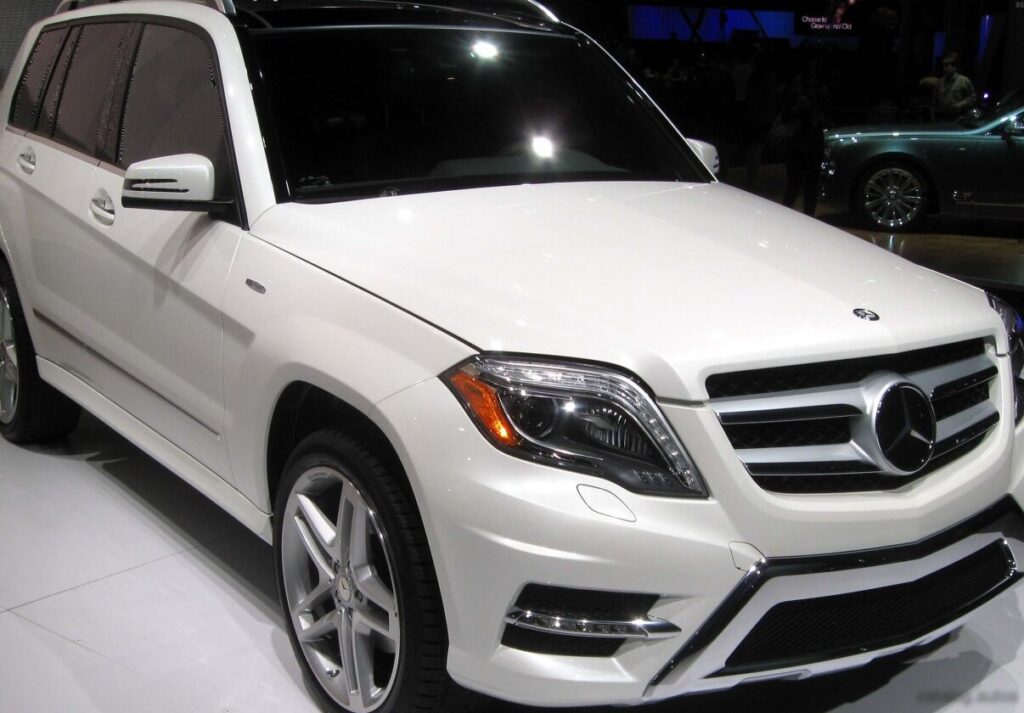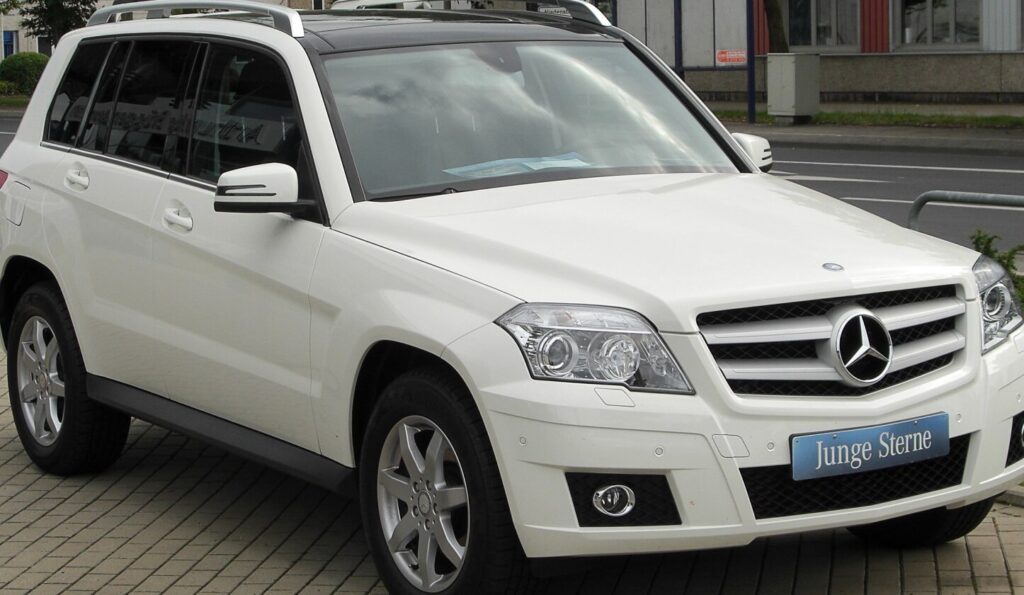
The Mercedes-Benz GLK 320 CDI 4MATIC, produced from 2008 to 2009, was a diesel-powered variant of the first-generation GLK (X204) compact luxury crossover SUV. Positioned as a mid-range offering within the GLK lineup, it bridged the gap between the base GLK 300 and the higher-performance GLK 55 AMG. This model aimed to provide a balance of fuel efficiency, torque, and all-weather capability, appealing to buyers seeking a practical yet refined SUV. The GLK 320 CDI was primarily marketed in Europe and other regions where diesel engines were popular, though a limited number were available in the United States.
Technical Specifications
| Brand | Mercedes-Benz |
| Model | GLK |
| Generation | GLK (X204) |
| Type | GLK 320 CDI V6 (224 Hp) 4MATIC 7G-TRONIC |
| Start of production | 2008 |
| End of production | 2009 |
| Powertrain Architecture | Internal Combustion engine |
| Body type | SUV |
| Seats | 5 |
| Doors | 5 |
| Fuel consumption (urban) | 10.3-10.7 l/100 km (22.8 – 22 US mpg) |
| Fuel consumption (extra urban) | 6.5-7 l/100 km (36.2 – 33.6 US mpg) |
| Fuel consumption (combined) | 7.9-8.4 l/100 km (29.8 – 28 US mpg) |
| CO2 emissions | 208-220 g/km |
| Fuel Type | Diesel |
| Acceleration 0 – 100 km/h | 7.5 sec |
| Acceleration 0 – 62 mph | 7.5 sec |
| Acceleration 0 – 60 mph | 7.1 sec |
| Maximum speed | 220 km/h (136.7 mph) |
| Emission standard | Euro 4 |
| Weight-to-power ratio | 8.1 kg/Hp |
| Weight-to-torque ratio | 3.3 kg/Nm |
| Power | 224 Hp @ 3800 rpm |
| Torque | 540 Nm @ 1600-2400 rpm (398.28 lb.-ft. @ 1600-2400 rpm) |
| Engine layout | Front, Longitudinal |
| Engine Model/Code | OM 642.961 |
| Engine displacement | 2987 cm3 (182.28 cu. in.) |
| Number of cylinders | 6 |
| Engine configuration | V-engine |
| Cylinder Bore | 83 mm (3.27 in.) |
| Piston Stroke | 92 mm (3.62 in.) |
| Compression ratio | 17.7:1 |
| Number of valves per cylinder | 4 |
| Fuel injection system | Diesel Commonrail |
| Engine aspiration | Turbocharger, Intercooler |
| Valvetrain | DOHC |
| Engine oil capacity | 8 l (8.45 US qt | 7.04 UK qt) |
| Coolant capacity | 11.5 l (12.15 US qt | 10.12 UK qt) |
| Kerb Weight | 1805 kg (3979.34 lbs.) |
| Max. weight | 2500 kg (5511.56 lbs.) |
| Max load | 695 kg (1532.21 lbs.) |
| Trunk (boot) space (minimum) | 450 l (15.89 cu. ft.) |
| Trunk (boot) space (maximum) | 1550 l (54.74 cu. ft.) |
| Fuel tank capacity | 66 l (17.44 US gal | 14.52 UK gal) |
| Max. roof load | 75 kg (165.35 lbs.) |
| Permitted trailer load (braked) | 2000 kg (4409.25 lbs.) |
| Permitted trailer load (unbraked) | 750 kg (1653.47 lbs.) |
| Length | 4528 mm (178.27 in.) |
| Width | 1840 mm (72.44 in.) |
| Width (including mirrors) | 2016 mm (79.37 in.) |
| Height | 1689 mm (66.5 in.) |
| Wheelbase | 2755 mm (108.46 in.) |
| Front track | 1567 mm (61.69 in.) |
| Rear track | 1569 mm (61.77 in.) |
| Ride height (ground clearance) | 187 mm (7.36 in.) |
| Drag coefficient (Cd) | 0.35 |
| Minimum turning circle | 11.5 m (37.73 ft.) |
| Front suspension | Independent, McPherson with coil spring and anti-roll bar |
| Rear suspension | Independent multi-link spring suspension with stabilizer |
| Front brakes | Ventilated discs |
| Rear brakes | Ventilated discs |
| Gearbox | 7 gears, automatic transmission G-TRONIC |
INTRODUCTION
The Mercedes-Benz GLK 320 CDI 4MATIC, launched in 2008, was a key component of the X204 GLK series. This generation of GLK represented Mercedes-Benz’s entry into the burgeoning compact luxury SUV segment, aiming to attract buyers who desired the prestige of the three-pointed star in a more manageable and fuel-efficient package. The 320 CDI variant, with its potent diesel engine and standard all-wheel drive, offered a compelling alternative to gasoline-powered models and competitors like the BMW X3 and Audi Q5. Production of this specific trim level was relatively short-lived, ending in 2009, likely due to evolving emissions regulations and the introduction of updated engine technologies.
Powertrain & Engine Architecture
At the heart of the GLK 320 CDI lay the OM 642.961 3.0-liter V6 diesel engine. This engine was a sophisticated design featuring a common rail direct injection system, a variable geometry turbocharger, and an intercooler. The common rail system, operating at extremely high pressures, allowed for precise fuel metering and optimized combustion, contributing to both power and efficiency. The V6 configuration provided inherent smoothness and balance, minimizing vibrations typically associated with diesel engines. The engine produced 224 horsepower at 3800 rpm and a substantial 540 Nm (398 lb-ft) of torque between 1600 and 2400 rpm. This broad torque curve provided strong acceleration and effortless cruising. The engine was paired with Mercedes-Benz’s 7G-TRONIC seven-speed automatic transmission. This transmission was known for its smooth and responsive shifts, and it was programmed to prioritize fuel economy while still providing ample performance when needed. The 7G-TRONIC also featured a manual shift mode for drivers who preferred more control.
Driving Characteristics
The GLK 320 CDI 4MATIC offered a refined and comfortable driving experience. The abundant torque from the diesel engine meant that the SUV felt strong and responsive in everyday driving situations. Acceleration was brisk, with a 0-60 mph time of around 7.1 seconds. While not a sports SUV, the GLK 320 CDI provided ample power for merging onto highways and overtaking other vehicles. The 7G-TRONIC transmission contributed to a smooth and seamless driving experience, with well-timed shifts. Compared to the gasoline-powered GLK 300, the 320 CDI offered significantly more torque, resulting in a more relaxed and effortless driving experience, particularly when fully loaded or towing. However, the diesel engine was noticeably louder and produced more vibration than the gasoline engine, although Mercedes-Benz did a good job of isolating the cabin from engine noise. The 4MATIC all-wheel-drive system provided excellent traction in all weather conditions, enhancing stability and confidence.
Equipment & Trim Levels
The GLK 320 CDI 4MATIC came standard with a generous array of features, reflecting its position as a luxury SUV. Standard equipment included leather upholstery, dual-zone automatic climate control, a premium audio system, power-adjustable front seats, and a sunroof. Safety features included anti-lock brakes, stability control, traction control, and a comprehensive airbag system. Optional extras included navigation system, a rearview camera, parking sensors, and upgraded leather upholstery. The interior design was typical of Mercedes-Benz, with a focus on quality materials and a sophisticated aesthetic. The dashboard layout was clean and functional, with intuitive controls.
Chassis & Braking
The GLK 320 CDI featured a fully independent suspension system, with McPherson struts at the front and a multi-link setup at the rear. This suspension design provided a comfortable ride while maintaining good handling characteristics. Stabilizer bars were fitted to both axles to reduce body roll during cornering. The braking system consisted of ventilated discs on all four wheels, providing ample stopping power. Anti-lock brakes (ABS) and electronic brake-force distribution (EBD) were standard features, enhancing safety and control. The steering was hydraulic power-assisted, providing a precise and responsive feel.
Market Reception & Comparison
The GLK 320 CDI 4MATIC was generally well-received by automotive critics. Reviewers praised its powerful and fuel-efficient diesel engine, comfortable ride, and luxurious interior. However, some critics noted the engine’s noise and vibration compared to gasoline alternatives. Compared to the GLK 300, the 320 CDI offered superior fuel economy and significantly more torque, making it a better choice for drivers who frequently tow or drive long distances. Compared to competitors like the BMW X3 and Audi Q5, the GLK 320 CDI offered a unique combination of luxury, performance, and fuel efficiency. Its diesel engine provided a distinct advantage in terms of fuel economy, while its spacious interior and comfortable ride made it a practical choice for families.
Legacy
The Mercedes-Benz GLK 320 CDI 4MATIC, while a relatively short-lived model, has developed a reputation for reliability and durability. The OM 642 diesel engine is known for its robust construction and longevity, and with proper maintenance, it can provide many years of reliable service. On the used car market, the GLK 320 CDI remains a popular choice for buyers seeking a fuel-efficient and capable luxury SUV. However, potential buyers should be aware of the higher maintenance costs associated with diesel engines, including the potential for issues with the diesel particulate filter (DPF) and fuel injectors. Despite these potential concerns, the GLK 320 CDI remains a compelling option for those who appreciate the benefits of diesel power.