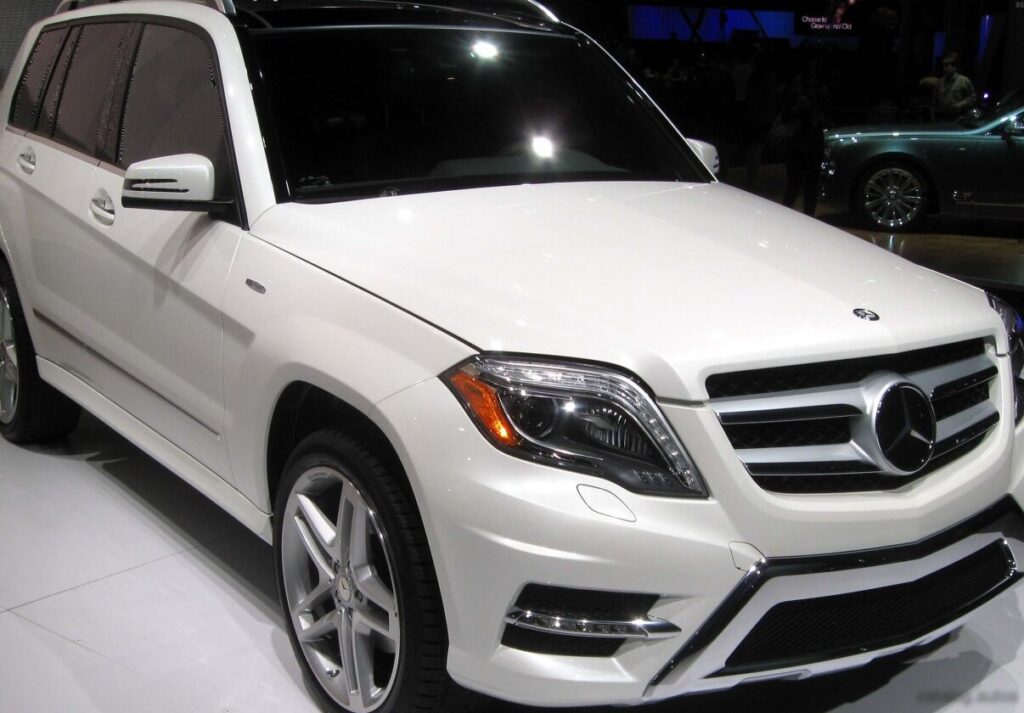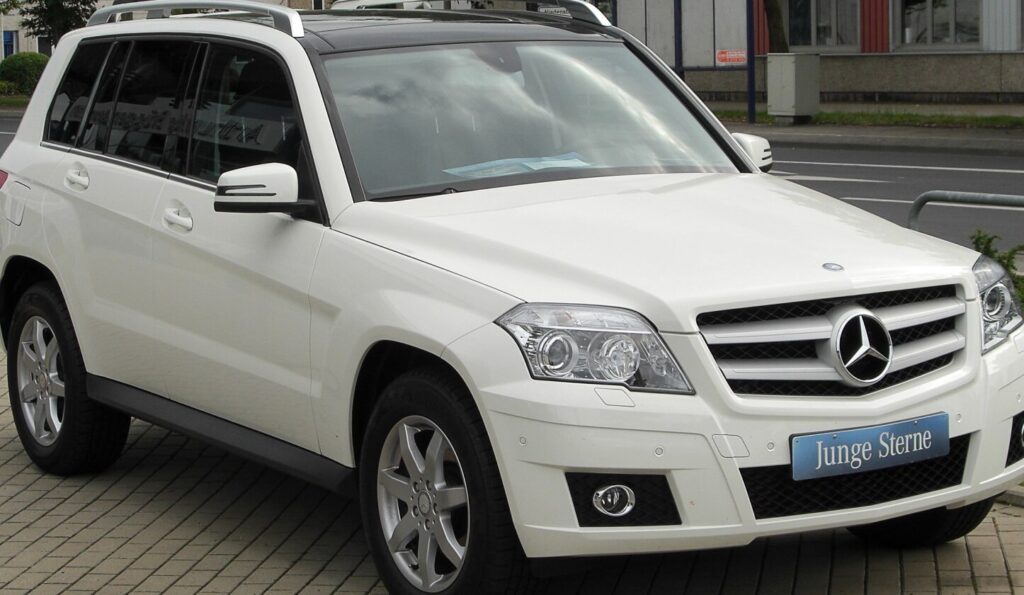
The Mercedes-Benz GLK 350 CDI 4MATIC, produced from 2009 to 2010, represented a significant entry for Mercedes-Benz into the burgeoning compact luxury SUV segment. Part of the X204 GLK-Class generation, this variant combined a powerful diesel engine with a sophisticated all-wheel-drive system and a 7-speed automatic transmission. Positioned as a mid-range offering within the GLK lineup, it aimed to deliver a balance of performance, efficiency, and luxury features, appealing to buyers seeking a practical yet refined SUV. The GLK, in general, was designed to bridge the gap between the larger ML-Class and the smaller, more urban-focused B-Class.
Technical Specifications
| Brand | Mercedes-Benz |
| Model | GLK |
| Generation | GLK (X204) |
| Type (Engine) | GLK 350 CDI V6 (224 Hp) 4MATIC 7G-TRONIC |
| Start of production | 2009 |
| End of production | 2010 |
| Powertrain Architecture | Internal Combustion engine |
| Body type | SUV |
| Seats | 5 |
| Doors | 5 |
| Fuel consumption (economy) – urban (NEDC) | 10.3-10.7 l/100 km (22.8 – 22 US mpg, 27.4 – 26.4 UK mpg, 9.7 – 9.3 km/l) |
| Fuel consumption (economy) – extra urban (NEDC) | 6.5-7 l/100 km (36.2 – 33.6 US mpg, 43.5 – 40.4 UK mpg, 15.4 – 14.3 km/l) |
| Fuel consumption (economy) – combined (NEDC) | 7.9-8.4 l/100 km (29.8 – 28 US mpg, 35.8 – 33.6 UK mpg, 12.7 – 11.9 km/l) |
| CO2 emissions (NEDC) | 208-220 g/km |
| Fuel Type | Diesel |
| Acceleration 0 – 100 km/h | 7.5 sec |
| Acceleration 0 – 62 mph | 7.5 sec |
| Acceleration 0 – 60 mph | 7.1 sec |
| Maximum speed | 220 km/h (136.7 mph) |
| Emission standard | Euro 4 |
| Weight-to-power ratio | 8.1 kg/Hp, 124.1 Hp/tonne |
| Weight-to-torque ratio | 3.3 kg/Nm, 299.2 Nm/tonne |
| Power | 224 Hp @ 3800 rpm |
| Power per litre | 75 Hp/l |
| Torque | 540 Nm @ 1600-2400 rpm (398.28 lb.-ft. @ 1600-2400 rpm) |
| Engine layout | Front, Longitudinal |
| Engine Model/Code | OM 642.961 |
| Engine displacement | 2987 cm3 (182.28 cu. in.) |
| Number of cylinders | 6 |
| Engine configuration | V-engine |
| Cylinder Bore | 83 mm (3.27 in.) |
| Piston Stroke | 92 mm (3.62 in.) |
| Compression ratio | 18:1 |
| Number of valves per cylinder | 4 |
| Fuel injection system | Diesel Commonrail |
| Engine aspiration | Turbocharger, Intercooler |
| Valvetrain | DOHC |
| Engine oil capacity | 8 l (8.45 US qt | 7.04 UK qt) |
| Kerb Weight | 1805 kg (3979.34 lbs.) |
| Max. weight | 2500 kg (5511.56 lbs.) |
| Max load | 695 kg (1532.21 lbs.) |
| Trunk (boot) space – minimum | 450 l (15.89 cu. ft.) |
| Trunk (boot) space – maximum | 1550 l (54.74 cu. ft.) |
| Fuel tank capacity | 66 l (17.44 US gal | 14.52 UK gal) |
| Max. roof load | 75 kg (165.35 lbs.) |
| Permitted trailer load with brakes (12%) | 2000 kg (4409.25 lbs.) |
| Permitted trailer load without brakes | 750 kg (1653.47 lbs.) |
| Length | 4525 mm (178.15 in.) |
| Width | 1840 mm (72.44 in.) |
| Width including mirrors | 2016 mm (79.37 in.) |
| Height | 1689 mm (66.5 in.) |
| Wheelbase | 2755 mm (108.46 in.) |
| Front track | 1567 mm (61.69 in.) |
| Rear (Back) track | 1588 mm (62.52 in.) |
| Front overhang | 813 mm (32.01 in.) |
| Rear overhang | 957 mm (37.68 in.) |
| Ride height (ground clearance) | 201 mm (7.91 in.) |
| Drag coefficient (Cd) | 0.35 |
| Minimum turning circle (turning diameter) | 11.5 m (37.73 ft.) |
| Approach angle | 23° |
| Departure angle | 25° |
| Ramp-over (brakeover) angle | 19° |
| Climb angle | 35° |
| Wading depth | 300 mm (11.81 in.) |
| Drivetrain Architecture | The Internal combustion engine (ICE) drives permanently the four wheels of the vehicle. |
| Drive wheel | All wheel drive (4×4) |
| Number of gears and type of gearbox | 7 gears, automatic transmission G-TRONIC |
| Front suspension | Independent, type McPherson with coil spring and anti-roll bar |
| Rear suspension | Independent multi-link spring suspension with stabilizer |
| Front brakes | Ventilated discs |
| Rear brakes | Ventilated discs |
| Assisting systems | ABS (Anti-lock braking system) |
| Steering type | Steering rack and pinion |
| Power steering | Hydraulic Steering |
| Tires size | Front wheel tires: 235/60 R17; 235/50 R19; 235/45 R20Rear wheel tires: 235/60 R17; 255/55 R17; 235/50 R19; 255/45 R19; 255/40 R20 |
| Wheel rims size | Front wheel rims: 7.5J x 17; 7.5J x 19; 8.5J x 20Rear wheel rims: 7.5J x 17; 8J x 17; 7.5J x 19; 8.5J x 19; 9.5J x 20 |
INTRODUCTION
The Mercedes-Benz GLK 350 CDI 4MATIC, produced between 2009 and 2010, was a key component of the first-generation (X204) GLK-Class. This model aimed to provide a more accessible entry point into the Mercedes-Benz SUV range, offering a compelling blend of luxury, practicality, and fuel efficiency. Built on the W204 C-Class platform, the GLK shared many components with its sedan sibling, resulting in a familiar driving experience with the added benefits of a higher ride height and all-wheel drive. The CDI designation signified a diesel engine, and the 4MATIC system denoted Mercedes-Benz’s full-time all-wheel-drive capability. The 7G-TRONIC transmission was a seven-speed automatic, known for its smooth shifting and efficiency.
Powertrain & Engine Architecture
At the heart of the GLK 350 CDI 4MATIC lies the OM642.961 3.0-liter V6 diesel engine. This engine is a robust and well-regarded unit, known for its durability and strong torque output. It features a common-rail direct injection system, delivering fuel directly into the cylinders at extremely high pressure for improved combustion efficiency and reduced emissions. The engine utilizes a single turbocharger with an intercooler to boost power and torque. The valvetrain employs double overhead camshafts (DOHC) with four valves per cylinder, optimizing airflow for enhanced performance. The 7G-TRONIC automatic transmission, a seven-speed unit, was specifically tuned to complement the diesel engine’s characteristics, providing smooth and responsive gear changes. The transmission features a torque converter for smooth launches and low-speed driving, and allows for manual gear selection via steering wheel-mounted paddles in some configurations.
Driving Characteristics
The GLK 350 CDI 4MATIC offered a refined and comfortable driving experience. The 540 Nm (398 lb-ft) of torque available from 1600-2400 rpm provided ample pulling power for everyday driving and overtaking maneuvers. While not a sports SUV, the 7.5-second 0-60 mph acceleration was respectable for its class. The 7G-TRONIC transmission contributed to a smooth and seamless power delivery, minimizing shift shock. Compared to the gasoline-powered GLK 350, the CDI model prioritized fuel efficiency and low-end torque over outright horsepower. The 4MATIC all-wheel-drive system provided enhanced traction and stability, particularly in inclement weather conditions. The gear ratios were optimized for both fuel economy and responsive acceleration, with a relatively tall final drive to maximize highway cruising efficiency.
Equipment & Trim Levels
The GLK 350 CDI 4MATIC typically came well-equipped with standard features including automatic climate control, power-adjustable front seats, a multi-function steering wheel, and a premium audio system. Interior upholstery was typically MB-Tex leatherette, with optional genuine leather available. The dashboard featured a classic Mercedes-Benz design with wood or aluminum trim options. Optional extras included a navigation system, a panoramic sunroof, heated seats, and a rearview camera. Safety features such as ABS, traction control, and multiple airbags were standard. The GLK offered a relatively limited number of trim packages, with most options being added individually.
Chassis & Braking
The GLK 350 CDI 4MATIC utilized an independent suspension system at all four corners. The front suspension employed a McPherson strut design with coil springs and an anti-roll bar, while the rear suspension featured a multi-link setup, also with coil springs and a stabilizer bar. This configuration provided a comfortable ride and predictable handling. Braking duties were handled by ventilated discs on all four wheels, providing ample stopping power. The ABS (Anti-lock Braking System) helped to maintain steering control during emergency braking situations. The GLK’s chassis was designed to balance ride comfort with handling stability, offering a composed and confident driving experience.
Market Reception & Comparison
The GLK 350 CDI 4MATIC was generally well-received by automotive critics. It was praised for its fuel efficiency, strong torque output, and comfortable ride. However, some reviewers noted that the interior, while well-built, felt somewhat dated compared to newer competitors. Compared to the GLK 350 (gasoline), the CDI model offered significantly better fuel economy and a more relaxed driving experience, but lacked the same level of outright performance. Against rivals like the BMW X3 and Audi Q5, the GLK CDI offered a compelling value proposition, particularly for buyers prioritizing fuel efficiency and diesel power.
Legacy
The OM642 diesel engine used in the GLK 350 CDI has proven to be a durable and reliable powerplant, with many examples exceeding 200,000 miles with proper maintenance. The 7G-TRONIC transmission is also generally considered to be a robust unit. On the used car market, the GLK 350 CDI 4MATIC remains a popular choice for buyers seeking a fuel-efficient and well-equipped luxury SUV. However, potential buyers should be aware of the potential for diesel emissions system issues, such as DPF (Diesel Particulate Filter) clogging, which can require costly repairs. Overall, the GLK 350 CDI 4MATIC represents a solid and dependable option in the compact luxury SUV segment.