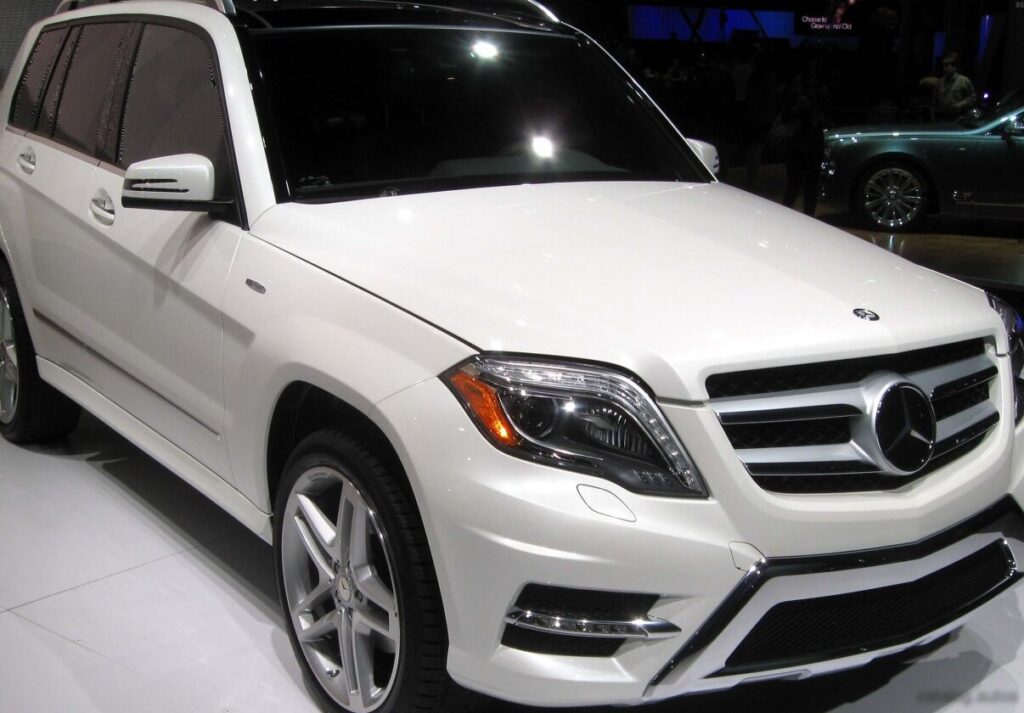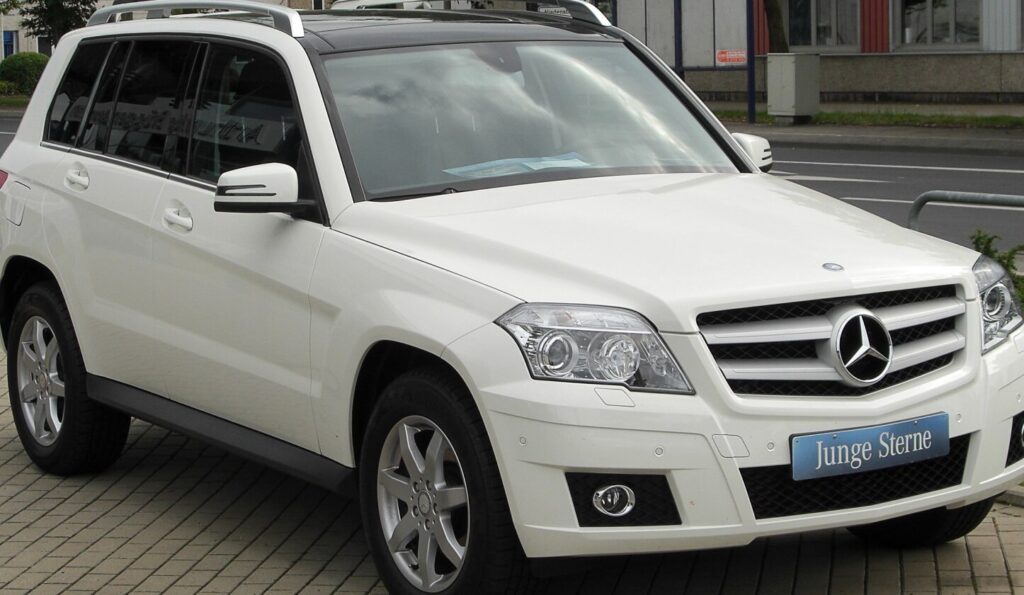
The Mercedes-Benz GLK 350 V6, produced from March 2009 to July 2012 as part of the X204 generation, represented a key offering in Mercedes-Benz’s compact luxury SUV lineup. Positioned as a mid-range trim, it bridged the gap between the base GLK 300 and the performance-oriented AMG variants. The GLK, internally designated as the X204, was Mercedes-Benz’s first foray into the compact luxury crossover segment, aiming to attract buyers seeking a more manageable and fuel-efficient alternative to the larger ML-Class. This particular 350 variant, with its 3.5-liter V6 engine and 7G-TRONIC automatic transmission, was primarily marketed towards American and European consumers desiring a blend of luxury, performance, and practicality.
Technical Specifications
| Brand | Mercedes-Benz |
| Model | GLK |
| Generation | GLK (X204) |
| Type (Engine) | GLK 350 V6 (268 Hp) 7G-TRONIC |
| Start of production | March, 2009 |
| End of production | July, 2012 |
| Powertrain Architecture | Internal Combustion engine |
| Body type | SUV |
| Seats | 5 |
| Doors | 5 |
| Fuel consumption (economy) – urban (EPA) | 14.7 l/100 km (16 US mpg, 19.2 UK mpg, 6.8 km/l) |
| Fuel consumption (economy) – extra urban (EPA) | 10.2-10.7 l/100 km (23.1 – 22 US mpg, 27.7 – 26.4 UK mpg, 9.8 – 9.3 km/l) |
| Fuel Type | Petrol (Gasoline) |
| Acceleration 0 – 60 mph | 6.5 sec |
| Maximum speed | 210 km/h (130.49 mph) – Electronically limited |
| Power | 268 Hp @ 6000 rpm |
| Power per litre | 76.6 Hp/l |
| Torque | 350 Nm @ 2400-5000 rpm (258.15 lb.-ft. @ 2400-5000 rpm) |
| Maximum engine speed | 6500 rpm |
| Engine layout | Front, Longitudinal |
| Engine Model/Code | M 272.991 |
| Engine displacement | 3498 cm3 (213.46 cu. in.) |
| Number of cylinders | 6 |
| Engine configuration | V-engine |
| Cylinder Bore | 92.9 mm (3.66 in.) |
| Piston Stroke | 86 mm (3.39 in.) |
| Compression ratio | 10.7:1 |
| Number of valves per cylinder | 4 |
| Fuel injection system | Multi-port manifold injection |
| Engine aspiration | Naturally aspirated engine |
| Valvetrain | DOHC |
| Engine oil capacity | 7 l (7.4 US qt | 6.16 UK qt) |
| Trunk (boot) space – minimum | 450 l (15.89 cu. ft.) |
| Trunk (boot) space – maximum | 1550 l (54.74 cu. ft.) |
| Fuel tank capacity | 66 l (17.44 US gal | 14.52 UK gal) |
| Permitted trailer load with brakes (12%) | 1588 kg (3500.94 lbs.) |
| Length | 4528 mm (178.27 in.) |
| Width | 1886 mm (74.25 in.) |
| Width including mirrors | 2016 mm (79.37 in.) |
| Height | 1699 mm (66.89 in.) |
| Wheelbase | 2755 mm (108.46 in.) |
| Front track | 1526 mm (60.08 in.) |
| Rear (Back) track | 1588 mm (62.52 in.) |
| Ride height (ground clearance) | 201 mm (7.91 in.) |
| Drag coefficient (Cd) | 0.35 |
| Minimum turning circle (turning diameter) | 11.5 m (37.73 ft.) |
| Approach angle | 23° |
| Departure angle | 25° |
| Ramp-over (brakeover) angle | 19° |
| Wading depth | 300 mm (11.81 in.) |
| Drivetrain Architecture | The Internal combustion engine (ICE) drives the rear wheels of the vehicle. |
| Drive wheel | Rear wheel drive |
| Number of gears and type of gearbox | 7 gears, automatic transmission G-TRONIC |
| Front suspension | Independent, type McPherson with coil spring and anti-roll bar |
| Rear suspension | Independent multi-link spring suspension with stabilizer |
| Front brakes | Ventilated discs, 330×32 mm |
| Rear brakes | Ventilated discs, 300×22 mm |
| Assisting systems | ABS (Anti-lock braking system) |
| Steering type | Steering rack and pinion |
| Power steering | Hydraulic Steering |
| Tires size | 235/50 R19 |
| Wheel rims size | 7.5J x 19 |
Powertrain & Engine Architecture
The GLK 350 V6 was powered by the M272.991 engine, a 3.5-liter naturally aspirated V6. This engine, a staple in many Mercedes-Benz vehicles of the era, featured a 60-degree V-angle and utilized a three-valve-per-cylinder (two intake, one exhaust) DOHC valvetrain. Fuel delivery was handled by a multi-port fuel injection system, providing precise fuel metering for optimal combustion. The engine’s design prioritized smooth power delivery and refinement over outright performance. Paired with the engine was the 7G-TRONIC automatic transmission, a seven-speed torque converter automatic known for its smooth shifting and efficiency. This transmission offered a wide range of gear ratios, contributing to both fuel economy and responsive acceleration. The 7G-TRONIC also featured a manual shift mode, allowing drivers some control over gear selection.
Driving Characteristics
The GLK 350 V6 with the 7G-TRONIC transmission offered a comfortable and refined driving experience. While not as sporty as some of its competitors, it provided ample power for everyday driving and highway cruising. The 268 horsepower and 258 lb-ft of torque allowed for a 0-60 mph time of around 6.5 seconds. The 7G-TRONIC transmission’s gear ratios were tuned for a balance of acceleration and fuel efficiency. Compared to the base GLK 300 with its turbocharged four-cylinder engine, the 350 offered significantly more power and a smoother, more linear power delivery. However, it lacked the low-end torque of a diesel engine, such as the GLK 220 CDI available in Europe. The rear-wheel-drive configuration contributed to a balanced feel, although all-wheel drive (4MATIC) was a popular option.
Equipment & Trim Levels
The GLK 350 V6 came standard with a generous array of features, including leatherette upholstery, dual-zone automatic climate control, a power liftgate, and a premium sound system. Optional extras included genuine leather upholstery, a panoramic sunroof, navigation system, and a suite of driver-assistance features like blind-spot monitoring and lane-keeping assist. Interior trim options ranged from wood veneers to aluminum accents, allowing buyers to personalize the cabin to their taste. The dashboard layout was typical of Mercedes-Benz at the time, with a focus on elegant design and intuitive controls.
Chassis & Braking
The GLK 350 V6 utilized an independent suspension system at all four wheels. The front suspension employed a McPherson strut design, while the rear featured a multi-link setup. This configuration provided a comfortable ride and good handling characteristics. Braking duties were handled by ventilated disc brakes on all four wheels, providing ample stopping power. Anti-lock braking system (ABS) was standard, enhancing safety and stability during emergency braking maneuvers. The GLK 350’s chassis was designed to provide a balance between ride comfort and handling precision, making it suitable for both city driving and longer journeys.
Market Reception & Comparison
The GLK 350 V6 was generally well-received by automotive critics. It was praised for its comfortable ride, refined interior, and powerful engine. However, some reviewers noted that its handling wasn’t as sporty as some of its competitors, such as the BMW X3 or Audi Q5. Fuel economy was considered average for its class. Compared to the GLK 300, the 350 offered a significant performance upgrade, but at a higher price point. The GLK 350 also offered a more luxurious experience than the diesel-powered GLK 220 CDI, which was primarily focused on fuel efficiency.
Legacy
The Mercedes-Benz GLK 350 V6, while superseded by the GLC in 2015, remains a popular choice in the used car market. The M272 engine is known for its reliability, although regular maintenance is crucial to prevent oil leaks and ensure long-term durability. The 7G-TRONIC transmission is also generally reliable, but fluid changes should be performed according to the manufacturer’s recommendations. Today, well-maintained examples of the GLK 350 V6 offer a compelling combination of luxury, performance, and value, making them an attractive option for buyers seeking a capable and refined compact SUV.