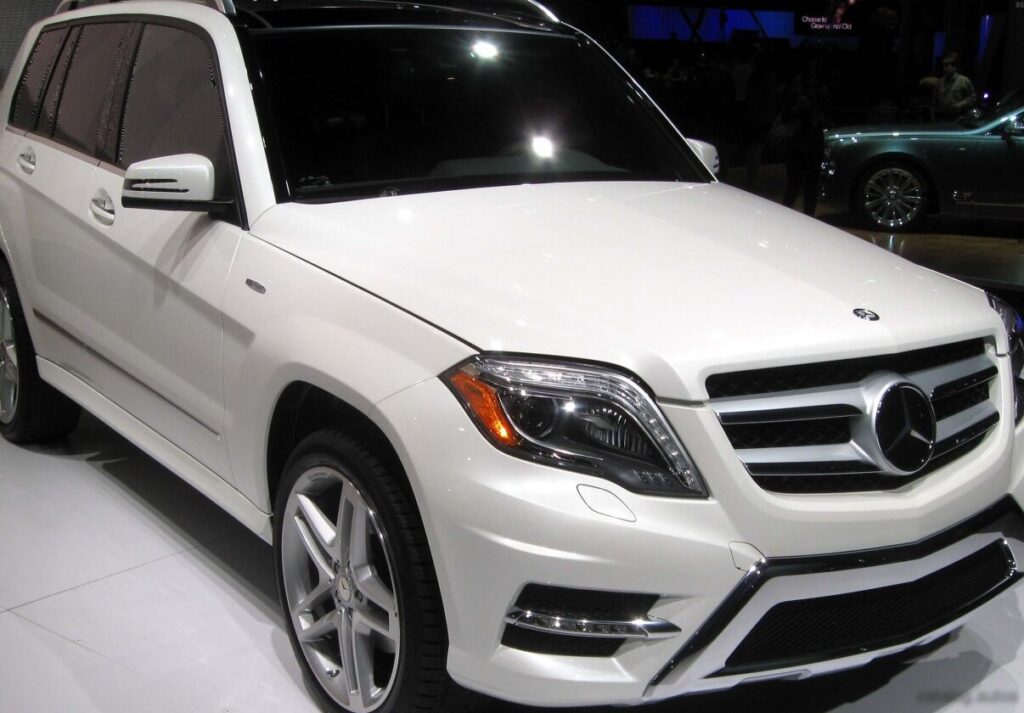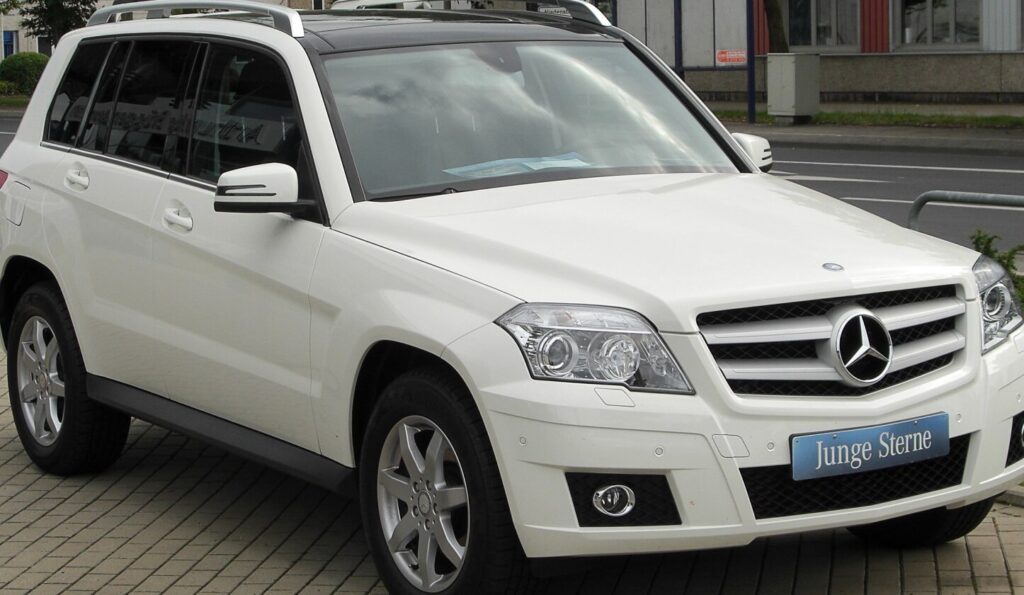
The Mercedes-Benz GLK 350 4MATIC, produced between 2008 and 2011 as part of the X204 series, represented Mercedes-Benz’s entry into the burgeoning compact luxury SUV segment. Positioned as a more accessible alternative to the larger ML-Class, the GLK 350 aimed to attract buyers seeking a blend of practicality, luxury, and the prestige associated with the three-pointed star. This particular variant, equipped with the 3.5-liter V6 engine and a 7G-TRONIC automatic transmission, served as the primary offering for the North American market, balancing performance with relative fuel efficiency within the GLK lineup.
Technical Specifications
| Brand | Mercedes-Benz |
| Model | GLK |
| Generation | GLK (X204) |
| Type | GLK 350 V6 (272 Hp) 4MATIC 7G-TRONIC |
| Start of production | 2008 |
| End of production | 2011 |
| Powertrain Architecture | Internal Combustion engine |
| Body type | SUV |
| Seats | 5 |
| Doors | 5 |
| Fuel consumption (urban) | 14.2-14.6 l/100 km (16.6 – 16.1 US mpg) |
| Fuel consumption (extra urban) | 8.3-8.5 l/100 km (28.3 – 27.7 US mpg) |
| Fuel consumption (combined) | 10.5-10.8 l/100 km (22.4 – 21.8 US mpg) |
| CO2 emissions | 245-251 g/km |
| Fuel Type | Petrol (Gasoline) |
| Acceleration 0 – 100 km/h | 6.7 sec |
| Acceleration 0 – 60 mph | 6.4 sec |
| Maximum speed | 230 km/h (142.92 mph) |
| Emission standard | Euro 5 |
| Weight-to-power ratio | 6.5 kg/Hp |
| Weight-to-torque ratio | 5 kg/Nm |
| Power | 272 Hp @ 6000 rpm |
| Torque | 350 Nm @ 2400-5000 rpm (258.15 lb.-ft. @ 2400-5000 rpm) |
| Engine layout | Front, Longitudinal |
| Engine Model/Code | M 272.971 |
| Engine displacement | 3498 cm3 (213.46 cu. in.) |
| Number of cylinders | 6 |
| Engine configuration | V-engine |
| Cylinder Bore | 92.9 mm (3.66 in.) |
| Piston Stroke | 86 mm (3.39 in.) |
| Compression ratio | 10.7:1 |
| Number of valves per cylinder | 4 |
| Fuel injection system | Multi-port manifold injection |
| Engine aspiration | Naturally aspirated engine |
| Valvetrain | DOHC |
| Engine oil capacity | 7 l (7.4 US qt | 6.16 UK qt) |
| Coolant capacity | 8.4 l (8.88 US qt | 7.39 UK qt) |
| Kerb Weight | 1755 kg (3869.11 lbs.) |
| Max. weight | 2480 kg (5467.46 lbs.) |
| Max load | 725 kg (1598.35 lbs.) |
| Trunk (boot) space – minimum | 450 l (15.89 cu. ft.) |
| Trunk (boot) space – maximum | 1550 l (54.74 cu. ft.) |
| Fuel tank capacity | 66 l (17.44 US gal | 14.52 UK gal) |
| Max. roof load | 75 kg (165.35 lbs.) |
| Permitted trailer load with brakes (12%) | 2000 kg (4409.25 lbs.) |
| Permitted trailer load without brakes | 750 kg (1653.47 lbs.) |
| Length | 4525 mm (178.15 in.) |
| Width | 1840 mm (72.44 in.) |
| Width including mirrors | 2016 mm (79.37 in.) |
| Height | 1689 mm (66.5 in.) |
| Wheelbase | 2755 mm (108.46 in.) |
| Front track | 1567 mm (61.69 in.) |
| Rear track | 1588 mm (62.52 in.) |
| Front overhang | 813 mm (32.01 in.) |
| Rear overhang | 957 mm (37.68 in.) |
| Ride height (ground clearance) | 201 mm (7.91 in.) |
| Drag coefficient (Cd) | 0.36 |
| Minimum turning circle | 11.5 m (37.73 ft.) |
| Front brakes | Ventilated discs |
| Rear brakes | Ventilated discs |
| Number of gears | 7 |
| Gearbox type | Automatic transmission G-TRONIC |
INTRODUCTION
The GLK 350 4MATIC, launched in 2008, was a crucial model for Mercedes-Benz, signaling their commitment to a more compact and accessible luxury SUV offering. Built on the W204 C-Class platform (internally designated X204), the GLK aimed to capture a younger demographic and compete with rivals like the BMW X3 and Audi Q5. The 350 variant, powered by the M272 V6 engine and paired with the 7G-TRONIC automatic transmission, was the mainstay of the lineup, offering a balance of performance and refinement. Production continued through 2011, after which the GLK received a facelift and continued until being replaced by the GLC in 2015.
Powertrain & Engine Architecture
At the heart of the GLK 350 lies the M272.971 3.5-liter naturally aspirated V6 engine. This engine, a staple in many Mercedes-Benz models of the era, features a 60-degree V-angle and utilizes a three-valve-per-cylinder (two intake, one exhaust) DOHC valvetrain. The M272 is known for its smooth operation and relatively high power output for its displacement. Fuel delivery is managed by a multi-port fuel injection system, and the engine benefits from variable valve timing on both intake and exhaust camshafts. The 7G-TRONIC automatic transmission, a seven-speed unit, provides smooth and efficient gear changes. This transmission is known for its wide gear ratio spread, contributing to both fuel economy and responsive acceleration. The 4MATIC all-wheel-drive system is full-time, utilizing a center differential to distribute torque between the front and rear axles, enhancing traction in various conditions.
Driving Characteristics
The GLK 350 4MATIC offered a comfortable and composed driving experience. The 272 horsepower and 258 lb-ft of torque provided adequate acceleration, with a 0-60 mph time of around 6.4 seconds. While not a sports SUV, the GLK 350 felt responsive in everyday driving situations. The 7G-TRONIC transmission contributed to this, offering seamless shifts and keeping the engine in its optimal power band. Compared to the base GLK 280 (which was not widely available in the US), the 350 offered a noticeable performance advantage. The 4MATIC system provided confident handling in inclement weather, and the suspension, tuned for comfort, absorbed bumps and imperfections in the road well. The gear ratios were optimized for both highway cruising and city driving, providing a balance between fuel efficiency and responsiveness.
Equipment & Trim Levels
The GLK 350 4MATIC came standard with a generous array of features, including leatherette upholstery, dual-zone automatic climate control, a power liftgate, and a premium audio system. Optional extras included genuine leather upholstery, a panoramic sunroof, navigation system, heated and ventilated front seats, and a Harman Kardon sound system. The interior design was typical of Mercedes-Benz, with a focus on quality materials and a refined aesthetic. Trim levels were relatively simple, with most options being added individually rather than packaged into distinct tiers. The overall ambiance was one of understated luxury and sophistication.
Chassis & Braking
The GLK 350 utilized a McPherson strut front suspension and a multi-link independent rear suspension. This setup provided a good balance of ride comfort and handling precision. Stabilizer bars were fitted to both axles to reduce body roll during cornering. The braking system consisted of ventilated discs on all four wheels, providing ample stopping power. Anti-lock brakes (ABS) and electronic stability control (ESP) were standard safety features. The GLK 350’s chassis was designed to provide a stable and secure driving experience, even when fully loaded.
Market Reception & Comparison
The GLK 350 4MATIC was generally well-received by automotive critics. It was praised for its comfortable ride, refined interior, and strong engine. However, some reviewers noted that its styling was somewhat polarizing. Compared to the GLK 280, the 350 offered a significant performance upgrade, making it the preferred choice for most buyers. Fuel economy was reasonable for its class, although not class-leading. Reliability was generally good, although some owners reported issues with the electronic systems. The GLK 350 successfully carved out a niche for itself in the compact luxury SUV segment, attracting buyers who valued Mercedes-Benz’s reputation for quality and refinement.
Legacy
The GLK 350 4MATIC remains a popular choice in the used car market. Its combination of luxury, performance, and practicality makes it an appealing option for buyers seeking a well-rounded SUV. The M272 V6 engine is known for its durability, although regular maintenance is essential to ensure its longevity. Common maintenance items include oil changes, spark plug replacements, and coolant flushes. The 7G-TRONIC transmission is also generally reliable, but it may require fluid changes and occasional servicing. Overall, the GLK 350 4MATIC represents a solid and dependable luxury SUV that continues to offer a compelling value proposition.