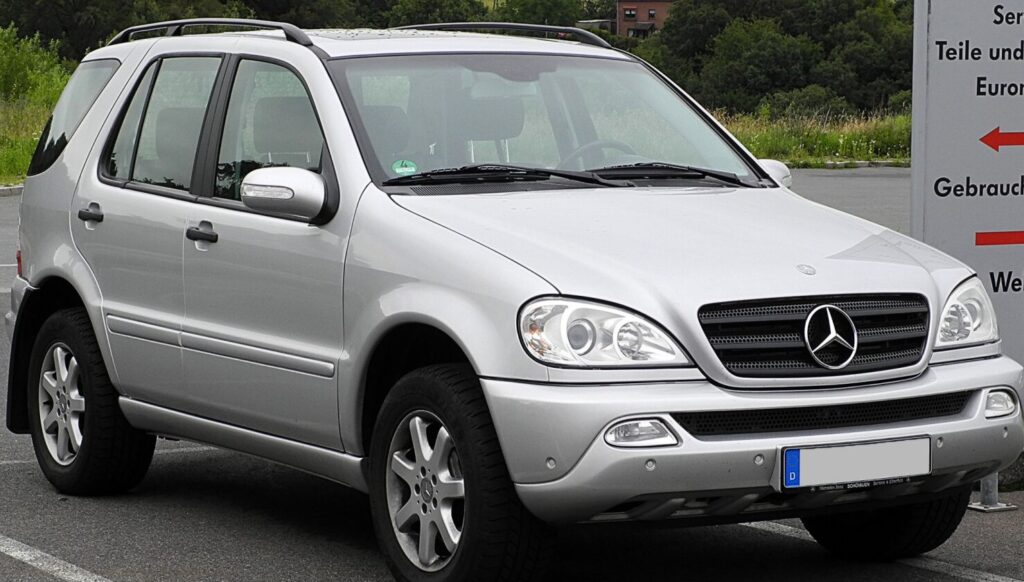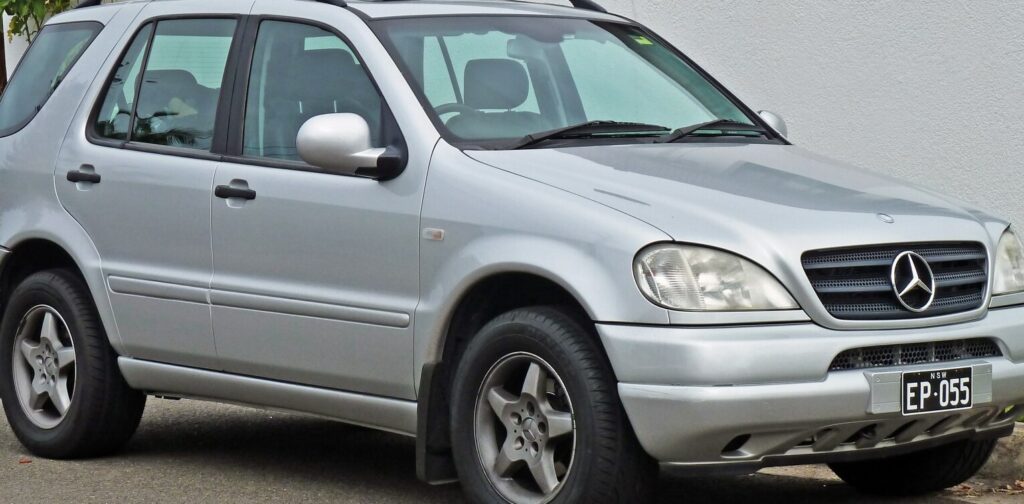
The Mercedes-Benz M-Class (W163) ML 270 CDI 4MATIC, produced from 1999 to 2001, represented a significant entry for Mercedes-Benz into the burgeoning mid-size SUV market. Positioned as a diesel-powered alternative within the first-generation W163 series, it offered a blend of luxury, practicality, and all-wheel-drive capability. This variant, equipped with the OM612.963 engine and a 5G-TRONIC automatic transmission, aimed to appeal to buyers seeking fuel efficiency and towing capacity without sacrificing the Mercedes-Benz brand experience. It served as a key model in establishing the M-Class as a competitor to vehicles like the BMW X5 and the Lexus RX.
Technical Specifications
| Brand | Mercedes-Benz |
| Model | M-class |
| Generation | M-class (W163) |
| Type (Engine) | ML 270 CDI (163 Hp) 4MATIC 5G-TRONIC |
| Start of production | 1999 |
| End of production | 2001 |
| Powertrain Architecture | Internal Combustion engine |
| Body type | SUV |
| Seats | 5 |
| Doors | 5 |
| Fuel consumption (urban) | 12.4 l/100 km (19 US mpg, 22.8 UK mpg, 8.1 km/l) |
| Fuel consumption (extra urban) | 8 l/100 km (29.4 US mpg, 35.3 UK mpg, 12.5 km/l) |
| Fuel consumption (combined) | 9.1 l/100 km (25.8 US mpg, 31 UK mpg, 11 km/l) |
| Fuel Type | Diesel |
| Acceleration 0 – 100 km/h | 11.4 sec |
| Acceleration 0 – 62 mph | 11.4 sec |
| Acceleration 0 – 60 mph | 10.8 sec |
| Maximum speed | 183 km/h (113.71 mph) |
| Weight-to-power ratio | 12.5 kg/Hp, 79.7 Hp/tonne |
| Weight-to-torque ratio | 5.5 kg/Nm, 180.9 Nm/tonne |
| Power | 163 Hp @ 4200 rpm |
| Power per litre | 60.7 Hp/l |
| Torque | 370 Nm @ 1800 rpm (272.9 lb.-ft. @ 1800 rpm) |
| Engine layout | Front, Longitudinal |
| Engine Model/Code | OM 612.963 |
| Engine displacement | 2685 cm3 (163.85 cu. in.) |
| Number of cylinders | 5 |
| Engine configuration | Inline |
| Cylinder Bore | 88 mm (3.46 in.) |
| Piston Stroke | 88.4 mm (3.48 in.) |
| Compression ratio | 18:1 |
| Number of valves per cylinder | 4 |
| Fuel injection system | Diesel Commonrail |
| Engine aspiration | Turbocharger, Intercooler |
| Valvetrain | DOHC |
| Engine oil capacity | 7.5 l (7.93 US qt | 6.6 UK qt) |
| Coolant capacity | 11 l (11.62 US qt | 9.68 UK qt) |
| Kerb Weight | 2045 kg (4508.45 lbs.) |
| Max. weight | 2810 kg (6194.99 lbs.) |
| Max load | 765 kg (1686.54 lbs.) |
| Trunk (boot) space – minimum | 633 l (22.35 cu. ft.) |
| Trunk (boot) space – maximum | 2020 l (71.34 cu. ft.) |
| Fuel tank capacity | 70 l (18.49 US gal | 15.4 UK gal) |
| Length | 4587 mm (180.59 in.) |
| Width | 1833 mm (72.17 in.) |
| Height | 1820 mm (71.65 in.) |
| Wheelbase | 2820 mm (111.02 in.) |
| Front track | 1565 mm (61.61 in.) |
| Rear (Back) track | 1565 mm (61.61 in.) |
| Drag coefficient (Cd) | 0.39 |
| Drive wheel | All wheel drive (4×4) |
| Number of gears and type of gearbox | 5 gears, automatic transmission |
| Front suspension | Double wishbone |
| Rear suspension | Double wishbone |
| Front brakes | Ventilated discs |
| Rear brakes | Disc |
| Assisting systems | ABS (Anti-lock braking system) |
| Steering type | Steering rack and pinion |
| Power steering | Hydraulic Steering |
| Tires size | 225/75 R16 |
| Wheel rims size | 16 |
Powertrain & Engine Architecture
The ML 270 CDI’s heart was the OM612.963, a 2.7-liter inline-five cylinder diesel engine. This engine was a significant departure for Mercedes-Benz, representing their first foray into five-cylinder diesel technology. It featured a cast iron block and aluminum cylinder head, incorporating a turbocharger with an intercooler to boost power and efficiency. The engine utilized a second-generation common rail direct injection system, delivering fuel at extremely high pressures for improved combustion and reduced emissions. The valvetrain employed double overhead camshafts (DOHC) with four valves per cylinder. The 5G-TRONIC automatic transmission, a five-speed unit, was specifically tuned to complement the engine’s torque characteristics. This transmission offered smooth shifts and contributed to the vehicle’s relatively relaxed driving experience.
Driving Characteristics
The ML 270 CDI 4MATIC offered a comfortable and capable driving experience, prioritizing torque over outright acceleration. With 370 Nm (272.9 lb-ft) of torque available from 1800 rpm, the vehicle provided ample pulling power for everyday driving and towing. The 0-60 mph time of around 10.8 seconds was respectable for the era, but not particularly sporty. The automatic transmission, while smooth, could feel somewhat hesitant during quick overtaking maneuvers. Compared to the higher-output ML 320 or ML 430 models, the 270 CDI lacked the same level of responsiveness. However, it excelled in fuel economy, offering a significant advantage over its gasoline-powered siblings. The 4MATIC all-wheel-drive system provided excellent traction in various weather conditions, enhancing stability and control.
Equipment & Trim Levels
The ML 270 CDI 4MATIC typically came standard with features such as air conditioning, power windows and locks, heated mirrors, and an AM/FM radio. Upholstery was generally cloth, although leather was available as an option. Optional extras included a sunroof, upgraded audio system, navigation system, and parking sensors. Trim levels were relatively limited, with most variations stemming from the addition of optional packages. The interior design was typical of Mercedes-Benz at the time, emphasizing quality materials and a functional layout.
Chassis & Braking
The W163 M-Class featured a robust chassis with a fully independent suspension system utilizing double wishbones at both the front and rear. This setup provided a comfortable ride and good handling characteristics. The ML 270 CDI was equipped with ventilated disc brakes at the front and solid discs at the rear. Anti-lock braking system (ABS) was standard. The suspension was tuned to balance ride comfort with handling stability, leaning towards the former given the vehicle’s intended role as a luxury SUV. Stabilizer bars were fitted front and rear to reduce body roll during cornering.
Market Reception & Comparison
The ML 270 CDI 4MATIC was generally well-received by automotive critics, particularly for its fuel efficiency and comfortable ride. However, some reviewers noted the engine’s lack of refinement compared to some of its competitors. Compared to the ML 320, the 270 CDI offered significantly better fuel economy but lacked the same level of performance. The ML 430, with its V8 engine, provided even more power but at a considerable cost in terms of fuel consumption. The 270 CDI appealed to buyers who prioritized practicality and economy over outright performance.
Legacy
The OM612 engine, while innovative for its time, proved to be somewhat prone to issues with the swirl motors and injector seals, leading to potential starting problems and increased maintenance costs as the vehicles aged. However, with proper maintenance, these engines can remain reliable. Today, the W163 ML 270 CDI 4MATIC is a relatively affordable entry point into Mercedes-Benz ownership. Its combination of luxury, practicality, and all-wheel-drive capability continues to appeal to buyers seeking a capable and comfortable SUV. The model represents an important step in Mercedes-Benz’s expansion into the SUV segment and helped establish the M-Class as a successful and enduring model line.