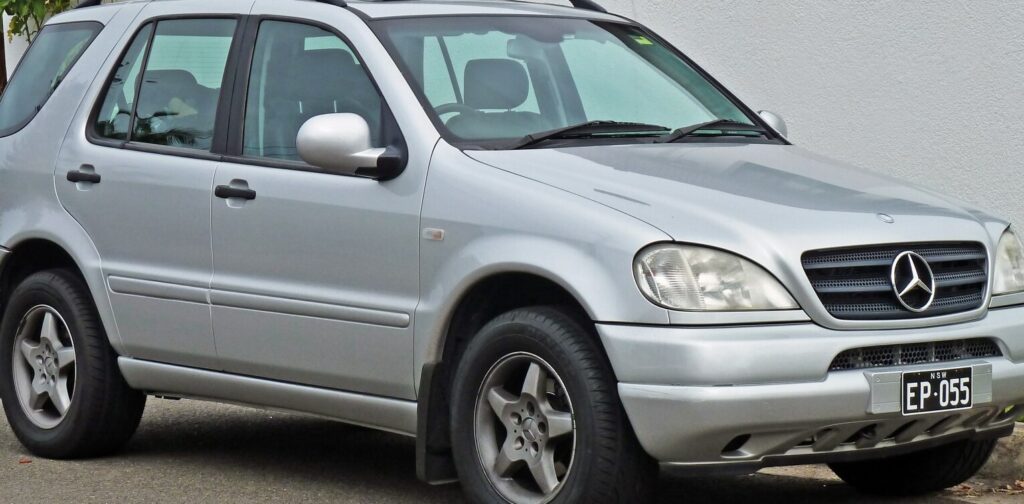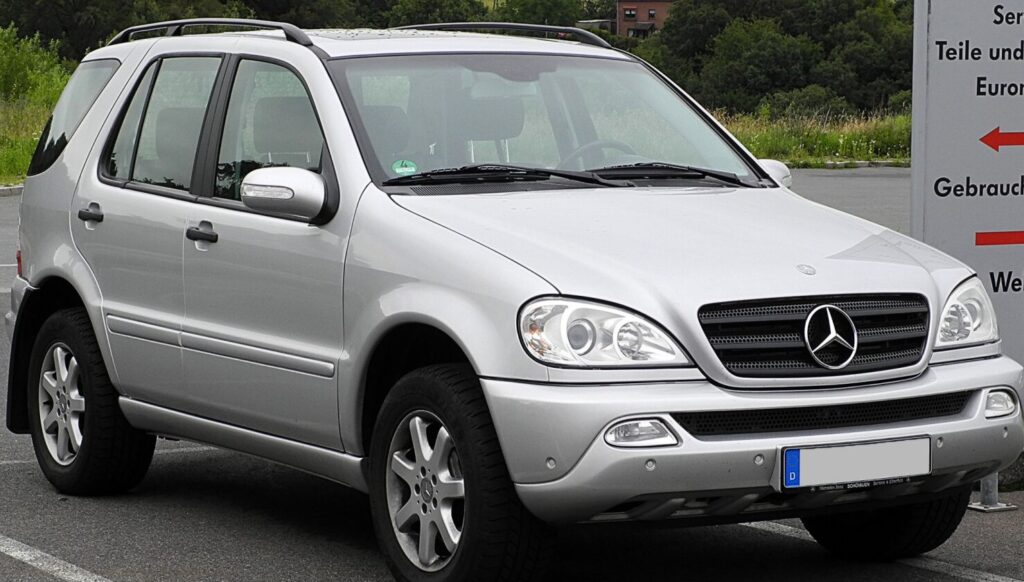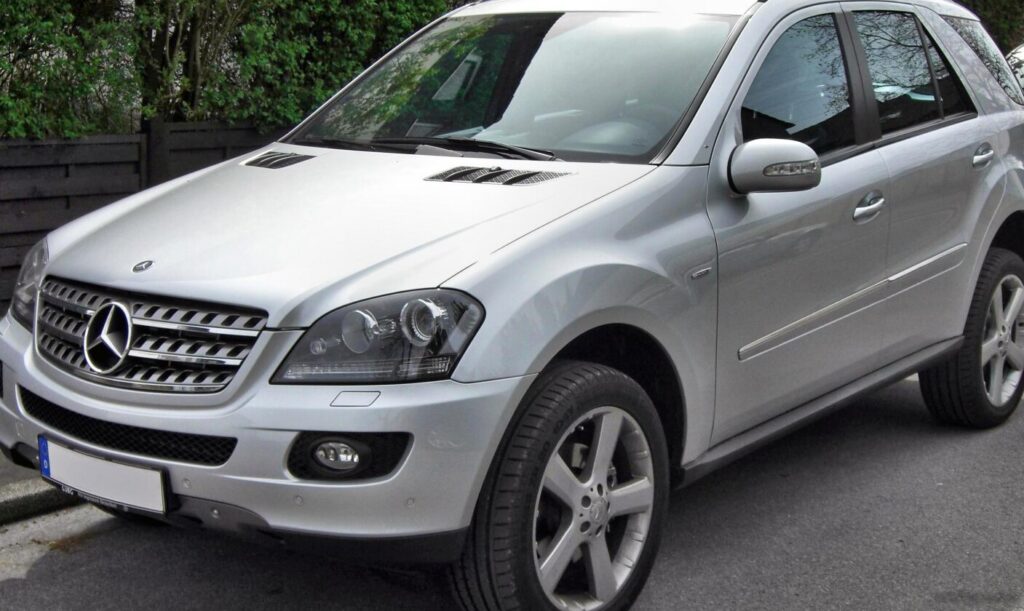
The Mercedes-Benz W164 M-Class AMG ML 63, produced from 2006 to 2008, represented the high-performance variant of the second-generation M-Class SUV. Positioned as the flagship model, it aimed to deliver a blend of luxury, space, and substantial performance, appealing to buyers seeking a powerful and capable SUV with the Mercedes-Benz badge. This model occupied the top tier of the W164 lineup, significantly outperforming the base V6 models and even the ML 500 with its supercharged V8. It was a direct competitor to vehicles like the BMW X5 4.8is and the Porsche Cayenne S.
Technical Specifications
| Brand | Mercedes-Benz |
| Model | M-Class |
| Generation | M-Class (W164) |
| Type | AMG ML 63 V8 (510 Hp) 4MATIC 7G-TRONIC AMG SPEEDSHIFT |
| Start of production | 2006 |
| End of production | 2008 |
| Powertrain Architecture | Internal Combustion engine |
| Body type | SUV |
| Seats | 7 |
| Doors | 5 |
| Fuel consumption (urban) | 24.1 l/100 km (9.8 US mpg, 11.7 UK mpg, 4.1 km/l) |
| Fuel consumption (extra urban) | 12.2 l/100 km (19.3 US mpg, 23.2 UK mpg, 8.2 km/l) |
| Fuel consumption (combined) | 16.5 l/100 km (14.3 US mpg, 17.1 UK mpg, 6.1 km/l) |
| CO2 emissions | 392 g/km |
| Fuel Type | Petrol (Gasoline) |
| Acceleration 0 – 100 km/h | 5 sec |
| Acceleration 0 – 62 mph | 5 sec |
| Acceleration 0 – 60 mph | 4.8 sec |
| Maximum speed | 250 km/h (155.34 mph) |
| Weight-to-power ratio | 4.4 kg/Hp, 227.7 Hp/tonne |
| Weight-to-torque ratio | 3.6 kg/Nm, 281.3 Nm/tonne |
| Power | 510 Hp @ 6800 rpm |
| Power per litre | 82.2 Hp/l |
| Torque | 630 Nm (464.66 lb.-ft.) |
| Engine layout | Front, Longitudinal |
| Engine Model/Code | M 156 E 63 |
| Engine displacement | 6208 cm3 (378.84 cu. in.) |
| Number of cylinders | 8 |
| Engine configuration | V-engine |
| Cylinder Bore | 102.2 mm (4.02 in.) |
| Piston Stroke | 94.6 mm (3.72 in.) |
| Compression ratio | 11.3:1 |
| Number of valves per cylinder | 4 |
| Fuel injection system | Multi-port manifold injection |
| Engine aspiration | Naturally aspirated engine |
| Engine oil capacity | 9.7 l (10.25 US qt, 8.53 UK qt) |
| Kerb Weight | 2240 kg (4938.35 lbs.) |
| Max. weight | 2880 kg (6349.31 lbs.) |
| Max load | 640 kg (1410.96 lbs.) |
| Trunk (boot) space – minimum | 551 l (19.46 cu. ft.) |
| Trunk (boot) space – maximum | 2050 l (72.4 cu. ft.) |
| Fuel tank capacity | 95 l (25.1 US gal, 20.9 UK gal) |
| Length | 4820 mm (189.76 in.) |
| Width | 1951 mm (76.81 in.) |
| Height | 1863 mm (73.35 in.) |
| Wheelbase | 2915 mm (114.76 in.) |
| Front track | 1665 mm (65.55 in.) |
| Rear (Back) track | 1669 mm (65.71 in.) |
| Drive wheel | All wheel drive (4×4) |
| Number of gears and type of gearbox | 7 gears, automatic transmission |
| Front suspension | Air suspension |
| Rear suspension | Air suspension |
| Front brakes | Ventilated discs |
| Rear brakes | Ventilated discs |
| Assisting systems | ABS (Anti-lock braking system) |
| Tires size | 295/45 R19 |
INTRODUCTION
The W164 Mercedes-Benz ML 63 AMG, launched in 2006, was the performance-oriented version of the second-generation M-Class. Built on the 164 platform, it aimed to provide a compelling alternative to other high-performance luxury SUVs. Production continued through 2008, with the model receiving a minor facelift during its run. The ML 63 distinguished itself from the standard M-Class models through its powerful AMG-tuned engine, upgraded suspension, and aggressive styling cues. It was designed to appeal to buyers who desired the practicality of an SUV combined with the performance characteristics of a sports car.
Powertrain & Engine Architecture
At the heart of the ML 63 was the M156 E 63 6.2-liter naturally aspirated V8 engine. This engine, a hallmark of AMG’s engineering prowess at the time, produced 510 horsepower at 6800 rpm and 464 lb-ft of torque. The M156 featured a high-pressure multi-port fuel injection system, a variable valve timing system (VVT), and a relatively high 11.3:1 compression ratio. The engine’s construction utilized an all-aluminum block and heads, contributing to its relatively lightweight design. Power was delivered to all four wheels via Mercedes-Benz’s 7G-TRONIC seven-speed automatic transmission, which was specifically tuned by AMG for faster shift times and more aggressive performance. The transmission featured AMG SPEEDSHIFT functionality, allowing drivers to manually select gears via steering wheel-mounted paddle shifters or the gear selector.
Driving Characteristics
The ML 63 offered a distinctly sporty driving experience for an SUV of its size. The 6.2-liter V8 provided strong acceleration, with a 0-60 mph time of around 4.8 seconds and a limited top speed of 155 mph. The 7G-TRONIC transmission, while smooth in automatic mode, allowed for precise gear changes when operated manually. The AMG-tuned suspension, featuring air suspension, provided a comfortable ride while minimizing body roll during cornering. However, the ML 63’s weight (over 5,000 lbs) was noticeable, particularly during hard braking and aggressive cornering. Compared to the standard M-Class models, the ML 63 offered a significantly more engaging and dynamic driving experience. It differed substantially from the ML 500, which used a supercharged V8, offering a more linear power delivery versus the naturally aspirated ML 63’s more aggressive throttle response.
Equipment & Trim Levels
The ML 63 came standard with a comprehensive list of features, reflecting its position as the range-topping model. Standard equipment included leather upholstery, heated and ventilated front seats, a premium sound system, a sunroof, and automatic climate control. Exterior features included AMG-specific body styling, including unique front and rear bumpers, side skirts, and a rear spoiler. Optional extras included a DVD entertainment system, upgraded interior trim materials, and a variety of driver-assistance features. The interior generally featured dark wood trim and aluminum accents, emphasizing the vehicle’s sporty yet luxurious character.
Chassis & Braking
The ML 63’s chassis was reinforced to handle the increased power and torque of the AMG engine. The suspension system utilized air suspension with AMG’s Adaptive Damping System (ADS), allowing drivers to adjust the suspension stiffness to suit their preferences. Braking duties were handled by ventilated disc brakes on all four wheels, with larger rotors and upgraded calipers compared to the standard M-Class models. The ML 63 also featured Mercedes-Benz’s Anti-lock Braking System (ABS), Electronic Stability Program (ESP), and traction control system.
Market Reception & Comparison
The ML 63 AMG received generally positive reviews from automotive critics. It was praised for its powerful engine, engaging driving dynamics, and luxurious interior. However, some critics noted its high fuel consumption and substantial weight. Compared to the ML 500, the ML 63 offered a more visceral driving experience but at the cost of fuel economy. The ML 63’s fuel economy figures of around 14 mpg combined were significantly lower than those of the V6-powered M-Class models. Reliability was generally good, although the complexity of the AMG engine and drivetrain meant that maintenance costs could be higher than those of the standard M-Class.
Legacy
The W164 ML 63 AMG remains a desirable vehicle in the used car market, particularly among enthusiasts seeking a high-performance luxury SUV. The M156 engine is highly regarded for its durability and sound, and well-maintained examples command a premium price. While fuel economy is a concern, the ML 63’s combination of performance, luxury, and practicality continues to appeal to a dedicated following. The M156 engine, while no longer in production, is considered by many to be one of AMG’s finest creations, and the W164 ML 63 represents a significant chapter in the evolution of the high-performance SUV.