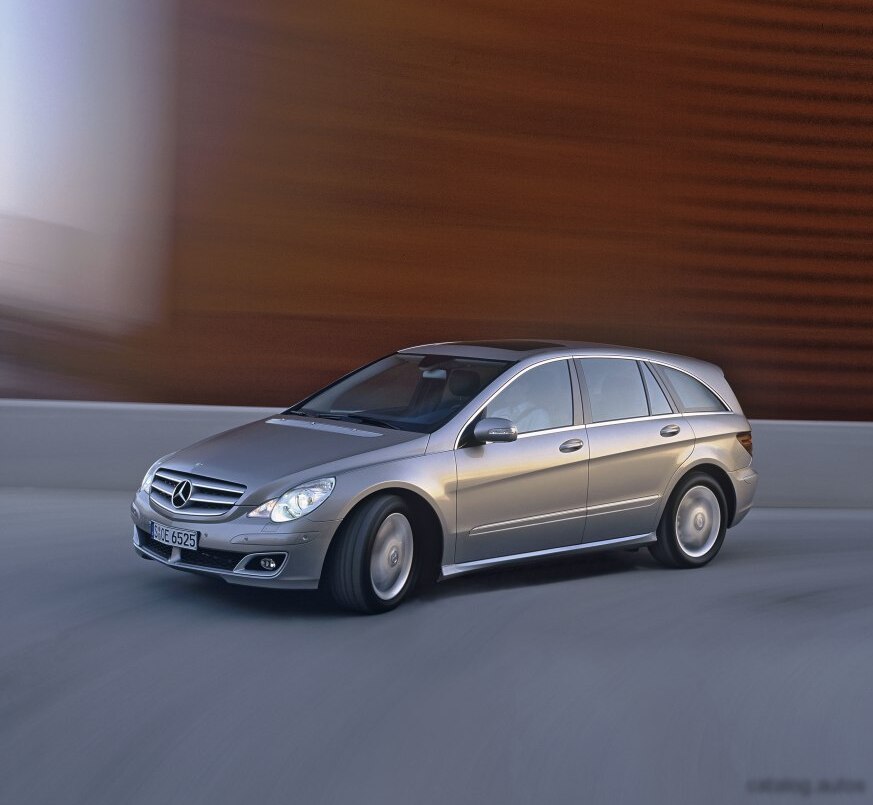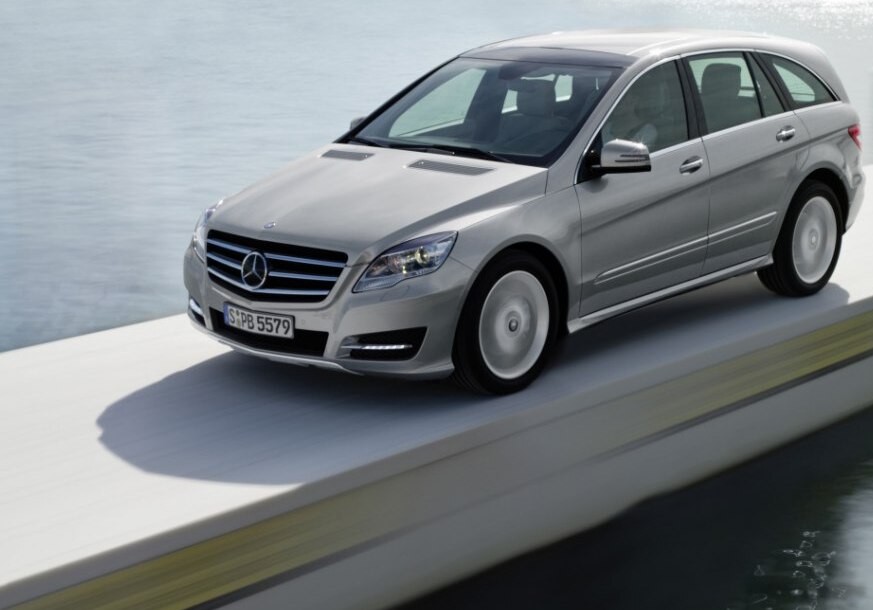
The Mercedes-Benz R-Class Long (V251 series, post-facelift) R 300 V6 G-TRONIC, produced from 2010 to 2014, represented a unique offering in the luxury vehicle segment. Positioned as a spacious, versatile vehicle blending elements of a sport utility vehicle (SUV), minivan, and station wagon, the R-Class aimed to provide a comfortable and practical experience for families. The “Long” designation indicated an extended wheelbase, offering increased rear passenger space and cargo capacity. The R 300 V6 G-TRONIC variant, equipped with a 3.0-liter V6 engine and a 7-speed automatic transmission, served as a mid-range option within the R-Class lineup, balancing performance with fuel efficiency and a more accessible price point compared to the higher-powered R 350 and R 63 AMG models.
Technical Specifications
| Brand | Mercedes-Benz |
| Model | R-Class |
| Generation | R-Class Long (V251, facelift 2010) |
| Type (Engine) | R 300 V6 (232 Hp) G-TRONIC |
| Start of production | 2010 |
| End of production | 2014 |
| Powertrain Architecture | Internal Combustion engine |
| Body type | Station wagon (estate) |
| Seats | 5-7 |
| Doors | 5 |
| Fuel consumption (urban) | 14.1 l/100 km (16.7 US mpg, 20 UK mpg) |
| Fuel consumption (extra urban) | 8.6-8.9 l/100 km (27.4 – 26.4 US mpg, 32.8 – 31.7 UK mpg) |
| Fuel consumption (combined) | 10.6-10.8 l/100 km (22.2 – 21.8 US mpg, 26.6 – 26.2 UK mpg) |
| CO2 emissions | 248-253 g/km |
| Fuel Type | Petrol (Gasoline) |
| Acceleration 0 – 100 km/h | 9.7 sec |
| Acceleration 0 – 62 mph | 9.7 sec |
| Acceleration 0 – 60 mph | 9.2 sec |
| Maximum speed | 222 km/h (137.94 mph) |
| Emission standard | Euro 5 |
| Weight-to-power ratio | 9.1 kg/Hp, 110.5 Hp/tonne |
| Weight-to-torque ratio | 7 kg/Nm, 142.9 Nm/tonne |
| Power | 232 Hp @ 6000 rpm |
| Power per litre | 77.4 Hp/l |
| Torque | 300 Nm @ 2500-5000 rpm (221.27 lb.-ft. @ 2500-5000 rpm) |
| Engine layout | Front, Longitudinal |
| Engine Model/Code | M 272.945 |
| Engine displacement | 2996 cm3 (182.83 cu. in.) |
| Number of cylinders | 6 |
| Engine configuration | V-engine |
| Compression ratio | 11.3:1 |
| Number of valves per cylinder | 4 |
| Fuel injection system | Multi-port manifold injection |
| Engine aspiration | Naturally aspirated engine |
| Engine oil capacity | 8 l (8.45 US qt | 7.04 UK qt) |
| Kerb Weight | 2100 kg (4629.71 lbs.) |
| Max. weight | 2840 kg (6261.13 lbs.) |
| Max load | 740 kg (1631.42 lbs.) |
| Trunk (boot) space – minimum | 633 l (22.35 cu. ft.) |
| Trunk (boot) space – maximum | 2385 l (84.23 cu. ft.) |
| Fuel tank capacity | 80 l (21.13 US gal | 17.6 UK gal) |
| Max. roof load | 100 kg (220.46 lbs.) |
| Permitted trailer load with brakes (12%) | 2100 kg (4629.71 lbs.) |
| Permitted trailer load without brakes | 750 kg (1653.47 lbs.) |
| Length | 5157 mm (203.03 in.) |
| Width | 1922 mm (75.67 in.) |
| Width including mirrors | 2183 mm (85.94 in.) |
| Height | 1674 mm (65.91 in.) |
| Wheelbase | 3215 mm (126.57 in.) |
| Front track | 1661 mm (65.39 in.) |
| Rear (Back) track | 1651 mm (65 in.) |
| Front overhang | 922 mm (36.3 in.) |
| Rear overhang | 1020 mm (40.16 in.) |
| Drivetrain Architecture | Rear wheel drive |
| Drive wheel | Rear wheel drive |
| Number of gears and type of gearbox | 7 gears, automatic transmission G-TRONIC |
| Front suspension | Double wishbone |
| Rear suspension | Independent multi-link spring suspension with stabilizer |
| Front brakes | Disc |
| Rear brakes | Disc |
| Assisting systems | ABS (Anti-lock braking system) |
| Tires size | 255/55 R18 |
| Wheel rims size | 18 |
Powertrain & Engine Architecture
The R 300 V6 was powered by the M272.945 engine, a 3.0-liter naturally aspirated V6. This engine featured a 60-degree V-angle and utilized a multi-port fuel injection system. The engine produced 232 horsepower at 6000 rpm and 300 Nm (221 lb-ft) of torque between 2500 and 5000 rpm. The engine’s design prioritized smooth operation and refinement over outright performance. The G-TRONIC transmission, a 7-speed automatic, was a key component of the powertrain. This transmission offered smooth and responsive shifting, contributing to a comfortable driving experience. It featured a torque converter lock-up clutch to improve fuel efficiency at cruising speeds. The engine was longitudinally mounted, driving the rear wheels.
Driving Characteristics
The R 300 V6 G-TRONIC offered a comfortable and composed driving experience. While not particularly sporty, the engine provided adequate power for everyday driving and highway cruising. Acceleration from 0 to 60 mph took approximately 9.2 seconds. The 7-speed automatic transmission helped to keep the engine in its optimal power band, providing smooth and predictable acceleration. Compared to the more powerful R 350, the R 300 felt less urgent in its acceleration, but it offered better fuel economy. The automatic transmission, while smooth, lacked the engagement and control offered by the available manual transmission in some markets. The R-Class’s size and weight were noticeable, but the suspension did a good job of absorbing bumps and providing a comfortable ride.
Equipment & Trim Levels
The R 300 V6 G-TRONIC typically came standard with features such as leather upholstery, dual-zone automatic climate control, a premium audio system, and power-adjustable front seats. Optional extras included a panoramic sunroof, rear-seat entertainment system, navigation system, and advanced safety features like blind-spot monitoring and lane-keeping assist. Trim levels varied by market, but generally offered increasing levels of luxury and technology. The interior design was typical of Mercedes-Benz, with a focus on quality materials and a refined aesthetic. The extended wheelbase of the “Long” version provided ample space for passengers in the second and third rows, making it a practical choice for families.
Chassis & Braking
The R-Class featured a double wishbone front suspension and an independent multi-link rear suspension with a stabilizer bar. This suspension setup provided a comfortable ride and good handling characteristics. The R 300 V6 was equipped with disc brakes on all four wheels, along with ABS (Anti-lock Braking System). The braking system provided adequate stopping power for the vehicle’s weight. The R-Class’s weight distribution was relatively balanced, contributing to its stable handling. The standard tire size was 255/55 R18, providing a good balance of grip and ride comfort.
Market Reception & Comparison
The Mercedes-Benz R-Class, in general, received mixed reviews. Critics praised its spacious interior, comfortable ride, and luxurious features, but many questioned its unconventional styling and positioning. The R 300 V6 G-TRONIC was often seen as a sensible choice for buyers prioritizing fuel efficiency and comfort over outright performance. Compared to the R 350, the R 300 offered better fuel economy (around 22.2-21.8 mpg combined) but less power. It was also generally more affordable. The R-Class competed with other luxury SUVs and crossovers, such as the Acura MDX and BMW X5, but its unique blend of features made it difficult to directly compare.
Legacy
The Mercedes-Benz R-Class was discontinued after the 2014 model year due to slow sales. While it wasn’t a commercial success, the R-Class remains a unique and interesting vehicle. The M272 engine, used in the R 300 V6, is generally considered to be a reliable engine, although regular maintenance is essential. The 7-speed G-TRONIC transmission is also known for its durability. On the used car market, the R-Class offers a relatively affordable entry point into the Mercedes-Benz luxury segment. However, potential buyers should be aware of the vehicle’s size and weight, as well as the potential for higher maintenance costs compared to more mainstream vehicles.