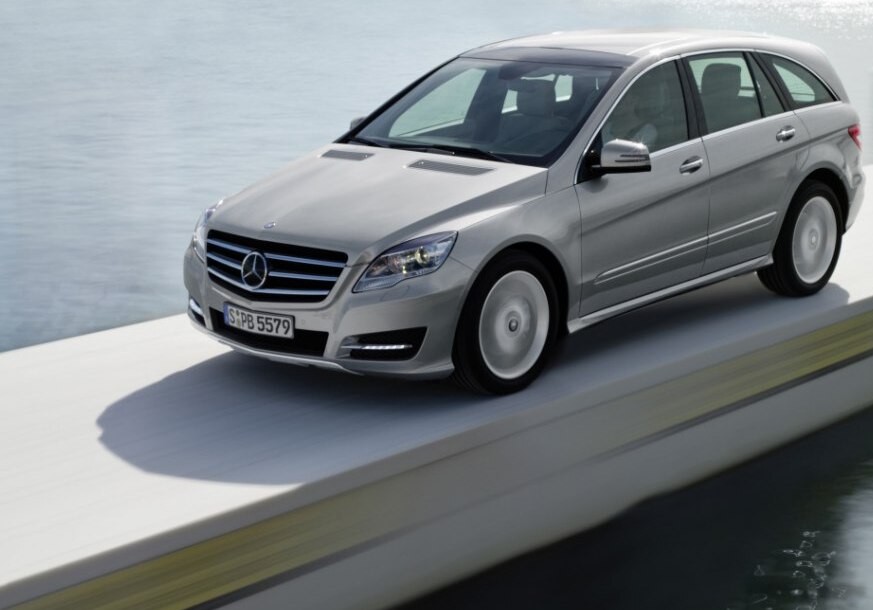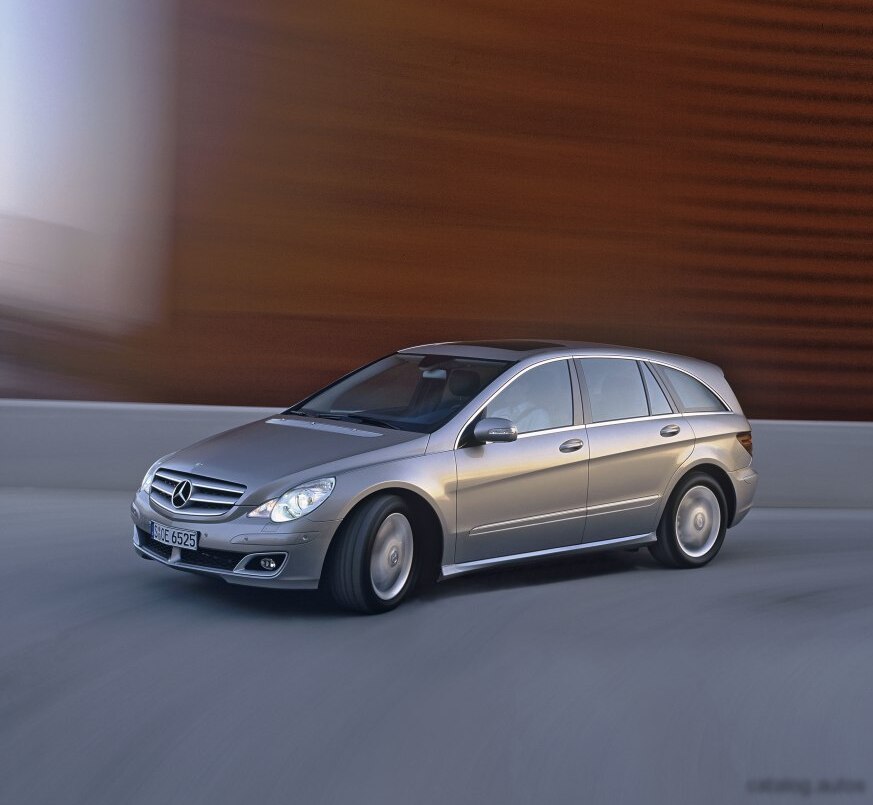
The Mercedes-Benz R-Class Long (V251) R 350 V6 G-TRONIC, produced from 2007 to 2010, represents a unique offering in the luxury vehicle segment. Positioned as a spacious, six or seven-seat vehicle, the R-Class aimed to blend the practicality of a minivan with the driving experience and prestige associated with the Mercedes-Benz brand. The “Long” designation indicates an extended wheelbase version, primarily sold in markets where larger vehicles were favored. The R 350 V6, equipped with the 272-horsepower 3.5-liter engine and the 7G-TRONIC automatic transmission, occupied a mid-range position within the R-Class lineup, offering a balance between performance and fuel efficiency compared to the R 280 and R 500 models.
Technical Specifications
| Brand | Mercedes-Benz |
| Model | R-Class |
| Generation | R-Class Long (V251) |
| Type (Engine) | R 350 V6 (272 Hp) G-TRONIC |
| Start of production | 2007 |
| End of production | 2010 |
| Powertrain Architecture | Internal Combustion engine |
| Body type | Station wagon (estate) |
| Seats | 5 |
| Doors | 5 |
| Fuel consumption (urban) | 15.4-15.6 l/100 km (15.3 – 15.1 US mpg, 18.3 – 18.1 UK mpg, 6.5 – 6.4 km/l) |
| Fuel consumption (extra urban) | 8.6-8.8 l/100 km (27.4 – 26.7 US mpg, 32.8 – 32.1 UK mpg, 11.6 – 11.4 km/l) |
| Fuel consumption (combined) | 11.1-11.3 l/100 km (21.2 – 20.8 US mpg, 25.4 – 25 UK mpg, 9 – 8.8 km/l) |
| CO2 emissions | 265 g/km |
| Fuel Type | Petrol (Gasoline) |
| Acceleration 0 – 100 km/h | 8.2 sec |
| Acceleration 0 – 62 mph | 8.2 sec |
| Acceleration 0 – 60 mph | 7.8 sec |
| Maximum speed | 234 km/h (145.4 mph) |
| Emission standard | Euro 5 |
| Weight-to-power ratio | 8 kg/Hp, 125.1 Hp/tonne |
| Weight-to-torque ratio | 6.2 kg/Nm, 160.9 Nm/tonne |
| Power | 272 Hp @ 6000 rpm |
| Power per litre | 77.8 Hp/l |
| Torque | 350 Nm @ 2400-5000 rpm (258.15 lb.-ft. @ 2400-5000 rpm) |
| Engine layout | Front, Longitudinal |
| Engine Model/Code | M 272.967 |
| Engine displacement | 3498 cm3 (213.46 cu. in.) |
| Number of cylinders | 6 |
| Engine configuration | V-engine |
| Compression ratio | 10.7:1 |
| Fuel injection system | Multi-port manifold injection |
| Engine aspiration | Naturally aspirated engine |
| Engine oil capacity | 8 l (8.45 US qt | 7.04 UK qt) |
| Coolant capacity | 10.1 l (10.67 US qt | 8.89 UK qt) |
| Kerb Weight | 2175 kg (4795.05 lbs.) |
| Max. weight | 2810 kg (6194.99 lbs.) |
| Max load | 635 kg (1399.94 lbs.) |
| Trunk (boot) space – maximum | 2385 l (84.23 cu. ft.) |
| Fuel tank capacity | 80 l (21.13 US gal | 17.6 UK gal) |
| Permitted trailer load with brakes (12%) | 2100 kg (4629.71 lbs.) |
| Permitted trailer load without brakes | 750 kg (1653.47 lbs.) |
| Length | 5157 mm (203.03 in.) |
| Width | 1922 mm (75.67 in.) |
| Height | 1674 mm (65.91 in.) |
| Wheelbase | 3215 mm (126.57 in.) |
| Front track | 1661 mm (65.39 in.) |
| Rear track | 1651 mm (65 in.) |
| Minimum turning circle | 12.4 m (40.68 ft.) |
| Drivetrain Architecture | Rear wheel drive |
| Number of gears | 7 |
| Gearbox type | Automatic transmission G-TRONIC |
| Front suspension | Double wishbone |
| Rear suspension | Independent multi-link spring suspension with stabilizer |
| Front brakes | Ventilated discs |
| Rear brakes | Disc |
| Assisting systems | ABS (Anti-lock braking system) |
| Steering type | Steering rack and pinion |
| Power steering | Hydraulic Steering |
| Tires size | 235/65 R17 |
| Wheel rims size | 17 |
Powertrain & Engine Architecture
The R 350 V6 is powered by the M272.967 engine, a 3.5-liter naturally aspirated V6. This engine utilizes a three-valve-per-cylinder design (two intake, one exhaust) and multi-port fuel injection. The M272 engine family was known for its smooth operation and relatively high power output for its displacement. The engine’s architecture is a 60-degree V-angle, contributing to its balance and refinement. The 7G-TRONIC automatic transmission, a seven-speed unit, was a key feature. It offered smooth and efficient gear changes, contributing to both performance and fuel economy. The transmission featured a torque converter lock-up clutch to minimize slippage and improve efficiency at cruising speeds. The R 350’s drivetrain is rear-wheel drive, a configuration that aligned with Mercedes-Benz’s traditional emphasis on driving dynamics.
Driving Characteristics
The R 350 V6 G-TRONIC provided a comfortable and refined driving experience. While not overtly sporty, the engine delivered adequate power for everyday driving and highway cruising. Acceleration from 0-60 mph took approximately 7.8 seconds, which was respectable for a large vehicle. The 7G-TRONIC transmission contributed to smooth acceleration and minimized noticeable gear changes. Compared to the R 280 with its smaller V6, the R 350 offered noticeably more power. However, it lacked the outright performance of the R 500, which featured a larger V8 engine. The automatic transmission, while convenient, did result in some power loss compared to the available six-speed manual transmission in some markets. The R-Class, due to its size and weight, wasn’t particularly agile, but the suspension provided a comfortable ride, absorbing bumps and imperfections in the road surface effectively.
Equipment & Trim Levels
The R 350 V6 typically came standard with a comprehensive list of features, including leather upholstery, dual-zone automatic climate control, a premium audio system, and power-adjustable front seats. Optional extras included a rear-seat entertainment system, a panoramic sunroof, and advanced driver-assistance features like Distronic adaptive cruise control. Trim levels varied by market, but generally, the R 350 offered a step up in luxury and features compared to the base R 280. Interior materials were of high quality, reflecting Mercedes-Benz’s commitment to craftsmanship. The long wheelbase version provided ample space for passengers in all three rows, making it a practical choice for families.
Chassis & Braking
The R-Class Long featured a double wishbone front suspension and an independent multi-link rear suspension, both incorporating stabilizer bars to reduce body roll. The braking system consisted of ventilated discs at the front and solid discs at the rear. Anti-lock brakes (ABS) were standard, providing enhanced stopping power and stability. The suspension was tuned for comfort, prioritizing ride quality over sporty handling. The steering was hydraulic power-assisted, offering a balanced feel and reasonable responsiveness.
Market Reception & Comparison
The Mercedes-Benz R-Class was a polarizing vehicle. Critics praised its spacious interior, comfortable ride, and luxurious features, but many questioned its styling and overall concept. The R-Class didn’t fit neatly into any existing vehicle category, being larger than most SUVs but lacking the off-road capability of a traditional SUV. The R 350 V6 was generally well-received for its balance of performance and fuel economy. Compared to the R 280, it offered more power, while the R 500 was more expensive and less fuel-efficient. Fuel economy figures were around 21.2-20.8 US mpg combined, which was reasonable for a vehicle of its size and weight.
Legacy
The Mercedes-Benz R-Class, despite its limited sales success, remains a unique and interesting vehicle. The M272 engine, used in the R 350, is generally considered to be a reliable powerplant, although regular maintenance is crucial. Common issues include oil leaks and potential problems with the balance shaft. The 7G-TRONIC transmission is also generally reliable, but fluid changes should be performed according to the manufacturer’s recommendations. On the used car market, the R 350 V6 offers a relatively affordable entry point into the Mercedes-Benz luxury segment. Its spacious interior and comfortable ride make it a practical choice for families seeking a versatile vehicle.