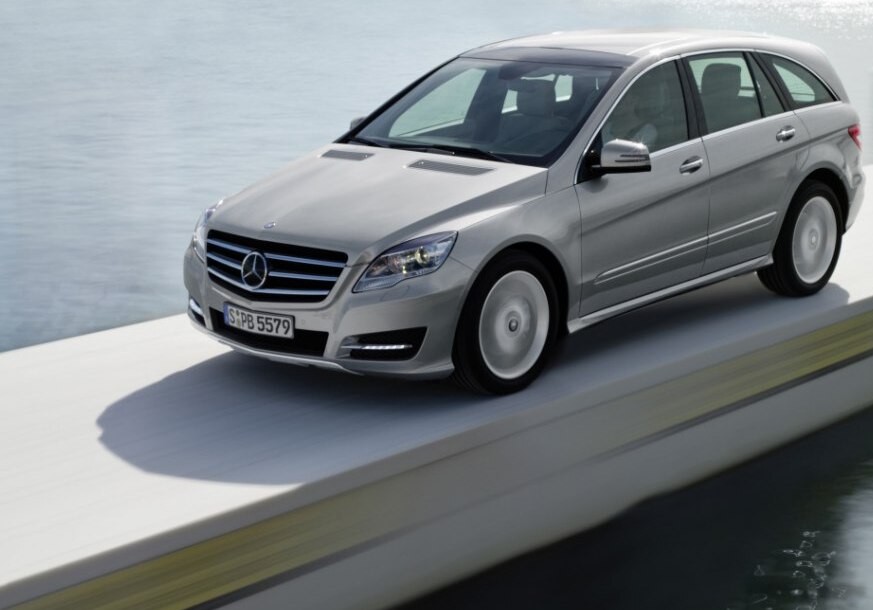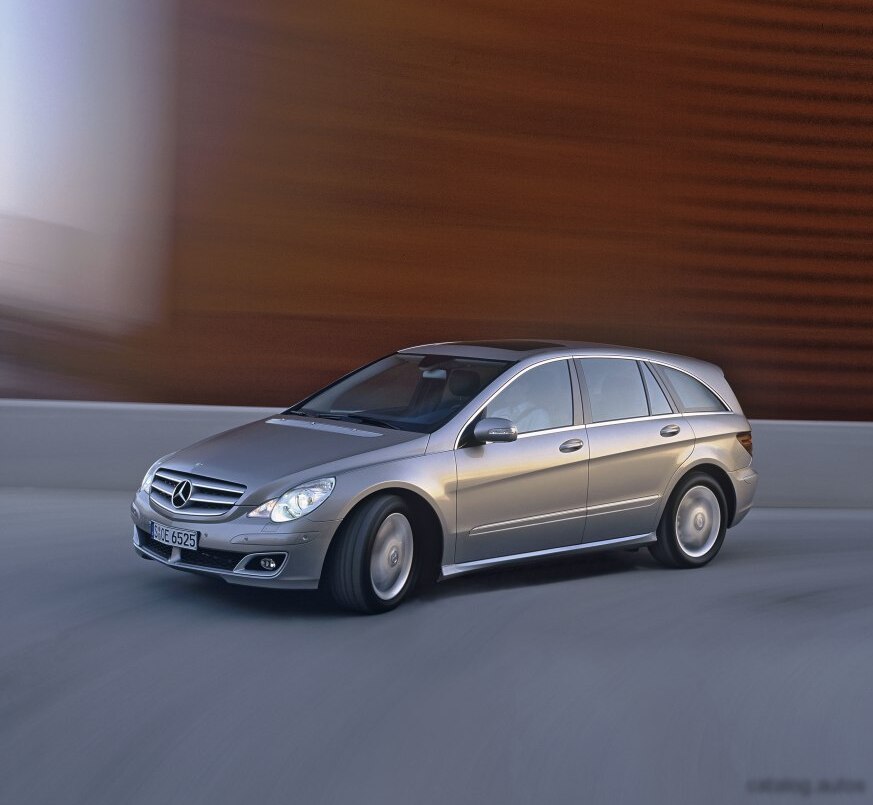
The Mercedes-Benz R-class Long (V251) R 500 V8 4MATIC G-TRONIC, produced from 2006 to 2008, represented a unique offering in the luxury vehicle segment. Positioned as a spacious, six or seven-passenger vehicle, the R-class aimed to blend the comfort of a luxury sedan with the versatility of an SUV. The “Long” designation indicated an extended wheelbase version, primarily sold in markets outside of North America, offering increased rear passenger legroom and cargo capacity. This particular R 500 variant, equipped with the naturally aspirated 5.0-liter V8 engine and 7G-TRONIC automatic transmission, sat at the top of the initial R-class lineup, offering the highest level of performance and refinement.
Technical Specifications
| Brand | Mercedes-Benz |
| Model | R-class |
| Generation | R-class Long (V251) |
| Type (Engine) | R 500 V8 (306 Hp) 4MATIC G-TRONIC |
| Start of production | 2006 |
| End of production | 2008 |
| Powertrain Architecture | Internal Combustion engine |
| Body type | Station wagon (estate) |
| Seats | 5 |
| Doors | 5 |
| Fuel consumption (combined) | 13.3 l/100 km (17.7 US mpg, 21.2 UK mpg, 7.5 km/l) |
| CO2 emissions | 317 g/km |
| Fuel Type | Petrol (Gasoline) |
| Acceleration 0 – 100 km/h | 7 sec |
| Acceleration 0 – 62 mph | 7 sec |
| Acceleration 0 – 60 mph | 6.7 sec |
| Maximum speed | 245 km/h (152.24 mph) |
| Emission standard | Euro 5 |
| Weight-to-power ratio | 7.3 kg/Hp, 136.6 Hp/tonne |
| Weight-to-torque ratio | 4.9 kg/Nm, 205.4 Nm/tonne |
| Power | 306 Hp @ 5600 rpm |
| Power per litre | 61.6 Hp/l |
| Torque | 460 Nm @ 2700-4750 rpm (339.28 lb.-ft. @ 2700-4750 rpm) |
| Engine layout | Front, Longitudinal |
| Engine Model/Code | M 113.964 |
| Engine displacement | 4966 cm3 (303.04 cu. in.) |
| Number of cylinders | 8 |
| Engine configuration | V-engine |
| Cylinder Bore | 97 mm (3.82 in.) |
| Piston Stroke | 84 mm (3.31 in.) |
| Compression ratio | 10:1 |
| Number of valves per cylinder | 4 |
| Fuel injection system | Multi-port manifold injection |
| Engine aspiration | Naturally aspirated engine |
| Engine oil capacity | 8.5 l (8.98 US qt | 7.48 UK qt) |
| Coolant | 10.1 l (10.67 US qt | 8.89 UK qt) |
| Kerb Weight | 2240 kg (4938.35 lbs.) |
| Max. weight | 2895 kg (6382.38 lbs.) |
| Max load | 655 kg (1444.03 lbs.) |
| Trunk (boot) space – maximum | 2385 l (84.23 cu. ft.) |
| Fuel tank capacity | 80 l (21.13 US gal | 17.6 UK gal) |
| Max. roof load | 100 kg (220.46 lbs.) |
| Permitted trailer load with brakes (12%) | 2100 kg (4629.71 lbs.) |
| Permitted trailer load without brakes | 750 kg (1653.47 lbs.) |
| Length | 5157 mm (203.03 in.) |
| Width | 1922 mm (75.67 in.) |
| Height | 1674 mm (65.91 in.) |
| Wheelbase | 3215 mm (126.57 in.) |
| Front track | 1661 mm (65.39 in.) |
| Rear (Back) track | 1651 mm (65 in.) |
| Minimum turning circle | 12.4 m (40.68 ft.) |
| Drive wheel | All wheel drive (4×4) |
| Number of gears and type of gearbox | 7 gears, automatic transmission G-TRONIC |
| Front suspension | Double wishbone |
| Rear suspension | Independent multi-link spring suspension with stabilizer |
| Front brakes | Ventilated discs |
| Rear brakes | Ventilated discs |
| Assisting systems | ABS (Anti-lock braking system) |
| Steering type | Steering rack and pinion |
| Power steering | Hydraulic Steering |
| Tires size | 255/55 R19 W |
| Wheel rims size | 19 |
Powertrain & Engine Architecture
The heart of the R 500 was the M113.964 5.0-liter naturally aspirated V8 engine. This engine, a staple of Mercedes-Benz performance models in the early 2000s, featured a three-valve-per-cylinder design (two intake, one exhaust) and a relatively high 10:1 compression ratio. Fuel delivery was handled by a multi-port fuel injection system. The engine produced 306 horsepower at 5600 rpm and 460 Nm (339 lb-ft) of torque between 2700 and 4750 rpm. This power was channeled through Mercedes-Benz’s 7G-TRONIC seven-speed automatic transmission, a sophisticated unit known for its smooth shifts and wide gear ratios. The 7G-TRONIC allowed for both relaxed cruising and responsive acceleration. The 4MATIC all-wheel-drive system distributed power to all four wheels, enhancing traction and stability, particularly in adverse weather conditions.
Driving Characteristics
The R 500 offered a comfortable and refined driving experience. While not a sports car, the V8 engine provided ample power for effortless acceleration and highway cruising. The 0-60 mph sprint took approximately 6.7 seconds, and the vehicle had a governed top speed of 152 mph. The 7G-TRONIC transmission contributed to smooth gear changes, and the all-wheel-drive system inspired confidence in various driving conditions. Compared to the R 320 CDI diesel variant, the R 500 offered quicker acceleration but at the expense of significantly lower fuel economy. The R 500’s power delivery was linear and predictable, making it easy to modulate. However, the vehicle’s considerable weight (over 5,000 lbs) was noticeable during spirited driving.
Equipment & Trim Levels
The R 500 typically came well-equipped with standard features including leather upholstery, power-adjustable front seats with memory function, dual-zone automatic climate control, a premium audio system, and a sunroof. Optional extras included a rear-seat entertainment system, navigation system, adaptive cruise control, and parking assist. The interior design was typical of Mercedes-Benz at the time, emphasizing luxury and comfort. The long wheelbase version offered generous space for both front and rear passengers, making it a comfortable choice for long journeys. Interior trim options included wood veneers and aluminum accents.
Chassis & Braking
The R-class Long featured a robust chassis designed to handle the vehicle’s weight and provide a comfortable ride. The front suspension utilized a double wishbone design, while the rear employed an independent multi-link setup with a stabilizer bar. This configuration aimed to balance ride comfort with handling precision. Braking duties were handled by ventilated disc brakes on all four wheels, coupled with an Anti-lock Braking System (ABS) and Electronic Stability Program (ESP) for enhanced safety. The steering was a hydraulic power-assisted rack and pinion system, providing a responsive and precise feel.
Market Reception & Comparison
The Mercedes-Benz R-class, despite its innovative design and luxurious features, faced lukewarm reception in the market, particularly in North America. Critics often cited its unconventional styling and high price point as drawbacks. The R 500, being the top-of-the-line variant, was even more expensive. Compared to the R 320 CDI, the R 500 offered superior performance but suffered from significantly worse fuel economy (13.3 l/100km vs. around 9.5 l/100km for the diesel). The R 500 appealed to buyers who prioritized performance and refinement over fuel efficiency.
Legacy
The M113 V8 engine, used in the R 500, is generally considered a reliable powerplant, although maintenance costs can be high due to its complexity. Common issues include oil leaks and occasional problems with the cooling system. The 7G-TRONIC transmission is also generally reliable, but requires regular fluid changes. Today, the R 500 can be found on the used car market at relatively affordable prices. While it may not be the most popular or sought-after Mercedes-Benz model, it offers a unique combination of luxury, space, and performance, making it an interesting option for buyers looking for a distinctive and comfortable grand tourer.