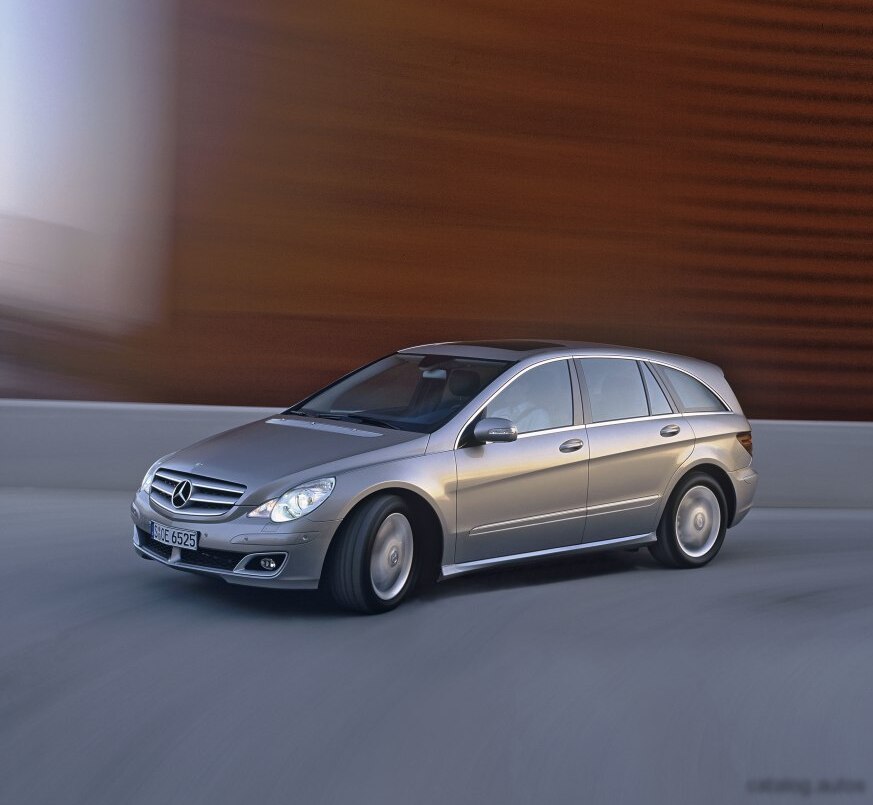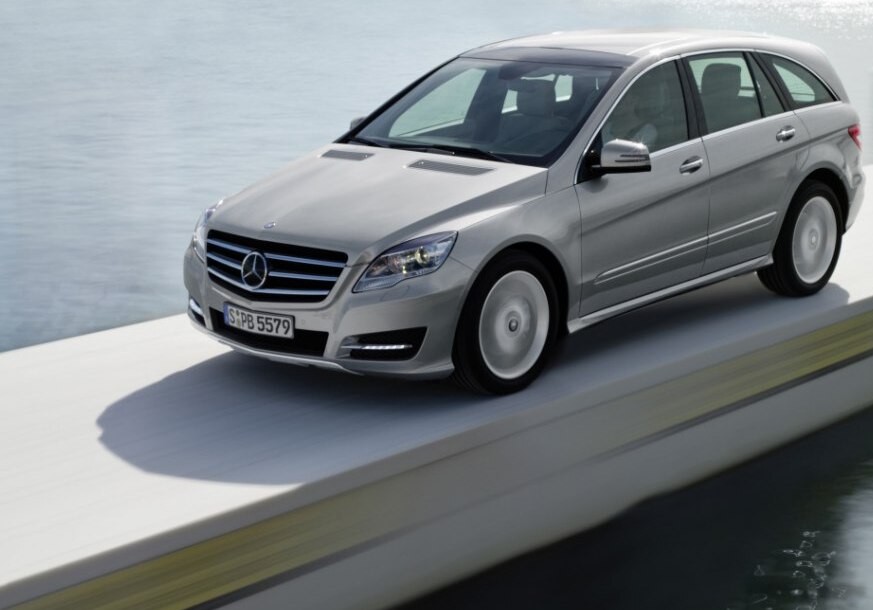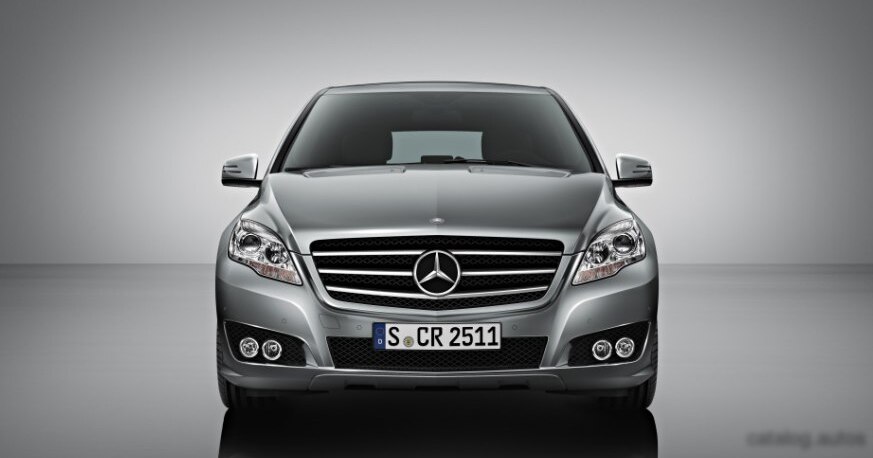
The Mercedes-Benz R-Class R 350 4MATIC, produced from 2010 to 2012 as part of the W251 facelift, represented a unique offering in the luxury vehicle segment. Positioned as a spacious, versatile crossover between a traditional SUV and a station wagon (estate), the R-Class aimed to provide family-oriented buyers with a more refined and comfortable alternative. The R 350 variant, equipped with the M272 V6 engine and 7G-TRONIC automatic transmission, served as a mid-range option within the R-Class lineup, offering a balance of performance and fuel efficiency. It was marketed primarily in North America and Europe, attempting to carve out a niche for itself in a competitive market.
Technical Specifications
| Brand | Mercedes-Benz |
| Model | R-Class |
| Generation | R-Class (W251, facelift 2010) |
| Type (Engine) | R 350 V6 (272 Hp) 4MATIC G-TRONIC |
| Start of production | 2010 |
| End of production | 2012 |
| Powertrain Architecture | Internal Combustion engine |
| Body type | Station wagon (estate) |
| Seats | 5-7 |
| Doors | 5 |
| Fuel consumption (urban) | 15.8-16.1 l/100 km (14.9 – 14.6 US mpg, 17.9 – 17.5 UK mpg, 6.3 – 6.2 km/l) |
| Fuel consumption (extra urban) | 9.2-9.5 l/100 km (25.6 – 24.8 US mpg, 30.7 – 29.7 UK mpg, 10.9 – 10.5 km/l) |
| Fuel consumption (combined) | 11.6-11.9 l/100 km (20.3 – 19.8 US mpg, 24.4 – 23.7 UK mpg, 8.6 – 8.4 km/l) |
| CO2 emissions | 271-279 g/km |
| Fuel Type | Petrol (Gasoline) |
| Acceleration 0 – 100 km/h | 8.3 sec |
| Acceleration 0 – 62 mph | 8.3 sec |
| Acceleration 0 – 60 mph | 7.9 sec |
| Maximum speed | 230 km/h (142.92 mph) |
| Emission standard | Euro 5 |
| Weight-to-power ratio | 7.7 kg/Hp, 129.2 Hp/tonne |
| Weight-to-torque ratio | 6 kg/Nm, 166.3 Nm/tonne |
| Power | 272 Hp @ 6000 rpm |
| Power per litre | 77.8 Hp/l |
| Torque | 350 Nm @ 2400-5000 rpm (258.15 lb.-ft. @ 2400-5000 rpm) |
| Engine layout | Front, Longitudinal |
| Engine Model/Code | M 272.967 |
| Engine displacement | 3498 cm3 (213.46 cu. in.) |
| Engine configuration | V-engine |
| Compression ratio | 10.7:1 |
| Number of valves per cylinder | 4 |
| Fuel injection system | Multi-port manifold injection |
| Engine aspiration | Naturally aspirated engine |
| Engine oil capacity | 8 l (8.45 US qt | 7.04 UK qt) |
| Coolant capacity | 10.1 l (10.67 US qt | 8.89 UK qt) |
| Kerb Weight | 2105 kg (4640.73 lbs.) |
| Max. weight | 2840 kg (6261.13 lbs.) |
| Max load | 735 kg (1620.4 lbs.) |
| Trunk (boot) space – minimum | 550 l (19.42 cu. ft.) |
| Trunk (boot) space – maximum | 1950 l (68.86 cu. ft.) |
| Fuel tank capacity | 80 l (21.13 US gal | 17.6 UK gal) |
| Max. roof load | 100 kg (220.46 lbs.) |
| Permitted trailer load with brakes (12%) | 2100 kg (4629.71 lbs.) |
| Permitted trailer load without brakes | 750 kg (1653.47 lbs.) |
| Length | 4922 mm (193.78 in.) |
| Width | 1922 mm (75.67 in.) |
| Width including mirrors | 2183 mm (85.94 in.) |
| Height | 1674 mm (65.91 in.) |
| Wheelbase | 2980 mm (117.32 in.) |
| Front track | 1661 mm (65.39 in.) |
| Rear track | 1651 mm (65 in.) |
| Front overhang | 922 mm (36.3 in.) |
| Rear overhang | 1020 mm (40.16 in.) |
| Drive wheel | All wheel drive (4×4) |
| Number of gears and type of gearbox | 7 gears, automatic transmission G-TRONIC |
| Front suspension | Double wishbone |
| Rear suspension | Independent multi-link spring suspension with stabilizer |
| Front brakes | Disc |
| Rear brakes | Disc |
| Assisting systems | ABS (Anti-lock braking system) |
| Tires size | 255/55 R18 |
| Wheel rims size | 18 |
Powertrain & Engine Architecture
The heart of the R 350 is the M272.967 3.5-liter naturally aspirated V6 engine. This engine, a staple in many Mercedes-Benz vehicles of the era, features a 60-degree V-angle and utilizes a three-valve-per-cylinder (two intake, one exhaust) design. It employs multi-port fuel injection and a relatively high 10.7:1 compression ratio. The M272 is known for its smooth operation and respectable power output. The engine is longitudinally mounted in the engine bay, driving all four wheels through the 4MATIC all-wheel-drive system. Paired with the engine is the 7G-TRONIC automatic transmission, a seven-speed unit known for its smooth shifts and efficiency. This transmission offered a ‘Comfort’ and ‘Sport’ mode, allowing drivers to tailor the shift points to their driving style. The 7G-TRONIC was a significant advancement over previous Mercedes-Benz automatic transmissions, contributing to improved fuel economy and a more refined driving experience.
Driving Characteristics
The R 350 4MATIC offered a comfortable and composed driving experience. While not overtly sporty, the 272 horsepower and 258 lb-ft of torque provided adequate acceleration for everyday driving and highway cruising. The 0-60 mph time of around 7.9 seconds was respectable for a vehicle of its size and weight. The 7G-TRONIC transmission contributed to smooth gear changes, and the all-wheel-drive system provided enhanced traction in various weather conditions. Compared to the more powerful R 550 variant, the R 350 felt less urgent in its acceleration, but it offered better fuel economy. Against the diesel-powered R 320 CDI, the R 350 lacked the low-end torque of the diesel, but provided a smoother and quieter engine experience. The gear ratios were tuned for a balance of fuel efficiency and usability, prioritizing comfortable cruising over outright performance.
Equipment & Trim Levels
The R 350 typically came standard with a generous array of features, reflecting its luxury positioning. These included leather upholstery, power-adjustable front seats with memory function, dual-zone automatic climate control, a premium audio system, and a power liftgate. Optional extras included a rear-seat entertainment system, panoramic sunroof, adaptive cruise control, and parking assist. Trim levels varied depending on the market, but generally offered packages that bundled together popular options. Interior upholstery options included various leather colors and wood trim finishes. The dashboard layout was typical of Mercedes-Benz at the time, with a focus on elegant design and intuitive controls.
Chassis & Braking
The R-Class utilized a robust chassis designed to handle the vehicle’s weight and provide a comfortable ride. The front suspension featured a double wishbone design, while the rear employed an independent multi-link setup with a stabilizer bar. This configuration aimed to balance ride comfort with handling stability. The R 350 came equipped with disc brakes on all four wheels, providing ample stopping power. Anti-lock braking system (ABS) was standard, enhancing safety during emergency braking situations. The suspension tuning was geared towards comfort, prioritizing a smooth ride over sharp handling. The 4MATIC all-wheel-drive system distributed power between the front and rear axles as needed, enhancing traction and stability.
Market Reception & Comparison
The Mercedes-Benz R-Class, despite its innovative design, struggled to gain widespread acceptance in the market. Critics often questioned its styling and positioning, finding it difficult to categorize as either an SUV or a station wagon. The R 350 variant was generally praised for its smooth engine and comfortable ride, but its fuel economy was considered average for its class. Compared to competitors like the Acura MDX and BMW X5, the R-Class offered a more unique and spacious interior, but lacked the brand cachet and sporty driving dynamics of some rivals. The R 350’s reliability was generally good, but some owners reported issues with the air suspension system (if equipped) and electronic components.
Legacy
The Mercedes-Benz R-Class was discontinued after the 2012 model year due to slow sales. While it didn’t achieve mainstream success, the R-Class remains a unique and interesting vehicle. The M272 V6 engine and 7G-TRONIC transmission proved to be reliable powertrains, and well-maintained examples continue to offer comfortable and practical transportation. On the used car market, the R 350 represents a relatively affordable entry point into the Mercedes-Benz luxury segment. Its spacious interior and all-wheel-drive capability make it a suitable choice for families and those living in areas with inclement weather. However, potential buyers should be aware of potential maintenance costs associated with a luxury vehicle of this age, particularly regarding the electronic systems and suspension components.