Technical Specifications
| Brand | Mercedes-Benz |
| Model | R-class |
| Generation | R-class (W251) |
| Type (Engine) | R 280 V6 (231 Hp) G-TRONIC |
| Start of production | 2007 |
| End of production | 2009 |
| Powertrain Architecture | Internal Combustion engine |
| Body type | Station wagon (estate) |
| Seats | 5 |
| Doors | 5 |
| Fuel consumption (combined) | 10.9 l/100 km |
| Fuel consumption (US mpg) | 21.6 US mpg |
| Fuel consumption (UK mpg) | 25.9 UK mpg |
| Fuel consumption (km/l) | 9.2 km/l |
| CO2 emissions | 260 g/km |
| Fuel Type | Petrol (Gasoline) |
| Acceleration 0 – 100 km/h | 9.6 sec |
| Acceleration 0 – 62 mph | 9.6 sec |
| Acceleration 0 – 60 mph | 9.1 sec |
| Maximum speed | 222 km/h (137.94 mph) |
| Emission standard | Euro 5 |
| Weight-to-power ratio | 9.2 kg/Hp |
| Power | 231 Hp @ 6000 rpm |
| Power per litre | 77.1 Hp/l |
| Torque | 300 Nm @ 2500-5000 rpm (221.27 lb.-ft. @ 2500-5000 rpm) |
| Engine layout | Front, Longitudinal |
| Engine Model/Code | M 272.945 |
| Engine displacement | 2996 cm3 (182.83 cu. in.) |
| Number of cylinders | 6 |
| Engine configuration | V-engine |
| Compression ratio | 11.3:1 |
| Fuel injection system | Multi-port manifold injection |
| Engine aspiration | Naturally aspirated engine |
| Engine oil capacity | 8 l (8.45 US qt | 7.04 UK qt) |
| Coolant capacity | 10.1 l (10.67 US qt | 8.89 UK qt) |
| Kerb Weight | 2130 kg (4695.85 lbs.) |
| Max. weight | 2790 kg (6150.9 lbs.) |
| Max load | 660 kg (1455.05 lbs.) |
| Trunk (boot) space – minimum | 550 l (19.42 cu. ft.) |
| Trunk (boot) space – maximum | 1950 l (68.86 cu. ft.) |
| Fuel tank capacity | 80 l (21.13 US gal | 17.6 UK gal) |
| Permitted trailer load with brakes (12%) | 2100 kg (4629.71 lbs.) |
| Permitted trailer load without brakes | 750 kg (1653.47 lbs.) |
| Length | 4922 mm (193.78 in.) |
| Width | 1922 mm (75.67 in.) |
| Height | 1674 mm (65.91 in.) |
| Wheelbase | 2980 mm (117.32 in.) |
| Front track | 1661 mm (65.39 in.) |
| Rear track | 1651 mm (65 in.) |
| Minimum turning circle | 11.8 m (38.71 ft.) |
| Drivetrain Architecture | Rear wheel drive |
| Number of gears | 7 |
| Gearbox type | Automatic transmission G-TRONIC |
| Front suspension | Double wishbone |
| Rear suspension | Independent multi-link spring suspension with stabilizer |
| Front brakes | Ventilated discs |
| Rear brakes | Disc |
| Assisting systems | ABS (Anti-lock braking system) |
| Steering type | Steering rack and pinion |
| Power steering | Hydraulic Steering |
| Tires size | 255/55 R18 |
| Wheel rims size | 18 |
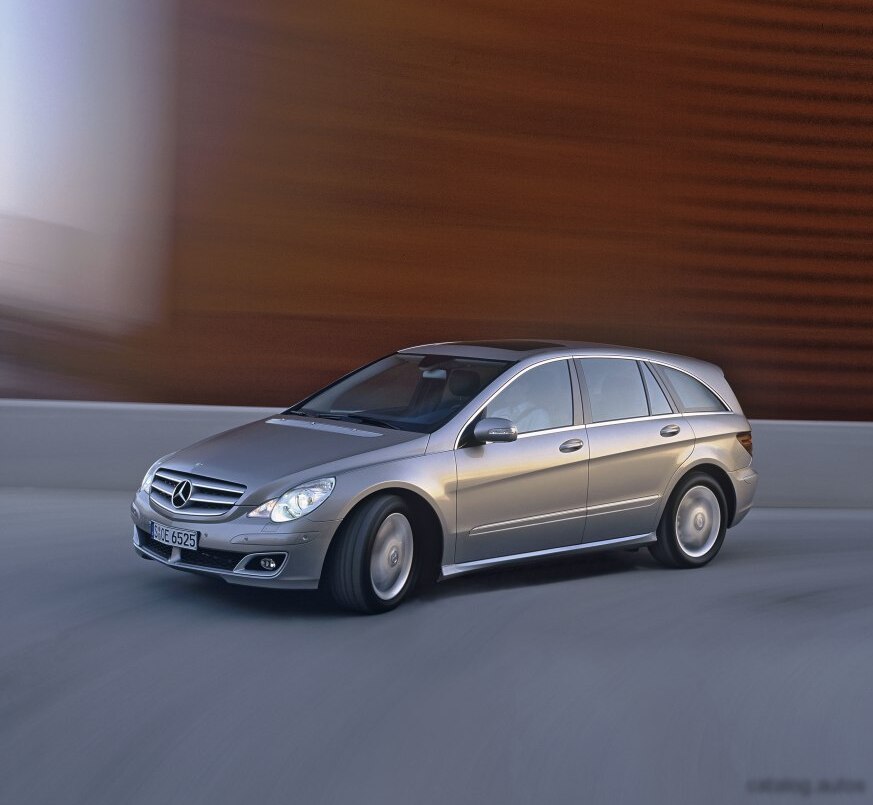
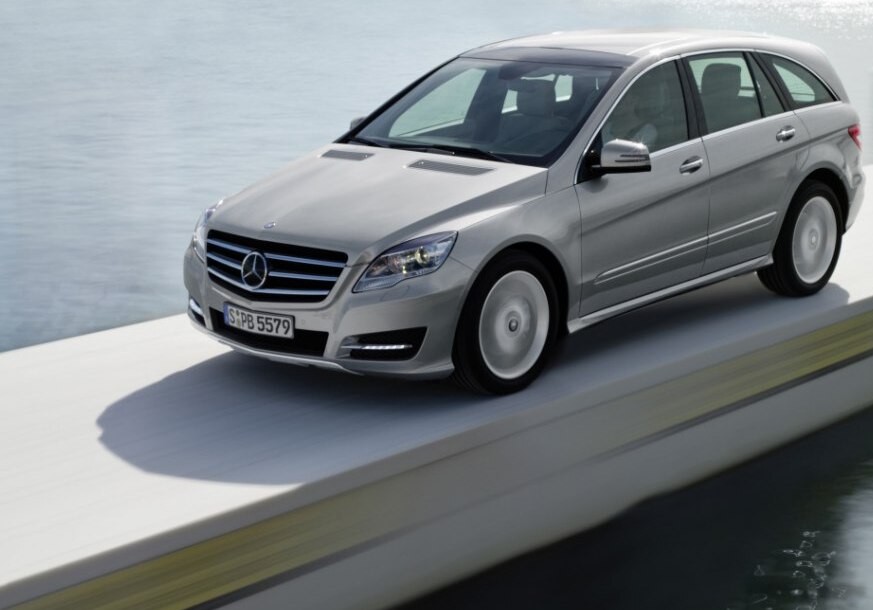
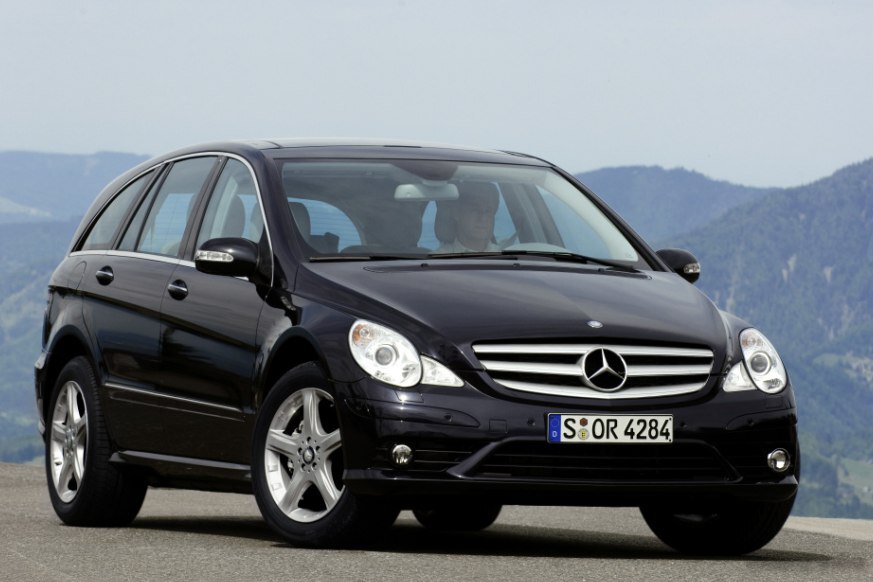
The Mercedes-Benz R-Class (W251) R 280 V6, produced from 2007 to 2009, was a distinctive vehicle in the luxury automotive landscape. Positioned as a spacious, six or seven-seat vehicle, the R-Class aimed to bridge the gap between traditional minivans and the prestige associated with the Mercedes-Benz brand. The R 280 V6, equipped with a 3.0-liter V6 engine and the 7G-TRONIC automatic transmission, occupied a mid-range position within the R-Class lineup, offering a balance between performance, fuel economy, and luxury. It was primarily targeted at buyers in markets where large SUVs were less common, and who desired a versatile vehicle for family transportation and long-distance travel.
Powertrain & Engine Architecture
The R 280 V6 was powered by the M272.945 engine, a 3.0-liter naturally aspirated V6. This engine featured a 60-degree V-angle, three valves per cylinder (two intake, one exhaust), and a dual overhead camshaft design. The engine employed a multi-port fuel injection system, delivering fuel directly into the intake ports. The M272 engine family was well-regarded for its smooth operation and respectable power output for its displacement. Paired with the engine was the 7G-TRONIC automatic transmission, a seven-speed unit known for its smooth and efficient gear changes, contributing to both performance and fuel economy. The 7G-TRONIC incorporated a torque converter lock-up clutch that engaged in most gears, minimizing slippage and enhancing efficiency. The engine’s longitudinal mounting and rear-wheel-drive configuration were standard practice for Mercedes-Benz passenger vehicles of that era.
Driving Characteristics
The R 280 V6 delivered a comfortable and refined driving experience. Producing 231 horsepower and 300 Nm (221 lb-ft) of torque, acceleration was sufficient for everyday driving, achieving a 0-60 mph time of approximately 9.1 seconds. However, it wasn’t designed to be a particularly sporty vehicle. The 7G-TRONIC transmission provided smooth shifts, although it could occasionally exhibit some hesitation during more aggressive acceleration. Compared to the R 320 CDI (diesel) or the more powerful R 350, the R 280 V6 offered less outright performance. The diesel variant provided significantly more torque, resulting in stronger acceleration, while the R 350 boasted higher peak horsepower. The R 280 V6’s rear-wheel-drive configuration offered a balanced feel, but lacked the all-wheel-drive capability found in some other R-Class models, potentially posing a challenge in adverse weather conditions.
Equipment & Trim Levels
The R 280 V6 typically came equipped with a generous array of standard features, including leather upholstery, dual-zone automatic climate control, a premium audio system, and power-adjustable front seats. A range of optional extras were available, such as a panoramic sunroof, a navigation system, a rear-seat entertainment system, and advanced safety technologies like Distronic adaptive cruise control. Trim levels varied depending on the specific market, generally offering progressively higher levels of luxury and technology. The interior design adhered to the typical Mercedes-Benz aesthetic, emphasizing high-quality materials and a sophisticated ambiance. The R-Class’s unique seating arrangement allowed for either five or seven passengers, although the third-row seats were best suited for children or shorter adults.
Chassis & Braking
The R-Class (W251) employed a unibody construction. The R 280 V6 featured a double wishbone front suspension and an independent multi-link rear suspension, complete with a stabilizer bar. This suspension setup prioritized ride comfort and provided competent handling characteristics. The braking system consisted of ventilated discs at the front and solid discs at the rear, with ABS (Anti-lock Braking System) included as standard equipment. The steering system was a rack-and-pinion design with hydraulic power assistance. The R 280 V6’s curb weight of approximately 2130 kg (4695.85 lbs) contributed to its stable road manners, but also somewhat limited its agility.
Market Reception & Comparison
The R-Class, as a whole, received a somewhat mixed reception from automotive critics. While its spacious interior and luxurious features were praised, its styling and unconventional proportions were often questioned. The R 280 V6 was generally viewed as a pragmatic choice for buyers who prioritized comfort and fuel economy over outright performance. Its fuel consumption of 10.9 l/100 km (21.6 US mpg) was reasonable for a vehicle of its size and class, but still higher than that of the R 320 CDI. Reliability was generally considered good, although some owners reported occasional issues with the electronic systems and, in models so equipped, the air suspension. Compared to other luxury SUVs and crossovers available at the time, the R-Class offered a unique combination of space, comfort, and the prestige of the Mercedes-Benz brand.
Legacy
The Mercedes-Benz R-Class (W251) was discontinued in 2009 due to lackluster sales figures. Despite not achieving widespread commercial success, it remains a distinctive and somewhat underrated vehicle. The M272 engine used in the R 280 V6 is generally regarded as a reliable powerplant, provided it receives regular maintenance. In the used car market, the R 280 V6 can be found at relatively affordable prices, making it an appealing option for buyers seeking a spacious and luxurious vehicle. However, prospective buyers should be mindful of the potential for age-related issues and the ongoing costs associated with maintaining a Mercedes-Benz.