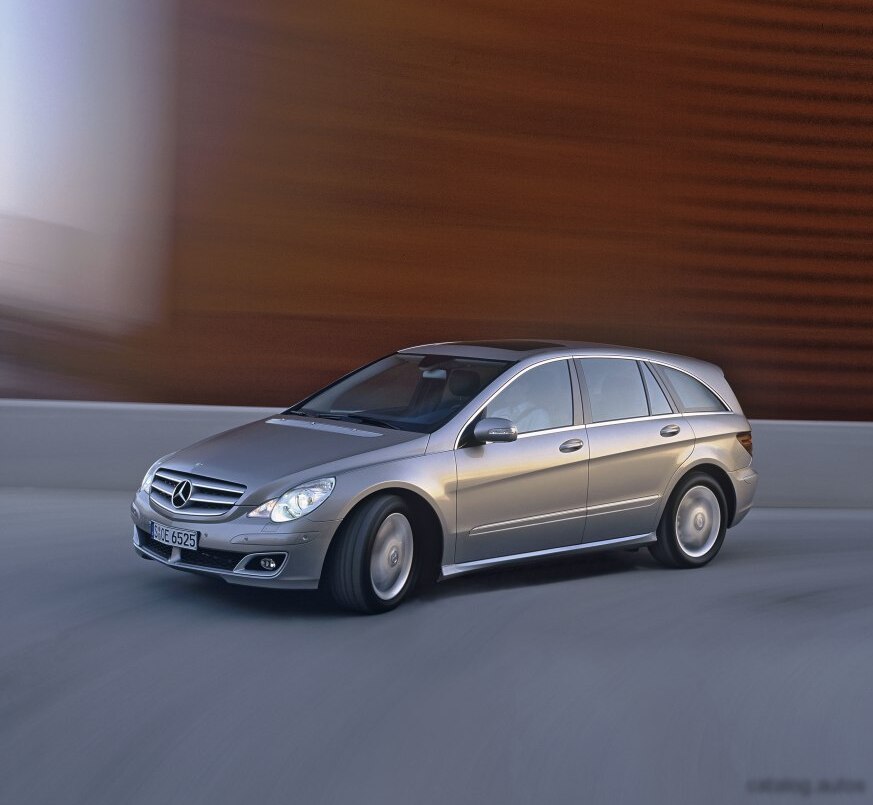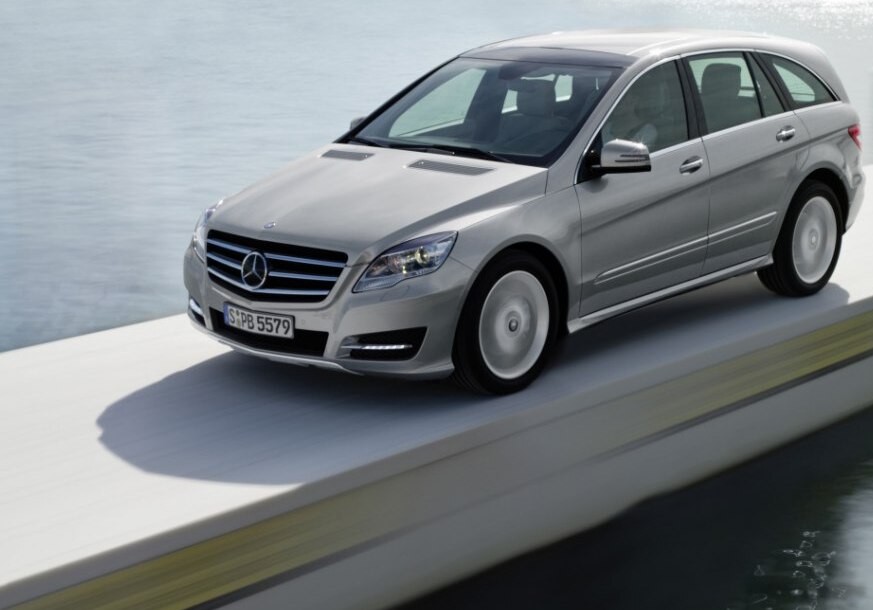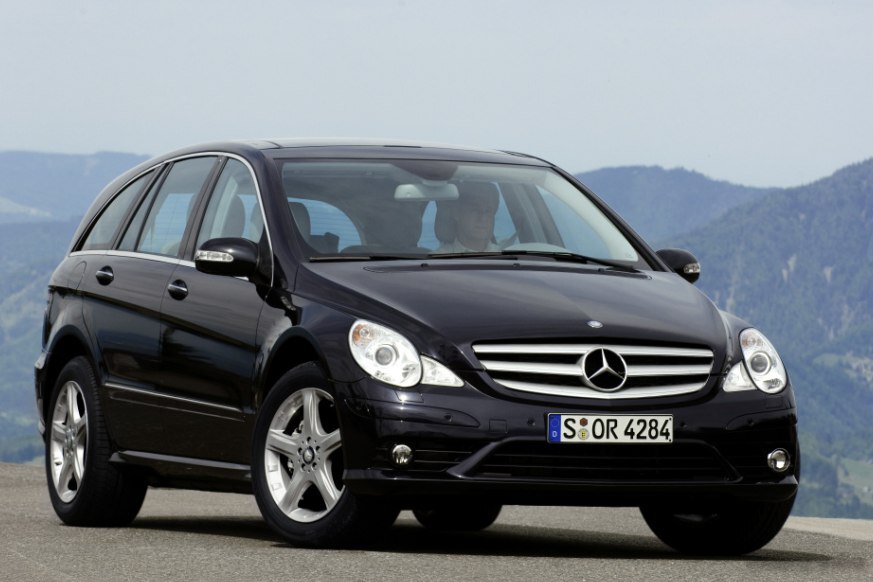
The Mercedes-Benz R-Class (W251) R 300 CDI V6 BlueEFFICIENCY, produced from 2009 to 2010, represented a unique offering in the luxury vehicle segment. Positioned as a spacious, six or seven-seat vehicle, the R-Class aimed to blend the practicality of a minivan with the prestige and driving experience associated with Mercedes-Benz. The R 300 CDI variant, equipped with a 3.0-liter V6 turbodiesel engine and the 7G-TRONIC automatic transmission, served as a mid-range option within the R-Class lineup, offering a balance between performance, fuel economy, and refinement. It was primarily marketed in Europe and other regions where larger, multi-purpose vehicles were popular, though it saw limited sales in the United States.
Technical Specifications
| Brand | Mercedes-Benz |
| Model | R-class |
| Generation | R-class (W251) |
| Type (Engine) | R 300 CDI V6 BlueEFFICIENCY (190 Hp) G-TRONIC |
| Start of production | 2009 |
| End of production | 2010 |
| Powertrain Architecture | Internal Combustion engine |
| Body type | Station wagon (estate) |
| Seats | 5 |
| Doors | 5 |
| Fuel consumption (combined) | 7.6 l/100 km (30.9 US mpg, 37.2 UK mpg, 13.2 km/l) |
| CO2 emissions | 199 g/km |
| Fuel Type | Diesel |
| Acceleration 0 – 100 km/h | 9.5 sec |
| Acceleration 0 – 62 mph | 9.5 sec |
| Acceleration 0 – 60 mph | 9 sec |
| Maximum speed | 215 km/h (133.59 mph) |
| Emission standard | Euro 5 |
| Weight-to-power ratio | 11.5 kg/Hp, 87 Hp/tonne |
| Weight-to-torque ratio | 5 kg/Nm, 201.4 Nm/tonne |
| Power | 190 Hp @ 3800 rpm |
| Power per litre | 63.6 Hp/l |
| Torque | 440 Nm @ 1400-2800 rpm (324.53 lb.-ft. @ 1400-2800 rpm) |
| Engine layout | Front, Longitudinal |
| Engine Model/Code | OM 642.950 |
| Engine displacement | 2987 cm3 (182.28 cu. in.) |
| Number of cylinders | 6 |
| Engine configuration | V-engine |
| Compression ratio | 15.5:1 |
| Fuel injection system | Diesel Commonrail |
| Engine aspiration | Turbocharger, Intercooler |
| Engine oil capacity | 8.5 l (8.98 US qt | 7.48 UK qt) |
| Coolant | 10.1 l (10.67 US qt | 8.89 UK qt) |
| Kerb Weight | 2185 kg (4817.1 lbs.) |
| Max. weight | 2840 kg (6261.13 lbs.) |
| Max load | 655 kg (1444.03 lbs.) |
| Trunk (boot) space – minimum | 550 l (19.42 cu. ft.) |
| Trunk (boot) space – maximum | 1950 l (68.86 cu. ft.) |
| Fuel tank capacity | 80 l (21.13 US gal | 17.6 UK gal) |
| Permitted trailer load with brakes (12%) | 2100 kg (4629.71 lbs.) |
| Permitted trailer load without brakes | 750 kg (1653.47 lbs.) |
| Length | 4922 mm (193.78 in.) |
| Width | 1922 mm (75.67 in.) |
| Height | 1674 mm (65.91 in.) |
| Wheelbase | 2980 mm (117.32 in.) |
| Front track | 1661 mm (65.39 in.) |
| Rear (Back) track | 1651 mm (65 in.) |
| Minimum turning circle | 12 m (39.37 ft.) |
| Drivetrain Architecture | Rear wheel drive |
| Number of gears and type of gearbox | 7 gears, automatic transmission G-TRONIC |
| Front suspension | Double wishbone |
| Rear suspension | Independent multi-link spring suspension with stabilizer |
| Front brakes | Ventilated discs |
| Rear brakes | Disc |
| Assisting systems | ABS (Anti-lock braking system) |
| Steering type | Steering rack and pinion |
| Power steering | Hydraulic Steering |
| Tires size | 235/65 R17 |
| Wheel rims size | 17 |
INTRODUCTION
The W251 Mercedes-Benz R-Class, launched in 2005, was a bold attempt to create a crossover vehicle that didn’t quite fit neatly into existing segments. The R 300 CDI V6 BlueEFFICIENCY, introduced in 2009 as part of a mid-cycle refresh, aimed to improve fuel efficiency and reduce emissions while maintaining a comfortable driving experience. The “BlueEFFICIENCY” designation signified a range of enhancements focused on optimizing aerodynamics, reducing weight, and improving engine management. This variant occupied a middle ground in the R-Class range, positioned above the entry-level R 280 CDI and below the more powerful R 350 CDI.
Powertrain & Engine Architecture
At the heart of the R 300 CDI was the OM 642.950 3.0-liter V6 turbodiesel engine. This engine was a sophisticated design featuring a common rail direct injection system, a variable geometry turbocharger, and an intercooler. The common rail system allowed for precise control of fuel delivery, optimizing combustion and reducing noise. The V6 configuration provided inherent smoothness and balance. The engine produced 190 horsepower at 3800 rpm and a substantial 440 Nm (324.53 lb-ft) of torque between 1400 and 2800 rpm. This broad torque curve was a key characteristic of the engine, providing strong pulling power at low and mid-range speeds. The engine also featured a diesel particulate filter (DPF) to reduce emissions. The 7G-TRONIC automatic transmission, a seven-speed unit, was standard. This transmission offered smooth and quick shifts, contributing to both performance and fuel efficiency. It featured a torque converter lock-up clutch to minimize slippage and improve fuel economy at cruising speeds.
Driving Characteristics
The R 300 CDI, with its 190 hp and automatic transmission, offered a comfortable and relaxed driving experience. Acceleration from 0 to 100 km/h (0-62 mph) took approximately 9.5 seconds, which was adequate for everyday driving but not particularly sporty. The strength of this variant lay in its mid-range torque, making it easy to overtake and maintain speed on highways. Compared to the more powerful R 350 CDI, the R 300 CDI felt less urgent in its acceleration, but it offered better fuel economy. The 7G-TRONIC transmission generally shifted smoothly, although some drivers noted occasional hesitation at lower speeds. The rear-wheel-drive configuration provided a balanced feel, but it wasn’t ideal for driving in slippery conditions without the optional 4MATIC all-wheel-drive system. The gear ratios were tuned for fuel efficiency, with a relatively tall final drive.
Equipment & Trim Levels
The R 300 CDI BlueEFFICIENCY came reasonably well-equipped as standard. Typical features included automatic climate control, power windows and mirrors, a multi-function steering wheel, and an audio system with CD player. Upholstery was typically a combination of fabric and leatherette, with full leather options available as an upgrade. Optional extras included a sunroof, navigation system, premium sound system, heated seats, and parking sensors. The interior design was typical of Mercedes-Benz at the time, with a focus on luxury and comfort. The dashboard layout was functional and well-organized, although some critics found it to be somewhat dated.
Chassis & Braking
The R-Class featured a robust chassis with a double wishbone front suspension and an independent multi-link rear suspension. This suspension setup provided a comfortable ride, absorbing bumps and imperfections in the road effectively. A stabilizer bar was fitted to both the front and rear axles to reduce body roll during cornering. The braking system consisted of ventilated discs at the front and solid discs at the rear. Anti-lock brakes (ABS) were standard, providing enhanced stopping power and stability. The steering was a rack-and-pinion system with hydraulic power assistance, offering precise and responsive steering feel.
Market Reception & Comparison
The R-Class, in general, struggled to gain widespread acceptance in the market. Its unusual styling and high price point were often cited as drawbacks. The R 300 CDI, while offering a good balance of performance and fuel economy, faced competition from more conventional SUVs and minivans. Critics praised the engine’s refinement and torque, but some found the overall driving experience to be somewhat lacking in excitement. Fuel economy was a strong point, with the R 300 CDI achieving around 7.6 l/100 km (30.9 US mpg) in combined driving. Compared to the R 280 CDI, the R 300 CDI offered a noticeable increase in power and torque. Compared to the R 350 CDI, it was less powerful but more fuel-efficient.
Legacy
The Mercedes-Benz R-Class was discontinued in 2015. While it wasn’t a commercial success, it represented an innovative attempt to create a new type of vehicle. The OM 642 engine family, used in the R 300 CDI, is known for its durability and reliability. Well-maintained examples of the R 300 CDI can still be found on the used car market today, offering a comfortable and spacious vehicle at a relatively affordable price. However, potential buyers should be aware of the potential for costly repairs, particularly related to the complex diesel emissions system and the automatic transmission. The R-Class, and specifically the R 300 CDI, remains a somewhat niche vehicle, appreciated by those who value its unique combination of luxury, space, and fuel efficiency.