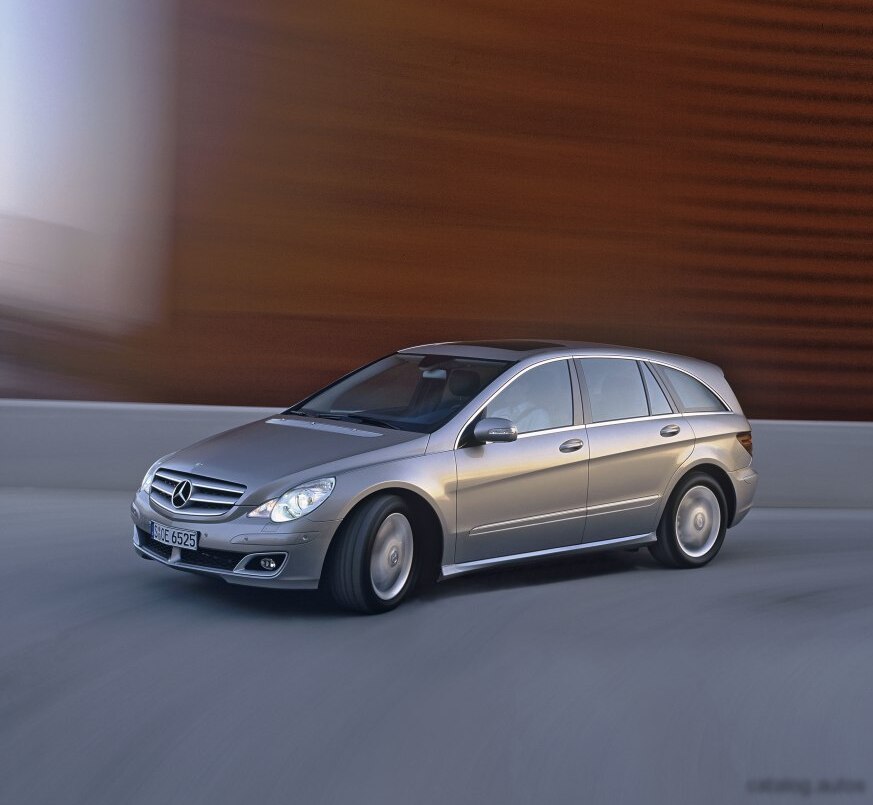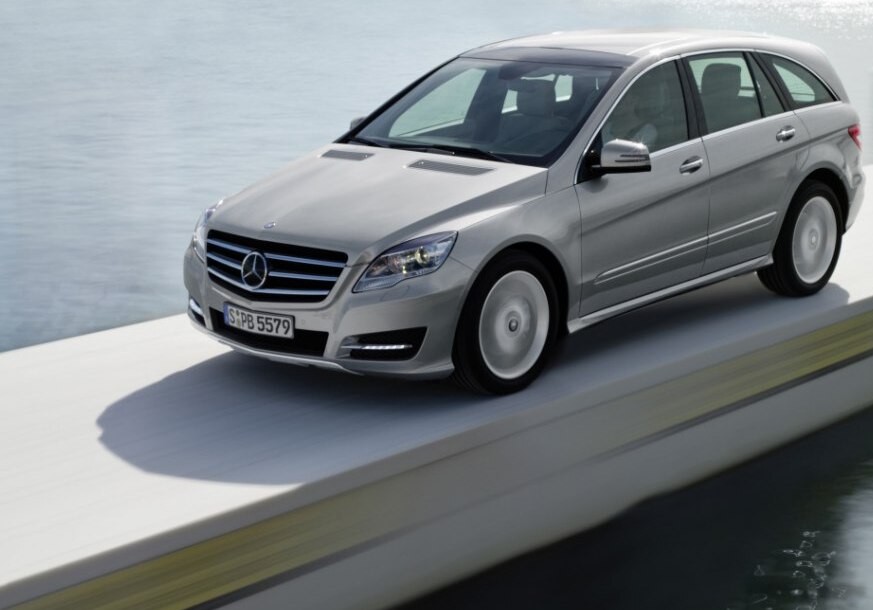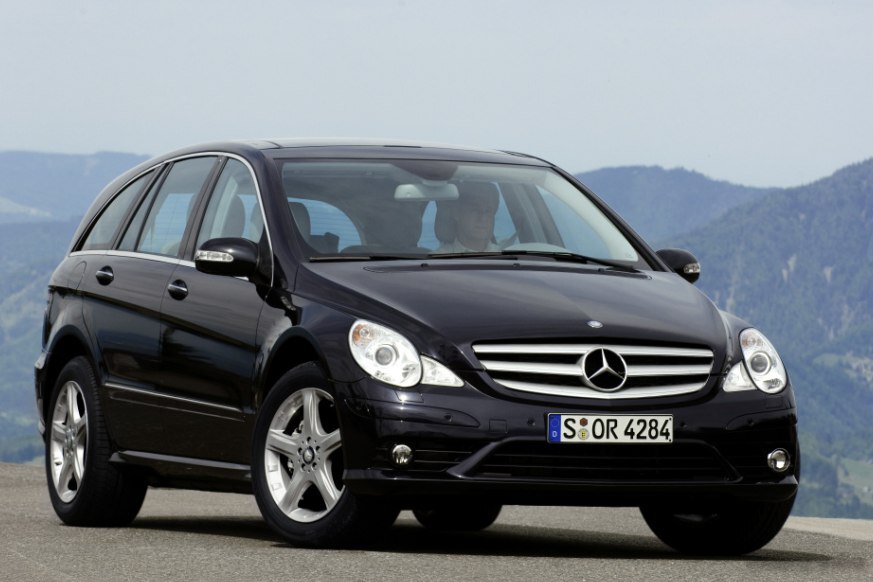
The Mercedes-Benz R-Class (W251) R 300 V6 G-TRONIC, produced from 2009 to 2010, represents a unique offering within the luxury station wagon segment. Positioned as a mid-range variant of the W251 series, it aimed to blend the practicality of a spacious family vehicle with the prestige and refinement expected of the Mercedes-Benz brand. The R 300 V6 served as a bridge between the entry-level R 280 CDI diesel and the higher-performance R 350 and R 63 AMG models. It was primarily marketed in Europe and North America, attempting to carve out a niche for itself in a market segment that wasn’t particularly well-defined.
Technical Specifications
| Brand | Mercedes-Benz |
| Model | R-class |
| Generation | R-class (W251) |
| Type (Engine) | R 300 V6 (231 Hp) G-TRONIC |
| Start of production | 2009 |
| End of production | 2010 |
| Powertrain Architecture | Internal Combustion engine |
| Body type | Station wagon (estate) |
| Seats | 5 |
| Doors | 5 |
| Fuel consumption (urban) | 15.2-15.4 l/100 km (15.5 – 15.3 US mpg, 18.6 – 18.3 UK mpg, 6.6 – 6.5 km/l) |
| Fuel consumption (extra urban) | 8.8-9.0 l/100 km (26.7 – 26.1 US mpg, 32.1 – 31.4 UK mpg, 11.4 – 11.1 km/l) |
| Fuel consumption (combined) | 11.1-11.3 l/100 km (21.2 – 20.8 US mpg, 25.4 – 25 UK mpg, 9 – 8.8 km/l) |
| CO2 emissions | 260 g/km |
| Fuel Type | Petrol (Gasoline) |
| Acceleration 0 – 100 km/h | 9.7 sec |
| Acceleration 0 – 62 mph | 9.7 sec |
| Acceleration 0 – 60 mph | 9.2 sec |
| Maximum speed | 222 km/h (137.94 mph) |
| Emission standard | Euro 5 |
| Weight-to-power ratio | 9.2 kg/Hp, 108.5 Hp/tonne |
| Weight-to-torque ratio | 7.1 kg/Nm, 140.8 Nm/tonne |
| Power | 231 Hp @ 6000 rpm |
| Power per litre | 77.1 Hp/l |
| Torque | 300 Nm @ 2500-5000 rpm (221.27 lb.-ft. @ 2500-5000 rpm) |
| Engine layout | Front, Longitudinal |
| Engine Model/Code | M 272.945 |
| Engine displacement | 2996 cm3 (182.83 cu. in.) |
| Number of cylinders | 6 |
| Engine configuration | V-engine |
| Compression ratio | 11.3:1 |
| Fuel injection system | Multi-port manifold injection |
| Engine aspiration | Naturally aspirated engine |
| Engine oil capacity | 8 l (8.45 US qt | 7.04 UK qt) |
| Coolant capacity | 10.1 l (10.67 US qt | 8.89 UK qt) |
| Kerb Weight | 2130 kg (4695.85 lbs.) |
| Max. weight | 2790 kg (6150.9 lbs.) |
| Max load | 660 kg (1455.05 lbs.) |
| Trunk (boot) space – minimum | 550 l (19.42 cu. ft.) |
| Trunk (boot) space – maximum | 1950 l (68.86 cu. ft.) |
| Fuel tank capacity | 80 l (21.13 US gal | 17.6 UK gal) |
| Permitted trailer load with brakes (12%) | 2100 kg (4629.71 lbs.) |
| Permitted trailer load without brakes | 750 kg (1653.47 lbs.) |
| Length | 4922 mm (193.78 in.) |
| Width | 1922 mm (75.67 in.) |
| Height | 1674 mm (65.91 in.) |
| Wheelbase | 2980 mm (117.32 in.) |
| Front track | 1661 mm (65.39 in.) |
| Rear track | 1651 mm (65 in.) |
| Minimum turning circle | 11.8 m (38.71 ft.) |
| Drivetrain Architecture | Rear wheel drive |
| Drive wheel | Rear wheel drive |
| Number of gears | 7 |
| Gearbox type | Automatic transmission G-TRONIC |
| Front suspension | Double wishbone |
| Rear suspension | Independent multi-link spring suspension with stabilizer |
| Front brakes | Ventilated discs |
| Rear brakes | Disc |
| Assisting systems | ABS (Anti-lock braking system) |
| Steering type | Steering rack and pinion |
| Power steering | Hydraulic Steering |
| Tires size | 255/55 R18 |
| Wheel rims size | 18 |
Powertrain & Engine Architecture
The R 300 V6 was powered by the M272.945 engine, a 3.0-liter naturally aspirated V6. This engine, a staple in many Mercedes-Benz vehicles of the era, featured a 60-degree V-angle and utilized a multi-port fuel injection system. The engine produced 231 horsepower at 6000 rpm and 300 Nm (221 lb-ft) of torque between 2500 and 5000 rpm. The 11.3:1 compression ratio contributed to its efficiency, though it required premium fuel. Paired with the engine was the 7G-TRONIC automatic transmission, a seven-speed unit known for its smooth shifting and efficiency. This transmission offered a balance between performance and fuel economy, with gear ratios optimized for both highway cruising and acceleration.
Driving Characteristics
The R 300 V6 G-TRONIC offered a comfortable and refined driving experience. While not overtly sporty, the engine provided adequate power for everyday driving and highway overtaking. The 7G-TRONIC transmission contributed to smooth acceleration, although it could sometimes feel hesitant during quick downshifts. Compared to the more powerful R 350, the R 300 felt less urgent in its acceleration, taking 9.7 seconds to reach 62 mph. However, this difference was often offset by the R 300’s slightly better fuel economy. The rear-wheel-drive configuration provided a balanced feel, but it lacked the all-wheel-drive capability of some other R-Class variants, potentially limiting its performance in inclement weather.
Equipment & Trim Levels
The R 300 V6 typically came standard with a generous array of features, reflecting its luxury positioning. These included leather upholstery, automatic climate control, a premium audio system, and power-adjustable front seats. Optional extras included a sunroof, navigation system, rear-seat entertainment, and parking assist. Trim levels varied by market, but generally, the R 300 V6 was positioned as a well-equipped mid-range option, offering a step up in luxury and features compared to the base models but falling short of the fully-loaded R 350 and R 63 AMG.
Chassis & Braking
The W251 R-Class featured a unibody construction and a sophisticated suspension system designed to provide a comfortable ride. The R 300 V6 utilized a double wishbone front suspension and an independent multi-link rear suspension with a stabilizer bar. Braking duties were handled by ventilated discs at the front and solid discs at the rear, equipped with ABS (Anti-lock Braking System). The suspension tuning was geared towards comfort rather than outright sportiness, prioritizing a smooth and controlled ride over sharp handling.
Market Reception & Comparison
The R-Class, in general, faced a lukewarm reception in the market. Its unusual styling and somewhat ambiguous positioning – not quite an SUV, not quite a minivan, and not quite a traditional station wagon – contributed to its limited sales success. The R 300 V6, while offering a good balance of performance and fuel economy, was often overshadowed by the more powerful R 350 and the more fuel-efficient diesel variants. Critics generally praised the R 300’s comfortable ride and refined interior, but noted its lack of dynamic flair and its relatively high price point. Fuel economy was rated at around 21.2-20.8 US mpg combined, which was reasonable for a vehicle of its size and weight, but not class-leading.
Legacy
The Mercedes-Benz R-Class, including the R 300 V6 variant, remains a relatively uncommon sight on the road today. While not known for any widespread mechanical issues, the complexity of its systems and the age of the vehicles mean that maintenance can be costly. The M272 engine is generally considered reliable, but regular maintenance, including oil changes and timing chain inspections, is crucial. On the used car market, the R 300 V6 represents a relatively affordable entry point into the Mercedes-Benz luxury segment, appealing to buyers seeking a spacious and comfortable vehicle with a degree of prestige. However, potential buyers should be aware of the vehicle’s potential maintenance costs and its somewhat niche appeal.