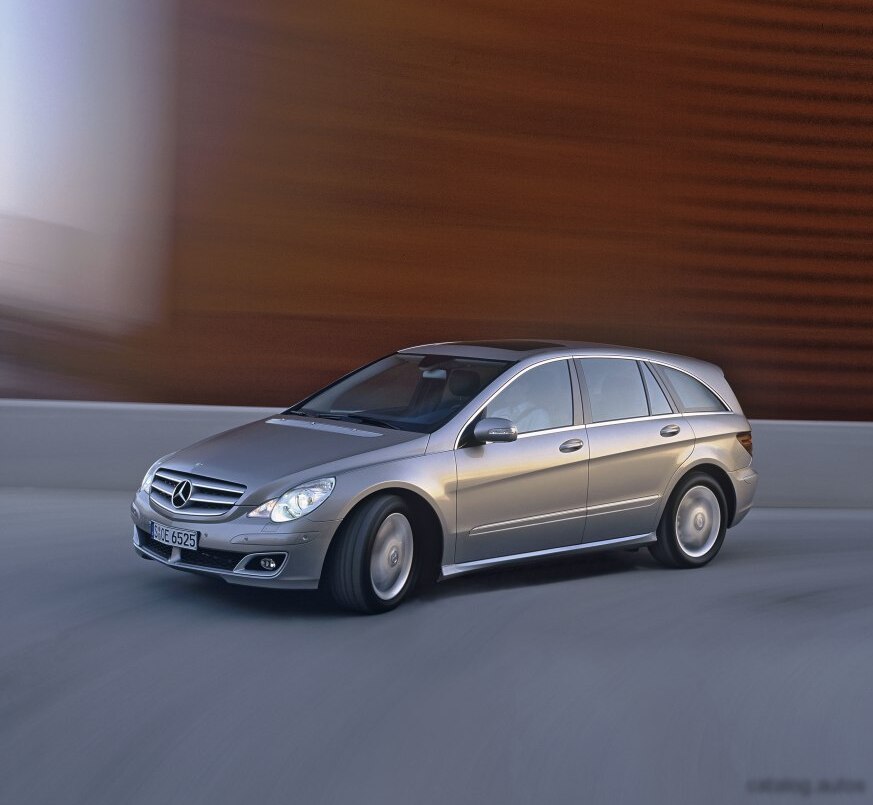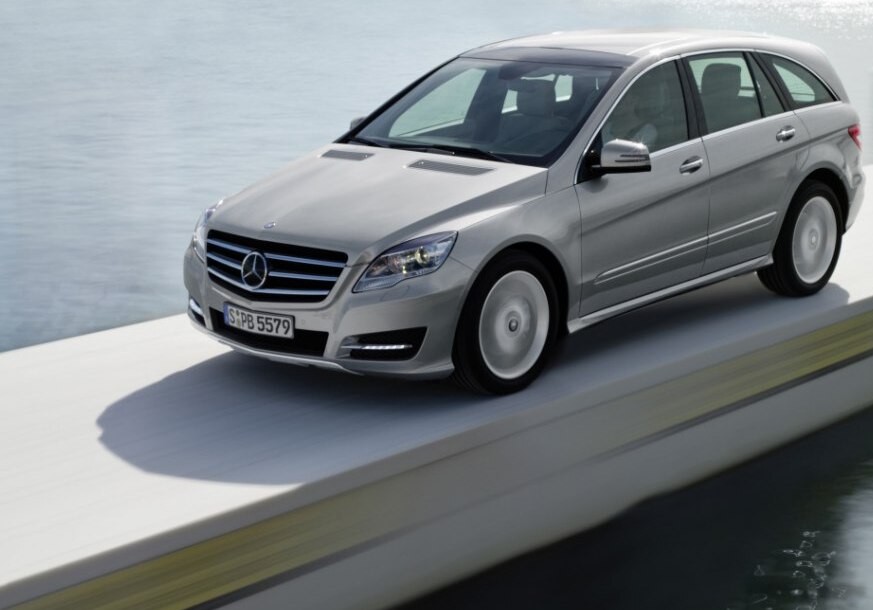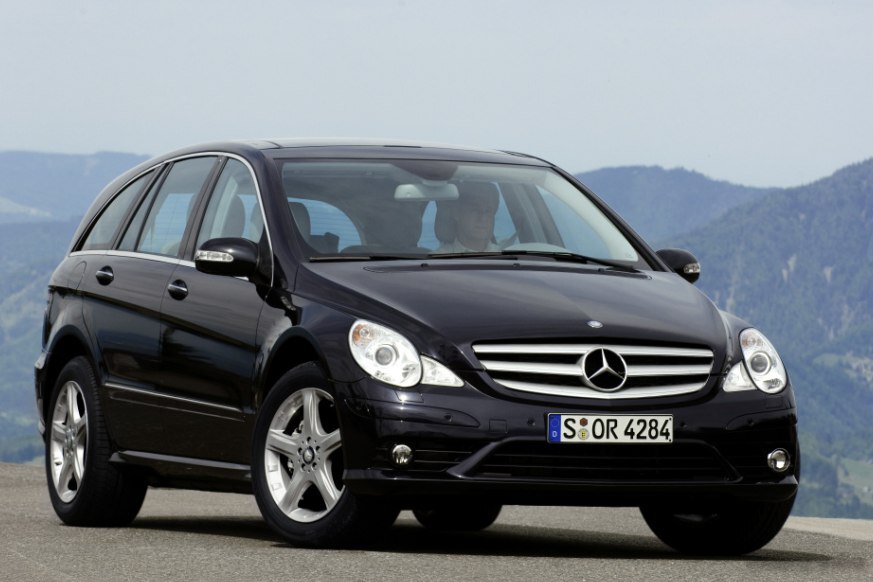
The Mercedes-Benz R-Class (W251) R 350 CDI V6 4MATIC G-TRONIC, produced from 2009 to 2010, represents a unique offering within the luxury SUV/wagon segment. Positioned as a spacious, versatile vehicle, the R-Class aimed to blend the practicality of a sport tourer with the prestige and refinement expected of a Mercedes-Benz. This particular variant, powered by the OM 642.950 3.0-liter V6 turbodiesel engine and paired with the 7G-TRONIC automatic transmission, was a key model in the R-Class lineup, offering a balance of performance, fuel efficiency, and all-weather capability thanks to its 4MATIC all-wheel-drive system. It was sold primarily in Europe and other markets where larger wagons and SUVs were popular, though it saw limited sales in the United States.
Technical Specifications
| Brand | Mercedes-Benz |
| Model | R-class |
| Generation | R-class (W251) |
| Type (Engine) | R 350 CDI V6 (224 Hp) 4MATIC G-TRONIC |
| Start of production | 2009 |
| End of production | 2010 |
| Powertrain Architecture | Internal Combustion engine |
| Body type | Station wagon (estate) |
| Seats | 5-7 |
| Doors | 5 |
| Fuel consumption (combined) | 9.3 l/100 km (25.3 US mpg, 30.4 UK mpg, 10.8 km/l) |
| CO2 emissions | 246 g/km |
| Fuel Type | Diesel |
| Acceleration 0 – 100 km/h | 8.7 sec |
| Acceleration 0 – 62 mph | 8.7 sec |
| Acceleration 0 – 60 mph | 8.3 sec |
| Maximum speed | 222 km/h (137.94 mph) |
| Emission standard | Euro 5 |
| Weight-to-power ratio | 10 kg/Hp, 99.6 Hp/tonne |
| Weight-to-torque ratio | 4.4 kg/Nm, 226.7 Nm/tonne |
| Power | 224 Hp |
| Power per litre | 75 Hp/l |
| Torque | 510 Nm (376.16 lb.-ft.) |
| Maximum engine speed | 4500 rpm |
| Engine layout | Front, Longitudinal |
| Engine Model/Code | OM 642.950 |
| Engine displacement | 2987 cm3 (182.28 cu. in.) |
| Number of cylinders | 6 |
| Engine configuration | V-engine |
| Cylinder Bore | 83 mm (3.27 in.) |
| Piston Stroke | 92 mm (3.62 in.) |
| Compression ratio | 16.5:1 |
| Number of valves per cylinder | 4 |
| Fuel injection system | Diesel Commonrail |
| Engine aspiration | Turbocharger, Intercooler |
| Engine oil capacity | 8.5 l (8.98 US qt | 7.48 UK qt) |
| Coolant | 10.1 l (10.67 US qt | 8.89 UK qt) |
| Kerb Weight | 2250 kg (4960.4 lbs.) |
| Max. weight | 2840 kg (6261.13 lbs.) |
| Max load | 590 kg (1300.73 lbs.) |
| Trunk (boot) space – minimum | 550 l (19.42 cu. ft.) |
| Trunk (boot) space – maximum | 1950 l (68.86 cu. ft.) |
| Fuel tank capacity | 80 l (21.13 US gal | 17.6 UK gal) |
| Max. roof load | 100 kg (220.46 lbs.) |
| Permitted trailer load with brakes (12%) | 2100 kg (4629.71 lbs.) |
| Permitted trailer load without brakes | 750 kg (1653.47 lbs.) |
| Length | 4922 mm (193.78 in.) |
| Width | 1922 mm (75.67 in.) |
| Height | 1659 mm (65.31 in.) |
| Wheelbase | 2980 mm (117.32 in.) |
| Drive wheel | All wheel drive (4×4) |
| Number of gears and type of gearbox | 7 gears, automatic transmission G-TRONIC |
| Front suspension | Double wishbone |
| Rear suspension | Independent multi-link spring suspension with stabilizer |
| Front brakes | Disc |
| Rear brakes | Disc |
| Assisting systems | ABS (Anti-lock braking system) |
| Steering type | Steering rack and pinion |
| Power steering | Hydraulic Steering |
| Tires size | 235/65 R17 |
| Wheel rims size | 7.5J x 17 |
INTRODUCTION
The W251 Mercedes-Benz R-Class, launched in 2005, was a bold attempt to create a new vehicle category – a “sports tourer.” The R 350 CDI V6 4MATIC G-TRONIC, produced from 2009-2010, represented a mid-cycle refresh of the original model. It aimed to offer the space and practicality of a minivan, combined with the driving experience and luxury associated with Mercedes-Benz. The R-Class was built on the same platform (the 1HX0 platform, shared with the W164 M-Class) and offered seating for up to seven passengers. This specific diesel variant was particularly popular in European markets due to favorable taxation and the efficiency of diesel engines.
Powertrain & Engine Architecture
At the heart of the R 350 CDI 4MATIC lies the OM 642.950 3.0-liter V6 turbodiesel engine. This engine is a robust and well-regarded design, featuring a cast iron block and aluminum cylinder heads. It utilizes a common rail direct injection system, delivering fuel at extremely high pressures for optimized combustion. The engine also incorporates a variable geometry turbocharger (VGT) and an intercooler to enhance power and efficiency. The V6 produces 224 horsepower and a substantial 510 Nm (376 lb-ft) of torque. The 7G-TRONIC automatic transmission, a seven-speed unit, was standard. This transmission is known for its smooth shifting and efficiency, contributing to the R 350 CDI’s relatively good fuel economy for a vehicle of its size. The transmission features a torque converter and electronically controlled gear changes.
Driving Characteristics
The R 350 CDI 4MATIC offered a comfortable and refined driving experience. The 3.0-liter V6 provided ample torque, making it capable of accelerating from 0 to 60 mph in around 8.3 seconds. While not a sports car, the engine delivered strong performance for everyday driving and overtaking maneuvers. The 7G-TRONIC transmission contributed to smooth and seamless gear changes, enhancing the overall driving experience. The 4MATIC all-wheel-drive system provided excellent traction in various weather conditions, making it a safe and confident vehicle to drive year-round. Compared to the R 350 gasoline variant, the CDI offered significantly better fuel economy and more low-end torque. It wasn’t as quick as the higher-output R 500, but it provided a more balanced and practical driving experience for many owners.
Equipment & Trim Levels
The R 350 CDI 4MATIC typically came well-equipped with standard features such as leather upholstery, automatic climate control, a premium audio system, and power-adjustable front seats. Optional extras included a sunroof, navigation system, rear-seat entertainment system, and parking assist. Trim levels varied depending on the market, but generally, the R 350 CDI sat in the mid-range of the R-Class lineup, offering a good balance of luxury and features. Interior materials were of high quality, reflecting Mercedes-Benz’s commitment to craftsmanship. The dashboard layout was functional and well-designed, with intuitive controls.
Chassis & Braking
The R-Class utilized a robust chassis with a double wishbone front suspension and an independent multi-link rear suspension. This setup provided a comfortable ride and good handling characteristics. Stabilizer bars were fitted to both the front and rear axles to reduce body roll. The R 350 CDI 4MATIC was equipped with disc brakes on all four wheels, providing ample stopping power. Anti-lock braking system (ABS) and electronic stability control (ESP) were standard safety features. The suspension was tuned to prioritize comfort, but it still offered a reasonably controlled driving experience.
Market Reception & Comparison
The R-Class, in general, received mixed reviews. Critics praised its spacious interior, comfortable ride, and available features, but some found its styling unconventional and its size cumbersome. The R 350 CDI variant was generally well-received for its fuel efficiency and strong torque output. Compared to other luxury SUVs of the time, such as the BMW X5 and Audi Q7, the R-Class offered a unique blend of wagon-like practicality and SUV capability. However, it didn’t achieve the same level of sales success as its competitors. Fuel economy was a strong point, offering around 25 mpg combined, which was competitive for its class.
Legacy
The Mercedes-Benz R-Class was discontinued after the 2013 model year. While it wasn’t a commercial success, it remains a unique and interesting vehicle. The OM 642 engine, in particular, is known for its durability and reliability, provided it is properly maintained. Used R 350 CDI models are relatively affordable and can offer a lot of value for the money. However, potential buyers should be aware of potential maintenance costs associated with a complex vehicle like the R-Class. The R-Class paved the way for the current generation of luxury SUVs with three-row seating, and its innovative design continues to be appreciated by enthusiasts.