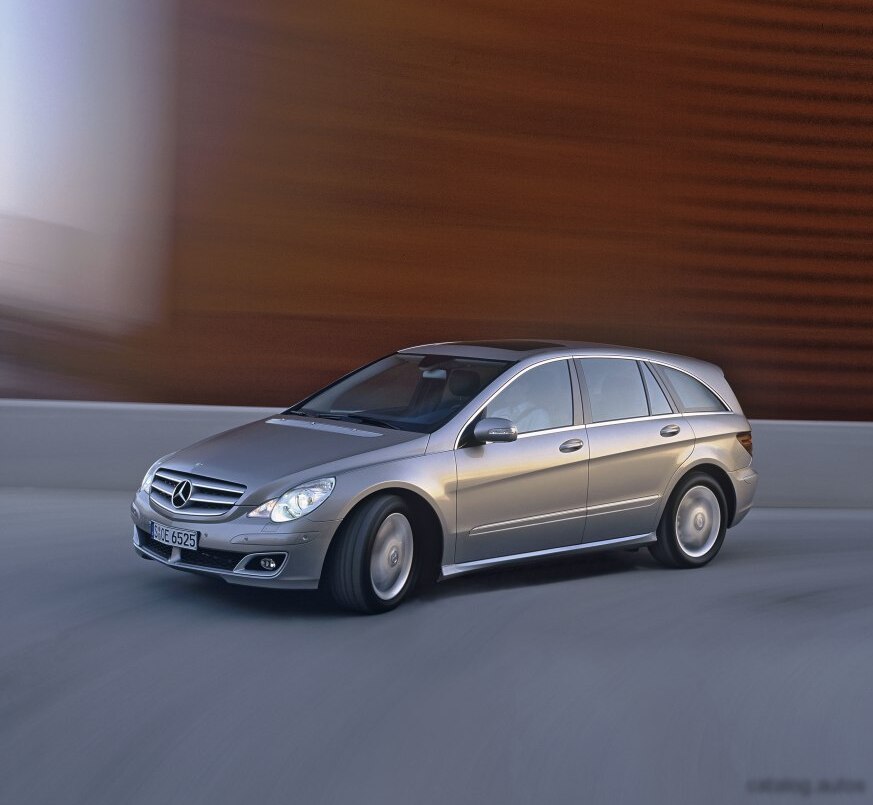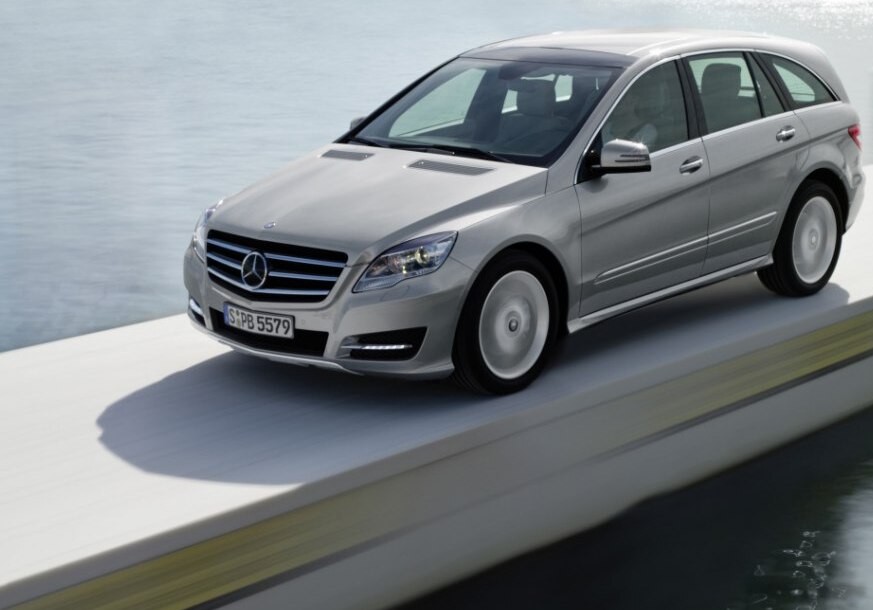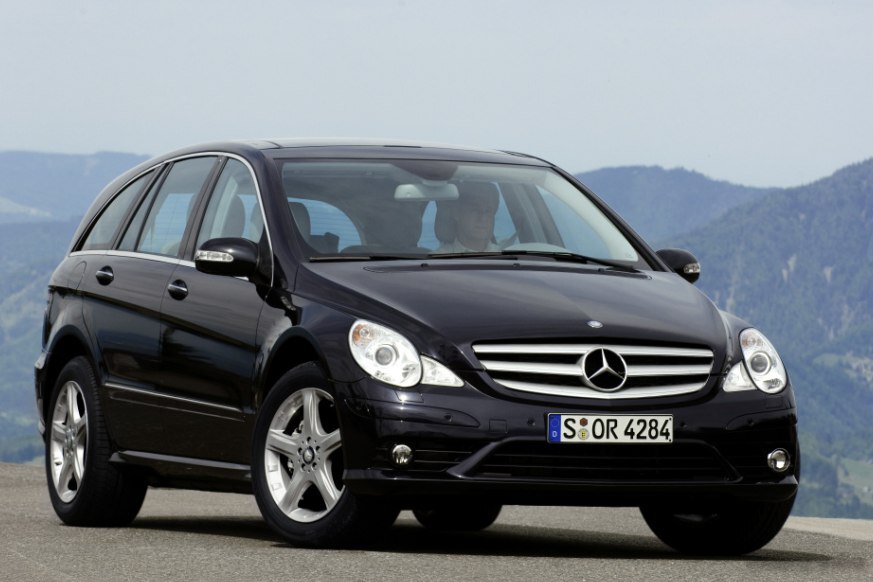
The Mercedes-Benz R-class (W251) R 500 V8 4MATIC, produced from May 2007 to May 2009, represented a unique offering in the luxury vehicle segment. Positioned as a spacious, versatile, and technologically advanced grand tourer, the R 500 aimed to blend the comfort of a luxury sedan with the practicality of an SUV. It was part of the first generation (W251) of the R-class, a model line intended to appeal to buyers seeking an alternative to traditional sport utility vehicles. This particular variant, equipped with the naturally aspirated 5.5-liter V8 engine and 7G-TRONIC automatic transmission, sat at the top of the R-class range, offering the highest level of performance and refinement.
Technical Specifications
| Brand | Mercedes-Benz |
| Model | R-class |
| Generation | R-class (W251) |
| Type | R 500 V8 (388 Hp) 4MATIC 7G-TRONIC |
| Start of production | May, 2007 |
| End of production | May, 2009 |
| Powertrain Architecture | Internal Combustion engine |
| Body type | Station wagon (estate) |
| Seats | 5-7 |
| Doors | 5 |
| Fuel consumption (urban) | 18.2-18.8 l/100 km (12.9 – 12.5 US mpg) |
| Fuel consumption (extra urban) | 9.8-10.2 l/100 km (24 – 23.1 US mpg) |
| Fuel consumption (combined) | 12.9-13.4 l/100 km (18.2 – 17.6 US mpg) |
| CO2 emissions | 306-311 g/km |
| Fuel Type | Petrol (Gasoline) |
| Acceleration 0 – 100 km/h | 6.1 sec |
| Acceleration 0 – 62 mph | 6.1 sec |
| Acceleration 0 – 60 mph | 5.8 sec |
| Maximum speed | 250 km/h (155.34 mph) – Electronically limited |
| Emission standard | Euro 4 |
| Weight-to-power ratio | 5.5 kg/Hp |
| Weight-to-torque ratio | 4 kg/Nm |
| Power | 388 Hp @ 6000 rpm |
| Torque | 530 Nm @ 2800-4800 rpm (390.91 lb.-ft. @ 2800-4800 rpm) |
| Engine layout | Front, Longitudinal |
| Engine Model/Code | M 273.963 |
| Engine displacement | 5461 cm3 (333.25 cu. in.) |
| Number of cylinders | 8 |
| Engine configuration | V-engine |
| Cylinder Bore | 98 mm (3.86 in.) |
| Piston Stroke | 90.5 mm (3.56 in.) |
| Compression ratio | 10.7:1 |
| Number of valves per cylinder | 4 |
| Fuel injection system | Multi-port manifold injection |
| Engine aspiration | Naturally aspirated |
| Valvetrain | DOHC |
| Engine oil capacity | 9 l (9.51 US qt | 7.92 UK qt) |
| Coolant capacity | 10.1 l (10.67 US qt | 8.89 UK qt) |
| Kerb Weight | 2145 kg (4728.92 lbs.) |
| Max. weight | 2880 kg (6349.31 lbs.) |
| Max load | 735 kg (1620.4 lbs.) |
| Trunk (boot) space – minimum | 324 l (11.44 cu. ft.) |
| Trunk (boot) space – maximum | 2001 l (70.66 cu. ft.) |
| Fuel tank capacity | 80 l (21.13 US gal | 17.6 UK gal) |
| Permitted trailer load with brakes (12%) | 2100 kg (4629.71 lbs.) |
| Permitted trailer load without brakes | 750 kg (1653.47 lbs.) |
| Permitted towbar download | 85 kg (187.39 lbs.) |
| Length | 4938 mm (194.41 in.) |
| Width | 1922 mm (75.67 in.) |
| Width including mirrors | 2168 mm (85.35 in.) |
| Height | 1661 mm (65.39 in.) |
| Wheelbase | 2980 mm (117.32 in.) |
| Front track | 1643 mm (64.69 in.) |
| Rear track | 1636 mm (64.41 in.) |
| Front overhang | 933 mm (36.73 in.) |
| Rear overhang | 1025 mm (40.35 in.) |
| Minimum turning circle | 11.7 m (38.39 ft.) |
| Drivetrain Architecture | All wheel drive (4×4) |
| Number of gears | 7 |
| Gearbox type | Automatic transmission G-TRONIC |
| Front suspension | Coil spring, Double wishbone, Transverse stabilizer |
| Rear suspension | Independent multi-link suspension, Air suspension, Transverse stabilizer |
| Front brakes | Ventilated discs |
| Rear brakes | Ventilated discs |
| Assisting systems | ABS (Anti-lock braking system) |
| Steering type | Steering rack and pinion |
| Power steering | Hydraulic |
| Tires size | 255/50 R19 |
| Wheel rims size | 8J x 19 |
Powertrain & Engine Architecture
The heart of the R 500 is the M273.963 5.5-liter naturally aspirated V8 engine. This engine, a staple of Mercedes-Benz’s high-performance offerings during the mid-2000s, features a three-valve per cylinder (two intake, one exhaust) design and utilizes multi-port fuel injection. The engine produces 388 horsepower at 6000 rpm and 530 Nm (390.91 lb-ft) of torque between 2800 and 4800 rpm. The 7G-TRONIC automatic transmission, a seven-speed unit, was specifically chosen for its smooth shifting and ability to handle the engine’s substantial torque output. This transmission offered both fully automatic operation and a manual shift mode, allowing drivers to exert more control over gear selection. The 4MATIC all-wheel-drive system distributes power to all four wheels, enhancing traction and stability, particularly in adverse weather conditions.
Driving Characteristics
The R 500 delivered a refined and powerful driving experience. The V8 engine provided ample acceleration, with a 0-60 mph time of around 5.8 seconds. While not a sports car, the R 500 offered brisk performance for its size and weight. The 7G-TRONIC transmission contributed to smooth and seamless gear changes, enhancing the overall driving comfort. Compared to the R 320 CDI (diesel) or the R 350 (V6 gasoline) models, the R 500 prioritized performance over fuel economy. The V8 offered a more responsive throttle and a more authoritative power delivery, making it ideal for long-distance highway cruising and towing. However, the increased weight of the V8 engine and the complexity of the 4MATIC system did result in a slightly less agile feel compared to rear-wheel-drive variants.
Equipment & Trim Levels
The R 500 typically came standard with a high level of equipment, reflecting its position as the flagship model. Standard features included leather upholstery, wood trim, a premium sound system, dual-zone automatic climate control, and power-adjustable front seats with memory function. Optional extras included a rear-seat entertainment system, panoramic sunroof, adaptive cruise control, and parking assist. The interior was designed to be luxurious and comfortable, with seating for up to seven passengers depending on the configuration. The third-row seats were relatively spacious for a vehicle of this type, making the R 500 a viable option for families.
Chassis & Braking
The R-class featured a robust chassis designed to handle the weight and power of the V8 engine. The suspension system consisted of coil springs and a double wishbone setup at the front, and an independent multi-link suspension with air suspension at the rear. The air suspension allowed for adjustable ride height and damping, providing a comfortable ride even on uneven surfaces. Braking duties were handled by ventilated discs on all four wheels, coupled with an Anti-lock Braking System (ABS) and Electronic Stability Program (ESP) for enhanced safety. The R 500’s braking performance was adequate for its weight and performance level.
Market Reception & Comparison
The Mercedes-Benz R-class, despite its innovative design and luxurious features, faced lukewarm reception in the US market. Critics often cited its unconventional styling and high price point as drawbacks. The R 500, being the most expensive variant, was particularly affected by these concerns. While praised for its powerful engine and comfortable ride, the R 500’s fuel economy was significantly lower than that of the R 320 CDI or R 350 models. Compared to competitors like the Acura MDX or BMW X5, the R-class offered a unique blend of space and luxury, but its polarizing design limited its appeal.
Legacy
The M273 engine, found in the R 500, is generally considered a reliable powerplant when properly maintained. However, like all complex engines, it is susceptible to certain issues, such as valve cover gasket leaks and potential problems with the balance shaft. The 7G-TRONIC transmission is also known for its reliability, but regular fluid changes are crucial for long-term health. Today, the R 500 represents a relatively rare and often overlooked luxury vehicle. Well-maintained examples can be found on the used car market, offering a unique combination of performance, space, and refinement. While not a mainstream choice, the R 500 appeals to enthusiasts seeking a distinctive and capable grand tourer.