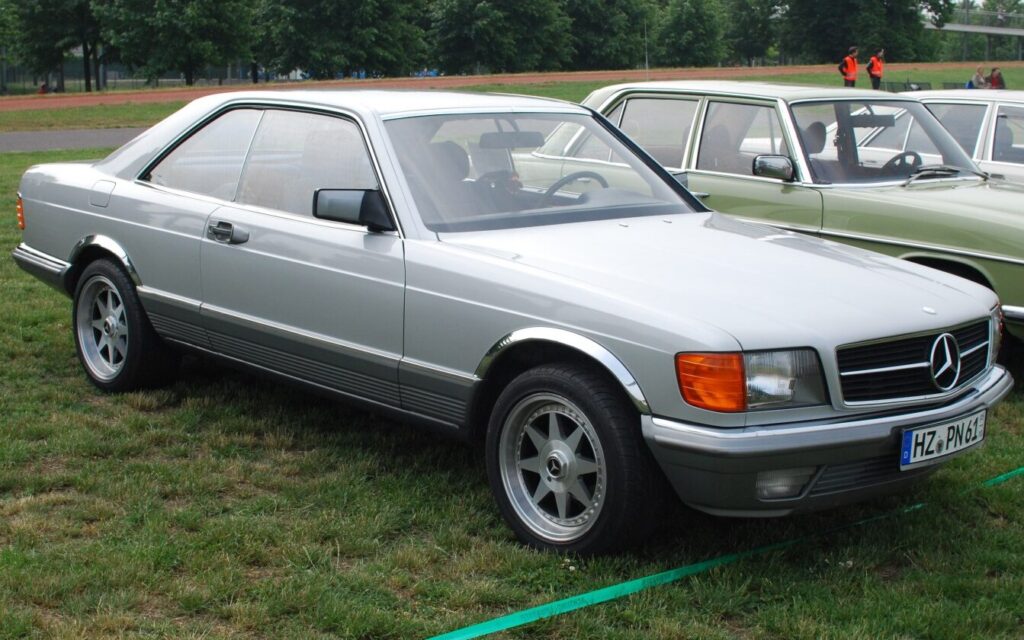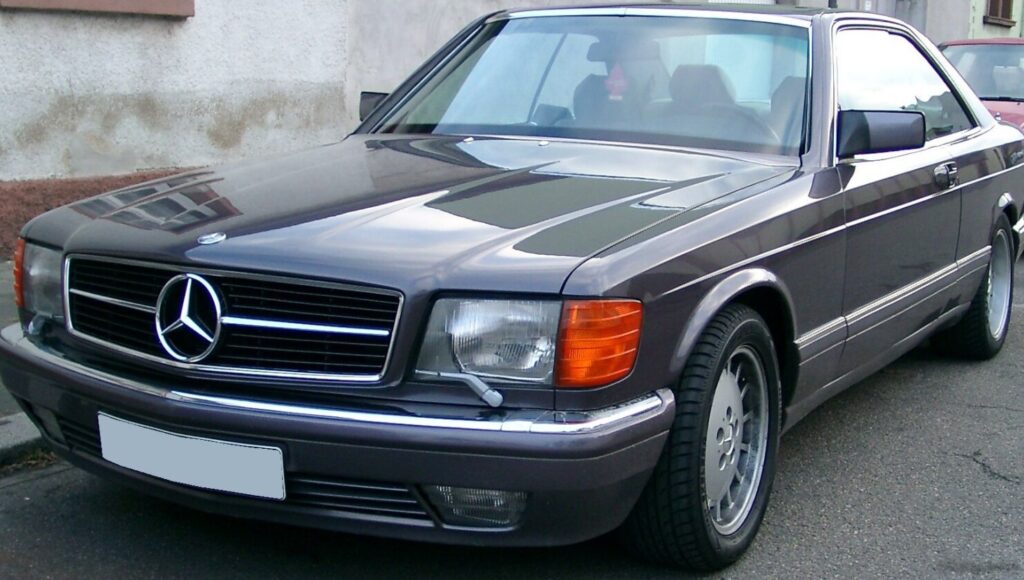
The Mercedes-Benz 420 SEC, part of the C126 series facelift produced from August 1985 to September 1987, represented a luxurious and powerful grand touring coupe. Positioned as a high-end variant within the C126 lineup, it offered a blend of performance and comfort aimed at discerning buyers. The “SEC” designation signified “S-Class Coupe,” emphasizing its derivation from the flagship S-Class sedan. This model bridged the gap between the more accessible 300 SEC and the top-of-the-line 560 SEC, offering a substantial increase in power over the base model while remaining more attainable than the range-topping variant. The C126 platform, known for its robust engineering and sophisticated design, established a benchmark for luxury coupes of its era.
Technical Specifications
| Brand | Mercedes-Benz |
| Model | S-class |
| Generation | S-class Coupe (C126, facelift 1985) |
| Type (Engine) | 420 SEC V8 (218 Hp) Automatic |
| Start of production | August, 1985 |
| End of production | September, 1987 |
| Powertrain Architecture | Internal Combustion engine |
| Body type | Coupe |
| Seats | 4 |
| Doors | 2 |
| Fuel consumption (urban) | 14.6 l/100 km (16.1 US mpg, 19.3 UK mpg, 6.8 km/l) |
| Fuel consumption (extra urban) | 8.9 l/100 km (26.4 US mpg, 31.7 UK mpg, 11.2 km/l) |
| Fuel Type | Petrol (Gasoline) |
| Acceleration 0 – 100 km/h | 8.3 sec |
| Acceleration 0 – 62 mph | 8.3 sec |
| Acceleration 0 – 60 mph | 7.9 sec |
| Maximum speed | 218 km/h (135.46 mph) |
| Weight-to-power ratio | 7.3 kg/Hp, 136.3 Hp/tonne |
| Weight-to-torque ratio | 4.8 kg/Nm, 206.3 Nm/tonne |
| Power | 218 Hp @ 5200 rpm |
| Power per litre | 52 Hp/l |
| Torque | 330 Nm @ 3750 rpm (243.4 lb.-ft. @ 3750 rpm) |
| Engine layout | Front, Longitudinal |
| Engine Model/Code | M 116 E 42 / 116.965 |
| Engine displacement | 4196 cm3 (256.06 cu. in.) |
| Number of cylinders | 8 |
| Engine configuration | V-engine |
| Cylinder Bore | 92 mm (3.62 in.) |
| Piston Stroke | 78.9 mm (3.11 in.) |
| Compression ratio | 9:1 |
| Number of valves per cylinder | 2 |
| Fuel injection system | Multi-port manifold injection |
| Engine aspiration | Naturally aspirated engine |
| Valvetrain | SOHC |
| Engine oil capacity | 8 l (8.45 US qt | 7.04 UK qt) |
| Coolant | 12.5 l (13.21 US qt | 11 UK qt) |
| Kerb Weight | 1600 kg (3527.4 lbs.) |
| Max. weight | 2120 kg (4673.8 lbs.) |
| Max load | 520 kg (1146.4 lbs.) |
| Fuel tank capacity | 90 l (23.78 US gal | 19.8 UK gal) |
| Length | 4935 mm (194.29 in.) |
| Width | 1828 mm (71.97 in.) |
| Height | 1407 mm (55.39 in.) |
| Wheelbase | 2850 mm (112.2 in.) |
| Front track | 1555 mm (61.22 in.) |
| Rear track | 1527 mm (60.12 in.) |
| Drivetrain Architecture | The Internal combustion engine (ICE) drives the rear wheels of the vehicle. |
| Drive wheel | Rear wheel drive |
| Number of gears and type of gearbox | 4 gears, automatic transmission |
| Front suspension | Double wishbone |
| Rear suspension | Trailing arm |
| Front brakes | Ventilated discs |
| Rear brakes | Disc |
| Assisting systems | ABS (Anti-lock braking system) |
| Steering type | Cone worm with recirculation balls |
| Power steering | Hydraulic Steering |
| Tires size | Front wheel tires: 205/65 R15Rear wheel tires: 205/65 R15 |
| Wheel rims size | Front wheel rims: 7J x 15Rear wheel rims: 7J x 15 |
Powertrain & Engine Architecture
The heart of the 420 SEC was the M116 E 42 engine, a 4.2-liter naturally aspirated V8. This engine, a cornerstone of Mercedes-Benz’s engineering prowess, featured a single overhead camshaft (SOHC) design and utilized Bosch K-Jetronic multi-port fuel injection. The M116 series was known for its durability and smooth power delivery. The 9:1 compression ratio contributed to both performance and the ability to run on readily available gasoline. Paired with the engine was a four-speed automatic transmission, designed for smooth and effortless shifting. This transmission, while not offering the outright performance of a manual, perfectly complemented the car’s grand touring character. The engine’s longitudinal front-engine layout and rear-wheel drive configuration were typical for high-performance coupes of the era.
Driving Characteristics
The 420 SEC Automatic offered a refined and comfortable driving experience. While the 218 horsepower and 330 Nm (243 lb-ft) of torque weren’t groundbreaking by modern standards, they were ample for spirited driving in the 1980s. Acceleration to 60 mph took approximately 7.9 seconds, and the car could reach a top speed of 135 mph. Compared to the 300 SEC, the 420 SEC provided a noticeable increase in power and responsiveness. However, it lacked the sharper handling of the lighter, more agile 300 SEC. The automatic transmission, while smooth, did result in some power loss compared to the available manual options in other C126 models. Gear ratios were tuned for comfortable cruising, prioritizing relaxed highway driving over aggressive acceleration.
Equipment & Trim Levels
The 420 SEC came standard with a generous array of features befitting its luxury status. Leather upholstery was standard, along with power windows, power locks, and a sunroof. Climate control, a high-quality sound system, and cruise control were also included. Optional extras included upgraded leather, a premium sound system, and a self-leveling suspension. The interior design emphasized elegance and comfort, with wood trim and a well-appointed dashboard. The 420 SEC typically featured more luxurious interior appointments than the base 300 SEC, but fell short of the fully loaded options available on the 560 SEC.
Chassis & Braking
The C126 chassis featured an independent suspension system, with double wishbones at the front and a trailing arm setup at the rear. This configuration provided a comfortable ride and good handling characteristics. The 420 SEC was equipped with ventilated disc brakes at the front and solid discs at the rear. An Anti-lock Braking System (ABS) was standard, enhancing safety and control. The steering system utilized a cone worm and recirculation ball mechanism with hydraulic power assistance, providing a balanced feel and ease of maneuverability. Stabilizer bars were fitted front and rear to reduce body roll during cornering.
Market Reception & Comparison
The 420 SEC was generally well-received by automotive critics. It was praised for its luxurious interior, smooth ride, and powerful engine. However, some critics noted that the automatic transmission dulled the driving experience compared to the manual options. Compared to the 300 SEC, the 420 SEC offered a significant performance upgrade, but at a higher price point. The 560 SEC, with its larger engine and more luxurious features, represented the ultimate expression of the C126 coupe, but also commanded a substantial premium. Fuel economy, while acceptable for the era, was not a strong point, averaging around 16 mpg in the city and 26 mpg on the highway.
Legacy
The Mercedes-Benz 420 SEC has become a sought-after classic among enthusiasts. The M116 engine is known for its reliability and longevity, provided it receives regular maintenance. However, like all cars of this era, it is susceptible to age-related issues, such as corrosion and deterioration of rubber components. Parts availability is generally good, although some specific components can be difficult to find. Today, the 420 SEC represents a stylish and sophisticated piece of automotive history, offering a unique blend of luxury, performance, and classic Mercedes-Benz engineering. Well-maintained examples continue to command respectable prices in the used car market, appealing to collectors and enthusiasts alike.