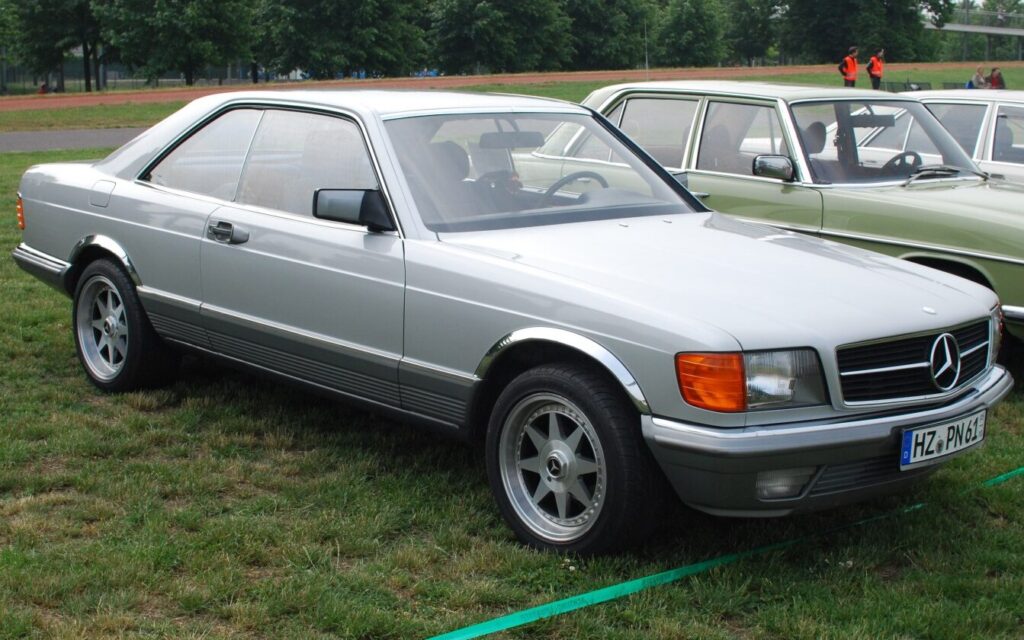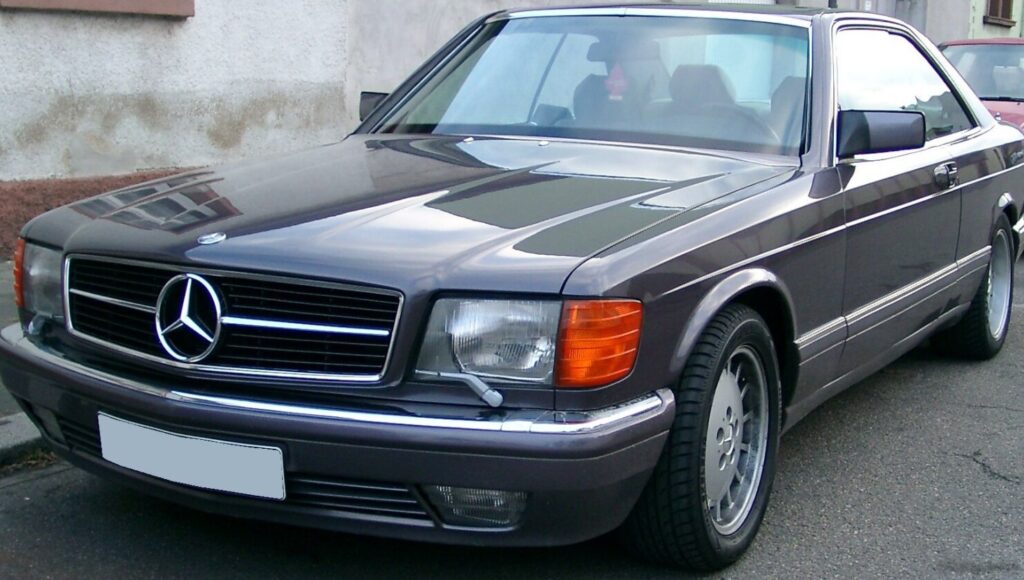
The Mercedes-Benz 420 SEC, part of the C126 series facelift produced from September 1987 to October 1991, represented a luxurious and powerful grand touring coupe. Positioned as a mid-to-high range offering within the C126 lineup – which also included the 300 SEC and 560 SEC – the 420 SEC combined elegant styling with a robust V8 engine and comfortable appointments. The C126 generation, launched in 1985 as a successor to the W116 S-Class coupes, quickly became synonymous with sophisticated German engineering and a status symbol for discerning buyers. This facelift brought subtle but important updates to the exterior and interior, solidifying its position in the luxury coupe market.
Technical Specifications
| Brand | Mercedes-Benz |
| Model | S-class |
| Generation | S-class Coupe (C126, facelift 1985) |
| Type (Engine) | 420 SEC V8 (231 Hp) Automatic |
| Start of production | September, 1987 |
| End of production | October, 1991 |
| Powertrain Architecture | Internal Combustion engine |
| Body type | Coupe |
| Seats | 4 |
| Doors | 2 |
| Fuel consumption (urban) | 15.1 l/100 km (15.6 US mpg, 18.7 UK mpg, 6.6 km/l) |
| Fuel consumption (extra urban) | 8.7 l/100 km (27 US mpg, 32.5 UK mpg, 11.5 km/l) |
| Fuel Type | Petrol (Gasoline) |
| Acceleration 0 – 100 km/h | 8.2 sec |
| Acceleration 0 – 62 mph | 8.2 sec |
| Acceleration 0 – 60 mph | 7.8 sec |
| Maximum speed | 222 km/h (137.94 mph) |
| Weight-to-power ratio | 7 kg/Hp, 142.6 Hp/tonne |
| Weight-to-torque ratio | 4.8 kg/Nm, 206.8 Nm/tonne |
| Power | 231 Hp @ 5400 rpm |
| Power per litre | 55.1 Hp/l |
| Torque | 335 Nm @ 4000 rpm (247.08 lb.-ft. @ 4000 rpm) |
| Engine layout | Front, Longitudinal |
| Engine Model/Code | M 116 E 42 / 116.965 |
| Engine displacement | 4196 cm3 (256.06 cu. in.) |
| Number of cylinders | 8 |
| Engine configuration | V-engine |
| Cylinder Bore | 92 mm (3.62 in.) |
| Piston Stroke | 78.9 mm (3.11 in.) |
| Compression ratio | 10:1 |
| Number of valves per cylinder | 2 |
| Fuel injection system | Multi-port manifold injection |
| Engine aspiration | Naturally aspirated engine |
| Valvetrain | SOHC |
| Engine oil capacity | 8 l (8.45 US qt | 7.04 UK qt) |
| Coolant | 12.5 l (13.21 US qt | 11 UK qt) |
| Kerb Weight | 1620 kg (3571.49 lbs.) |
| Max. weight | 2140 kg (4717.89 lbs.) |
| Max load | 520 kg (1146.4 lbs.) |
| Fuel tank capacity | 90 l (23.78 US gal | 19.8 UK gal) |
| Length | 4935 mm (194.29 in.) |
| Width | 1828 mm (71.97 in.) |
| Height | 1407 mm (55.39 in.) |
| Wheelbase | 2850 mm (112.2 in.) |
| Front track | 1555 mm (61.22 in.) |
| Rear track | 1527 mm (60.12 in.) |
| Drivetrain Architecture | The Internal combustion engine (ICE) drives the rear wheels of the vehicle. |
| Drive wheel | Rear wheel drive |
| Number of gears and type of gearbox | 4 gears, automatic transmission |
| Front suspension | Double wishbone |
| Rear suspension | Trailing arm |
| Front brakes | Ventilated discs |
| Rear brakes | Disc |
| Assisting systems | ABS (Anti-lock braking system) |
| Steering type | Cone worm with recirculation balls |
| Power steering | Hydraulic Steering |
| Tires size | Front wheel tires: 205/65 R15Rear wheel tires: 205/65 R15 |
| Wheel rims size | Front wheel rims: 7J x 15Rear wheel rims: 7J x 15 |
Powertrain & Engine Architecture
The heart of the 420 SEC was the M116 E 42 engine, a 4.2-liter naturally aspirated V8. This engine, a cornerstone of Mercedes-Benz’s engineering prowess during the era, featured a single overhead camshaft (SOHC) design and utilized Bosch K-Jetronic multi-port fuel injection. The M116 series was known for its smooth operation, durability, and relatively simple maintenance compared to later, more complex Mercedes engines. The 420 SEC’s version produced 231 horsepower at 5400 rpm and 335 Nm (247 lb-ft) of torque at 4000 rpm. The engine’s longitudinal mounting and rear-wheel-drive configuration were typical for Mercedes-Benz grand tourers of the time. Paired with a four-speed automatic transmission, the powertrain prioritized smooth, effortless cruising over outright performance. This transmission, while not offering the responsiveness of a manual, was well-suited to the car’s intended purpose as a comfortable and refined long-distance vehicle.
Driving Characteristics
The 420 SEC, with its automatic transmission, delivered a distinctly different driving experience compared to its manual-transmission siblings or the higher-performance 560 SEC. Acceleration from 0 to 60 mph took around 7.8 seconds, respectable for the late 1980s, but noticeably slower than the 560 SEC. The automatic transmission’s gear ratios were geared towards relaxed cruising, providing ample torque for highway passing but lacking the urgency of a sportier setup. The suspension, tuned for comfort, absorbed bumps effectively, making long journeys a pleasure. However, the car’s considerable weight (approximately 3571 lbs) and relatively soft suspension meant it wasn’t particularly agile in corners. The steering, while precise, lacked the feedback desired by more enthusiastic drivers. Overall, the 420 SEC offered a refined and comfortable driving experience, prioritizing luxury and ease of use over sporty handling.
Equipment & Trim Levels
The 420 SEC came standard with a generous array of features befitting its luxury status. Leather upholstery was standard, along with power windows, power locks, and a sunroof. Climate control, a high-quality sound system, and cruise control were also included. Optional extras included heated seats, a premium sound system with a cassette player, and upgraded leather options. The interior design was characterized by its elegant simplicity and high-quality materials. The dashboard featured wood trim and analog gauges, creating a classic and sophisticated ambiance. The 420 SEC’s trim level sat comfortably between the more basic 300 SEC and the top-of-the-line 560 SEC, offering a compelling balance of luxury and performance.
Chassis & Braking
The C126 coupe utilized a robust chassis with double wishbone suspension at the front and a trailing arm suspension at the rear. This setup prioritized ride comfort and stability. The 420 SEC was equipped with ventilated disc brakes at the front and solid discs at the rear, providing adequate stopping power for its weight and performance. An Anti-lock Braking System (ABS) was standard, enhancing safety and control during hard braking. The steering system employed a cone worm and recirculation ball mechanism, offering precise steering but lacking the direct feel of more modern systems. The car rode on 7J x 15 inch wheels with 205/65 R15 tires, providing a good balance of comfort and grip.
Market Reception & Comparison
The 420 SEC was generally well-received by automotive critics, who praised its luxurious interior, smooth ride, and powerful engine. However, some critics noted its relatively high price and its lack of sporty handling compared to other coupes on the market. Compared to the 300 SEC, the 420 SEC offered significantly more power and performance. Compared to the 560 SEC, it provided a similar level of luxury but with slightly less horsepower and a lower price tag. Fuel economy was typical for a V8-powered car of the era, averaging around 15.1 l/100 km (15.6 US mpg) in the city and 8.7 l/100 km (27 US mpg) on the highway. Reliability was generally good, although maintenance costs could be high due to the car’s complex engineering and the cost of replacement parts.
Legacy
The Mercedes-Benz 420 SEC remains a sought-after classic car today, appreciated for its elegant styling, luxurious interior, and robust engineering. The M116 engine, while aging, is known for its durability and relatively simple maintenance. However, finding well-maintained examples can be challenging, and parts availability can be limited. The 420 SEC represents a high point in Mercedes-Benz’s grand touring heritage, offering a unique blend of luxury, performance, and style. Its enduring appeal lies in its ability to transport occupants in comfort and style, while also providing a tangible connection to a bygone era of automotive excellence. Values have been steadily increasing in recent years, reflecting the growing demand for well-preserved examples of this iconic coupe.