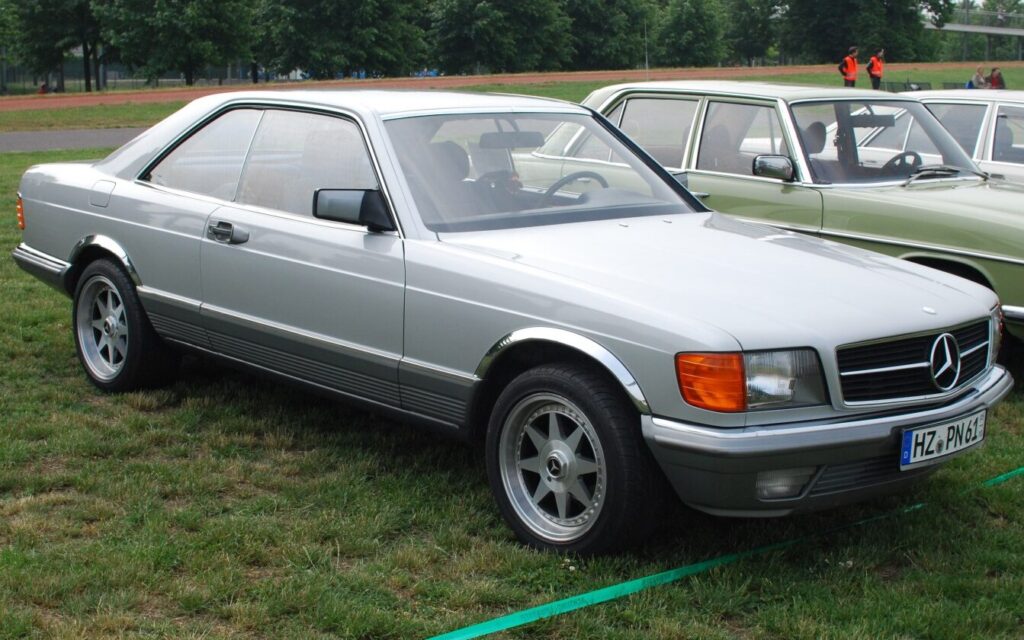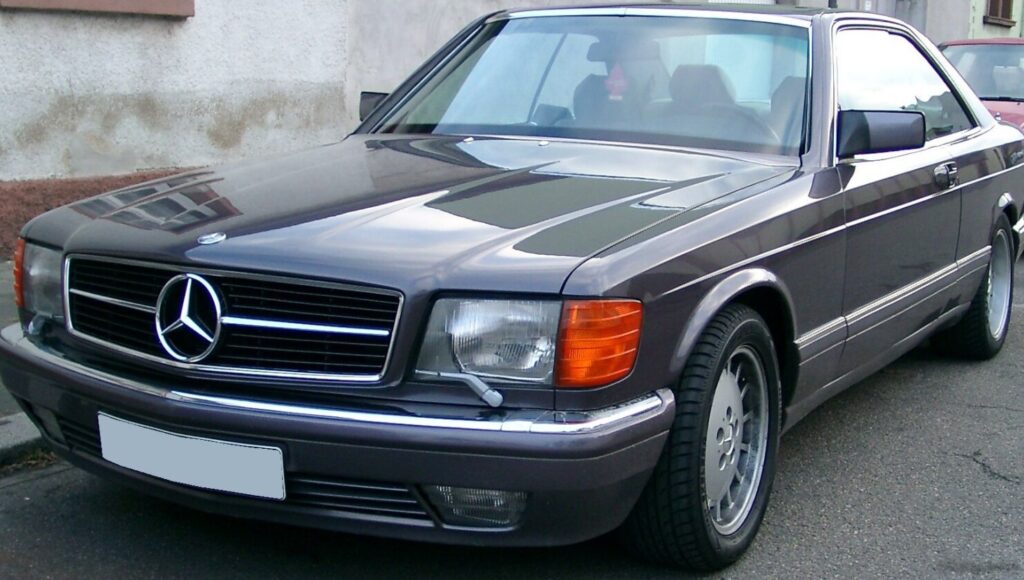
The Mercedes-Benz 500 SEC, a facelifted iteration of the C126 series produced between September 1985 and September 1987, represented a high watermark in luxury coupe design during its era. Positioned as the flagship of the S-Class coupe range, the 500 SEC combined a potent 5.0-liter V8 engine with an exclusive four-speed automatic transmission. This configuration was engineered to deliver effortless performance and a supremely refined driving experience, appealing to buyers who prioritized prestige and comfortable grand touring capabilities. The C126 generation, internally designated as the SEC, marked a significant evolution from previous Mercedes coupes, boasting a more contemporary and spacious interior alongside advanced engineering features for its time.
Technical Specifications
| Brand | Mercedes-Benz |
| Model | S-class |
| Generation | S-class Coupe (C126, facelift 1985) |
| Type (Engine) | 500 SEC V8 CAT (223 Hp) Automatic |
| Start of production | September, 1985 |
| End of production | September, 1987 |
| Powertrain Architecture | Internal Combustion engine |
| Body type | Coupe |
| Seats | 4 |
| Doors | 2 |
| Fuel consumption (urban) | 15.9 l/100 km (14.8 US mpg, 17.8 UK mpg, 6.3 km/l) |
| Fuel consumption (extra urban) | 9.6 l/100 km (24.5 US mpg, 29.4 UK mpg, 10.4 km/l) |
| Fuel Type | Petrol (Gasoline) |
| Acceleration 0 – 100 km/h | 8 sec |
| Acceleration 0 – 62 mph | 8 sec |
| Acceleration 0 – 60 mph | 7.6 sec |
| Maximum speed | 220 km/h (136.7 mph) |
| Weight-to-power ratio | 7.3 kg/Hp, 137.7 Hp/tonne |
| Weight-to-torque ratio | 4.4 kg/Nm, 225.3 Nm/tonne |
| Power | 223 Hp @ 4700 rpm |
| Power per litre | 44.8 Hp/l |
| Torque | 365 Nm @ 2500 rpm (269.21 lb.-ft. @ 2500 rpm) |
| Engine layout | Front, Longitudinal |
| Engine Model/Code | M 117 E 50 / 117.965 |
| Engine displacement | 4973 cm3 (303.47 cu. in.) |
| Number of cylinders | 8 |
| Engine configuration | V-engine |
| Cylinder Bore | 96.5 mm (3.8 in.) |
| Piston Stroke | 85 mm (3.35 in.) |
| Compression ratio | 9:1 |
| Number of valves per cylinder | 2 |
| Fuel injection system | Multi-port manifold injection |
| Engine aspiration | Naturally aspirated engine |
| Valvetrain | SOHC |
| Engine oil capacity | 9 l (9.51 US qt | 7.92 UK qt) |
| Coolant | 13.5 l (14.27 US qt | 11.88 UK qt) |
| Kerb Weight | 1620 kg (3571.49 lbs.) |
| Max. weight | 2140 kg (4717.89 lbs.) |
| Max load | 520 kg (1146.4 lbs.) |
| Fuel tank capacity | 90 l (23.78 US gal | 19.8 UK gal) |
| Length | 4935 mm (194.29 in.) |
| Width | 1828 mm (71.97 in.) |
| Height | 1407 mm (55.39 in.) |
| Wheelbase | 2845 mm (112.01 in.) |
| Front track | 1555 mm (61.22 in.) |
| Rear track | 1527 mm (60.12 in.) |
| Drivetrain Architecture | Rear wheel drive |
| Number of gears and type of gearbox | 4 gears, automatic transmission |
| Front suspension | Double wishbone |
| Rear suspension | Threaded twist beam |
| Front brakes | Ventilated discs |
| Rear brakes | Disc |
| Assisting systems | ABS (Anti-lock braking system) |
| Steering type | Cone worm with recirculation balls |
| Power steering | Hydraulic Steering |
| Tires size | Front wheel tires: 205/65 R15 Rear wheel tires: 205/65 R15 |
| Wheel rims size | Front wheel rims: 7J x 15 Rear wheel rims: 7J x 15 |
Powertrain & Engine Architecture
The 500 SEC’s powertrain revolved around the M117 E 50 engine, a 4.97-liter (303.47 cubic inch) naturally aspirated V8. This engine was a hallmark of Mercedes-Benz’s engineering expertise, employing a single overhead camshaft (SOHC) design with two valves per cylinder. Bosch K-Jetronic fuel injection provided precise fuel delivery, contributing to both performance and reasonable fuel economy for the period. The engine generated 223 horsepower at 4700 rpm and 365 Nm (269.21 lb-ft) of torque at 2500 rpm. The four-speed automatic transmission, a robust unit for its time, was specifically calibrated to work in harmony with the V8’s torque curve, delivering smooth and relatively swift gear changes. While not a cutting-edge transmission by contemporary standards, it was renowned for its durability and dependability.
Driving Characteristics
The 500 SEC Automatic offered a distinct driving experience when contrasted with its manual transmission counterparts or the smaller-engined models like the 300 SEC. The automatic transmission prioritized comfort and ease of operation over outright performance. Acceleration from 0-60 mph was achieved in approximately 7.6 seconds, respectable for the mid-1980s, but demonstrably slower than the manual versions. The automatic’s gear ratios were optimized for relaxed cruising, making it an ideal grand tourer. Power delivery was smooth and linear, with the V8 providing abundant torque across the entire rev range. However, the automatic transmission did somewhat diminish the engine’s full potential, and drivers seeking a more engaging driving experience often favored the five-speed manual option available on other C126 models.
Equipment & Trim Levels
The 500 SEC came equipped with a comprehensive array of luxury features as standard. Leather upholstery was standard, as were power-adjustable front seats with memory functionality. Climate control, a premium audio system, and power windows were also included. The interior trim was typically finished in wood veneer, enhancing the car’s luxurious ambiance. Optional extras encompassed a sunroof, upgraded audio systems, and a rear seat entertainment system. The 500 SEC was positioned as the top-tier coupe offering, and its standard equipment reflected this status.
Chassis & Braking
The C126 chassis incorporated an independent double wishbone suspension at the front and a threaded twist beam rear suspension. This configuration provided a comfortable ride while maintaining commendable handling characteristics. The 500 SEC featured ventilated disc brakes at the front and solid disc brakes at the rear. An Anti-lock Braking System (ABS) was standard, improving safety and control during emergency braking situations. The steering system was a recirculating ball type with hydraulic power assistance, offering a balanced combination of road feel and ease of use.
Market Reception & Comparison
The 500 SEC was generally well-received by automotive journalists, who lauded its luxurious interior, smooth ride quality, and powerful engine. However, some critics pointed out that the automatic transmission somewhat detracted from the driving experience compared to the manual versions. In comparison to the 300 SEC, the 500 SEC delivered significantly greater performance and a more refined driving experience, but at a substantially higher price point. Fuel economy was a concern for some, as the 500 SEC consumed a considerable amount of gasoline, particularly in city driving. Reliability was generally good, although maintenance costs were elevated due to the car’s complexity and the expense of replacement parts.
Legacy
The Mercedes-Benz 500 SEC continues to be a highly desirable classic car today. The M117 engine, while fuel-intensive, is known for its durability and longevity when properly maintained. The automatic transmission, while not the most engaging, has proven to be reliable over the long term. Well-preserved examples of the 500 SEC command premium prices in the used car market, reflecting their status as an emblem of 1980s luxury and engineering excellence. The C126 generation, and the 500 SEC in particular, established a foundation for future Mercedes-Benz coupes, solidifying a reputation for blending performance, luxury, and technological innovation.