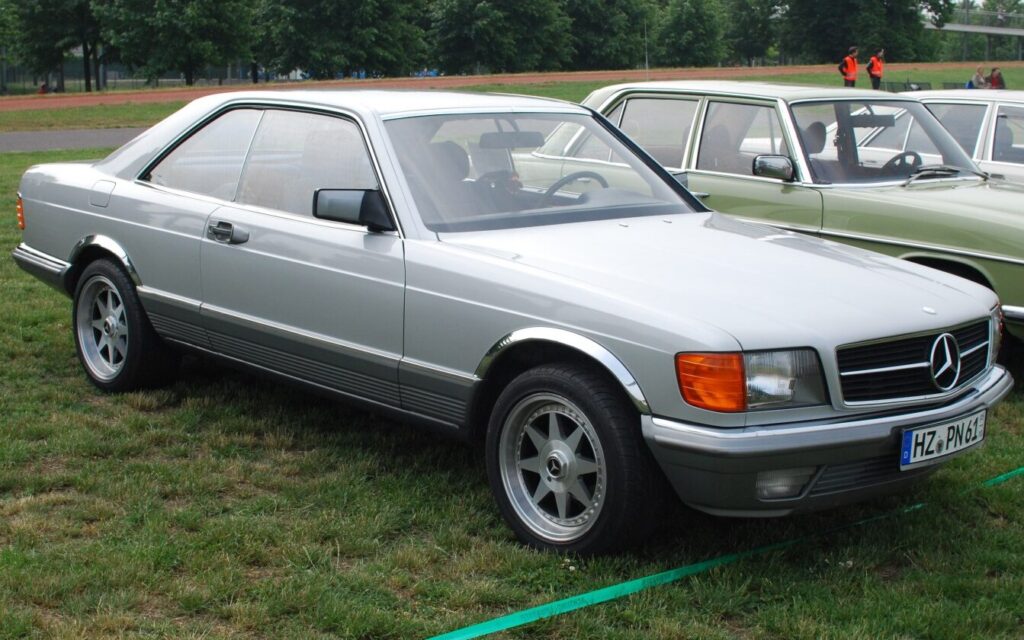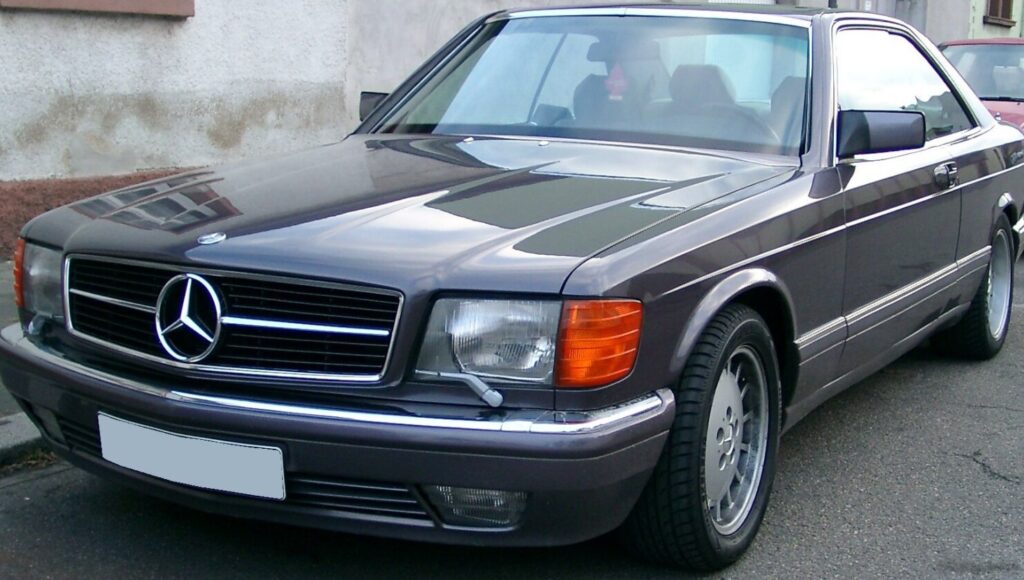
The Mercedes-Benz 500 SEC, part of the C126 series facelift produced from September 1987 to September 1991, represented the pinnacle of luxury coupe design for its time. Positioned as the top-of-the-line offering within the C126 coupe range, the 500 SEC featured a potent 5.0-liter V8 engine paired exclusively with a four-speed automatic transmission. This combination aimed to deliver effortless performance and a refined driving experience, catering to buyers who desired both power and convenience. The C126 platform itself, introduced in 1985 as a successor to the W116 S-Class coupes, was a significant step forward in terms of technology, safety, and overall sophistication.
Technical Specifications
| Brand | Mercedes-Benz |
| Model | S-class |
| Generation | S-class Coupe (C126, facelift 1985) |
| Type (Engine) | 500 SEC V8 CAT (252 Hp) Automatic |
| Start of production | September, 1987 |
| End of production | September, 1991 |
| Powertrain Architecture | Internal Combustion engine |
| Body type | Coupe |
| Seats | 4 |
| Doors | 2 |
| Fuel consumption (economy) – urban | 16.2 l/100 km (14.5 US mpg, 17.4 UK mpg, 6.2 km/l) |
| Fuel consumption (economy) – extra urban | 9.4 l/100 km (25 US mpg, 30.1 UK mpg, 10.6 km/l) |
| Fuel Type | Petrol (Gasoline) |
| Acceleration 0 – 100 km/h | 7.5 sec |
| Acceleration 0 – 62 mph | 7.5 sec |
| Acceleration 0 – 60 mph | 7.1 sec |
| Maximum speed | 230 km/h (142.92 mph) |
| Weight-to-power ratio | 6.5 kg/Hp, 152.7 Hp/tonne |
| Weight-to-torque ratio | 4.2 kg/Nm, 236.4 Nm/tonne |
| Power | 252 Hp @ 5200 rpm |
| Power per litre | 50.7 Hp/l |
| Torque | 390 Nm @ 3750 rpm (287.65 lb.-ft. @ 3750 rpm) |
| Engine layout | Front, Longitudinal |
| Engine Model/Code | M 117 E 50 / 117.965 |
| Engine displacement | 4973 cm3 (303.47 cu. in.) |
| Number of cylinders | 8 |
| Engine configuration | V-engine |
| Cylinder Bore | 96.5 mm (3.8 in.) |
| Piston Stroke | 85 mm (3.35 in.) |
| Compression ratio | 10:1 |
| Number of valves per cylinder | 2 |
| Fuel injection system | Multi-port manifold injection |
| Engine aspiration | Naturally aspirated engine |
| Valvetrain | SOHC |
| Engine oil capacity | 9 l (9.51 US qt | 7.92 UK qt) |
| Coolant | 13.5 l (14.27 US qt | 11.88 UK qt) |
| Kerb Weight | 1650 kg (3637.63 lbs.) |
| Max. weight | 2170 kg (4784.03 lbs.) |
| Max load | 520 kg (1146.4 lbs.) |
| Fuel tank capacity | 90 l (23.78 US gal | 19.8 UK gal) |
| Length | 4935 mm (194.29 in.) |
| Width | 1828 mm (71.97 in.) |
| Height | 1407 mm (55.39 in.) |
| Wheelbase | 2845 mm (112.01 in.) |
| Front track | 1555 mm (61.22 in.) |
| Rear (Back) track | 1527 mm (60.12 in.) |
| Drivetrain Architecture | The Internal combustion engine (ICE) drives the rear wheels of the vehicle. |
| Drive wheel | Rear wheel drive |
| Number of gears and type of gearbox | 4 gears, automatic transmission |
| Front suspension | Double wishbone |
| Rear suspension | Threaded twist beam |
| Front brakes | Ventilated discs |
| Rear brakes | Disc |
| Assisting systems | ABS (Anti-lock braking system) |
| Steering type | Cone worm with recirculation balls |
| Power steering | Hydraulic Steering |
| Tires size | Front wheel tires: 205/65 R15 Rear wheel tires: 205/65 R15 |
| Wheel rims size | Front wheel rims: 7J x 15 Rear wheel rims: 7J x 15 |
Powertrain & Engine Architecture
The heart of the 500 SEC was the M117 E 50 engine, a 4.97-liter (303.47 cubic inch) naturally aspirated V8. This engine, a cornerstone of Mercedes-Benz’s engineering prowess, featured a single overhead camshaft (SOHC) design with two valves per cylinder. Bosch K-Jetronic fuel injection delivered precise fuel metering, contributing to both performance and relatively good fuel economy for the era. The engine produced 252 horsepower at 5200 rpm and 390 Nm (287.65 lb-ft) of torque at 3750 rpm. The four-speed automatic transmission, a robust unit designed to handle the V8’s output, was the only transmission option available. While not particularly advanced by modern standards, it provided smooth and comfortable shifts, perfectly complementing the car’s grand touring character.
Driving Characteristics
The 500 SEC Automatic offered a distinctly different driving experience compared to its manual transmission siblings or the lower-displacement models like the 300 SEC or 420 SEC. The automatic transmission prioritized smooth acceleration and effortless cruising over outright performance. While the 7.5-second 0-60 mph time was respectable for the late 1980s, it was slightly slower than the manual versions. The automatic’s gear ratios were tuned for comfort and fuel efficiency, resulting in a more relaxed driving style. The V8 engine, however, provided ample torque throughout the rev range, making overtaking maneuvers easy and confident. The car felt substantial and planted on the road, offering a secure and refined ride.
Equipment & Trim Levels
The 500 SEC came standard with a comprehensive list of luxury features. Leather upholstery was standard, as were power-adjustable front seats with memory function. Climate control, a premium sound system, and power windows and locks were also included. The interior trim was typically finished in wood veneer, adding to the car’s opulent ambiance. Optional extras included a sunroof, upgraded sound systems, and a rear seat entertainment system. The 500 SEC was positioned as the flagship model, and its equipment level reflected that status.
Chassis & Braking
The C126 coupe chassis featured an independent double wishbone suspension at the front and a threaded twist beam rear suspension. This setup provided a comfortable ride while maintaining good handling characteristics. The 500 SEC was equipped with ventilated disc brakes at the front and solid disc brakes at the rear. An Anti-lock Braking System (ABS) was standard, enhancing safety and control during hard braking. The steering was a recirculating ball system with hydraulic power assistance, providing a balanced feel and ease of maneuverability.
Market Reception & Comparison
The 500 SEC was generally well-received by automotive critics, who praised its luxurious interior, powerful engine, and refined driving experience. However, some critics noted that the automatic transmission dulled the car’s performance potential compared to the manual versions. Compared to the 420 SEC, the 500 SEC offered significantly more power and a more prestigious image. Fuel economy, while acceptable for a V8 of that era, was considerably lower than the six-cylinder models. Reliability was generally good, but maintenance costs were high due to the car’s complexity and the cost of parts.
Legacy
The Mercedes-Benz 500 SEC remains a highly sought-after classic car today. The M117 engine, known for its durability, is generally reliable if properly maintained. However, like all older Mercedes-Benz models, it requires regular attention to prevent issues with the fuel injection system, electrical components, and rubber seals. The automatic transmission is also generally reliable, but fluid changes are crucial. Well-maintained examples command high prices in the used car market, reflecting their rarity, luxurious features, and iconic status. The 500 SEC represents a high point in Mercedes-Benz coupe design and engineering, and it continues to be appreciated by enthusiasts around the world.