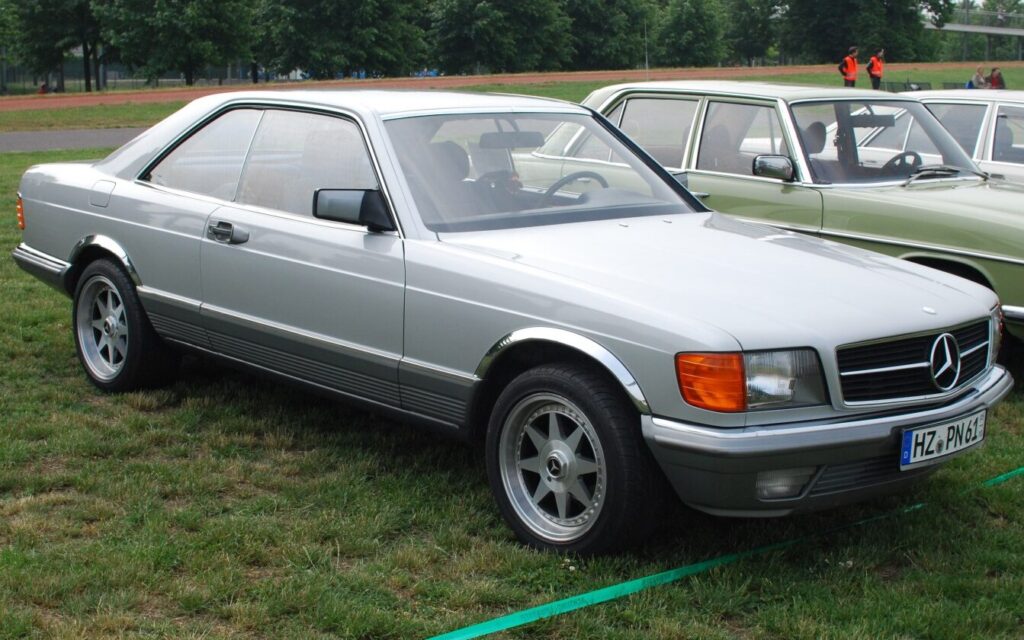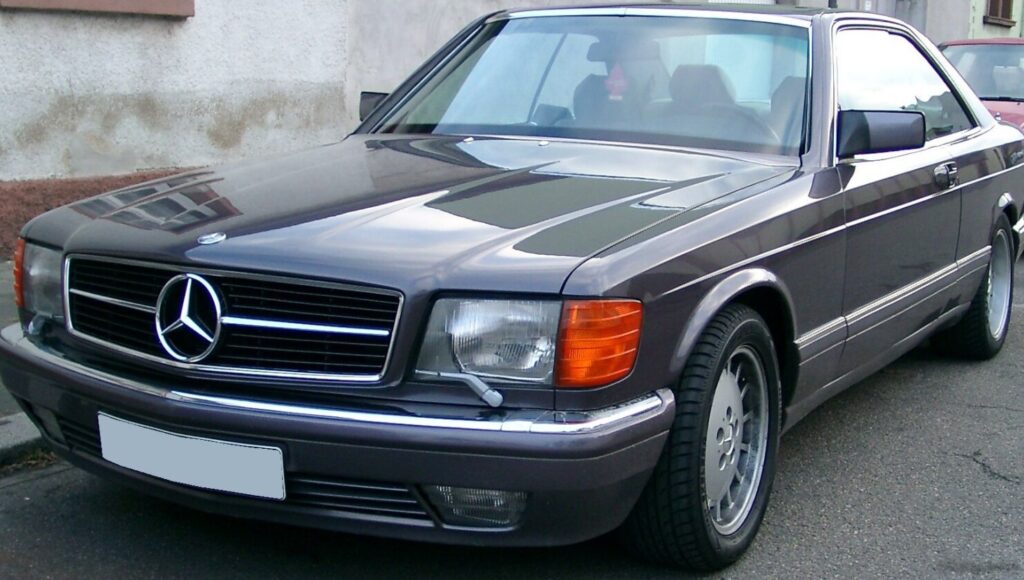
The Mercedes-Benz 560 SEC, part of the C126 series facelift produced from June 1985 to September 1987, represented the pinnacle of luxury coupe performance for its time. Positioned as the flagship of the S-Class coupe range, it offered a more sporting alternative to the sedan while maintaining the renowned Mercedes-Benz comfort and build quality. The “SEC” designation signified “S-Class Coupe, Einspritzmotor” (fuel injection). This model was a key component of the C126 generation, which itself was a groundbreaking design introducing new levels of safety and refinement to the luxury coupe segment. It was primarily marketed towards affluent buyers seeking a grand touring vehicle with both prestige and performance.
Technical Specifications
| Brand | Mercedes-Benz |
| Model | S-class |
| Generation | S-class Coupe (C126, facelift 1985) |
| Type (Engine) | 560 SEC V8 (272 Hp) Automatic |
| Start of production | June, 1985 |
| End of production | September, 1987 |
| Powertrain Architecture | Internal Combustion engine |
| Body type | Coupe |
| Seats | 4 |
| Doors | 2 |
| Fuel consumption (urban) | 17.1 l/100 km (13.8 US mpg, 16.5 UK mpg, 5.8 km/l) |
| Fuel consumption (extra urban) | 10.6 l/100 km (22.2 US mpg, 26.6 UK mpg, 9.4 km/l) |
| Fuel Type | Petrol (Gasoline) |
| Acceleration 0 – 100 km/h | 6.9 sec |
| Acceleration 0 – 62 mph | 6.9 sec |
| Acceleration 0 – 60 mph | 6.6 sec |
| Maximum speed | 238 km/h (147.89 mph) |
| Weight-to-power ratio | 6.4 kg/Hp, 155.4 Hp/tonne |
| Weight-to-torque ratio | 4.1 kg/Nm, 245.7 Nm/tonne |
| Power | 272 Hp @ 5000 rpm |
| Power per litre | 49 Hp/l |
| Torque | 430 Nm @ 3750 rpm (317.15 lb.-ft. @ 3750 rpm) |
| Engine layout | Front, Longitudinal |
| Engine Model/Code | M 117 E 56 / 117.968 |
| Engine displacement | 5547 cm3 (338.5 cu. in.) |
| Number of cylinders | 8 |
| Engine configuration | V-engine |
| Cylinder Bore | 96.5 mm (3.8 in.) |
| Piston Stroke | 94.8 mm (3.73 in.) |
| Compression ratio | 9:1 |
| Number of valves per cylinder | 2 |
| Fuel injection system | Multi-port manifold injection |
| Engine aspiration | Naturally aspirated engine |
| Valvetrain | DOHC |
| Engine oil capacity | 8 l (8.45 US qt | 7.04 UK qt) |
| Coolant | 13.5 l (14.27 US qt | 11.88 UK qt) |
| Kerb Weight | 1750 kg (3858.09 lbs.) |
| Max. weight | 2210 kg (4872.22 lbs.) |
| Max load | 460 kg (1014.13 lbs.) |
| Fuel tank capacity | 90 l (23.78 US gal | 19.8 UK gal) |
| Length | 4935 mm (194.29 in.) |
| Width | 1828 mm (71.97 in.) |
| Height | 1402 mm (55.2 in.) |
| Wheelbase | 2845 mm (112.01 in.) |
| Front track | 1555 mm (61.22 in.) |
| Rear track | 1527 mm (60.12 in.) |
| Drivetrain Architecture | The Internal combustion engine (ICE) drives the rear wheels of the vehicle. |
| Drive wheel | Rear wheel drive |
| Number of gears | 4 |
| Gearbox type | automatic transmission |
| Front suspension | Double wishbone |
| Rear suspension | Threaded twist beam |
| Front brakes | Ventilated discs |
| Rear brakes | Disc |
| Assisting systems | ABS (Anti-lock braking system) |
| Steering type | Cone worm with recirculation balls |
| Power steering | Hydraulic Steering |
| Tires size | Front wheel tires: 215/65 R15Rear wheel tires: 215/65 R15 |
| Wheel rims size | Front wheel rims: 7J x 15Rear wheel rims: 7J x 15 |
Powertrain & Engine Architecture
The heart of the 560 SEC was the M117 E 56 engine, a 5.5-liter (5547 cc) naturally aspirated V8. This engine, a further development of the long-running M117 family, featured a cast iron block and aluminum cylinder heads. It employed Bosch K-Jetronic fuel injection, a mechanical system known for its reliability and precise fuel delivery, though less efficient than later electronic systems. The engine produced 272 horsepower at 5000 rpm and 317 lb-ft of torque at 3750 rpm. The valvetrain consisted of a dual overhead camshaft (DOHC) design with two valves per cylinder. The engine was longitudinally mounted in the front of the vehicle. The 560 SEC exclusively used a four-speed automatic transmission (722.3 series), chosen for its smooth operation and suitability for the grand touring nature of the car. This transmission was known for its durability, but could feel somewhat dated compared to more modern automatics.
Driving Characteristics
The 560 SEC, with its 272 hp and automatic transmission, offered a distinctly different driving experience compared to its 300 SEC or 560 SL counterparts. While not as overtly sporty as a manual transmission model, the 560 SEC delivered strong acceleration – 0-60 mph in around 6.6 seconds – and effortless cruising. The automatic transmission, while smooth, did result in some power loss and a less engaging driving experience. The gear ratios were optimized for comfortable highway driving rather than aggressive acceleration. The car’s substantial weight (approximately 3858 lbs) was noticeable, but the powerful V8 provided ample torque to overcome this. The suspension, tuned for comfort, provided a smooth ride, but body roll was present during cornering.
Equipment & Trim Levels
The 560 SEC came standard with a high level of equipment befitting its flagship status. Leather upholstery was standard, as were power-adjustable front seats with memory function. Other standard features included climate control, power windows, central locking, and a high-quality sound system. Optional extras included a sunroof, heated seats, and a more advanced audio system. Interior trim options were limited, typically featuring wood veneer accents and a choice of leather colors. The overall interior design emphasized luxury and sophistication.
Chassis & Braking
The C126 chassis featured independent suspension all around. The front suspension utilized double wishbones, while the rear employed a threaded twist beam. This setup provided a good balance between ride comfort and handling. Braking was accomplished via ventilated discs at the front and solid discs at the rear. An Anti-lock Braking System (ABS) was standard, a significant safety feature for the time. Steering was via a recirculating ball system with hydraulic power assistance. The 560 SEC’s tires were typically 215/65 R15, providing a good compromise between grip and ride comfort.
Market Reception & Comparison
The 560 SEC was generally well-received by automotive critics, who praised its luxurious interior, powerful engine, and comfortable ride. However, some criticized its relatively high price and the somewhat dated feel of the automatic transmission. Compared to the 300 SEC, the 560 SEC offered significantly more performance, but at a higher cost. The 560 SL, while also powered by the M117 engine, was a roadster and offered a different driving experience. Fuel economy was a concern, with the 560 SEC averaging around 13.8 mpg in the city and 22.2 mpg on the highway. Reliability was generally good, but maintenance costs could be high due to the complexity of the engine and the age of the vehicle.
Legacy
The Mercedes-Benz 560 SEC remains a highly sought-after classic car today. Its combination of luxury, performance, and timeless design has made it a favorite among collectors. The M117 engine, while not the most fuel-efficient, is known for its durability and relatively straightforward maintenance. Well-maintained examples command high prices in the used car market. The 560 SEC represents a high point in Mercedes-Benz engineering and design, and continues to be appreciated for its unique blend of elegance and power.