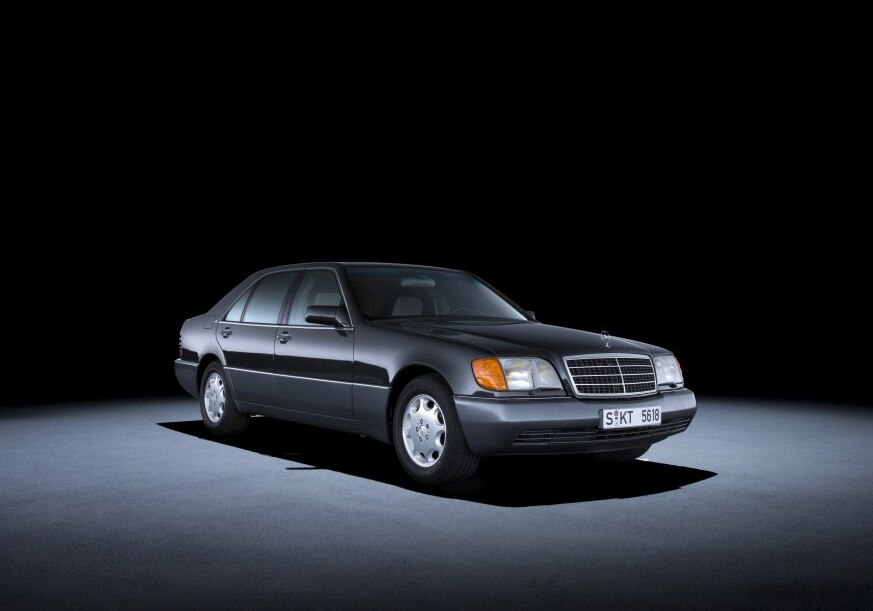
The Mercedes-Benz S-Class Long (V140) S 420, produced from 1993 to 1994, represented a significant evolution in luxury sedan design and technology. Part of the W140 generation – the successor to the W126 – the S 420 was positioned as a high-performance variant within the long-wheelbase S-Class lineup, offering a blend of power, comfort, and advanced features. The “Long” designation indicated an extended wheelbase, providing increased rear passenger legroom, a key selling point for the model, particularly in markets where chauffeur-driven travel was common. This model was primarily aimed at the North American and European markets, where large, luxurious sedans were highly sought after.
Technical Specifications
| Brand | Mercedes-Benz |
| Model | S-class |
| Generation | S-class Long (V140) |
| Type (Engine) | S 420 V8 (279 Hp) Automatic |
| Start of production | 1993 |
| End of production | 1994 |
| Powertrain Architecture | Internal Combustion engine |
| Body type | Sedan |
| Seats | 5 |
| Doors | 4 |
| Fuel consumption (urban) | 16 l/100 km (14.7 US mpg, 17.7 UK mpg, 6.3 km/l) |
| Fuel consumption (extra urban) | 9.7 l/100 km (24.2 US mpg, 29.1 UK mpg, 10.3 km/l) |
| Fuel consumption (combined) | 12.5 l/100 km (18.8 US mpg, 22.6 UK mpg, 8 km/l) |
| Fuel Type | Petrol (Gasoline) |
| Acceleration 0 – 100 km/h | 8.3 sec |
| Acceleration 0 – 62 mph | 8.3 sec |
| Acceleration 0 – 60 mph | 7.9 sec |
| Maximum speed | 245 km/h (152.24 mph) |
| Weight-to-power ratio | 7.2 kg/Hp, 139.5 Hp/tonne |
| Weight-to-torque ratio | 5 kg/Nm, 200 Nm/tonne |
| Power | 279 Hp @ 5700 rpm |
| Power per litre | 66.5 Hp/l |
| Torque | 400 Nm @ 3900 rpm (295.02 lb.-ft. @ 3900 rpm) |
| Engine layout | Front, Longitudinal |
| Engine Model/Code | M 119 E 42/119.970, 119.971 |
| Engine displacement | 4196 cm3 (256.06 cu. in.) |
| Number of cylinders | 8 |
| Engine configuration | V-engine |
| Cylinder Bore | 92 mm (3.62 in.) |
| Piston Stroke | 78.9 mm (3.11 in.) |
| Compression ratio | 11:1 |
| Number of valves per cylinder | 4 |
| Fuel injection system | Multi-port manifold injection |
| Engine aspiration | Naturally aspirated engine |
| Valvetrain | DOHC |
| Engine oil capacity | 8 l (8.45 US qt | 7.04 UK qt) |
| Coolant | 16.5 l (17.44 US qt | 14.52 UK qt) |
| Kerb Weight | 2000 kg (4409.25 lbs.) |
| Max. weight | 2650 kg (5842.25 lbs.) |
| Max load | 650 kg (1433 lbs.) |
| Trunk (boot) space – minimum | 525 l (18.54 cu. ft.) |
| Fuel tank capacity | 100 l (26.42 US gal | 22 UK gal) |
| Length | 5213 mm (205.24 in.) |
| Width | 1886 mm (74.25 in.) |
| Height | 1485 mm (58.46 in.) |
| Wheelbase | 3140 mm (123.62 in.) |
| Front track | 1606 mm (63.23 in.) |
| Rear (Back) track | 1579 mm (62.17 in.) |
| Drivetrain Architecture | Rear wheel drive |
| Drive wheel | Rear wheel drive |
| Number of gears and type of gearbox | 4 gears, automatic transmission |
| Front suspension | Double wishbone |
| Rear suspension | Independent multi-link spring suspension with stabilizer |
| Front brakes | Ventilated discs |
| Rear brakes | Ventilated discs |
| Assisting systems | ABS (Anti-lock braking system), Hydraulic Steering |
| Tires size | 235/60 R16 |
| Wheel rims size | 16 |
Powertrain & Engine Architecture
The S 420 was powered by the M119 E 42 engine, a 4.2-liter naturally aspirated V8. This engine was a cornerstone of Mercedes-Benz’s engineering prowess during the early 1990s. It featured a cast-iron block and aluminum cylinder heads, incorporating a double overhead camshaft (DOHC) valvetrain with four valves per cylinder. The M119 utilized Bosch Motronic fuel injection and engine management, delivering precise control over fuel delivery and ignition timing. The engine produced 279 horsepower at 5700 rpm and 400 Nm (295 lb-ft) of torque at 3900 rpm. The engine code 119.970 and 119.971 denote slight variations in the engine’s calibration and emissions control systems. Paired with the M119 was a four-speed automatic transmission (722.3), known for its smooth operation and reliability. This transmission was electronically controlled, adapting shift points based on driving conditions and throttle input.
Driving Characteristics
The S 420 offered a refined and comfortable driving experience. While not overtly sporty, the 4.2-liter V8 provided ample power for effortless cruising and confident acceleration. The 0-60 mph sprint took approximately 7.9 seconds, and the car had a governed top speed of 152 mph. The automatic transmission, while lacking the responsiveness of a manual, offered smooth and predictable shifts. The gear ratios were tuned for relaxed highway driving, with a focus on minimizing engine noise and maximizing fuel efficiency. Compared to the later S500 models with their larger displacement engines, the S 420 prioritized smoothness and refinement over outright performance. It also offered a more economical option than the V12-powered S600.
Equipment & Trim Levels
The S 420 came standard with a comprehensive array of luxury features. Leather upholstery was standard, along with power-adjustable front seats with memory function. Wood trim adorned the interior, enhancing the sense of opulence. Standard equipment also included automatic climate control, a premium sound system, and power windows and locks. Optional extras included a sunroof, rear seat entertainment system, and upgraded leather options. The long wheelbase version offered significantly more rear legroom, making it a popular choice for executives and those who frequently traveled with passengers.
Chassis & Braking
The V140 S-Class featured a robust chassis with double wishbone suspension at the front and an independent multi-link suspension at the rear. This setup provided a comfortable ride while maintaining good handling characteristics. Stabilizer bars were fitted to both axles to reduce body roll. The S 420 was equipped with ventilated disc brakes on all four wheels, providing ample stopping power. Anti-lock braking system (ABS) was standard, enhancing safety and control during emergency braking situations. The power steering was hydraulically assisted, offering precise and effortless steering control.
Market Reception & Comparison
The S 420 was generally well-received by automotive critics. It was praised for its luxurious interior, smooth ride, and powerful engine. However, some critics noted that the car’s size and weight could make it feel cumbersome in tight spaces. Compared to the S320 (with its inline-six engine), the S 420 offered significantly more power and refinement, but at a higher price point. Against the S500, it provided a more balanced combination of performance and fuel economy. Fuel economy, while not a primary concern for S-Class buyers, was reasonable for a vehicle of its size and performance, averaging around 18.8 US mpg in combined driving.
Legacy
The M119 engine, found in the S 420, is known for its durability and longevity. With proper maintenance, these engines can reliably exceed 200,000 miles. The V140 S-Class, in general, is considered a landmark vehicle in automotive history, setting a new standard for luxury and technology. Today, well-maintained S 420 models are sought after by collectors and enthusiasts. While parts availability can be a challenge, the car’s robust construction and relatively simple mechanical design make it a rewarding vehicle to own and maintain. The S 420 represents a high point in Mercedes-Benz engineering, offering a unique blend of classic luxury and modern performance.